
A bangle bracelet is the easiest piece of jewellery to wear every day. It slips on in a second, needs no clasp, works with almost everything in a wardrobe, and adds a finished look to an outfit that would otherwise feel plain. The problem is not finding bangle bracelets. It is finding ones that survive daily wear without losing their shine, turning your wrist green, snagging on sleeves, or feeling heavy by midday.
That is why this guide is organised by how bangles are actually worn, not just by how they look in a photograph. A slim gold vermeil bangle can be worn to work, to the gym, and to dinner without a second thought, while a wide enamel bangle may be beautiful but impractical for typing all day. A beaded stone bangle feels light and casual, while a thick cuff makes a statement but needs a wrist that suits it. Price is a poor guide on its own. Some of the most reliable everyday bangles are modestly priced, and some of the most expensive are the hardest to live with.
Below are nine bangle bracelets worth considering in 2027, from a classic gold vermeil bangle to stackable thin sets, pearl styles, and hammered brass. Each one is described by what it is good at, what to watch for, and who it suits best, so you can choose with your wrist and your routine in mind, not just a bestseller list.
Key takeaways
- Bangle bracelets are rigid, slip-on bracelets that suit everyday wear because they need no clasp and pair with almost any outfit.
- Gold vermeil, sterling silver, and stainless steel are the most reliable everyday materials, while plated and enamel finishes need more care.
- Fit matters more than style: a bangle should slide over the hand with a little resistance and sit comfortably at the wrist without spinning freely.
- Stacking two or three slim bangles is easier to wear all day than one very wide or heavy cuff.
- No bangle stays perfect forever, and plated finishes, glued stones, and enamel inlays will wear with daily use, so buy for the way you actually live.
What bangle bracelets actually are
A bangle is a rigid bracelet, usually a complete circle or a nearly complete circle, that slides over the hand and rests on the wrist. Unlike a chain bracelet, it has no clasp to fasten, and unlike a cuff, it does not open. That simple shape is both its strength and its limitation. It is quick to put on, hard to lose, and comfortable once you find the right size, but it has to fit over your hand, which means the opening must be wider than your knuckles.
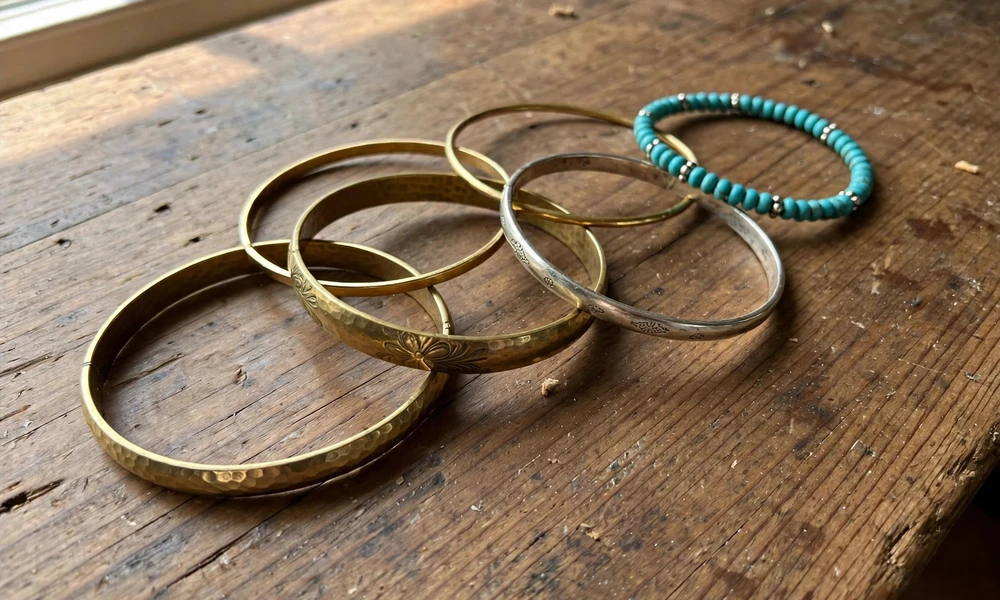
Bangles come in almost every material jewellery is made from: gold, silver, brass, stainless steel, enamel, wood, glass, leather, and stone beads strung on an elastic or wire core. The material decides how a bangle behaves. Solid metals are the most durable. Gold vermeil and sterling silver look warm and refined but need occasional cleaning. Brass is affordable and attractive but can tarnish and may irritate sensitive skin. Enamel and lacquer give bright colour but can chip if knocked against a desk or a doorframe.
Our guide to the best bangle bracelets of 2027 covers the wider range, from statement cuffs to occasion pieces. This guide narrows the focus to everyday wear: bangles that are light enough to forget, tough enough for a working day, and versatile enough to wear with jeans, a dress, or office clothes without looking out of place.
How we chose these bangles and what to look for
Look first at the fit. A bangle should slide over your hand with gentle resistance, not fall off when you shake your wrist, and not pinch. If it spins freely around your wrist, it will knock against everything and wear faster. If it is too tight, it will be uncomfortable by the afternoon and hard to remove. Measure the widest part of your hand, across the knuckles with your thumb tucked in, and compare it with the bangle’s inner diameter before you buy.
Look next at the material and the finish. Solid or vermeil gold, sterling silver, and stainless steel are the safest everyday choices. Plated bangles can look identical on day one but wear at the edges within months if worn daily, so check whether the plating is thick and whether the seller states the micron thickness. Avoid bangles with glued stones or enamel inlays if you plan to wear them while washing your hands, because water and soap get into the joints.
Finally, look at the weight and the width. A bangle under 15 grams is easy to forget. Above 30 grams, you will feel it by the end of the day. A width of 3 to 6 millimetres is the everyday sweet spot: slim enough to stack, wide enough to notice. Our roundup of the best everyday bracelets of 2027 uses the same test, because comfort is what decides whether a bracelet is worn daily or left in a drawer.
The 9 best bangle bracelets for everyday 2027
The Classic Gold Vermeil Bangle
What we like: A slim, polished gold vermeil bangle with a warm, even colour that looks like solid gold at a fraction of the price, light enough to wear all day and simple enough for any outfit. What to consider: Vermeil wears over time, especially at the edges, and it should be kept dry and stored separately. Best for: Everyday wear, work, and occasions. Material: Sterling silver with thick gold vermeil. Price range: 60 to 140 pounds. Standout feature: A clean, classic profile that stacks beautifully with other bangles.
This is the bangle to buy first if you own only one. It does the work of a solid gold bangle in daily life, looks right with both casual and formal clothes, and pairs with almost every other bracelet style you already own.
The Slim Sterling Silver Bangle
What we like: A narrow sterling silver bangle with a soft shine, cool and understated, that suits pale and cool-toned skin and looks as good with a white shirt as it does with a summer dress. What to consider: Silver tarnishes with air and moisture, so it needs a quick polish every few weeks. Best for: Minimal looks, office wear, and cool skin tones. Material: 925 sterling silver. Price range: 40 to 110 pounds. Standout feature: A cool, quiet shine that never looks overdone.
The Beaded Gemstone Bangle
What we like: Small polished stone beads, usually rose quartz, jade, or agate, strung on a strong elastic core, giving soft colour and a relaxed, handmade feel that works with casual clothes. What to consider: Elastic stretches over time and needs replacing, and porous stones should not be soaked. Best for: Casual days, holidays, and layered stacks. Material: Polished natural stone beads on elastic. Price range: 25 to 80 pounds. Standout feature: Gentle colour and a comfortable, flexible fit.
The Gold-Plated Cuff Bangle
What we like: A slightly wider gold-plated bangle with a smooth, open cuff shape that is easy to slip on and off, giving a polished, expensive look for very little money. What to consider: Plating wears fastest at the edges and where it rubs against a desk, so expect to replace it sooner than a vermeil piece. Best for: Evenings, events, and outfits that need one bold piece. Material: Stainless steel core with gold plating. Price range: 30 to 70 pounds. Standout feature: A bold, polished look at an accessible price.
The Pearl Bangle
What we like: Small freshwater pearls set along a slim gold or silver bangle, giving a soft, luminous finish that suits weddings, work, and smart daytime outfits alike. What to consider: Pearls are delicate and should be kept away from perfume, hairspray, and harsh cleaning products. Best for: Smart occasions, weddings, and classic styling. Material: Freshwater pearls on a gold vermeil or sterling silver bangle. Price range: 70 to 160 pounds. Standout feature: A soft glow that flatters the wrist without glitter.
Pearls bring a quiet luxury to an everyday bangle. They are not as tough as metal, but worn with a little care they stay beautiful for years and never look dated.
The Leather and Metal Bangle
What we like: A slim leather band wrapped around a metal core, often with a small gold or silver accent, giving a relaxed, modern look that suits jeans, boots, and casual tailoring. What to consider: Leather darkens with wear and should not be soaked, so it suits dry days better than wet ones. Best for: Casual outfits, weekends, and layered looks. Material: Leather over a stainless steel core with metal accents. Price range: 35 to 90 pounds. Standout feature: A warm, tactile texture that softens a metal-heavy stack.
The Hammered Brass Bangle
What we like: A hand-hammered brass bangle with a warm, textured surface that catches the light, giving an artisan feel and a golden tone at a very modest price. What to consider: Brass tarnishes quickly and can leave a green mark on sensitive skin, so it needs a lacquer coating or regular cleaning. Best for: Warm skin tones, bohemian styling, and summer outfits. Material: Hammered brass, often lacquered. Price range: 20 to 55 pounds. Standout feature: A hand-worked texture that looks far more expensive than it is.
The Enamel Bangle
What we like: A smooth bangle coated in deep-coloured enamel, often navy, emerald, or burgundy, that adds a block of colour to a neutral outfit and looks polished without any gemstones. What to consider: Enamel can chip if knocked hard, and a chipped bangle is hard to repair invisibly. Best for: Colour lovers, office outfits, and occasions. Material: Metal core with enamel coating. Price range: 30 to 85 pounds. Standout feature: Rich, glossy colour that needs no other decoration.
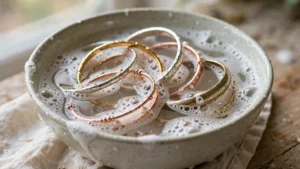
The Stackable Thin Bangle Set
What we like: A set of three or four very slim bangles in mixed metals, designed to be worn together, giving a layered look with almost no weight and endless combinations. What to consider: Thin bangles can bend if caught, and mixed metals need the same care as the softest metal in the set. Best for: Layering, gifting, and changing your look daily. Material: Mixed gold vermeil, sterling silver, and stainless steel. Price range: 50 to 120 pounds for a set. Standout feature: Four looks in one purchase, from a single bangle to a full stack.
A thin bangle set is the most versatile buy in this guide. Wear one alone for a minimal look, stack all four for an evening out, or mix them with bangles you already own.
Which bangle bracelet is right for you
Start with your skin tone and your wardrobe. Warm skin tones suit gold, brass, and warm enamel shades such as burgundy and emerald. Cool skin tones suit silver, white gold, and cool enamel shades such as navy and grey. If you wear mostly neutral clothes, a gold or silver bangle will work every day. If your wardrobe is colourful, a beaded or enamel bangle can tie an outfit together.
Then think about your day. If you type at a keyboard, choose slim bangles under 6 millimetres wide, because wide cuffs catch on the desk and make noise. If you work with your hands, choose solid metal or stainless steel, because enamel and plating chip more easily. If you want one bangle for everything, choose the classic gold vermeil or slim silver style, and save the pearl and enamel pieces for days when you can be a little more careful.
Size is the final check, and it matters more than style. A bangle that is too loose will slide, knock, and wear out faster. A bangle that is too tight will be uncomfortable and hard to remove. Our guide to how to measure your bracelet size explains the knuckle test in detail, and it is worth doing before you buy, especially online, where returns are a hassle.
The caveats that matter
Bangles are simple, but they are not indestructible. Plated finishes wear, elastic stretches, enamel chips, and pearls are easily damaged by chemicals. The most common mistake is wearing the same bangle every day without ever cleaning or checking it, then being surprised when the finish dulls or a stone loosens. A quick weekly wipe and a monthly check of stones, settings, and clasps will keep most bangles looking good for years.
| Detail | What is known |
|---|---|
| Best everyday materials | Gold vermeil, sterling silver, and stainless steel wear best with daily use |
| Fit rule | Slides over the hand with gentle resistance and sits snugly at the wrist |
| Ideal width for daily wear | 3 to 6 millimetres; slim enough to stack, wide enough to notice |
| Weight to aim for | Under 15 grams is easy to forget; over 30 grams is felt by evening |
| Materials that need extra care | Plated finishes, enamel, pearls, and glued stones |
| What to avoid | Water, perfume, and hairspray on pearls, enamel, and leather bangles |
| How often to clean | A quick wipe weekly, a proper clean monthly, and a check of stones and settings |
| What bangles do not do | They do not suit every wrist shape, and one size does not fit everyone |
If your skin reacts to metal, choose stainless steel, sterling silver, or solid gold, and avoid brass and nickel-plated pieces. If a bangle leaves a green mark, it is usually a reaction with copper in the alloy, not a sign of poor quality, but it is a sign to choose a different metal.
Checklist: choosing a bangle bracelet honestly
Use these checks before you buy, and again after a week of wear.
- Check the fit: it should slide over your hand with gentle resistance and not spin freely at the wrist.
- Check the material: gold vermeil, sterling silver, or stainless steel for daily wear; plated or enamel for occasional wear.
- Check the weight: hold it for a minute; if it feels heavy now, it will feel heavier by evening.
- Check the finish: look for even colour, smooth edges, and no rough spots that will catch on sleeves.
- Check the stones: tug each stone gently; if it moves, the setting or glue is already weak.
- Check your routine: if you wash your hands often or work with your hands, choose a tougher metal and a slimmer profile.
Frequently asked questions
How many bangles should I wear at once?
Two or three slim bangles is the comfortable everyday number. More than four starts to feel heavy and noisy, and wide cuffs are usually best worn alone.
Can I wear bangle bracelets every day?
Yes, if you choose the right material. Gold vermeil, sterling silver, and stainless steel cope well with daily wear. Plated, enamel, and pearl bangles are better saved for some days rather than every day.
How do I stop bangles from sliding and clinking?
Choose a snugger fit, wear fewer bangles, or add a slim silicone bangle keeper. A bangle that fits properly should move a little but not spin freely around your wrist.
Do bangle bracelets suit small wrists?
Yes, but choose slim profiles under 5 millimetres wide and smaller inner diameters. Wide cuffs can overwhelm a small wrist, while a single slim bangle looks balanced.
Can I shower or swim in bangle bracelets?
It is best not to. Water, soap, chlorine, and salt speed up tarnish, wear plating, and damage pearls, leather, and glued stones. Take bangles off before showering or swimming.
What is the difference between a bangle and a cuff?
A bangle is a closed circle that slides over the hand. A cuff is open at one side and squeezes onto the wrist. Bangles are more secure, cuffs are easier to put on and take off.
The bottom line
The best bangle bracelet for everyday wear in 2027 is not the most expensive or the most decorative. It is the one that fits your wrist, suits your skin tone, and survives your actual day without needing constant attention. For most people, that is a slim gold vermeil or sterling silver bangle, light enough to forget and simple enough to wear with everything.
Start with one good bangle, wear it for a week, and notice how it feels by evening. If it is comfortable, add a second or a third in a different metal or texture. That slow, honest way of building a stack is how a bangle becomes a daily habit rather than a drawer ornament.