Silk vs satin is one of the most confused comparisons in fashion, and the confusion is understandable. The two words sound like they belong to the same thing, and in shops they are often used as if they do. A satin dress, a silk blouse, a satin pillowcase, a silk scarf: the labels blur, the prices do not, and the result is that people buy satin expecting silk, or pay silk prices for a polyester weave that only looks like silk from a distance.
The honest truth is simple. Silk is a fibre, made by silkworms, and satin is a weave, a way of making fabric that can use silk, polyester, cotton, or a blend. That one fact explains almost everything else: why real silk costs more, why satin can be cheap or expensive, why silk breathes and most satin does not, and why the two fabrics behave so differently when you wear, wash, and keep them.
Below are nine comparisons that matter in 2027, from how each fabric feels and looks to how long it lasts, what it costs, and how to tell the real thing from a convincing copy. Each point gives you silk on one side and satin on the other, so you can choose with the fabric in mind, not just the label.
Key takeaways
- Silk is a natural fibre; satin is a weave that can be made from silk, polyester, cotton, or a blend, so the two are not the same thing.
- Silk breathes, regulates temperature, and drapes softly, while most satin is shinier, stiffer, and warmer to wear.
- Real silk costs more and needs gentler care, but it lasts longer and ages better than cheap polyester satin.
- Satin made from silk combines the best of both, and it is usually priced close to silk, not close to polyester satin.
- No fabric suits every garment, climate, or budget, and a satin label on its own tells you nothing about what the fabric is made from.
What silk and satin actually are
Silk is a natural protein fibre produced by silkworms, and it has been woven into cloth for thousands of years. A silk thread is smooth, strong for its weight, and slightly elastic, which is why silk fabric drapes in soft folds rather than holding a stiff shape. It absorbs moisture without feeling damp, it feels cool in summer and warm in winter, and it has a gentle, natural sheen rather than a hard shine. Most of the silk sold today is mulberry silk, made from silkworms fed on mulberry leaves, and it is graded by the length and evenness of the fibre.
Satin is not a fibre at all. It is a weaving technique in which the weft threads float over several warp threads before dipping under, which creates a smooth, glossy surface on one side and a duller surface on the other. That weave can be done with almost any fibre. Silk satin uses silk threads, polyester satin uses polyester, cotton satin uses cotton, and many high-street satins are a polyester blend.
That distinction is the key to every comparison that follows. When someone asks whether silk or satin is better, the useful question is usually which satin, made from what, and for what purpose.
How we chose these comparisons and what to look for
Look first at the fibre content on the label, not at the word satin. A label that says 100 percent silk tells you what you are buying. A label that says satin, or satin finish, without naming a fibre is usually polyester, and a label that says silk blend may contain as little as 5 percent silk.

Look next at the weight and the drape. Real silk falls in fluid, uneven folds and springs back softly when you let it go. Polyester satin tends to hold a stiffer shape, crease in sharp lines, and catch the light in a flat, even band. A good silk blouse shows the difference clearly, because a blouse sits close to the skin and moves with you, and a fabric that does not breathe will show it within an hour.
Finally, look at the care instructions and the price per wear. Silk needs gentle washing or dry cleaning, and it rewards that care by lasting for years. Polyester satin can usually go in the washing machine, but it pills, snags, and loses its shine faster.
The 9 comparisons that matter in 2027
1. What they actually are: fibre vs weave
What we like: Silk is a natural fibre with a clear identity, and satin is a versatile weave that can be made from many fibres, which means satin can be as luxurious as silk or as cheap as polyester. What to consider: The word satin on a label tells you nothing about fibre content, so you have to read the small print. Best for: Silk for people who want a natural fibre; satin for people who want the glossy look at any price. Fabric: Silk is mulberry silk; satin is a weave in silk, polyester, cotton, or a blend. Price range: Silk from around £40 a metre; polyester satin from around £5 a metre. Standout feature: Silk is a fibre, satin is a weave, and that one fact explains the rest.
2. How they feel on skin
What we like: Silk feels soft, smooth, and cool against the skin, with a slight warmth as it warms up, and it rarely irritates sensitive skin. What to consider: Polyester satin can feel slippery, clammy, and hot, especially in warm rooms, and it can cling to the body in a way silk does not. Best for: Silk for sleepwear, blouses, and anything worn close to the skin. Fabric: Silk is a protein fibre; polyester satin is a synthetic. Price range: Silk pillowcases around £30 to £80; polyester satin pillowcases around £8 to £20. Standout feature: Silk absorbs moisture without feeling wet, which keeps skin comfortable overnight.
3. How they look: sheen and drape
What we like: Silk has a soft, pearly glow that changes as you move, and it drapes in gentle, uneven folds that flatter the body. What to consider: Polyester satin has a harder, more uniform shine that can look cheap under bright light, and it holds stiffer folds that can make a garment look bulky. Best for: Silk for evening dresses and fluid blouses; satin for structured gowns where a bold shine is the point. Fabric: Silk has a natural lustre; satin shine comes from the weave. Price range: Silk dresses from around £150; polyester satin dresses from around £30. Standout feature: Silk glows, polyester satin glares, and the difference shows in photographs.
4. Durability and everyday wear
What we like: Silk is stronger than it looks, and a well-made silk garment can last for years with gentle care, softening rather than wearing out. What to consider: Silk is weaker when wet, it can stain from water and perfume, and it can be damaged by sunlight over time. Best for: Silk for special pieces you care for; polyester satin for hard-wearing, everyday use. Fabric: Silk is a strong natural fibre; polyester is a tough synthetic. Price range: Silk scarves around £50 to £200; polyester satin scarves around £10 to £30. Standout feature: Silk ages gracefully, while cheap satin pills and loses its shine.
5. Care and cleaning
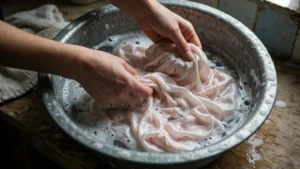
What we like: Silk needs gentle care, but the routine is simple: cool water, mild detergent, no wringing, dry flat or hang in shade. What to consider: Silk stains easily from water spots and perfume, it should not go in a hot dryer, and some silk garments genuinely need dry cleaning. Best for: Silk for people happy to hand-wash; polyester satin for people who want machine-washable clothes. Fabric: Silk is washable by hand; polyester satin is usually machine washable. Price range: Dry cleaning a silk dress around £10 to £20 a visit. Standout feature: Silk rewards gentle care, while polyester satin forgives neglect.
6. Breathability and warmth
What we like: Silk breathes well, wicks moisture away from the skin, and regulates temperature, feeling cool in summer and warm in winter. What to consider: Polyester satin traps heat and moisture, which makes it uncomfortable in warm weather and can leave skin feeling clammy. Best for: Silk for bedding, underwear, and summer clothes. Fabric: Silk is breathable; polyester satin is not. Price range: Silk bedding sets from around £80; polyester satin sets from around £20. Standout feature: Silk is one of the few fabrics that works in both hot and cold weather.
7. Cost and value
What we like: Silk costs more up front, but a well-made silk piece lasts for years and costs less per wear than a cheap satin piece you replace every season. What to consider: Silk prices vary widely, and a high price does not always mean high quality, so check the fibre content and the weight of the fabric. Best for: Silk for investment pieces; polyester satin for trends you will wear a few times. Fabric: Silk is priced by fibre quality and weight; polyester satin is priced by the metre. Price range: Silk blouses from around £80; polyester satin blouses from around £20. Standout feature: Silk is an investment, satin is a bargain, and both can be the right choice for different garments.
8. Best uses: dresses, bedding, and scarves
What we like: Silk suits dresses, blouses, scarves, and bedding, where softness and breathability matter most, while satin suits structured evening gowns and linings, where shine and body matter more. What to consider: Satin can be the better choice for a dramatic gown, because its stiffness holds a shape that silk would not. Best for: Silk for anything worn against the skin; satin for statement pieces and linings. Fabric: Silk for fluid garments; satin for structured ones. Price range: Silk scarves around £50 to £200; satin evening gowns from around £60. Standout feature: The right fabric depends on the garment, not on which fabric is more expensive.
9. How to spot real silk and fake satin
What we like: Real silk has a soft, uneven sheen, it feels warm to the touch, it wrinkles in soft lines, and it smells faintly of burnt hair when a thread is burned. What to consider: Polyester satin has a hard, even shine, it feels cool and plasticky, it creases in sharp lines, and a burned thread melts into a hard bead. Best for: Silk for people who want to buy once and buy well. Fabric: Silk is a natural protein fibre; polyester is a synthetic. Price range: Real silk rarely sells for less than £30 a metre. Standout feature: The burn test is the most reliable check, but reading the label and feeling the fabric usually tells you enough.
Which fabric is right for you
If you want something soft, breathable, and comfortable against the skin, choose silk. It is the better choice for blouses, scarves, pillowcases, and anything you wear for hours at a time, and it is worth the price for pieces you will keep. A satin dress can still be the right choice for an evening event, especially if the satin is silk, or if you want a bold shine and a structured shape that silk would not hold.
If you want a glossy look on a tight budget, or a garment you will wear once or twice, polyester satin is a sensible choice. It looks the part in a photograph, it is easy to care for, and it costs a fraction of silk.
If you can, choose silk satin, which is satin woven from silk. It has the glossy surface of satin and the softness and breathability of silk, and it is the fabric used in many of the best evening dresses and blouses. It costs close to silk, because it is silk, but it gives you both qualities in one fabric.
The caveats that matter
Neither fabric is perfect, and the most common mistake is buying on the word satin alone. A label that says satin without naming a fibre is usually polyester, and a label that says silk blend may contain very little silk. Check the fibre content, check the care label, and check the price against what real silk costs, because all three together tell you more than any single claim.
| Detail | What is known |
|---|---|
| What silk is | A natural protein fibre made by silkworms, soft, breathable, and strong for its weight |
| What satin is | A weaving technique that creates a glossy surface, usable with silk, polyester, cotton, or blends |
| Feel on skin | Silk feels soft and cool, then warm; polyester satin feels slippery and can feel clammy |
| Breathability | Silk breathes and regulates temperature; polyester satin traps heat and moisture |
| Durability | Silk lasts for years with gentle care; cheap satin pills and loses its shine faster |
| Care | Silk needs hand-washing or dry cleaning; polyester satin is usually machine washable |
| Cost | Silk costs more up front but less per wear; polyester satin is cheap but replaced more often |
| What the label hides | Satin alone tells you nothing about fibre content; check for 100 percent silk or the exact blend |
If you have sensitive skin, silk is the safer choice, because it is less likely to irritate and it does not trap heat against the skin.
Checklist: choosing between silk and satin honestly
Use these checks before you buy, and again when the garment arrives.
- Read the fibre content: 100 percent silk means silk, while satin alone usually means polyester.
- Feel the fabric: silk warms in your hand and feels soft, while polyester stays cool and slippery.
- Check the drape: silk falls in soft folds, while polyester satin holds stiffer, shinier folds.
- Check the price: real silk rarely costs less than £30 a metre, so a very cheap silk is probably not silk.
- Check the care label: silk needs gentle washing or dry cleaning, while polyester satin is usually machine washable.
- Think about the use: silk for anything worn close to the skin, satin for structured pieces where shine and shape matter most.
Frequently asked questions
Is satin the same as silk?
No. Silk is a fibre and satin is a weave. Satin can be made from silk, polyester, cotton, or a blend, so a satin garment may contain no silk at all, and a silk garment may not be satin.
Is silk satin better than polyester satin?
Yes, for comfort and longevity. Silk satin has the glossy surface of satin and the softness and breathability of silk, while polyester satin is cheaper, hotter to wear, and loses its shine faster.
Which is better for skin, silk or satin?
Silk is better for most skin, because it breathes, absorbs moisture without feeling damp, and rarely irritates sensitive skin. Polyester satin can trap heat and feel clammy, especially overnight.
Can you wash silk at home?
Most silk can be hand-washed in cool water with a mild detergent, then dried flat or hung in shade. Check the care label first, because some silk garments, especially structured ones, genuinely need dry cleaning.
Why is silk so much more expensive than satin?
Silk is a natural fibre that takes time and labour to produce, while polyester satin is made from cheap synthetic fibres in large quantities. The price gap reflects the cost of production, not just the brand.
How can I tell if a fabric is real silk?
Feel it first: silk warms in your hand, wrinkles in soft lines, and has a gentle, uneven sheen. Polyester satin feels cool and plasticky, creases in sharp lines, and has a hard, even shine. For a definitive check, our guide to natural fibres in clothing explains how to read labels and test fabrics before you buy.
The bottom line
Silk and satin are not rivals, and they are not the same thing. Silk is a fibre that feels soft, breathes well, and lasts for years with gentle care. Satin is a weave that can be made from silk or from polyester, and its quality depends entirely on the fibre used. The best choice is the one that suits the garment, the occasion, and your budget, not the one with the fancier label.
Read the fibre content, feel the fabric, and think about how you will wear it. Choose silk for comfort and longevity, choose satin for shine and structure, and choose silk satin when you want both. That is the honest way to buy fabric that looks good, feels good, and lasts.