Statement earrings are easy to buy and surprisingly easy to get wrong. The earring itself can be beautiful, the outfit can be lovely, and yet together they look busy, unbalanced, or simply too much. Usually the problem is not the earring. It is everything around it: a high neckline that hides the drop, a bold necklace that fights it, hair that swallows it, or a pattern that competes with it. Styling a statement earring is mostly about what you leave out.
That is good news, because it means you do not need a new wardrobe to wear the earrings you already own. You need a few simple decisions, made in the right order, before you leave the house. Put the earrings on first, build the outfit around them, and check the whole look in daylight and in movement.
This guide walks through nine practical steps for styling statement earrings in 2027, from choosing the neckline to balancing the rest of your jewellery, with tips for different face shapes, hairstyles and occasions. No new purchases are required. The aim is to make the pairs you already love look intentional, comfortable and entirely yours.
Key takeaways
- Put the earrings on first and build the outfit around them, rather than adding them as an afterthought.
- Keep the neckline simple and the necklace absent or very fine, so the earring is the one bold thing near your face.
- Show the earring: pull hair back, to one side, or behind the ears, so the shape is visible instead of hidden.
- Balance scale with your frame: a large earring suits a structured outfit, while a delicate outfit needs a lighter pair.
- No styling rule works for every face, outfit and occasion, and a pair that pulls or pinches is never worth wearing, however well it matches.
What styling statement earrings actually means
Styling a statement earring is not about following a trend. It is about giving one bold piece enough space to work. A statement earring is designed to be noticed first, which means everything near it should be quieter: a plain neckline, a simple hairstyle, a calm colour palette, and jewellery that supports rather than competes. When that balance is right, the earring looks expensive and deliberate. When it is wrong, the whole outfit looks noisy, even if every piece is lovely on its own.
The most common mistake is adding rather than subtracting. A statement earring plus a statement necklace plus a patterned dress plus a bold lip is four focal points fighting for attention, and the eye does not know where to rest. The second most common mistake is hiding the earring: hair worn loose over a long drop, a high collar that covers the clasp, or a scarf that tangles with a tassel. If you cannot see the earring, it is not doing its job.
It also helps to think of the earring as part of your face, not part of your outfit. It sits next to your eyes, your cheekbones and your jawline, so its shape and colour interact with your features more than with your clothes. That is why the same pair can look wonderful on one person and wrong on another, and why trying a pair with your own hair and makeup matters more than any photograph of it on a model.
How to plan a statement-earring outfit
Start with the occasion, not the earring. A pair that is perfect for a wedding can feel too much for a work meeting, and a pair that is ideal for a holiday can feel underdressed at a formal dinner. Decide where you are going and how long you will be there, then choose the pair that fits that day. A long evening calls for a secure fastening and a comfortable weight. A short event gives you more freedom to wear something heavier or more dramatic.
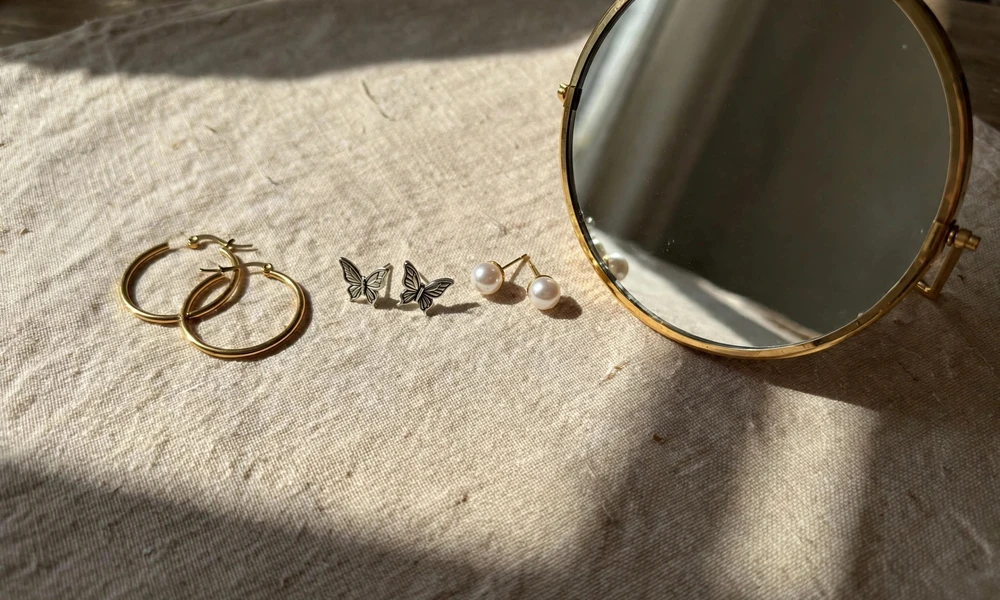
Next, put the earrings on before you choose the rest of the outfit. Stand in front of a mirror with the earrings in and your hair as you plan to wear it, then hold up tops and dresses against yourself. You will immediately see which necklines work and which ones fight the earring. A V-neck, a scoop neck or a bare shoulder usually works. A high crew neck, a ruffled collar or a busy print usually does not. This two-minute check saves more styling mistakes than any amount of theory.
Finally, think about your face shape before you commit. If you are unsure where to start, our guide to choosing earrings for your face shape explains the basic pairings in plain terms: longer drops lengthen round faces, wider shapes balance longer faces, and most shapes suit oval faces. You do not need to follow these rules rigidly, but they are a useful starting point when a pair feels wrong and you cannot say why.
The 9 steps to styling statement earrings
Start with the earrings, not the outfit
What to do: Put the earrings on first, then choose clothes that suit them. What to avoid: Finishing a full outfit and then adding a bold earring as an afterthought. Best for: Every occasion, because it prevents clashes before they happen. Time needed: Two minutes. Standout tip: If the earring changes how you feel about the outfit, it is the right pair for that day.
Keep the neckline simple
What to do: Choose a V-neck, scoop neck, boat neck or bare shoulder that leaves space around the earring. What to avoid: High crew necks, ruffles, heavy collars and busy prints right under the chin. Best for: Long drops and chandeliers, which need clear space to hang. Time needed: None, once the habit is set. Standout tip: A plain white shirt is the best test of a statement earring, because there is nothing to hide behind.
The neckline is the frame for the earring. A simple frame makes the earring look intentional. A busy frame makes it look accidental, even when the earring itself is beautiful.
Pull hair back or to one side
What to do: Wear hair in a low bun, a ponytail, a side part, or tucked behind the ears, so the earring is visible. What to avoid: Loose hair falling over a long drop, which hides the shape and tangles with beads and tassels. Best for: Long drops, chandeliers and tassels. Time needed: Three minutes. Standout tip: If you love loose hair, choose a wide or sculptural stud instead of a long drop, so the shape still shows.
Skip the necklace, or go very fine
What to do: Leave the neck bare, or wear a very fine chain with a small pendant. What to avoid: A bold necklace, a chunky chain or a layered set that competes with the earring. Best for: Long, wide or very colourful earrings. Time needed: None. Standout tip: If you miss the necklace, move the interest to your wrist instead, with a simple bracelet or a watch.
One focal point near the face is enough. A bare neck makes a statement earring look deliberate and expensive, while a competing necklace makes the whole look feel crowded.
Let one metal finish lead
What to do: Let the earring’s metal lead, and keep other jewellery in the same family or very quiet. What to avoid: Mixing bright gold, bright silver and rose gold all at once near the face. Best for: Metal earrings, especially gold and silver drops. Time needed: None. Standout tip: Mixed-metal earrings are the exception: they are designed to work with any metal, so they free you from this rule.
Balance the scale with your frame
What to do: Pair a large earring with a structured outfit, and a lighter earring with a delicate one. What to avoid: A huge earring with a flimsy, floaty dress, or a tiny earring lost against heavy tailoring. Best for: Anyone who feels a pair looks wrong without knowing why. Time needed: A minute in front of a mirror. Standout tip: Step back from the mirror and look at the whole silhouette, not just the earring in close-up.
Scale is about the whole picture. A bold earring needs a certain amount of structure around it to look intentional, and a delicate outfit needs a lighter earring to stay in balance. Check the full length, not just the face.
Choose shoes and a bag that stay quiet
What to do: Wear simple shoes and a plain bag, in a colour that already appears in your outfit. What to avoid: A patterned bag, a glittering shoe or a bright colour that pulls the eye away from your face. Best for: Evenings and weddings, where the earring is the point. Time needed: None. Standout tip: A nude or black shoe is almost always the right choice with a statement earring.
Match the mood, not just the colour
What to do: Match the earring’s mood to the occasion: romantic for a wedding, sculptural for a gallery, relaxed for a holiday. What to avoid: Wearing a festive, glittering pair to a sombre event, or a severe geometric pair to a soft, romantic occasion. Best for: Weddings, parties and formal events. Time needed: A moment of thought before you choose. Standout tip: If you are unsure, a pearl or gold pair is the safest choice, because it suits almost any mood.
Colour matching is useful, but mood matching matters more. A crystal chandelier in the right colour can still feel wrong at a relaxed lunch, while a simple gold drop can feel exactly right at a formal dinner. For weddings in particular, our guide to drop earrings for weddings covers which shapes suit different dresses and ceremonies.
Do a daylight and movement check
What to do: Check the full outfit in daylight, walk around, turn your head, and sit down in it. What to avoid: Judging the look only in a dim bedroom mirror, standing still. Best for: Every occasion, but especially weddings and long evenings. Time needed: Five minutes. Standout tip: If the earring catches on your collar, pulls when you turn, or disappears in daylight, change the earring or the top before you leave.
Matching statement earrings to your outfit
With a plain outfit, you have the most freedom. A white shirt, a black dress or a simple slip dress can carry almost any statement earring, from crystal chandeliers to resin studs, because there is nothing to compete with. This is the best place to wear your boldest pair, and the best place to experiment. If you are trying a new shape for the first time, wear it with the simplest outfit you own, and you will learn quickly whether you love it.
With a patterned or textured outfit, choose a simpler earring. A floral dress, a tweed jacket or a sequinned top already has a lot going on, so a sculptural stud or a modest gold drop will add polish without adding noise. A long tassel or a busy chandelier against a busy pattern is usually too much, however beautiful each piece is on its own. When in doubt, simplify the earring and let the clothes lead.
With formal or bridal outfits, the earring should suit the dress, not just the occasion. A strapless or off-the-shoulder dress suits a long drop, because the neck and shoulders are bare. A high-necked dress suits a stud or a shorter drop, because a long earring will fight the collar. If you are choosing earrings for a wedding dress, our guide to choosing earrings for a wedding dress walks through the pairings neckline by neckline, so you can match the earring to the dress rather than guessing.
The caveats that matter
Styling rules are guides, not laws, and the most important test is always your own comfort. A pair that pulls, pinches or itches will not look good on you, however well it matches your outfit, because discomfort shows in your face and your posture. If a pair hurts after an hour, take it out, and do not try to rescue it with a different top. Comfort is the foundation of good styling, not an afterthought.
| Detail | What is known |
|---|---|
| First step | Put the earrings on first, then build the outfit around them |
| Best neckline | V-neck, scoop neck, boat neck or bare shoulder, with clear space around the earring |
| Hair that shows the earring | Low bun, ponytail, side part or tucked behind the ears; loose hair hides long drops |
| Necklace rule | Skip it, or wear a very fine chain; a bold necklace competes with a bold earring |
| Metal rule | Let one metal finish lead; mixed-metal earrings are the exception and suit any metal |
| Scale rule | A large earring suits a structured outfit; a delicate outfit needs a lighter pair |
| Final check | Check the full outfit in daylight, in movement, sitting and turning, before leaving |
| What styling cannot fix | A pair that pulls, pinches or hurts will not look good, however well it matches the outfit |
It is also worth remembering that a statement earring does not have to be worn as a pair. A single bold earring, worn with a small stud in the other ear, is a deliberate, modern look that suits some people very well, especially with an asymmetric hairstyle. It is not for everyone, and it is not for every occasion, but it is a useful option if you love a pair and find two of them too much.
Checklist: styling statement earrings honestly
Use these checks before you leave the house.
- Put the earrings on first, then choose the outfit, not the other way around.
- Check the neckline: a V-neck, scoop neck or bare shoulder gives the earring room to show.
- Check your hair: pull it back, to one side, or behind your ears, so the earring is visible.
- Check the necklace: skip it, or keep it very fine, so the earring is the one bold piece near your face.
- Check the scale: step back and look at the whole silhouette, not just the earring in close-up.
- Check in daylight and in movement: walk, turn and sit, and change the earring or the top if anything catches or pulls.
Frequently asked questions
Can I wear statement earrings with my hair down?
Yes, but choose the shape carefully. A wide or sculptural stud shows through loose hair, while a long, thin drop often disappears into it.
Should I wear a necklace with statement earrings?
Usually not. A bold necklace and a bold earring compete, so most stylists choose one or the other. If you want something at the neck, a very fine chain with a small pendant is the safest choice.
Can I wear statement earrings to work?
Yes, if you choose a moderate pair. Geometric dangles, resin studs and modest hoops work in most offices. Keep the rest of the outfit tailored, skip the necklace, and save the largest chandeliers and tassels for after work.
How do I wear statement earrings with glasses?
Try the earring on with your glasses before you commit. Slim drops usually sit happily alongside a frame, while very wide shapes can press against it. A stud or a narrow drop is the safest choice with a strong frame.
Can I mix metals when I wear statement earrings?
Yes, but let one metal lead. A gold earring with a silver watch is fine, but three bright finishes competing near the face will pull attention away from the earring. Mixed-metal earrings are designed to work with any metal, so they are the easiest way to mix.
Is it OK to wear just one statement earring?
Yes, as a deliberate style choice. A single bold earring with a small stud in the other ear suits asymmetric hairstyles and modern, minimal outfits. It is not for every occasion, but it is a legitimate, fashionable option.
The bottom line
Styling statement earrings is mostly about subtraction. Put the earrings on first, keep the neckline simple, show the earring with your hair, skip the competing necklace, and check the whole look in daylight and in movement. Those five habits will make almost any statement pair look intentional, whether it is a crystal chandelier or a sculptural resin stud.
The pairs you already own are probably more versatile than you think. Try them with the simplest outfit you have, in daylight, with your hair as you would wear it out, and you will quickly learn which ones earn their place and which ones were only ever beautiful in the shop.