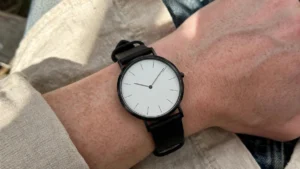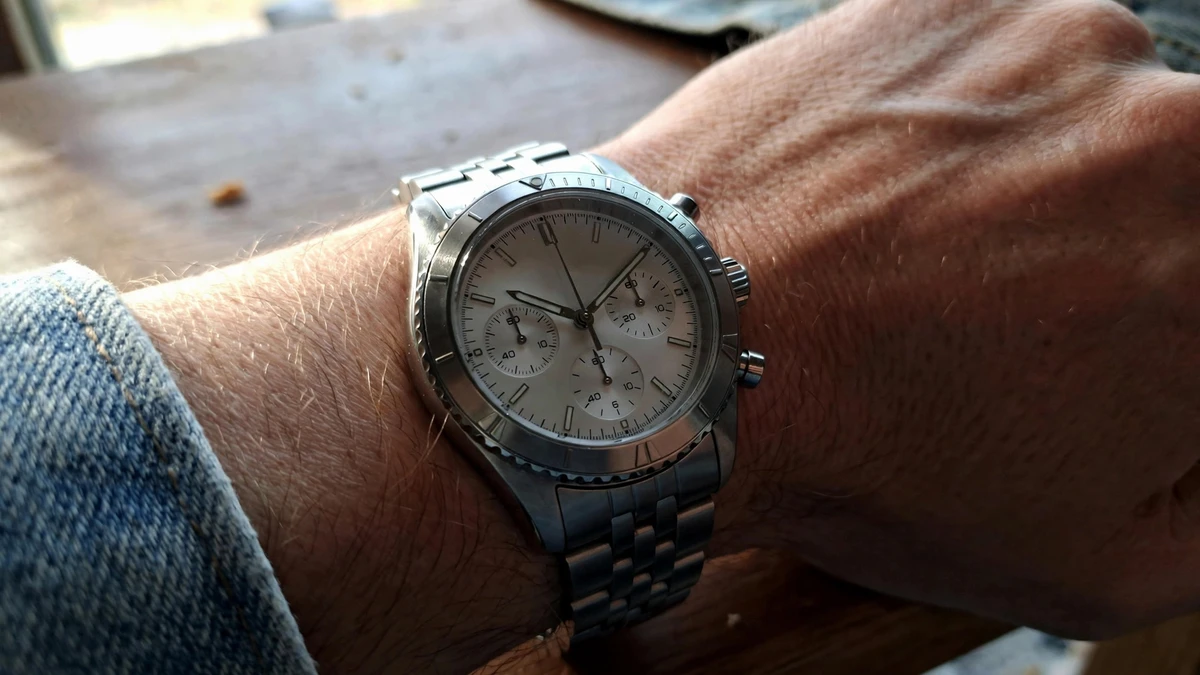
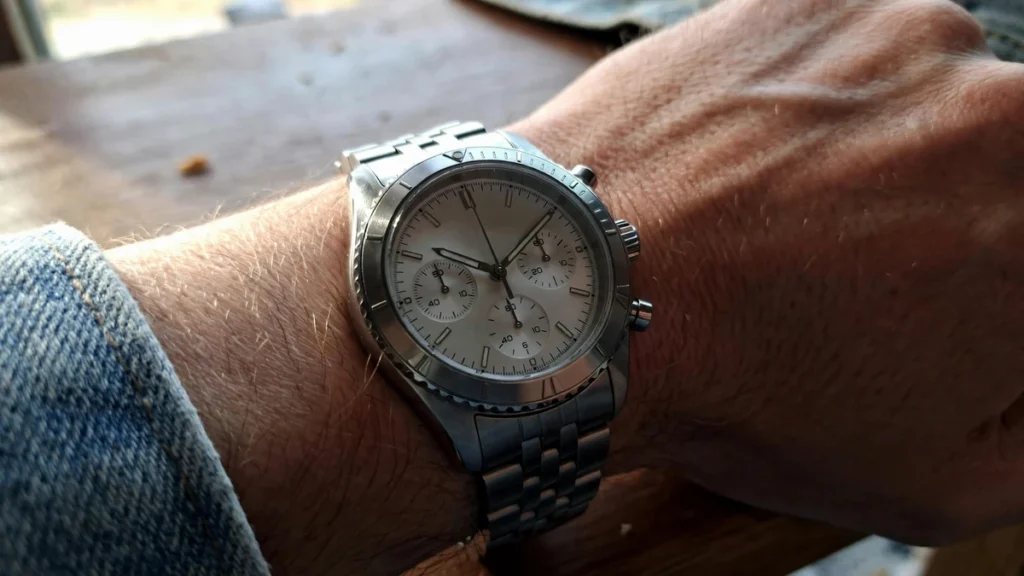
A chronograph watch is a watch with a stopwatch built into it, and the best chronograph watches of 2027 prove how much variety that simple idea can hold. Extra pushers on the side of the case start, stop and reset the timing, while small subdials on the face count the elapsed minutes and hours. It is one of the oldest complications in watchmaking, and it remains one of the most useful, because it turns a watch from something you glance at into something you actually use, whether you are timing a run, a roast, or a lap.
The problem is not finding a chronograph. It is choosing one. Prices run from under $300 to well over $10,000, cases run from slim quartz to thick automatic, and two watches that look almost identical on a screen can feel completely different on the wrist. A good chronograph should be readable at a glance, comfortable enough to wear all day, and honest about what it is: a timing tool first, and a piece of jewellery second.
Below are nine chronograph watches worth considering in 2027, from an affordable quartz starter to the watch that went to the Moon. Each one is described by what it is good at, what to watch for, and who it suits best, so you can choose with your wrist and your budget in mind, not just a bestseller list.
Key takeaways
- A chronograph is a watch with a built-in stopwatch: pushers start, stop and reset the timing, and subdials show the elapsed time.
- Quartz chronographs are the most accurate and the easiest to own; mechanical chronographs are bought for the craft and the feel, not the precision.
- Chronographs are thicker and heavier than plain watches, so check the case thickness and lug-to-lug length before you buy, not just the diameter.
- A tachymeter scale turns elapsed time into speed, which is useful for driving and sport, and decoration on most other wrists.
- No watch is a guaranteed investment, and a chronograph that is never serviced, or whose pushers are used underwater, will cost far more to fix than to admire.
What a chronograph watch actually does
A chronograph contains two instruments in one case. The first is the ordinary time display: hours, minutes and seconds, running all day. The second is a stopwatch that you start, stop and reset with the pushers on the side of the case. Press the top pusher and the long central seconds hand starts sweeping around the dial. Press it again and it stops. Press the bottom pusher and it flies back to twelve. The elapsed time is read off the subdials, the small circles inside the main dial that count minutes and hours.
The word comes from the Greek for time-writing, and the first chronographs were made for horse racing and astronomy, where timing an event to the second mattered. The idea spread to pilots, racing drivers and doctors, who needed to time laps, legs of a flight, or a pulse. That history is why so many chronographs carry a tachymeter scale around the bezel or dial: it converts elapsed time over a measured distance into speed, which is exactly what a racing driver wants and exactly what most owners will never use.
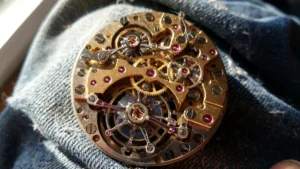
What separates a chronograph from a watch with a stopwatch mode is that the timing is hardware, not a screen. On a quartz chronograph the stopwatch is driven by a battery-powered circuit. On a mechanical chronograph it is driven by gears and levers, and you can feel the pusher click as the mechanism engages. Both are genuine chronographs. The difference is in how they feel, how accurate they are, and how much care they need.
How we chose these chronographs and what to look for
Start with the pushers. They should press cleanly, with a firm click and no mushiness, and the seconds hand should start instantly, without a stutter. On a good chronograph the reset is just as clean: one press and the hand snaps back to twelve. If the hand creeps, hesitates, or lands off centre, the movement needs attention, and that is worth knowing before you buy, not after.

Look next at the subdials. Three small subdials can look busy, and on some dials they are hard to read at a glance, which defeats the point of a timing watch. Two subdials, or a layout with strong contrast between the hands and the dial, is easier to live with. A guide to what a chronograph watch is explains the layouts in plain terms, and it is worth reading before you fall for a dial that photographs well and reads badly.
Finally, look at the size on your wrist. Chronographs are thick, because the timing mechanism sits on top of the timekeeping movement, and a 42 mm case that is 15 mm thick wears very differently from a 42 mm dress watch. Check the lug-to-lug length as well as the diameter, and remember that a bracelet adds weight while a leather or rubber strap makes the same watch feel lighter and more casual.
The 9 best chronograph watches of 2027
Omega Speedmaster Professional Moonwatch
What we like: The watch that went to the Moon, with a hand-wound movement, a clean black dial, and a history no other chronograph can match. It is legible, tough, and instantly recognisable without being loud. What to consider: It needs winding every day, it is not cheap, and the Hesalite crystal scratches more easily than sapphire. Best for: Collectors and anyone who wants one iconic chronograph. Material: Stainless steel, Hesalite crystal. Price range: Around $7,000 to $8,500. Standout feature: The Moonwatch heritage and the hand-wound calibre.
TAG Heuer Carrera Chronograph
What we like: A racing chronograph with a clean, uncluttered dial, a smooth automatic movement, and a case that sits comfortably under a cuff. The Carrera name carries real motorsport history. What to consider: The price puts it firmly in luxury territory, and the bracelet version adds weight. Best for: Drivers and anyone who wants a classic racing chronograph. Material: Stainless steel, sapphire crystal. Price range: Around $5,000 to $6,500. Standout feature: The clean dial and the racing heritage.
Breitling Navitimer B01 41
What we like: A pilot’s chronograph with a slide rule bezel, an in-house automatic movement, and a dial that manages to be busy and beautiful at the same time. What to consider: It is large and thick, the slide rule takes learning, and it is a serious investment. Best for: Pilots and collectors who love the aviation look. Material: Stainless steel, sapphire crystal. Price range: Around $9,000 to $10,500. Standout feature: The slide rule bezel and the in-house B01 movement.
Tudor Black Bay Chrono
What we like: A dive-watch case with a chronograph inside, a domed dial, and a movement with a five-day power reserve. It feels like a tool watch, not a dress watch pretending to be one. What to consider: It is thick and heavy, and the snowflake hands divide opinion. Best for: Anyone who wants a tough, everyday chronograph. Material: Stainless steel, sapphire crystal. Price range: Around $5,500 to $6,000. Standout feature: The five-day power reserve and the dive-watch build.
Seiko Prospex Speedtimer
What we like: A solar-powered chronograph with a sharp, retro dial, a comfortable bracelet, and accuracy that a mechanical watch cannot match. It charges from light and needs almost no attention. What to consider: The pushers feel lighter than a mechanical chronograph, and the dial is busy. Best for: First-time buyers and anyone who wants accuracy without servicing. Material: Stainless steel, sapphire crystal. Price range: Around $600 to $800. Standout feature: Solar power and the retro Speedtimer styling.
Hamilton Intra-Matic Auto Chrono
What we like: A slim automatic chronograph with a vintage look, a panda dial, and a case that actually fits under a shirt cuff. It is the most elegant watch on this list. What to consider: The hand-wound feel is absent, the strap is the weaker part of the package, and the water resistance is modest. Best for: Dressier days and smaller wrists. Material: Stainless steel, sapphire crystal. Price range: Around $2,000 to $2,500. Standout feature: The slim case and the vintage panda dial.
Longines Spirit Chronograph
What we like: A clean, modern pilot-style chronograph with a silicon balance spring, strong anti-magnetic performance, and a five-year warranty. It is quietly excellent. What to consider: The brand is less talked about than its rivals, and the dial is more restrained than some will want. Best for: Buyers who value engineering over badge. Material: Stainless steel, sapphire crystal. Price range: Around $3,000 to $3,500. Standout feature: The silicon balance spring and the five-year warranty.
Longines does not shout, and that is its strength. This chronograph is for the buyer who has done the research and wants the best movement for the money rather than the most recognisable name.
Zenith Chronomaster Original
What we like: A high-frequency automatic movement that measures tenths of a second, a tri-colour dial that is instantly recognisable, and a finishing level that punches above its price. What to consider: The tri-colour dial is not for everyone, and servicing a high-frequency movement is not cheap. Best for: Enthusiasts who care about the movement inside. Material: Stainless steel, sapphire crystal. Price range: Around $9,000 to $10,000. Standout feature: The 5 Hz El Primero movement and the tri-colour dial.
The Chronomaster is the watch for people who buy watches for what is inside them. The tenth-of-a-second hand sweeping around the dial is a small daily reminder of why mechanical watchmaking still matters.
Timex Waterbury Chronograph
What we like: An honest, affordable quartz chronograph with a classic dial, a comfortable strap, and a price that makes it an easy first chronograph. What to consider: It is quartz, so it lacks the feel of a mechanical movement, and the case is not as refined as the luxury options here. Best for: First-time buyers and anyone testing whether they like chronographs. Material: Stainless steel case, leather strap. Price range: Around $200 to $300. Standout feature: The price and the classic Waterbury styling.
There is no shame in starting here. A $250 chronograph that you wear every day teaches you more about what you want than a $7,000 one that stays in a drawer, and this is the right place to learn.
Which chronograph is right for your wrist and your life
Start with how you will actually use it. If you want to time things every day, a quartz or solar chronograph is the honest choice: it is accurate, it needs no winding, and it will not punish you for leaving it unworn for a week. If you want the ritual, the winding, the click of the pushers and the sweep of the hand, a mechanical chronograph is worth the extra money and the servicing, because the experience is the point.
Then think about the case. A gold or rose gold case changes the whole character of a watch, and our comparison of gold vs rose gold watches is a useful read before you choose a metal, because the warmer tones suit some skin tones and some wardrobes far better than others. A steel case on a bracelet is the most versatile choice, and it is the one most people end up wearing most often.
Finally, think about size honestly. Try the watch on, with the strap you will actually wear, and look at it from arm’s length in a mirror, not from six inches away. A chronograph that looks perfect in a product photo can look oversized on a smaller wrist, and a watch you have to keep adjusting is a watch you will stop wearing.
The caveats that matter
A chronograph is more complicated than a plain watch, and complication means maintenance. Mechanical chronographs need servicing every four to six years, and a full service on a luxury chronograph can cost several hundred dollars or more. Quartz chronographs need a battery every two to three years, and a solar one needs light, not a battery change, which is one reason the Seiko on this list is such an easy recommendation.
| Detail | What is known |
|---|---|
| What a chronograph does | It times events with pushers and subdials while still showing the time of day |
| Quartz vs mechanical | Quartz is more accurate and cheaper to own; mechanical is bought for craft and feel |
| Typical case thickness | 13 to 15 mm, noticeably thicker than a plain three-hand watch |
| Water resistance | Varies widely; never use the pushers underwater unless the watch is rated for it |
| Servicing | Mechanical chronographs need a service every 4 to 6 years |
| Tachymeter scale | Converts elapsed time into speed; useful for driving, decoration for most owners |
| Best first chronograph | A solar or quartz model under $800, so you learn what you like before spending more |
| What it does not do | It does not hold its value reliably, and it does not replace a dedicated stopwatch for serious timing |
The other rule is simple: do not press the pushers underwater. Most chronographs are not built for it, and water in a chronograph movement is an expensive repair. If you swim or dive with a watch, buy a dive watch and leave the chronograph at home. A budget guide such as our watches under $500 roundup is a good place to look if you want a tough, affordable watch for the water and a chronograph for everything else.
Checklist: buying a chronograph honestly
Use these checks before you buy, and again before the return window closes.
- Press the pushers: they should click cleanly, start instantly, and reset straight to twelve.
- Read the subdials at arm’s length: if you cannot read them quickly, the dial is too busy for you.
- Check the thickness and lug-to-lug length, not just the diameter, and try it on your wrist.
- Ask about servicing: how often, how much, and who can do it where you live.
- Check the water resistance and never use the pushers underwater unless the watch is rated for it.
- Buy the watch you will wear, not the one you think will impress other people.
Frequently asked questions
What is the difference between a chronograph and a stopwatch?
A chronograph is a watch with a stopwatch built in, so it shows the time of day and times events. A stopwatch only times events. A chronograph is the more useful everyday object, and the stopwatch is the more accurate specialist tool.
Are chronograph watches worth the money?
They are worth it if you like the complication and will use it. A quartz chronograph under $800 gives you almost all of the function for a fraction of the price. A mechanical one is worth it for the craft, the feel, and the pleasure of wearing it, not as a financial decision.
Do chronograph watches need servicing?
Mechanical chronographs need a service every four to six years, and the cost rises with the brand. Quartz chronographs need a battery every two to three years, and solar chronographs need light and almost no maintenance at all.
Can I wear a chronograph every day?
Yes, and most owners do. Choose a steel case, a comfortable strap or bracelet, and a dial you can read quickly. A slim automatic like the Hamilton on this list is easier to wear daily than a thick, heavy pilot’s chronograph.
Can I use the chronograph pushers underwater?
Almost always no. Water can enter through the pushers, and the repair is expensive. Unless your watch is specifically rated for it, keep the pushers dry and leave timing in the water to a proper dive watch.
What size chronograph should I buy?
For most wrists, 38 to 42 mm works well, but thickness and lug-to-lug length matter more than diameter. Try it on, look in a mirror from arm’s length, and choose the size that looks balanced, not the size that looks impressive in a photograph.
The bottom line
The best chronograph watch in 2027 is not the most expensive or the most famous. It is the one that fits your wrist, that you can read at a glance, and that you will actually use. For most people, that means a solar or quartz chronograph under $800, or a solid automatic in the $2,000 to $3,500 range, worn daily and serviced when it needs it.
Choose one watch, wear it for a month, and time something with it every day. That is how you find out whether you love the complication or just the idea of it, and it is the honest way to decide whether your next chronograph should be a tool, a pleasure, or both.