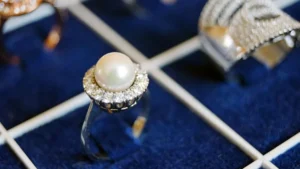

A topaz ring is one of the friendliest buys in fine jewellery, and one of the most confusing. Two rings can look almost identical yet differ enormously in value, because topaz is really two stones wearing one name: affordable blue topaz, which is almost always treated, and imperial topaz, a warm golden-orange stone that is genuinely scarce.
Topaz is a silicate mineral scoring 8 on the Mohs scale, and it grows in large, clean crystals, so big stones are affordable in a way they never are with sapphire or ruby. Pure topaz is colourless; its colours come from trace elements and treatment, which is why topaz has its own buying rules.
This guide covers what matters most before you buy: colour and the three shades of blue, imperial topaz, clarity and cut, treatments, settings, prices, and the paperwork that protects you.
Key takeaways
- Colour matters most, judged by variety: for blue topaz it is taste; for imperial topaz, a rich orange with a pink or red overtone carries the value.
- Almost every blue topaz has been irradiated and heated to create its colour. The treatment is permanent and accepted, but it must be disclosed.
- Topaz scores 8 on the Mohs scale yet has perfect cleavage in one direction, so a sharp knock can split it.
- Topaz is usually eye-clean, so a cloudy or heavily included stone is a poor buy at any price, unlike emerald, where inclusions are expected.
- Get a lab report for any expensive imperial or natural pink topaz, and buy the stone you can see, not the name on the label.
Start with colour, because it decides almost everything
With a diamond, cut usually comes first. With topaz, colour comes first, but how you judge it depends on which topaz you are buying. Jewellers describe colour in three parts: hue, tone, and saturation. A good topaz holds its colour in daylight, not only under shop spotlights, so always ask to see the ring by a window.
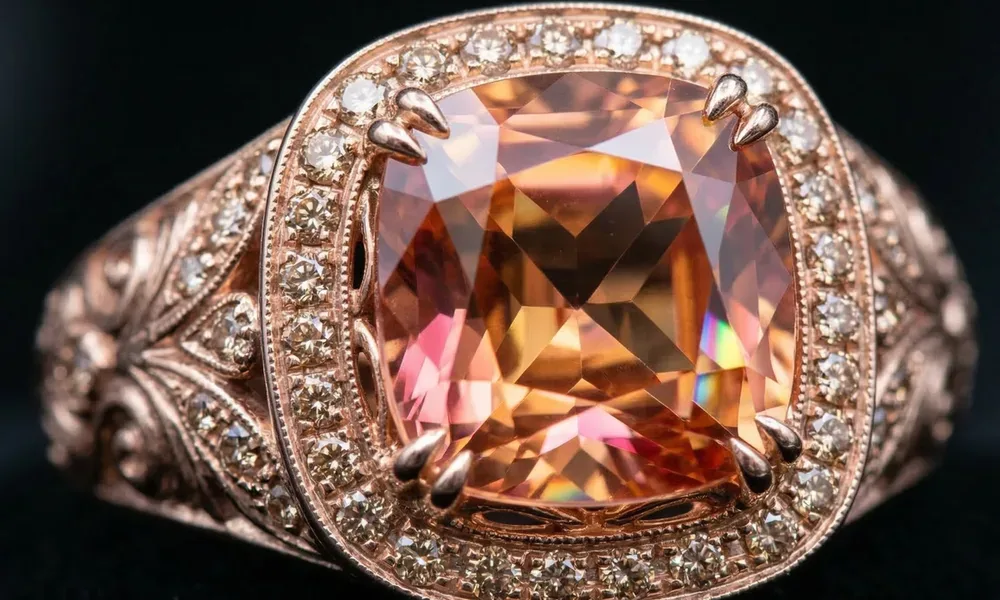
For blue topaz, colour is a matter of preference, and the price difference between shades is small, so choose the blue you love. For imperial topaz, colour is nearly everything: the most valued stones are a rich orange with a distinct pink or red overtone, and the price gap between that and a plain orange stone is very wide. A smaller imperial stone with vivid warm colour beats a larger one with a weak, brownish colour.
The three shades of blue topaz
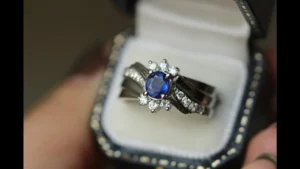
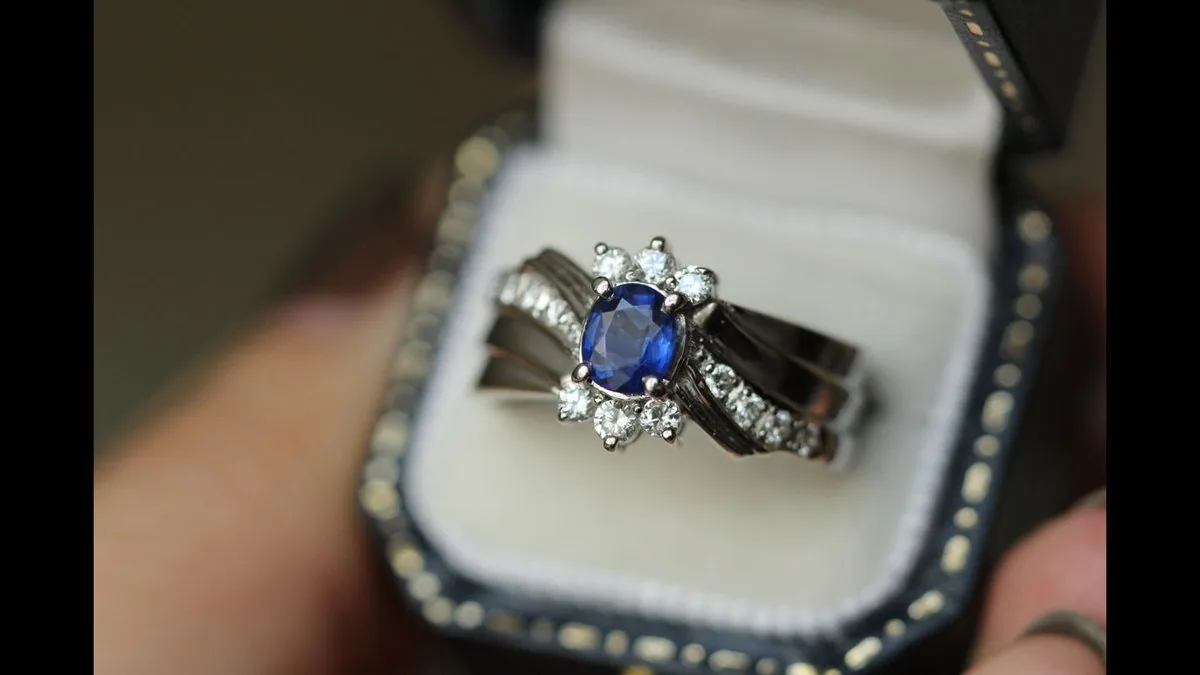
Blue is the most popular topaz colour, and it comes in three trade names that describe depth, not origin. Sky blue is the lightest, a pale, fresh, icy blue. Swiss blue is a vivid medium blue, the most common shade. London blue is the deepest, a rich, inky blue with a slight grey or green tone, often the most expensive. Natural blue topaz is rare and usually pale, so the vivid blues in shop windows are the product of treatment.
Choose the shade against your skin and wardrobe. Sky blue flatters fair skin and looks fresh with silver and white gold. Swiss blue is the most versatile. London blue is dramatic and suits evening wear, but check it in dim light, since the darkest stones can look almost black indoors. If you are still deciding between centre stones, our guide to the best non-diamond engagement rings of 2027 compares topaz with sapphire, emerald, ruby, morganite and moissanite.
Imperial topaz: the rare one worth slowing down for
Imperial topaz is the most valuable commercial variety of topaz, a warm golden-orange to pinkish-orange stone, and the finest examples come from Ouro Preto in Brazil. The name is said to come from Russia, where the stone was once reserved for the royal family, and a documented Brazilian origin often carries a premium.
The term imperial topaz is not universally defined. Some sellers use it for any orange topaz, while gemmologists reserve it for stones with a pink or red overtone and strong saturation. Judge the stone itself: a rich, warm orange with a pink flush and a lively cut is what you are paying for, while a plain yellow-brown stone labelled imperial is simply an orange topaz at an imperial price. Imperial topaz is generally not treated, though some pink material is made by heating orange stones, so ask and get the answer in writing. Pink topaz is much rarer than common blue topaz. Topaz is the traditional birthstone for November, and blue topaz is a modern birthstone for December.
Clarity and cut: what to look for
Topaz is a Type I clarity gem, which means it is usually eye-clean. A fine stone should be transparent and lively, with no flaws visible to the naked eye. This differs from ruby and emerald, where inclusions are expected: with topaz, a cloudy, milky or heavily included stone is simply a poor stone.
Cut matters more than many buyers realise, because topaz crystals grow large and cutters are tempted to cut big, shallow stones that show windowing, a washed-out patch in the centre where light leaks through. A well-cut topaz looks lively, balanced and symmetrical, with colour spread evenly across its face. There is no official cut grade for topaz, so your eyes are the final judge.
Treatments: the question that changes the price
Effectively all blue topaz is treated. Colourless topaz is irradiated to produce a blue colour centre, then heated to stabilise it. The result is permanent, stable and safe, and the treatment is accepted by every major gemmological laboratory. There is nothing wrong with buying a treated blue topaz, as long as you know it is treated and are paying a treated-stone price.
The treatment is cheap and the raw material is plentiful, so a large, vivid blue topaz costs a fraction of a comparable sapphire. What would be a problem is paying a natural-stone price for a treated stone, so always ask whether the stone has been irradiated and heated, and ask for the answer in writing. Lab-created topaz is real topaz grown in a laboratory, and it costs less than a comparable natural stone.
Settings and metals that suit a topaz
Topaz scores 8 on the Mohs scale, so it resists scratching well and will hold a polish for a lifetime. That number misleads buyers, because topaz also has perfect cleavage in one direction, so a sharp knock on the wrong plane can split the stone cleanly rather than chipping it. A bezel setting, where metal wraps around the stone’s edge, protects the girdle and removes most of the risk, and a halo adds a second layer of protection as well as sparkle.
A classic four-prong solitaire shows off the stone and lets in the most light, but it leaves the corners exposed, so it suits a ring worn gently rather than every day. If you work with your hands or never take a ring off, choose a bezel or half-bezel, and have the prongs checked once a year. If you are still deciding on style, our roundup of the best engagement rings of 2027 covers solitaires, halos and three-stone designs. White gold and platinum suit blue topaz, yellow gold warms imperial topaz, and rose gold flatters pink topaz.
Size, carat and what a topaz ring should cost
Carat is weight, not size, and topaz is less dense than sapphire, so a one-carat topaz looks slightly larger than a one-carat sapphire of the same shape. Because topaz crystals grow large, big stones are common, and price per carat climbs far less steeply with size than it does for sapphire or ruby. A smaller stone with better colour is still usually a better buy than a larger stone with poor colour.
Prices vary widely, so treat these as a rough guide to 2027. Blue topaz typically costs around $20 to $100 per carat, and a finished blue topaz ring often runs from around $200 to $1,500. Imperial topaz is a different market: around $500 to $1,500 per carat for good material, and $1,500 to $3,000 or more for fine stones with a strong pink overtone, with a finished ring typically from around $2,000 to $10,000 or more. If you are comparing topaz with a diamond or moissanite centre stone, our diamond versus moissanite engagement ring guide explains how the alternatives compare.
Topaz varieties at a glance
| Variety | Colour | Typical price per carat | Best for |
|---|---|---|---|
| Sky blue topaz | Pale, icy blue | $20 to $50 | Light rings in silver or white gold |
| Swiss blue topaz | Vivid medium blue | $30 to $80 | Everyday rings, classic blue topaz look |
| London blue topaz | Deep, inky blue | $50 to $100 | Evening rings and statement pieces |
| Imperial topaz | Golden orange, pink overtone | $500 to $3,000+ | Collectors, one-of-a-kind rings |
| Pink topaz | Soft pink to rose | $300 to $1,000 | Romantic rings in rose gold |
| White topaz | Colourless | Tens of dollars | Large, bright stone, small budget |
| Mystic topaz | Rainbow, coated | Fashion pricing | Colourful rings worn gently |
| Lab-created topaz | Usually blue | Less than natural | Large, vivid stone for less |
Certificates, sellers and the paperwork that protects you
For any imperial or natural pink topaz ring that costs serious money, insist on an independent lab report from GIA or AGL, confirming the stone is natural topaz, its colour, and its treatment. For an ordinary blue topaz ring, a certificate is rarely needed, but the seller should still state the treatment in writing. Be cautious of anyone who claims a vivid blue topaz is untreated.
Checklist: what to look for in a topaz ring
- Check the colour in daylight: an even blue in the shade you love, or a rich orange with a pink or red overtone for imperial topaz.
- Ask about treatment first: blue topaz is almost always irradiated and heated, imperial topaz should be untreated, mystic topaz is coated.
- Check clarity with your eyes: topaz should be eye-clean and transparent, with no cloudiness or surface-reaching cracks.
- Check the cut for windowing: make sure the centre is not washed out, especially in large, shallow stones.
- Choose a protective setting: a bezel or halo guards the stone against the sharp knock that topaz cleavage makes dangerous.
- Ask for a lab report on any expensive stone: an independent GIA or AGL report for imperial or natural pink topaz.
Frequently asked questions
What is the most important thing to look for in a topaz ring?
Colour, judged by variety. For blue topaz, choose the shade you love. For imperial topaz, look for a rich orange with a pink or red overtone, checked in daylight.
Is blue topaz a real gemstone?
Yes. Blue topaz is real topaz, but its colour is almost always created by irradiation followed by heating.
Is a topaz ring durable enough for everyday wear?
Mostly. Topaz scores 8 on the Mohs scale, so it resists scratching well, but it has perfect cleavage in one direction, so a sharp knock can split it. A bezel or halo setting makes it fine for regular wear.
How can you tell a real topaz from a fake one?
A lab-created topaz is real topaz, just grown in a laboratory, and it cannot be told from a natural stone by eye alone. A lab report settles it for any expensive stone.
How much should a topaz ring cost?
A blue topaz ring often runs from around $200 to $1,500, while an imperial topaz ring typically runs from around $2,000 to $10,000 or more. The variety, not the size alone, decides the price.
How do you care for a topaz ring?
Clean it with warm soapy water and a soft brush, rinse well and dry with a soft cloth. Avoid ultrasonic and steam cleaners, and store it separately.
The bottom line
A good topaz ring is bought in a clear order: decide which topaz you are buying first, then judge its colour, then check clarity and cut, then ask the treatment question, then choose a setting that protects the stone. Fall in love with the colour in daylight, and pay an imperial price only for a genuinely imperial stone.
Note: Prices here are indicative 2027 market ranges, not quotes, and vary with colour, size, origin, treatment and seller. Always confirm the treatment, identity and price of the exact stone in writing before you pay.