
The luxury hybrid motorcycle is the quietest revolution in motorcycling. It asks for no charging stations and no sacrifice of the sound, the gears and the long-distance freedom of a petrol engine — it simply adds an electric motor to a combustion engine and lets the two share the work: silent in town, strong on the open road, with instant torque on demand.
In 2027 the choice is still narrow — and that is exactly why it matters. Only one manufacturer sells a true strong hybrid motorcycle today, and its two models dominate this list, surrounded by prototypes, patents and early experiments from Yamaha, Honda and Piaggio. This guide covers hybrids only — every machine here pairs a petrol engine with an electric motor, and none needs plugging in. For battery-only bikes, read our guide to the top luxury electric motorcycles of 2027 instead.
Luxury here means clever engineering, premium finishes, a proper dealer network and a ride that feels considered, not compromised: smooth in traffic, frugal on fuel, fast enough to be fun. Every figure below comes from the manufacturer, and claims are labelled as claims. Narrow your shortlist — then book a test ride.
Key takeaways
- Kawasaki makes the only strong hybrids you can buy in 2027: the Ninja 7 Hybrid and the naked Z 7 Hybrid, both built around the same 451cc parallel-twin engine and electric motor.
- A hybrid needs no plug — its battery recharges from the engine and regenerative braking as you ride.
- The Ninja 7 Hybrid claims 250cc-class economy with 1,000cc-class standing-start acceleration — both Kawasaki claims, worth testing yourself.
- Yamaha’s Proto HEV is the most important hybrid prototype of 2027, but it is still a development machine you cannot buy.
- Check dealer support first: hybrids are new technology, and a dealer who understands the system matters more than a small price difference.
The top luxury hybrid motorcycles of 2027 compared
| Motorcycle | Powertrain | Combined power | Fuel economy (claimed) | Starting price | Best for | Status in 2027 |
|---|---|---|---|---|---|---|
| Kawasaki Ninja 7 Hybrid | 451cc twin + motor | 69 PS (51.1 kW) | 3.7 L/100 km in ECO-HYBRID | About $9,800 | Sport riding | On sale |
| Kawasaki Z 7 Hybrid | 451cc twin + 9 kW | 68.5 hp with e-boost | Up to 64 mpg, Eco-Hybrid | $12,499 | Everyday riding | On sale |
| Yamaha Proto HEV | Maxi-scooter | 250–300cc-class | Not published | Not published | Urban commuting | Prototype |
| Honda PCX Hybrid | 125cc single + motor assist | Mild assist | Better than standard PCX | Discontinued | Heritage | Out of production |
| Piaggio MP3 Hybrid | 125cc single + electric motor | Three-wheeler | Electric-only short range | Discontinued | Heritage | Out of production |
| Yamaha range-extender patent | Motor + petrol generator | Not published | Mostly electric | Not published | Future touring | Patent only |
| Benda P51 concept | Boxer hybrid | Not published | Not published | Not published | Design watch | Concept |
Kawasaki Ninja 7 Hybrid: the world’s first strong hybrid motorcycle
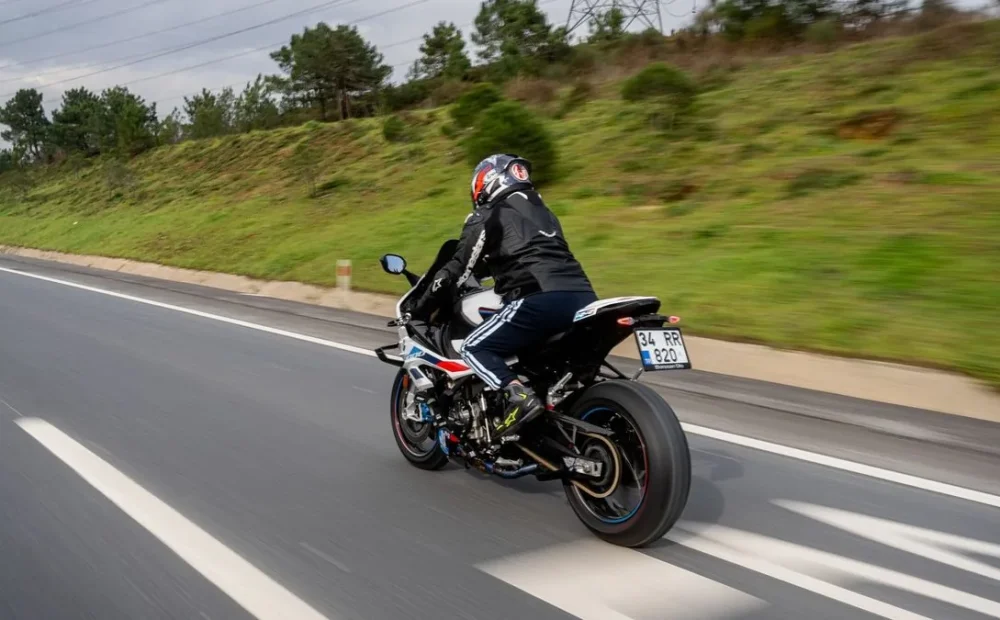
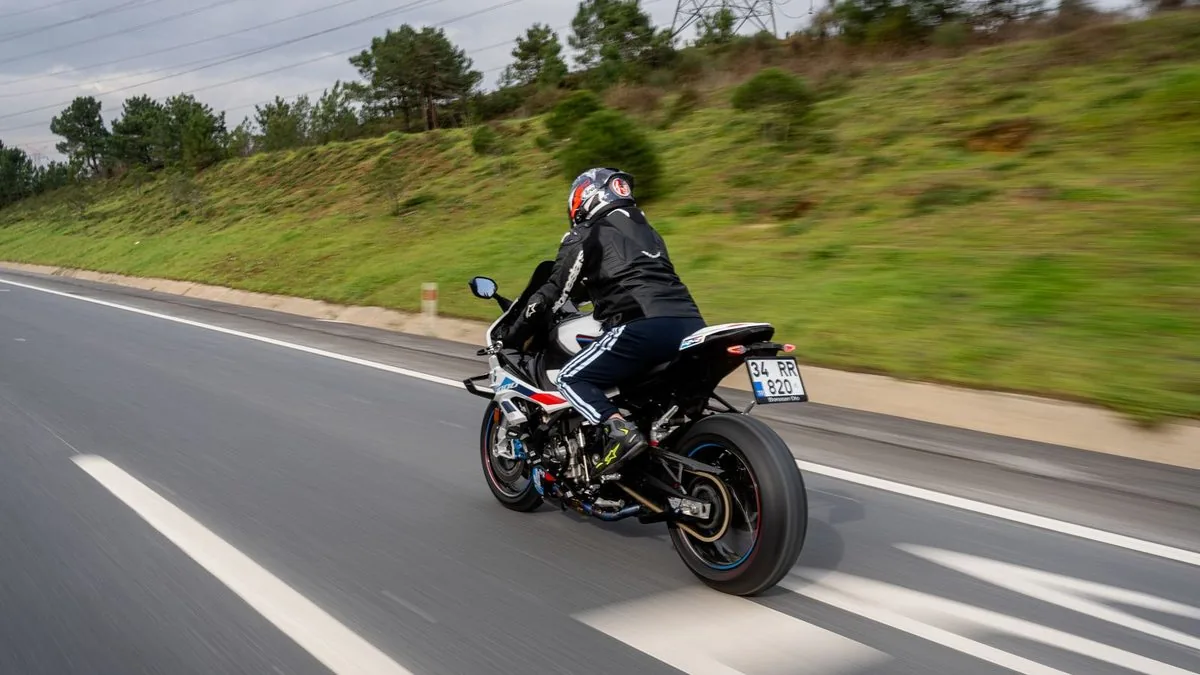
The Ninja 7 Hybrid started the category. Kawasaki calls it the world’s first strong hybrid motorcycle from a major manufacturer, and the claim holds up: unlike earlier mild hybrids, it can run on electric power alone, on petrol alone, or on both together. Its heart is a 451cc liquid-cooled parallel-twin paired with a compact traction motor behind the cylinder bank, fed by a 13 kg, 50.4-volt lithium-ion battery.
It makes 51.1 kW (69 PS) at 10,500 rpm and 60.4 Nm at just 2,800 rpm. Kawasaki claims standing-start acceleration to match a 1,000cc-class supersport with e-boost engaged, and 250cc-class fuel economy — 3.7 litres per 100 km in ECO-HYBRID mode, with 86 g/km of carbon dioxide. Both are manufacturer claims — but the direction is clear: big-bike punch, small-bike thirst.
Three drive modes give the bike three personalities: SPORT-HYBRID for full performance with button-shift control through a six-speed automated manual gearbox, ECO-HYBRID for the commute, and EV mode for silent, short, low-speed running — though Kawasaki warns speed and range are limited. A 4.3-inch TFT display, smartphone connectivity and a 795 mm seat complete a premium-feeling package. At about $9,800 in the United States, and from around £5,999 in the United Kingdom with current offers, it is the cheapest way into the hybrid class. Its 227 kg kerb weight and 14-litre tank make it a genuine all-rounder.
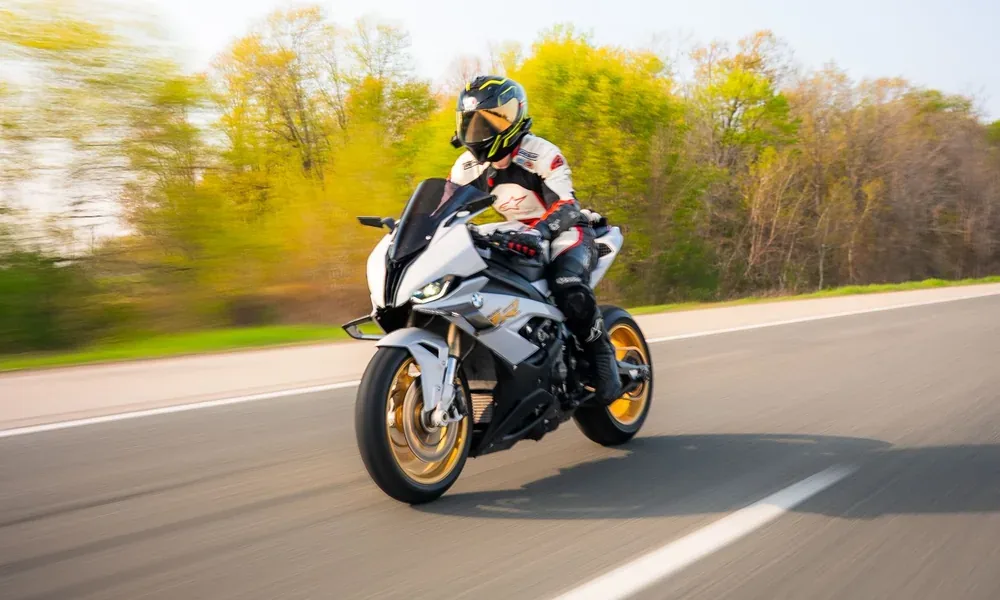
Kawasaki Z 7 Hybrid: the naked hybrid for everyday riding
If the Ninja 7 Hybrid is the sports bike of the pair, the Z 7 Hybrid is the daily rider. It shares the same 451cc parallel-twin hybrid powertrain in naked-bike bodywork, with a more upright position tuned for the commute — Kawasaki’s first production hybrid naked bike, and the more sensible of the two for many riders.
Its 451cc engine makes 58.3 horsepower alone; with the 9 kW motor and e-boost, combined output rises to 68.5 horsepower and 44.2 lb-ft of torque, with 60 mph claimed from rest in 4.3 seconds. Brisk rather than frightening: the motor fills the bottom of the power band, so the bike pulls cleanly away from traffic lights without being revved hard.
Economy is the Z 7’s strongest argument: Kawasaki claims up to 64 mpg in Eco-Hybrid and 58.8 in Sport-Hybrid, across four ride modes — Sport, Sport-Hybrid, Eco-Hybrid and EV. Its six-speed automated manual shifts by handlebar buttons, a walk mode helps with parking, and the 31.3-inch seat keeps the bike approachable. The sticking point is price: at $12,499 it costs significantly more than the faired Ninja 7 Hybrid and many conventional naked bikes. Be sure the silent town running and fuel savings are worth the first-generation premium before you commit.
Yamaha Proto HEV: the hybrid prototype that matters most
Yamaha’s answer is the Proto HEV, a hybrid maxi-scooter prototype first shown at the Japan Mobility Show in 2025 and again at the Indonesia Motorcycle Show in late 2026. You cannot buy it, and Yamaha has published no price or launch date, but it is the most credible sign yet that a second major manufacturer is serious about hybrids.
The Proto HEV aims for the performance and efficiency of a 250–300cc-class big scooter, pairing a combustion engine with an electric drive system in a tall, angular maxi-scooter body, as part of Yamaha’s multi-pathway strategy for carbon neutrality. It remains a development-stage prototype under active testing, so do not put down a deposit until Yamaha confirms production. If it reaches showrooms, expect premium finishes, a connected dashboard and silent city running.
How a hybrid motorcycle actually works
A strong hybrid carries two power sources and uses whichever suits the moment. At low speed the electric motor drives the bike alone, silently and with instant torque. At cruising speed the petrol engine takes over. Open the throttle hard and both work together, the motor filling the gap before the engine reaches its power band. Slow down and regenerative braking tops up the battery — the system recharges itself as you ride, with no cable, no charging point and no range anxiety.
That is the crucial difference from a purely electric bike: a hybrid never needs plugging in, and its range is limited only by its fuel tank — 14 litres on both Kawasakis, a claimed 378 km on the Z 7 Hybrid. The trade-off is complexity and weight: at 227 kg the Ninja 7 Hybrid is noticeably heavier than a comparable 450cc petrol bike. Servicing costs and long-term battery health are still open questions — no hybrid motorcycle has been on the road for a decade yet. Know the three types: a strong hybrid can run on electric power alone, a mild hybrid only assists the engine, and a series hybrid uses its petrol engine purely as a generator.
The early experiments: Honda PCX Hybrid and Piaggio MP3 Hybrid
Honda and Piaggio tested the hybrid idea on scooters long before Kawasaki. The Honda PCX Hybrid, sold in Asian markets, added an electric motor to the popular 125cc PCX for sharper acceleration and better fuel economy. A mild hybrid — its motor assisted the engine but could not power the scooter alone — it was discontinued, but it proved hybrid hardware could survive daily use in a small, affordable machine. Piaggio went further with the MP3 Hybrid, a three-wheeled scooter pairing a 125cc engine with an electric motor and a plug-in battery, able to run short distances on electric power alone — but it was expensive, heavy and short-lived. Neither machine is a luxury buy in 2027, and neither should be bought as a daily rider today without a specialist inspection. They are the category’s heritage — proof the idea is older than the hype.
Concepts and patents to watch in 2027
Beyond the production Kawasakis and the Yamaha prototype, the hybrid future lives in patents and concepts. Yamaha’s patents describe a series hybrid on a TMax-style frame, where a small single-cylinder engine drives a generator and never powers the rear wheel directly — an electric bike with a petrol range extender. China’s Benda has shown the P51, a boxer-engine hybrid concept — the idea is spreading beyond Japan. The top luxury hybrid SUVs of 2027 show how far the technology has come on four wheels; motorcycles follow a few years behind. Expect at least one more manufacturer to show a production-ready hybrid before the end of 2027, most likely a scooter or mid-size commuter.
How to choose a luxury hybrid motorcycle
- Decide what the hybrid is for: commuting favours EV mode and economy, weekends favour the Ninja’s sport modes.
- Test all three drive modes on one ride — the difference between EV, ECO-HYBRID and SPORT-HYBRID is the whole point.
- Ask who services the hybrid system, how long the battery warranty lasts, and what a replacement costs.
- Check the weight: at 227 kg the Ninja 7 Hybrid is heavier than a conventional 450, so try slow manoeuvres and parking before you buy.
- Compare running costs honestly — a hybrid saves fuel, but its higher price takes years to repay.
- Confirm parts and warranty support in your country, especially for future Yamaha models.
Frequently asked questions
What is the best luxury hybrid motorcycle of 2027?
The Kawasaki Ninja 7 Hybrid — the only true strong hybrid sports bike in production, with three drive modes, a claimed 69 PS and 250cc-class economy. The Z 7 Hybrid is the better everyday choice for naked-bike riders.
Do hybrid motorcycles need to be plugged in?
No. The Kawasaki hybrids recharge from the engine and regenerative braking while you ride — no cable, no charging stop. Only plug-in hybrids, like the old Piaggio MP3 Hybrid, needed mains charging.
How far can a hybrid motorcycle go on electric power alone?
Only a short distance at low speed. EV mode suits residential streets and car parks, and Kawasaki warns its speed and range are limited — the petrol engine does the long-distance work.
Are hybrid motorcycles more expensive than petrol bikes?
Yes, for now. The Z 7 Hybrid costs $12,499 and the Ninja 7 Hybrid starts at about $9,800 — clear premiums over conventional bikes. Fuel savings narrow the gap over time, but the premium buys technology and novelty as much as economy.
Will Yamaha or Honda sell a hybrid motorcycle in 2027?
Not yet confirmed. Yamaha’s Proto HEV remains a development prototype with no price or launch date, and Honda has no production hybrid on sale in 2027. Both are developing the technology, so an announcement is possible — but nothing is guaranteed.
Is a hybrid motorcycle better than an electric motorcycle?
It depends on your riding. A hybrid wins for long distances, no home charging, or silent town running without range anxiety. An electric bike wins for short rides, home charging, and the strongest acceleration at the lowest cost — the same trade-offs shaping the best luxury cars of 2027.
The bottom line
The luxury hybrid motorcycle of 2027 is a small class with one leader. The Ninja 7 Hybrid and Z 7 Hybrid are the only strong hybrids you can buy, and they are genuinely good motorcycles: fast enough to entertain, frugal enough to commute on, and clever enough to feel like the future. Yamaha’s Proto HEV shows competition is coming, and its patents suggest hybrid scooters will soon make it ordinary.
Want the hybrid experience today? Test ride the Ninja 7 Hybrid first and the Z 7 Hybrid second, and buy the one that fits your roads. If you can wait, watch Yamaha — the second manufacturer in may make hybrids mainstream.
Note: Prices, fuel economy and performance figures here are manufacturer claims or approximate market prices that vary by country and dealer — confirm the current specification, warranty and price with an authorised dealer before buying.