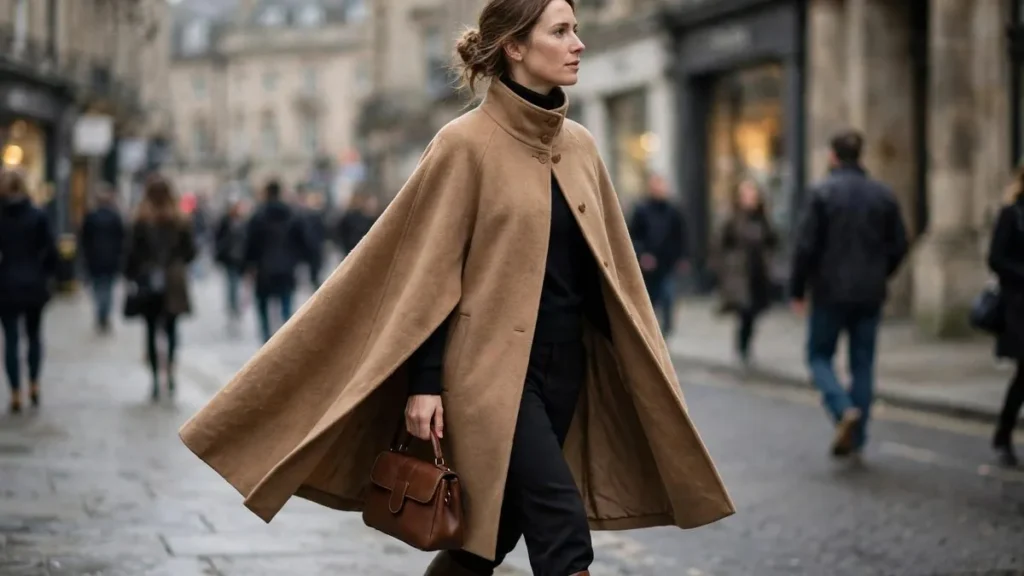
A cape coat is the one piece of outerwear that does the styling for you. It has no sleeves to set and no shoulders to fit precisely. It simply falls from the shoulders and turns an ordinary outfit into something deliberate. That is also why it is easy to get wrong: the same drape that makes it dramatic can make the whole outfit look shapeless if everything underneath is loose too.
The cape coat is back for winter 2027. Tagwalk recorded capes up 234% in the pre-fall collections compared with the previous winter, a figure cited by Vogue France in October 2026, and the shape appeared across the autumn and winter shows, from Balenciaga’s poppy-red cape coats to Chloé, Max Mara, Tod’s and Khaite.
Below are eight ways to wear a cape coat in 2027, from the everyday camel cape over jeans to the belted evening version over a dress.
Key takeaways
- A cape coat is cut like a coat but drapes like a cape: it opens at the front and buttons like a coat, with arm slits, not sleeves.
- Keep everything underneath slim and fitted, so the cape holds all the volume.
- Check the arm slits before you buy: they must be wide enough to reach a bag strap.
- A belt is the fastest fix for a shapeless cape: it defines the waist.
- A cape coat is a statement layer, not a heavy-duty winter coat: it suits mild to cold days.
What a cape coat actually is
A cape coat sits between three related garments. A cape opens at the front and fastens at the neck, with no sleeves. A poncho goes over the head, with no front opening. A capelet stops at the shoulders and is an accessory, not a coat. A cape coat is cut like a coat, with a front opening and buttons, often with real sleeves hidden under the cape layer or arm slits cut into the sides, falling to the knee or calf.
That construction is what makes it wearable. The arm slits matter most: your arms slip through them, so you can carry a bag or push a door without the garment sliding around. At Tod’s, the cape was shown as a second layer over a coat rather than a replacement for it. Wool capes drape cleanly and hold their shape, which is why camel, charcoal and navy wool are the easiest first buy; a flimsy fabric will flap instead of falling in a clean line.
Why the cape coat is back in 2027
The return is not one designer’s idea. The autumn and winter 2026/27 reports keep returning to the same names: Balenciaga, with black leather ponchos and poppy-red cape coats worn with leggings; Khaite and Chloé, with soft capes in warm neutrals; Max Mara and Tod’s, with long capes in camel and grey.
The mood is protection and cosiness: a cape wraps the body like a blanket, and after several seasons of sharp tailoring, that softness feels new. It goes over anything from jeans to a dress without the fitting problems of a tailored coat.
The 8 ways to wear a cape coat in 2027
Camel cape over a black turtleneck and straight jeans
What we like: A camel cape reads as classic first and fashionable second. A fitted black turtleneck and straight jeans keep the shape grounded, with knee-high brown boots to finish. What to consider: The cape must be wool or a wool blend with real weight, or it will flap instead of draping. Best for: Everyday winter days, lunch and shopping.
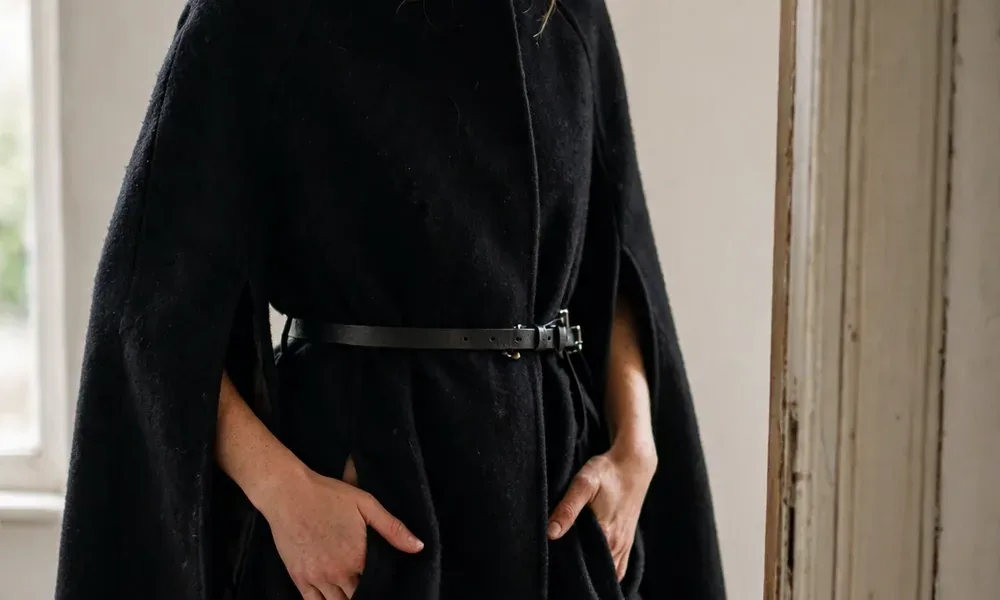
Belted black cape over a sheath dress
What we like: A thin belt turns a shapeless cape into a defined silhouette in seconds, and a black sheath dress keeps the line clean, with sheer tights and low pumps. What to consider: The belt must sit at your natural waist, not the hips, or the cape bunches above it. Best for: The office and daytime events.
Cropped cape jacket with a mini skirt and over-the-knee boots
What we like: A cropped cape jacket ending above the waist leaves the legs to do the work on proportion, and over-the-knee boots stretch the leg line. What to consider: This is a mild-weather look: a cropped cape will not keep you warm on a cold day. Best for: Daytime events and parties.
Plaid cape poncho over a knit mini dress
What we like: A plaid cape in green, blue and red does the styling by itself, so the dress underneath can be the simplest black knit you own. What to consider: One pattern is enough: keep the dress, boots and bag plain, or the outfit turns busy. Best for: Autumn weekends.
Leather cape jacket with cargo trousers
What we like: A black leather cape jacket cut to the hip sits cleanly over a fitted black top, and wide-leg cargo trousers bring the volume below instead of above. What to consider: Leather capes are not warm, so this is a mild-day or indoor-evening look, not a winter coat. Best for: Evenings and concerts.
Oversized khaki cape coat for easy casual days
What we like: An oversized khaki cape coat layers over a black top and trousers without adding bulk, and loafers keep it comfortable. What to consider: The more volume the coat has, the simpler everything else should be, or the outfit looks unfinished. Best for: Errands and weekends.
Houndstooth cape for the office
What we like: A houndstooth cape turns a sensible work outfit into something worth noticing, because the pattern does the styling, over a black sheath dress and sheer tights. What to consider: The cape should end at mid-calf or above the knee, not the ankle, or it reads as evening wear at a desk. Best for: Work and meetings.
Evening cape over a jumpsuit
What we like: A textured black cape over a fitted jumpsuit is evening dressing with very little effort: the cape brings the drama, the jumpsuit keeps the line clean. What to consider: Keep jewellery minimal and let the cape be the only statement. Best for: Dinners, parties and wedding guests.
Which cape coat is right for you
Start with length. A knee-length cape suits most heights and most days, while a mid-calf cape is warmer and dressier but harder to walk in. A cropped cape jacket is a styling piece, not a coat, and only works when the weather is mild. If you are choosing between two lengths, knee-length is the safest first cape, and our guide to the best winter coats for women shows the same length rules across different coat styles.
Next, think about your frame. A belted cape flatters almost everyone, because the belt creates a waist where the drape would hide one. A very long, unbelted cape can overwhelm a shorter frame, so if you are petite, choose a knee-length cape with a belt, or a cropped jacket. Finally, think about your winter: a cape is open at the sides, so on the coldest days it needs a fine, warm layer underneath. A guide to layering in winter is useful here, because layers under a cape must be fine and warm, never bulky.
The caveats that matter
A cape coat is warm, but it is not waterproof, and it is not windproof the way a buttoned coat is. The open sides let wind in, and in heavy rain a wool cape will soak through and lose its shape. A shower is fine; a downpour is not. If you are caught in one, let the cape dry slowly at room temperature on a wide hanger, never on a radiator.
The arms are the other practical problem. Narrow arm slits will pull the cape off your shoulders every time you reach for something, and a cape with no slits leaves your arms trapped underneath. Try the slits before you buy: reach for a bag strap, open a door and put your hands in your pockets. A trench coat solves the same problem differently, with real sleeves, and our roundup of the best trench coats is worth a look if you love the cape shape but need sleeves. Care is the same as for any wool coat: brush it after wear, hang it on a wide hanger, and dry-clean it once or twice a season.
| Detail | What is known |
|---|---|
| What it is | Opens at the front and buttons like a coat, with arm slits, not set-in sleeves |
| Not the same as | A poncho, which goes over the head, or a capelet, which stops at the shoulders |
| Key rule | Let the cape hold the volume and keep everything underneath slim and fitted |
| Best first buy | A knee-length camel or black wool cape with a belt |
| Best layer underneath | A fine turtleneck or thermal layer, never a bulky jumper |
| Check before buying | Arm slits wide enough to reach a bag strap without pulling the cape off |
| Warmth limit | Mild to cold days; open at the sides, not windproof or waterproof |
| After wear | Brush down, hang on a wide hanger, dry-clean once or twice a season |
Checklist: wearing a cape coat honestly
Use these checks before you leave the house in a cape coat.
- Check the base: a fine turtleneck and slim trousers or a sheath dress, nothing bulky.
- Check the arm slits: reach for your bag and open a door, and make sure the cape stays put.
- Check the waist: add a belt if the cape looks shapeless, at your natural waist.
- Check the length: knee-length for most days, mid-calf for dressier occasions, cropped only in mild weather.
- Check the weather: a cape is not windproof or waterproof, so add a scarf and carry an umbrella in rain.
- Check the accessories: one statement only, the cape itself, with minimal jewellery and a structured bag.
Frequently asked questions
What is the difference between a cape coat and a poncho?
A cape coat opens at the front and buttons like a coat, while a poncho goes over the head with no front opening. A cape coat is cut like a coat, with a defined shoulder and often arm slits, whereas a poncho is a single piece of fabric with a hole for the head.
Are cape coats in style in 2027?
Yes. Capes were up 234% in the pre-fall collections compared with the previous winter, according to Tagwalk figures cited by Vogue France, and the shape appeared across the autumn and winter 2026/27 shows at Balenciaga, Chloé, Max Mara, Tod’s and Khaite.
What should I wear under a cape coat?
Something slim and fitted: a fine turtleneck, a thin knit or a thermal layer, with straight trousers, slim jeans or a sheath dress. The cape holds all the volume, so anything bulky underneath will bunch at the shoulders.
Can a petite person wear a cape coat?
Yes, with the right length. Choose a knee-length cape with a belt, or a cropped cape jacket, rather than a long unbelted cape. A belt defines the waist, and over-the-knee boots stretch the leg line.
Is a cape coat warm enough for winter?
For mild to cold days, yes, especially in wool with a fine warm layer underneath and a scarf at the neck. For the coldest days, no: a cape is open at the sides, so it cannot match a buttoned tailored coat.
How do I keep a cape coat from slipping off my shoulders?
Check the arm slits first: they must be wide enough that reaching for a bag does not drag the cape sideways. A belt helps, because it anchors the cape at the waist.
The bottom line
A cape coat works when you respect what it is: a coat that drapes instead of fitting, with arm slits instead of sleeves. Keep everything underneath slim, check the slits before you buy, and add a belt when the shape needs defining. One good cape coat in camel or black is the most versatile dramatic piece in a winter wardrobe.
Start with the camel cape over a black turtleneck and jeans, try the belted version over a dress for smarter days, and keep the cropped and leather versions for mild weather and evenings.
Note: Trend figures and runway names here reflect autumn and winter 2026/27 coverage, including Tagwalk data cited by Vogue France; styles and prices change with the season, so treat the runway references as a guide, and try any cape on with your usual layers before buying.