A satin blouse looks effortless when it is worn, but it is not effortless to keep looking that way. Satin is a smooth, tightly woven fabric with a sheen on one side, and that smooth surface is exactly what makes it vulnerable. It marks easily, it creases, it snags, and the wrong wash can dull the shine or pucker the seams. The good news is that most satin blouses are easier to care for than their reputation suggests, as long as you know what the fabric is and what it can handle.
The first thing to check is the fibre. Most satin blouses sold today are made from polyester satin, which is washable at home and far more forgiving than silk satin. Silk satin is softer and has a more natural drape, but it is also more delicate and usually needs dry cleaning. The care label tells you which one you have, and it is the single most useful piece of information on the whole garment.
This guide covers how to care for a satin blouse step by step, from reading the label to washing, drying, ironing, stain treatment, and storage. The steps work for polyester satin and, with the adjustments noted, for silk satin too. Follow them in order the first time you wash a new blouse, and after that the routine becomes quick and automatic.
Key takeaways
- Always read the care label first: polyester satin is usually hand-washable, silk satin usually needs dry cleaning.
- Hand-wash satin in cool water with a small amount of gentle detergent.
- Never wring or twist satin, and never put it in a tumble dryer.
- Dry satin flat or on a padded hanger, away from direct sun and heat.
- Steam creases out rather than ironing directly, and treat stains quickly before they set.
Why satin needs different care
Satin is not a fibre, it is a weave. The word describes a way of weaving threads so that most of them sit on the surface, which is what creates the smooth, light-catching face of the fabric. That smooth surface is also why satin shows water marks so clearly: a single drop of water can disturb the way the threads lie and leave a visible ring.
The weave also explains why satin creases the way it does. The threads are packed tightly and lie flat, so a fold presses a sharp line into the fabric that does not fall out on its own. Heat can set those lines permanently, which is why ironing satin directly is risky. Steam is safer because it relaxes the fibres without pressing them flat, and that is the principle behind most of the advice in this guide.
Polyester satin is a synthetic fabric, so it holds its shape well, dries quickly, and tolerates cool water and gentle detergent. Silk satin is a natural protein fibre, so it is more sensitive to heat, alkalis, and rough handling, and it can lose its sheen if it is washed too hot or too often. If you are unsure which fibre your blouse is, the care label will say so, and the silk versus satin comparison explains the differences in more detail.
How to wash and care for satin, step by step
The nine steps below take a satin blouse from the wardrobe through washing, drying, and back into storage. Read the whole sequence once before you start, because the order matters: the way you wash a blouse decides how it dries, and the way it dries decides whether you need to steam it at all.
Before you begin, gather what you need: a clean basin or sink, cool water, a gentle liquid detergent, a clean white towel, and a padded hanger or a flat drying surface. Do not use a coloured towel, because the dye can transfer to wet satin. And do not use bleach, fabric softener, or a harsh stain remover on satin, because all three can damage the surface of the fabric.
The 9 steps to caring for a satin blouse 2027
Read the care label
The care label is the starting point for everything else in this guide. It tells you the fibre content, whether the blouse can be washed at home, the maximum water temperature, and whether it can be ironed.
What to Do: Read the whole label, including the fibre content and the washing symbols, before you do anything else. What to Avoid: Do not assume a blouse is washable just because it looks like polyester; some satin blends are dry clean only.
Best For: Every satin blouse, before its first wash. Time Needed: 2 minutes. Standout Tip: Photograph the label so you have the instructions even if the label fades.
Hand-wash in cool water
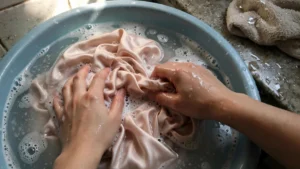
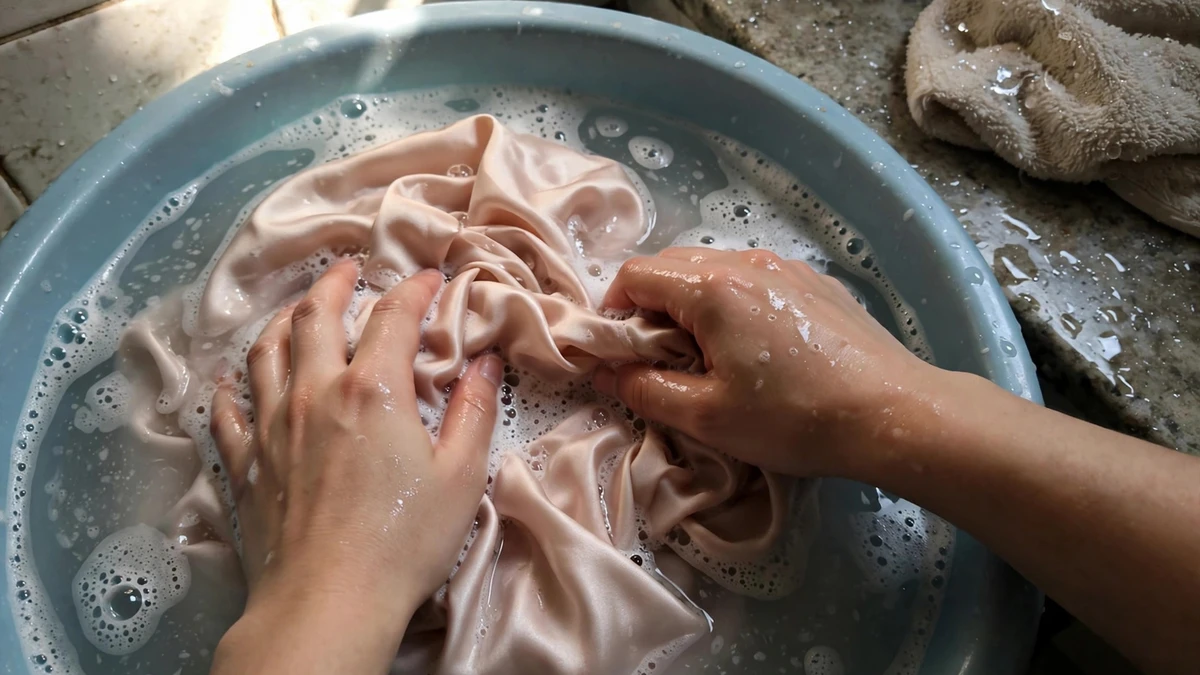
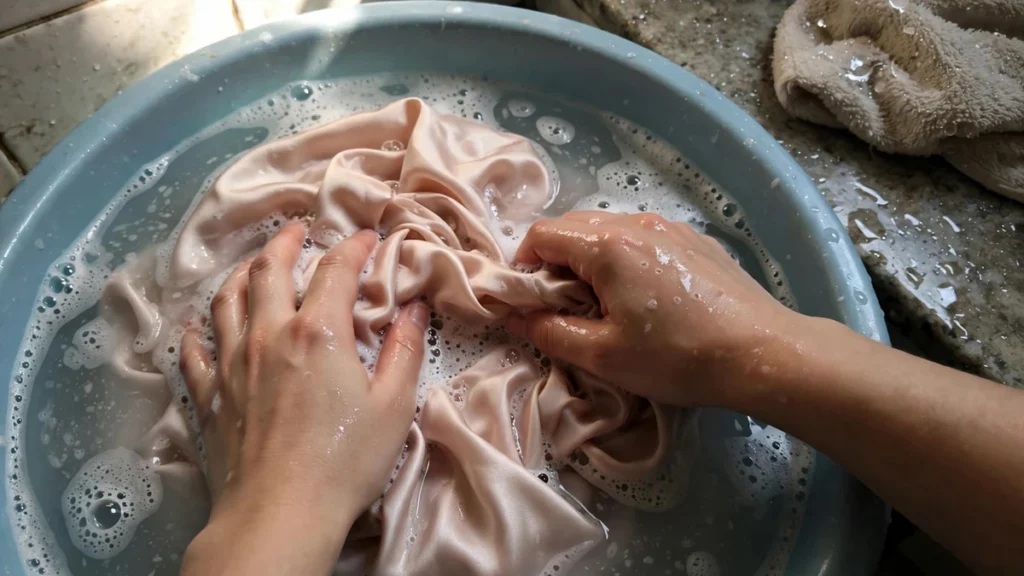
Hand-washing is the safest way to clean a satin blouse at home. Fill a clean basin with cool water, add a small amount of gentle liquid detergent, and swirl it to mix. Turn the blouse inside out, submerge it, and let it soak for five to ten minutes.
What to Do: Use cool water and a gentle detergent, and handle the blouse softly throughout. What to Avoid: Do not use hot water, which can set creases and dull the sheen, and do not scrub the fabric against itself.
Best For: Polyester satin blouses that are labelled hand-washable. Time Needed: 10–15 minutes. Standout Tip: Turn the blouse inside out to protect the shiny face of the fabric.
Use a gentle detergent, sparingly
Satin needs very little detergent, and too much is worse than too little. Excess detergent leaves a residue on the smooth surface of the fabric, which dulls the sheen and can attract dirt.
What to Do: Use a small amount of gentle liquid detergent and dissolve it fully before adding the blouse. What to Avoid: Do not use bleach, fabric softener, or detergent with added whiteners on satin.
Best For: All washable satin, especially pale colours. Time Needed: 1 minute. Standout Tip: If the water feels slippery, you have used too much detergent; rinse and start again with less.
Never wring or twist
Wringing is the single most damaging thing you can do to a satin blouse. Twisting the fabric stretches the threads, breaks the smooth surface, and presses deep creases into the weave that are very hard to remove.
What to Do: Lift the blouse out of the water and let it drip, then press it gently between clean towels to remove water. What to Avoid: Do not twist, wring, or squeeze the blouse, and do not hang it up dripping wet.
Best For: Every satin blouse, every time. Time Needed: 2 minutes. Standout Tip: Roll the blouse in a clean white towel and press down to absorb water without twisting.
Rinse and press out water gently
Rinse the blouse in clean, cool water until the water runs clear and there is no slippery feeling left on the fabric. Then lay the blouse flat on a clean white towel, roll the towel up with the blouse inside, and press down firmly to draw the water out. Unroll it and repeat with a dry towel if the blouse is still very wet.
What to Do: Rinse twice in cool water and press the water out with towels. What to Avoid: Do not leave the blouse soaking in rinse water, and do not use a spin cycle in a washing machine.
Best For: Polyester satin after hand-washing. Time Needed: 5 minutes. Standout Tip: A second dry towel makes a real difference to drying time.
Dry flat, away from sun and heat
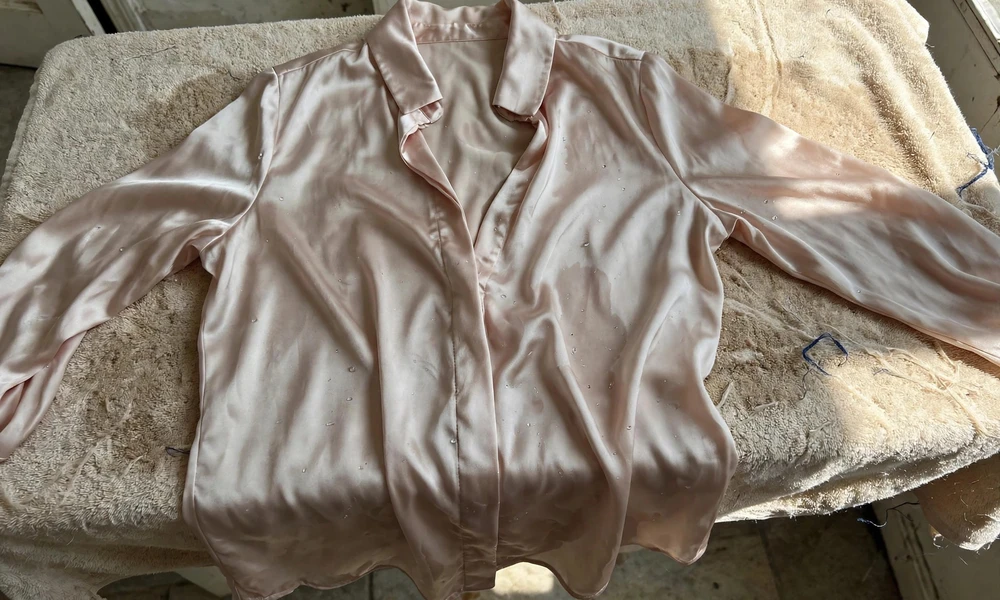
Satin should be dried flat or on a padded hanger, in a shaded place with good air flow. Direct sunlight fades satin and can make the fabric brittle over time, and heat from a radiator or a tumble dryer can set creases permanently.
What to Do: Lay the blouse flat on a clean towel or hang it on a padded hanger in the shade. What to Avoid: Do not use a tumble dryer, a radiator, or direct sunlight, and do not hang wet satin on a thin wire hanger.
Best For: All satin blouses after washing. Time Needed: 2–4 hours to dry. Standout Tip: Smooth the blouse into shape with your hands while it is still damp.
Steam out creases, do not iron directly
Steam is the safest way to remove creases from satin. Hold a steamer a few centimetres from the fabric and let the steam relax the fibres, then smooth the area gently with your hand. Ironing directly is risky because the heat and pressure can leave a shiny mark or set a crease permanently.
What to Do: Use a steamer on a low setting, held away from the fabric, and work from the top down. What to Avoid: Do not press a hot iron directly onto satin, and do not use the highest steam setting on silk satin.
Best For: Removing creases after washing or storage. Time Needed: 5–10 minutes. Standout Tip: If you must iron, use the lowest heat, iron on the reverse side, and place a cotton cloth between the iron and the satin.
Treat stains quickly and gently
Stains on satin need to be dealt with quickly, because the smooth surface lets liquids spread and set fast. Blot the stain immediately with a clean white cloth, working from the outside in so the stain does not spread. Do not rub, because rubbing pushes the stain deeper into the weave and can damage the surface.
What to Do: Blot immediately, then dab with cool water and a little gentle detergent. What to Avoid: Do not rub the stain, do not use bleach or harsh stain removers, and do not apply heat to a stain before it is removed.
Best For: Food, drink, and make-up marks on washable satin. Time Needed: 5 minutes, plus washing. Standout Tip: For oil-based marks, sprinkle a little cornflour on the stain first to absorb the oil before washing.
Store it properly between wears
How you store a satin blouse decides how it looks the next time you wear it. Hang it on a padded hanger in a wardrobe with enough space around it, because satin creases when it is squeezed between other garments. If you fold the blouse instead, place tissue paper between the folds to prevent sharp creases.
What to Do: Hang on a padded hanger with space around it, or fold with tissue paper between the layers. What to Avoid: Do not use wire hangers, do not cram the blouse into a crowded wardrobe, and do not store it in a plastic bag, which traps moisture.
Best For: Every satin blouse, between wears and between seasons. Time Needed: 2 minutes. Standout Tip: Keep the blouse away from rough jewellery and bag straps in the wardrobe, because they snag satin.
Common satin care mistakes
The most common mistake with satin is treating it like cotton. People wash it in hot water, wring it out, throw it in the dryer, and then wonder why the sheen has gone and the seams have puckered. Satin is not fragile, but it is particular, and it rewards gentle handling.
Another mistake is storing satin badly. A satin blouse crammed into a crowded wardrobe will come out creased, and a satin blouse hung on a wire hanger will develop pointed shoulders. Both problems are easy to avoid with a padded hanger and a little space. The same care that applies to silk also helps with satin, and the guide to caring for silk scarves covers the same principles for another delicate fabric. If you are buying your first satin blouse, the guide to buying a first silk blouse explains what to look for in fabric and fit before you spend anything.
The caveats that matter
Satin care is straightforward once you know the rules, but there are a few things that are worth knowing before you start. The table below sets out the main points, including what to do when something goes wrong and when it is time to stop trying at home and take the blouse to a professional.
| Detail | What is known |
|---|---|
| Fibre type | Polyester satin is usually hand-washable; silk satin usually needs dry cleaning. The care label decides. |
| Water temperature | Cool water is safest for all satin; hot water can set creases and dull the sheen. |
| Detergent | Use a small amount of gentle liquid detergent; never use bleach or fabric softener on satin. |
| Wringing | Never wring or twist satin; press water out gently between clean towels. |
| Drying | Dry flat or on a padded hanger, away from sun and heat; never use a tumble dryer. |
| Creases | Steam creases out; do not iron directly onto satin, and use a cloth barrier if you must iron. |
| Stains | Blot immediately and treat gently; do not rub, and do not apply heat to a stain before it is removed. |
| Storage | Hang on a padded hanger with space around it, or fold with tissue paper between the layers. |
None of these rules is difficult on its own, and together they add up to a routine that takes about fifteen minutes of active work.
Checklist: caring for a satin blouse
- Read the care label and check the fibre content before the first wash.
- Hand-wash in cool water with a small amount of gentle liquid detergent.
- Never wring, twist, or tumble-dry satin.
- Dry flat or on a padded hanger, away from direct sun and heat.
- Steam out creases instead of ironing directly onto the fabric.
- Treat stains quickly by blotting, and take stubborn stains to a professional cleaner.
Frequently asked questions
Can I machine-wash a satin blouse?
Some polyester satin blouses can be machine-washed on a gentle, cold cycle inside a mesh laundry bag, but hand-washing is safer and gives you more control. Never use a spin cycle on satin, because the force can crease and distort the fabric.
How do I remove wrinkles from satin without a steamer?
Hang the blouse in a steamy bathroom for ten minutes, which relaxes most light creases. If you must iron, use the lowest heat setting, iron on the reverse side, and place a cotton cloth between the iron and the satin.
Why does my satin blouse have water marks?
Water marks appear when a drop of water dries on satin and disturbs the way the threads lie. They are most visible on pale colours and on high-shine satin. The best fix is to wash the whole blouse, because spot-cleaning often leaves a ring.
Can I use fabric softener on satin?
No. Fabric softener coats the fibres and dulls the sheen that makes satin attractive. It can also leave a residue that attracts dirt. A small amount of gentle detergent is all satin needs,
How should I store a satin blouse long-term?
Clean the blouse first, then hang it on a padded hanger in a breathable garment bag, or fold it with acid-free tissue paper between the layers and store it in a clean drawer. Keep it away from direct light and moisture, and check it every few months for damp or mustiness. Never store satin in a sealed plastic bag.
What do I do if my satin blouse snags?
Do not pull the snagged thread, because that will make the pull worse. Use a needle to gently push the loop to the reverse side of the fabric, or take the blouse to a tailor if the snag is large. To prevent snags, keep satin away from rough jewellery, velcro, and coarse bag straps.
The bottom line
Caring for a satin blouse is mostly a matter of being gentle: cool water, a little detergent, no wringing, no tumble dryer, and steam instead of a hot iron. Polyester satin is forgiving enough to wash at home, while silk satin is worth taking to a professional. Either way, the routine is short, and the payoff is a blouse that keeps its sheen and its shape for years.
The single most useful habit is reading the care label before the first wash and then following it every time. A satin blouse that is cared for properly is a blouse you will reach for again and again, and that is the best return on the effort.