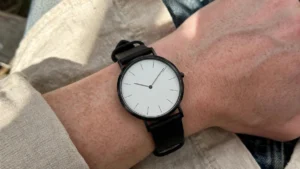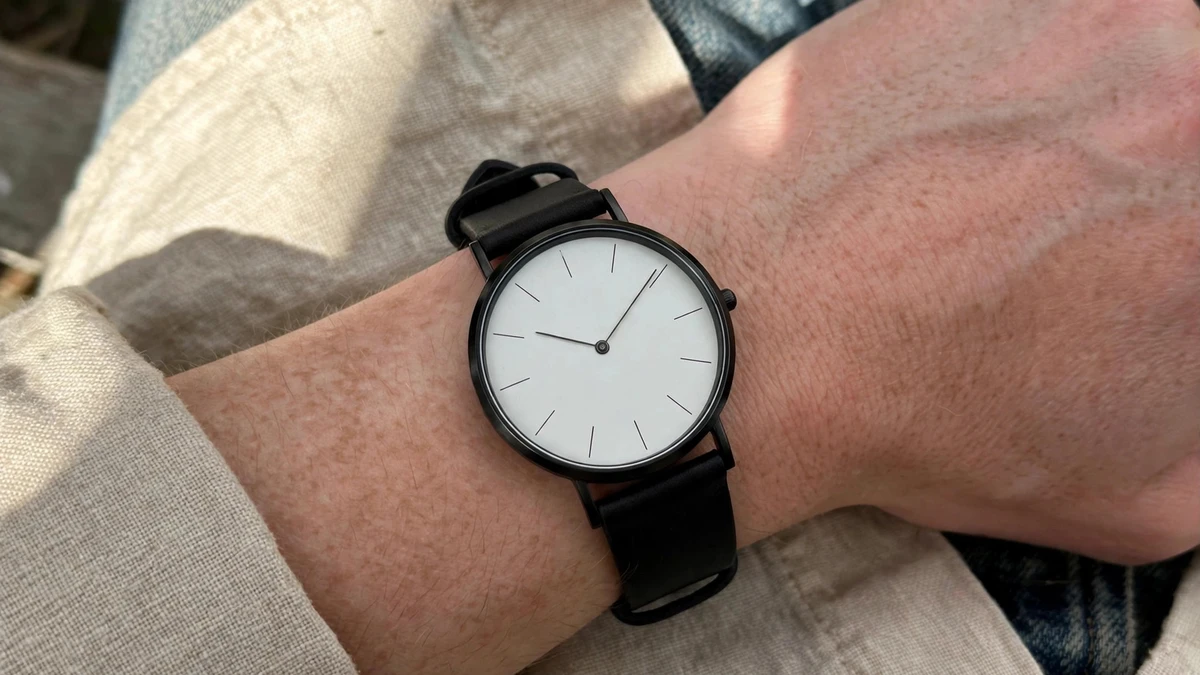

Minimalist watches are the quietest watches you can buy, and that is exactly the point. No busy subdials, no date window fighting for space, no logo shouting from the dial. Just a clean face, two or three hands, and a case that sits flat on the wrist. In a market full of watches trying to be noticed, a minimalist watch is the one that does not need to try.
The appeal is practical as well as visual. A clean dial is easier to read at a glance, a thin case slides under a cuff without catching, and a simple design goes with almost everything you own. That is why minimalist watches work as a first good watch, as a daily watch for someone who already owns louder pieces, and as a gift for someone whose taste you are not sure about.
Below are nine minimalist watches worth considering in 2027, from affordable quartz pieces to a hand-wound German classic. Each one is described by what it does well, what to watch for, and who it suits best.
Key takeaways
- A minimalist watch is defined by what it leaves out: a clean dial, few or no complications, and a slim case that sits flat on the wrist.
- Quartz minimalist watches are the most affordable and the most accurate, while mechanical ones offer craft and character at a higher price.
- Case size matters more than brand: 36 to 40 millimetres suits most wrists, and a thin case wears smaller than its diameter suggests.
- A simple dial is easy to read and easy to wear, but it shows every scratch and fingerprint, so the finish matters.
- No minimalist watch does everything, and the best one is the one you will actually wear every day, not the one with the longest specification list.
What makes a watch minimalist
Minimalism in watches is not a single style. It is a set of choices: a dial with as little on it as possible, markers instead of numerals or no markers at all, a case with clean lines and no crown guards, and a strap that does not compete with the watch. The best minimalist watches feel calm on the wrist, and they stay calm after a year of daily wear.
The movement matters less than the design, but it still shapes the watch. Quartz movements are thin, accurate and cheap to run, which is why most affordable minimalist watches use them. Mechanical movements are thicker and need servicing, but they give the watch a second hand that sweeps rather than ticks, and a connection to watchmaking that quartz cannot offer. Neither is better in absolute terms. The right choice depends on whether you want a watch you never think about, or a watch you enjoy thinking about.
Price is a poor guide on its own. Some of the cleanest minimalist designs cost under two hundred, and some of the most expensive are the simplest of all. What you are paying for, as you move up in price, is better finishing, a better movement, a sapphire crystal instead of mineral glass, and a case that feels solid rather than light. Those differences are real, but they are quiet ones, which is fitting for this kind of watch.
How we chose these watches and what to look for
Look first at the dial. A good minimalist dial is legible in bad light, with hands and markers that stand out from the background without shouting. A white dial with thin black hands looks clean in a photograph and can be hard to read in a dim room, so check the contrast in person if you can. A black or blue dial with pale hands is often easier to read, and it hides dust and fingerprints better.
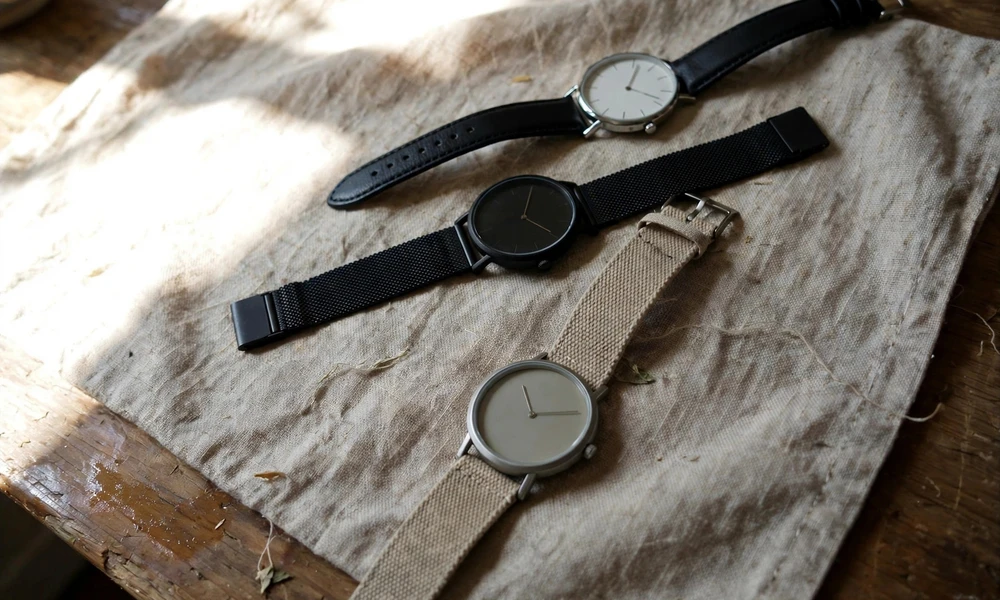
Look next at the case and the crystal. A sapphire crystal resists scratches far better than mineral glass, and it is worth paying for in a watch you will wear every day. A case between 36 and 40 millimetres suits most wrists, and a thin case, under 8 millimetres if possible, is what makes a minimalist watch slide under a cuff. Our guide to the best watches for teens covers the same sizing logic, because a watch that is too big for the wrist looks wrong no matter how clean the dial is.
Finally, look at the strap. A minimalist watch lives or dies by its strap, because there is nothing else to look at. A good leather strap should be supple and well stitched, a mesh bracelet should feel smooth rather than sharp, and a quick-release spring bar is a small detail that makes changing straps easy. A cheap strap can make a good watch feel cheap, and a good strap can make an affordable watch feel far more expensive than it is.
The 9 best minimalist watches of 2027
Daniel Wellington Classic Petite 28mm
What we like: A very clean white dial, thin hands, and a slim 28-millimetre case that wears beautifully on smaller wrists, with a wide choice of leather and mesh straps. What to consider: Quartz movement, mineral glass rather than sapphire, and no water resistance beyond a splash. Best for: Smaller wrists and first-time buyers. Material: Stainless steel case, leather or mesh strap. Price range: Around $199. Standout feature: The thinnest, cleanest dial in the affordable range.
This is the watch that made minimalist design mainstream. It is not the best-made watch on this list, but it is the easiest to understand, and for many people it is the right place to start.
MVMT Classic 40mm
What we like: A 40-millimetre case with a plain dial, thin baton markers and a choice of leather straps, at a price that makes it an easy first good watch. What to consider: Quartz movement, mineral glass, and a case that wears large on wrists under 6.5 inches. Best for: Larger wrists and casual daily wear. Material: Stainless steel case, leather strap. Price range: Around $150. Standout feature: Clean design at the lowest price on this list.
MVMT built its name on this formula: a simple watch, a fair price, and nothing you do not need. It is a good choice if you want the look without spending much to try it.
Skagen Signatur 40mm
What we like: Danish design with a very thin case, a mesh bracelet option, and a dial that uses a single dot at twelve o’clock instead of a numeral. What to consider: Quartz movement, mineral glass, and a mesh bracelet that can pull arm hair. Best for: Fans of Scandinavian design and thin watches. Material: Stainless steel case, mesh or leather strap. Price range: Around $195. Standout feature: The thinnest case in the affordable range.
Braun BN0021
What we like: A design by Dieter Rams, with a black dial, white hands, and a case that is a study in restraint. It is the most design-led watch on this list. What to consider: Quartz movement, a 38-millimetre case that wears small, and a price that is higher than the look suggests. Best for: Design lovers and collectors of Rams objects. Material: Stainless steel case, leather strap. Price range: Around $280. Standout feature: A Dieter Rams design, worn on the wrist.
This is the watch to buy if you care about who designed it. The Braun is not trying to be a watch first and a design object second. It is both, and it is honest about it.
Junghans Max Bill 38mm
What we like: A hand-wound mechanical movement, a domed acrylic crystal, and a dial designed by Max Bill at the Bauhaus in 1957. It is the classic minimalist watch. What to consider: Hand-wound, so it needs winding every day, and the acrylic crystal scratches more easily than sapphire. Best for: Collectors and anyone who wants a mechanical minimalist watch. Material: Stainless steel case, leather strap. Price range: Around $1,495. Standout feature: A Bauhaus design with a hand-wound movement.
The Max Bill is the watch other minimalist watches are measured against. Winding it every morning is a small ritual, and for many owners that ritual is the point.
Nomos Tangente 38
What we like: An in-house hand-wound movement, a superbly finished case, and a dial that is the cleanest in this price range, with a small seconds subdial at six. What to consider: Hand-wound, premium-priced, and the 38-millimetre case wears larger than its size suggests. Best for: Serious collectors and anyone buying one watch to keep. Material: Stainless steel case, leather or shell cordovan strap. Price range: Around $2,000. Standout feature: An in-house movement in a beautifully simple case.
Nomos is the brand that proves minimalist does not mean cheap. The Tangente is a watch you buy once and wear for decades, and it is the most expensive watch on this list for a reason.
Tissot Everytime Swissmatic
What we like: A Swiss automatic movement, a clean dial with a date window that does not disturb the design, and a price that is remarkable for an automatic watch. What to consider: The automatic movement is thicker than a quartz one, and the case is 40 millimetres, so it wears larger than it looks. Best for: Anyone who wants a Swiss automatic at an affordable price. Material: Stainless steel case, leather strap. Price range: Around $375. Standout feature: Swiss automatic movement at an affordable price.
The Everytime is the best value automatic on this list. It is not the thinnest or the most refined, but it is a real Swiss automatic for the price of a good quartz watch.
Citizen Stiletto Eco-Drive
What we like: A solar-powered Eco-Drive movement that never needs a battery, a very thin case, and a clean dial with thin markers. What to consider: The case is 37 millimetres and very thin, so it can feel light on larger wrists, and the mineral glass scratches more easily than sapphire. Best for: Anyone who wants a watch they never have to think about. Material: Stainless steel case, leather strap. Price range: Around $250. Standout feature: Solar power, so no battery changes ever.
The Stiletto is the watch for people who want to forget they own a watch. It charges from light, it keeps time well, and it is thin enough to disappear under a cuff.
Larsson & Jennings Norse 38mm
What we like: A 38-millimetre case, a clean white dial with a single red accent on the second hand, and a well-made leather strap. What to consider: Quartz movement, mineral glass, and a brand that is less well known than the others on this list. Best for: Anyone who wants a minimalist watch with a small, thoughtful detail. Material: Stainless steel case, leather strap. Price range: Around $250. Standout feature: The single red accent on the second hand.
The Norse is a reminder that minimalism does not have to mean monochrome. One small red detail is enough to give the watch character, and it is the kind of detail you notice more the longer you wear it.
Which minimalist watch suits your wrist
Wrist size is the first thing to get right. A 36-millimetre case suits wrists under 6.5 inches, a 38-millimetre case suits most wrists, and a 40-millimetre case suits wrists over 7 inches. A thin case wears smaller than its diameter suggests, so a 40-millimetre watch that is 7 millimetres thick can look right on a wrist where a thick 38-millimetre watch would look wrong.
Dial colour is the second choice. A white dial is the classic minimalist look, and it goes with everything, but it shows dust and fingerprints, and it can be hard to read in dim light. A black dial is easier to read, hides wear better, and looks slightly more formal. A blue or grey dial sits between the two, and it is a good choice if you already own a white and a black watch.
Strap choice is the third decision, and it changes the watch more than anything else. A black leather strap makes a minimalist watch formal, a brown leather strap makes it casual, and a mesh bracelet makes it feel modern. Our guide to entry-level Rado watches covers the same strap logic, because the strap is what you feel all day, and a strap you do not like is a watch you will not wear. Our roundup of luxury watches for women under $5,000 is also useful here, because it shows how the same minimalist principles work at a higher price.
The caveats that matter
Minimalist watches are simple, but they are not without trade-offs. A clean dial shows every scratch, a thin case is more vulnerable to knocks, and a simple watch cannot do what a smartwatch does. The table below is the honest summary, and it is worth reading before you choose.
| Detail | What is known |
|---|---|
| Best case size for most wrists | 38 millimetres, thin, under 8 millimetres if possible |
| Best movement for daily wear | Quartz or solar, for accuracy and no maintenance |
| Best movement for collectors | Hand-wound mechanical, for craft and character |
| Best crystal | Sapphire, for scratch resistance on a daily watch |
| Best strap to start with | Leather, black for formal, brown for casual |
| What to avoid | A case over 42 millimetres, or a dial with too many details |
| When to service it | Mechanical watches every 4 to 5 years; quartz needs a battery |
| What it does not do | It does not track fitness, show notifications, or replace a smartwatch |
If you are buying your first good watch, a minimalist watch is a sensible place to start. It is easy to wear, easy to read, and easy to live with, and it will still look right in ten years, when busier designs have dated.
Checklist: choosing a minimalist watch honestly
Use these checks before you buy, and again after a week of wearing it.
- Check the case size against your wrist: 36 to 38 millimetres for smaller wrists, 40 for larger ones.
- Check the crystal: sapphire is worth paying for in a watch you will wear every day.
- Check the dial in dim light: the hands and markers should stand out from the background.
- Check the strap: it should feel supple and well stitched, not stiff or sharp.
- Check the water resistance: 30 metres is splash-proof, not swim-proof, and most minimalist watches are not made for swimming.
- Wear it for a week before you judge it: a minimalist watch grows on you, and the first day is not the whole story.
Frequently asked questions
Are minimalist watches good for everyday wear?
Yes. A clean dial is easy to read, a thin case slides under a cuff, and a simple design goes with almost everything you own.
Should I choose quartz or mechanical?
Choose quartz if you want accuracy and no maintenance. Choose mechanical if you enjoy winding a watch and want a connection to watchmaking. Neither is better in absolute terms.
What size minimalist watch should I buy?
Most wrists suit 36 to 40 millimetres. Smaller wrists should stay at 36 to 38, larger wrists can wear 40. A thin case wears smaller than its diameter suggests.
Do minimalist watches hold their value?
Affordable quartz minimalist watches do not, and that is fine. Mechanical pieces from established brands such as Junghans and Nomos hold their value far better.
Can I wear a minimalist watch with a suit?
Yes, it is one of the best choices for a suit. A thin case, a clean dial and a leather strap are exactly what a dress watch should be.
Is sapphire crystal worth paying for?
Yes, if you wear the watch every day. Sapphire resists scratches far better than mineral glass, and a minimalist dial shows every mark.
The bottom line
The best minimalist watch in 2027 is not the most expensive or the most famous. It is the one that fits your wrist, suits your wardrobe, and that you will actually wear every day. For most people, that means a quartz or solar watch between 36 and 40 millimetres, with a sapphire crystal and a strap you like. For collectors, it means a hand-wound piece from a brand that treats simplicity as a craft, not a shortcut.
Choose one watch, wear it for a month, and judge it on how it feels on the wrist, not on how it looks in a photograph. A minimalist watch is a quiet object, and its quality shows up slowly, in the way it reads at a glance, the way it sits under a cuff, and the way you stop noticing it and start relying on it. That is the honest test, and it is the one that matters.