A first watch is a small milestone. For a teenager, it is usually the first accessory that is chosen rather than handed down, and the first one that has to survive school, sport, rain, and a bag that gets thrown on the floor. The best watches for teens in 2027 are the ones that handle all of that without fuss: readable at a glance, comfortable enough to forget about, and tough enough that a knocked wrist does not end the day.
The mistake is to buy a watch as if it were a small adult luxury piece. A teenager needs different things. A case that is too large slides around on a slim wrist. A leather strap stains and frays with daily wear. A complicated dial looks clever in a shop and unreadable in a classroom.
Below are nine watches worth considering in 2027, from a classic digital that costs less than a pair of trainers to a proper automatic for a teenager who already cares about how things are made. Each one is described by what it is good at, what to watch for, and who it suits best, so you can choose with a real teenager in mind, not a catalogue photo.
Key takeaways
- A good teen watch is readable, comfortable, and tough, in that order, and anything that fails one of those three is a bad buy at any price.
- Case size matters more than brand: 36 to 40 millimetres suits most teenage wrists, and a watch that slides around will not be worn.
- Quartz and solar watches are the practical choice for a first watch, while an automatic is a gift for a teenager who already enjoys mechanical things.
- Water resistance of 100 metres or more is worth paying for, because a watch that cannot handle rain, swimming, and handwashing will spend its life in a drawer.
- No watch is an investment at this age, and a first watch should be chosen for daily wear, not for resale value or brand prestige.
What makes a watch work for teens
A watch works for a teenager when it fits into a day that is busier and rougher than an adult’s. It is worn to school, to practice, on the bus, and out with friends, often for twelve hours or more. It gets bumped against desks, splashed at a sink, and caught on a sleeve.
Readability is the first test. A teenager glances at a watch between classes, in a corridor, or during a timed exam, and needs the time in half a second. A clean dial, clear numerals or markers, and hands that stand out from the background matter far more than extra complications. A chronograph with three tiny sub-dials looks impressive, but it is hard to read quickly, and a date window that needs a magnifier is no help at all.
Comfort is the second test. Lightweight resin, a soft silicone or fabric strap, and a case under 41 millimetres are the safe choices for a first watch, and a comfortable watch is one that actually gets worn every day.
How we chose these watches and what to look for
Look first at the case size and the weight. Most teenage wrists measure between 14 and 17 centimetres around, and a 36 to 40 millimetre case sits comfortably in that range. Anything above 42 millimetres tends to overhang the wrist, catch on sleeves, and feel clumsy. If you are buying without the teenager present, measure their wrist with a strip of paper and check the case diameter in the specification, not in a photo.
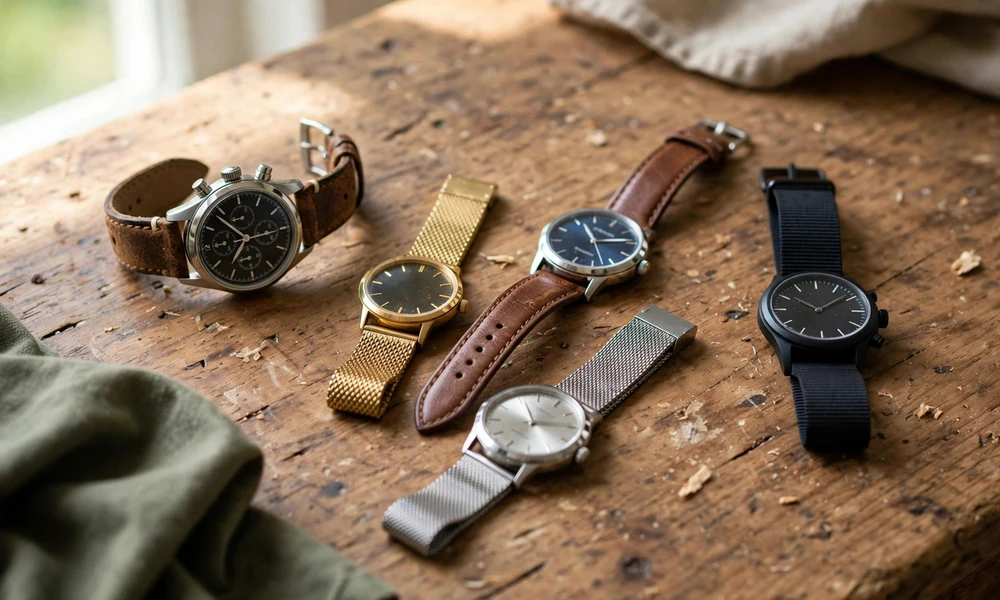
Look next at the movement and the water resistance. A quartz watch keeps excellent time, needs a battery change only every few years, and costs little. A solar quartz watch charges from light and removes the battery question entirely. An automatic watch is a lovely thing for a teenager who likes mechanical objects, but it needs wearing every day or it stops, and it costs more to service. For water resistance, 100 metres is the practical minimum for swimming and showering, and it is worth checking the number rather than assuming a sporty look means it can get wet. Our guide to the best luxury watches of 2027 explains what the higher end of the market offers, and it is a useful reminder that the qualities that make a watch good, a clear dial, a solid case, a comfortable strap, are the same at every price.
Finally, look at the strap and the crystal. A resin, silicone, or fabric strap survives daily wear and dries quickly, while leather looks smart but suffers in rain and sweat. A mineral crystal is fine for a first watch, but sapphire resists scratches far better and is worth the small premium if the teenager is hard on things.
The 9 best watches for teens in 2027
Casio F-91W
What we like: A classic digital watch with an alarm, stopwatch, and a seven-year battery, weighing just 21 grams, at a price that makes losing it annoying rather than disastrous. What to consider: The resin case and strap are basic, water resistance is 30 metres, so it handles rain and handwashing but not swimming. Best for: A first watch for a younger teenager, or a school and exam watch. Case material: Resin. Price range: Around £15 to £25. Standout feature: A seven-year battery and a display that is readable in any light.
Timex Weekender 38mm
What we like: A clean, simple analogue dial with an Indiglo backlight, a comfortable slip-through fabric strap that is easy to swap, and a classic look that works with a uniform or with weekend clothes. What to consider: Water resistance is 30 metres, so keep it away from the pool, and the tick of the quartz movement is audible in a quiet room. Best for: A teenager who wants a proper analogue watch without a big price. Case material: Brass with a mineral crystal. Price range: Around £55 to £85. Standout feature: The Indiglo dial light, which makes the time readable in a dark cinema or on a night bus.
Swatch Once Again
What we like: A bright, cheerful quartz watch with a clear white dial, a soft silicone strap, and the playful design Swatch is known for, at a price that suits a birthday gift. What to consider: Water resistance is 30 metres, and the plastic case will show scratches sooner than steel. Best for: A teenager who wants colour and personality rather than a plain black watch. Case material: Plastic with a mineral crystal. Price range: Around £60 to £90. Standout feature: A bold, friendly design that looks nothing like a grown-up’s watch.
Seiko 5 Sports SRPK97
What we like: A proper automatic movement with a day and date display, a 100-metre water resistance rating, and a 38 millimetre steel case that suits a slimmer wrist. What to consider: An automatic needs daily wear or it stops, and it is the most expensive watch on this list. Best for: An older teenager who is already interested in how watches work. Case material: Stainless steel with a Hardlex crystal. Price range: Around £260 to £340. Standout feature: A real mechanical movement with a display back, so you can see it working.
Casio G-Shock GA-2100
What we like: The slim “CasiOak” design, 200-metre water resistance, shock resistance, and a carbon core case that is light and very hard to damage. What to consider: The analogue-digital dial takes a day to learn, and the 45 millimetre case is large for a slim wrist. Best for: A sporty teenager who wants a watch that can take a knock. Case material: Carbon-reinforced resin. Price range: Around £90 to £130. Standout feature: Near-indestructible build with a slim profile for a G-Shock.
Daniel Wellington Petite 28mm
What we like: A slim, minimal dial with a clean white face, a thin case, and interchangeable straps, in a size that suits smaller wrists very well. What to consider: Water resistance is only 30 metres, and the minimalist style is not for everyone. Best for: A teenager who wants a slim, smart watch for school and occasions. Case material: Stainless steel with a mineral crystal. Price range: Around £110 to £160. Standout feature: A very slim 6 millimetre case that slides easily under a cuff.
Fossil Jacqueline 36mm
What we like: A classic round dial with Roman numerals, a slim steel case, and a leather strap that looks smart, at a mid-range price that suits a milestone birthday. What to consider: The leather strap needs care in rain, and water resistance is 50 metres, so no swimming. Best for: A teenager who wants a traditional, grown-up-looking watch. Case material: Stainless steel with a mineral crystal. Price range: Around £130 to £180. Standout feature: A timeless dial that will still look right in five years.
MVMT Classic 38mm
What we like: A minimal black dial, a slim steel mesh strap, and a modern look that suits teenagers who like clean, simple design. What to consider: Water resistance is 50 metres, and the mesh strap can snag fine hairs until it settles. Best for: A teenager who wants a modern, minimal watch. Case material: Stainless steel with a mineral crystal. Price range: Around £100 to £150. Standout feature: A mesh strap that adjusts to any wrist size without extra links.
Apple Watch SE (2nd generation)
What we like: A bright, readable display, fitness and sleep tracking, Family Setup so a parent can manage it, and water resistance to 50 metres for swimming. What to consider: It needs charging every day or two, it is a screen rather than a watch in the traditional sense, and the price is the highest here. Best for: A teenager who wants a smartwatch for sport, messages, and music. Case material: Aluminium with Ion-X glass. Price range: Around £220 to £260. Standout feature: Family Setup, which lets a parent set it up without the teenager needing their own phone.
Which watch is right for you
Start with the teenager, not the watch. A sporty teenager who swims and plays football needs water resistance and toughness above all else, and a G-Shock or a Seiko 5 will be worn far more than a slim dress watch. A teenager who cares about how things look will wear a clean, minimal watch every day and leave a chunky sports watch in a drawer.
Age matters too. For a younger teenager, a simple digital or a Timex Weekender is the sensible first step: cheap, readable, and easy to replace if it is lost. A smartwatch suits a teenager who is already comfortable with a phone and wants fitness tracking, but it is worth remembering that it needs charging, and a watch that is on a charger cannot tell the time. If the watch is a gift, our guide to luxury gifts under £1,000 has more ideas at a similar level, and the same rule applies: a gift that is used every day is worth more than one that impresses for an afternoon.
Finally, involve the teenager in the choice if you can. A watch is personal in a way a phone case is not, and a teenager who chose their own watch will look after it better than one who was handed a surprise. Let them try the size on their wrist, check the weight, and see the dial in daylight. Ten minutes in a shop will tell you more than ten reviews.
The caveats that matter
A first watch is a learning experience, and a few honest caveats are worth stating before you buy. Water resistance numbers are often misunderstood: 30 metres means it can handle rain and splashes, not a swim, and 50 metres means light swimming, not diving. A leather strap will not survive regular swimming, whatever the case rating says.
| Detail | What is known |
|---|---|
| Best case size for teens | 36 to 40 millimetres suits most teenage wrists |
| Minimum water resistance | 100 metres for regular swimming; 30 metres is rain and splashes only |
| Best movement for a first watch | Quartz or solar quartz: accurate, cheap, and needs little care |
| Best strap for daily wear | Resin, silicone, or fabric: dries fast and survives rough use |
| When to choose automatic | For an older teenager who enjoys mechanical things and will wear it daily |
| What to avoid | Cases over 42 millimetres, leather straps for sport, and very cheap fashion watches |
| Charging and batteries | Quartz batteries last 2 to 7 years; smartwatches need charging every 1 to 2 days |
| What it does not do | No first watch is an investment, and no watch replaces a phone for safety or contact |
If the watch is for a child under 13, or for a teenager with a nickel allergy, check the case and strap materials before buying, and ask the retailer if you are unsure. A rash from a strap is an easy problem to avoid and an annoying one to discover after a week of wear.
Checklist: choosing a watch for a teen honestly
Use these checks before you buy, and again after a week of wear.
- Check the case size: 36 to 40 millimetres for most teenage wrists, and try it on if you can.
- Check the water resistance: 100 metres or more if the teenager swims, and remember 30 metres is not a swimming rating.
- Check the strap: resin, silicone, or fabric for daily wear, and leather only for occasions.
- Check the dial: it should be readable in half a second, in daylight, without squinting.
- Check the weight: a heavy watch will be left at home, so lighter is better for a first watch.
- Check the cost of ownership: batteries, strap replacements, and servicing all add up over a few years.
Frequently asked questions
What size watch should a teenager wear?
Most teenage wrists suit a case between 36 and 40 millimetres. Measure the wrist with a strip of paper, and check the case diameter in the specification.
Is an automatic watch a good first watch for a teen?
It can be, for an older teenager who is interested in how things work and will wear it every day. For most teenagers, a quartz or solar watch is the better first choice, because it keeps time accurately, needs no daily winding, and costs less.
Can a teenager swim with a 30-metre water-resistant watch?
No. A 30-metre rating covers rain, splashes, and handwashing only. For regular swimming, look for 100 metres or more, and remember that a leather strap should not be worn in water at all.
How much should I spend on a teenager’s first watch?
There is no single right figure, but £50 to £150 buys a well-made quartz watch that will last years, and £250 to £350 buys a proper automatic.
Are smartwatches better than traditional watches for teens?
They do different jobs. A smartwatch tracks fitness, shows messages, and can help a parent stay in touch, but it needs charging every day or two. A traditional watch tells the time, needs no charging, and lasts for years. Many teenagers are happy with either, and some own both. A simple piece of everyday jewellery, such as the pieces in our guide to gold jewellery for everyday wear, follows the same logic: the piece that is worn every day is the one that was chosen well.
What if the teenager loses the watch?
It happens, and it is not a disaster. A first watch is a good place to learn to look after something valuable, and a lost watch is a lesson, not a failure.
The bottom line
The best watch for a teenager in 2027 is the one that fits their wrist, survives their day, and gets worn every morning without thinking about it. For most teenagers, that means a quartz watch between 36 and 40 millimetres, with 100 metres of water resistance and a strap that dries quickly. For a sporty teenager, a G-Shock is hard to beat. For one who already cares about how things are made, a Seiko 5 is a watch that can start a lifelong interest.
Choose with the teenager, not for them, buy a watch you can afford to replace, and remember that the first watch is rarely the last.