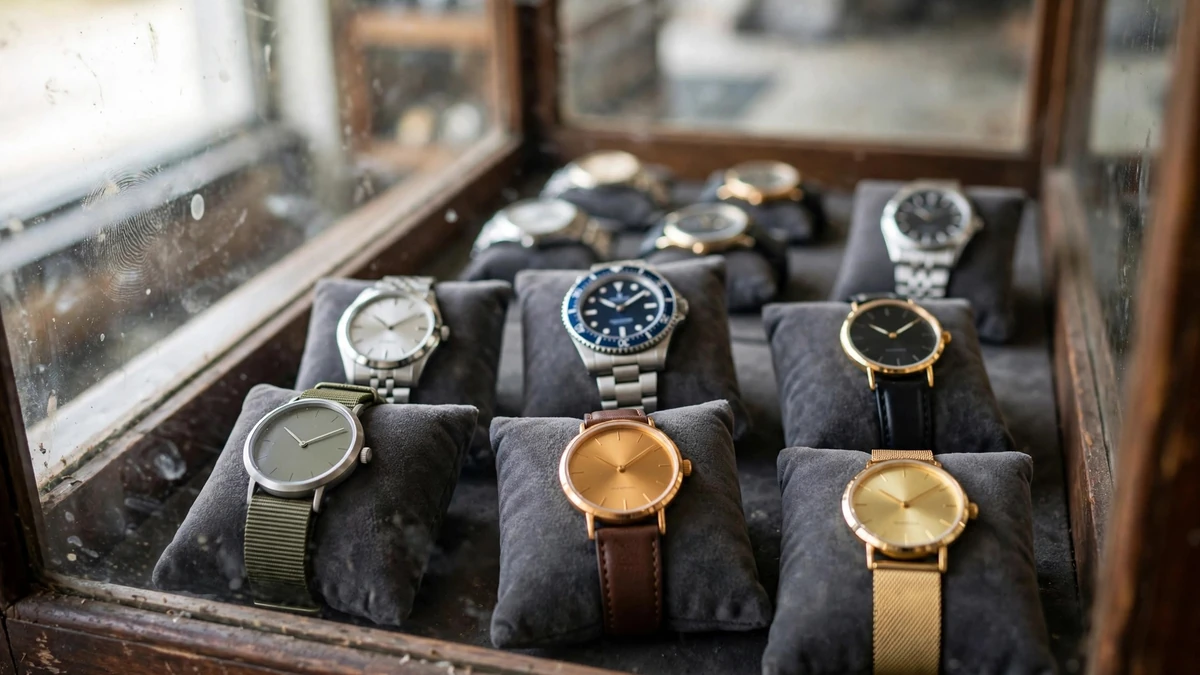
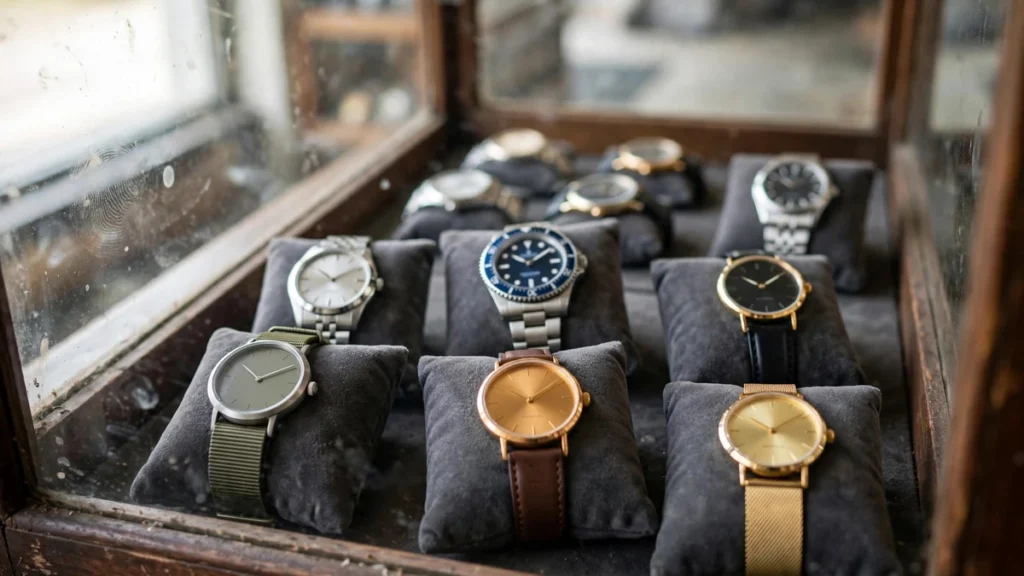
Buying a watch is one of the few purchases where the wrong choice is obvious within a week. A watch that is too large slides around the wrist. A strap that looked smart in the shop pinches by lunchtime. A dial that seemed elegant under bright lights is unreadable on a grey morning. The good news is that all of these mistakes are easy to avoid, if you know what to check before you pay.
The confusion usually comes from the sheer number of choices. Quartz or automatic, steel or leather, 38 or 44 millimetres, mineral or sapphire, water resistance of 30 or 200 metres. A watch is a small system, and the right one is the combination that fits your wrist, your day, and your budget at the same time.
This guide walks through the nine steps that matter in 2027, in the order you should actually do them, from measuring your wrist to checking the returns policy. Follow them, and you will end up with a watch you wear every day, rather than one that lives in a drawer. A watch bought in a hurry is the one most likely to end up unworn.
Key takeaways
- Measure your wrist first: most wrists suit a 36 to 42 millimetre case, and a watch that overhangs the wrist is too large, whatever the trend says.
- Decide the movement before the brand: quartz for accuracy and low maintenance, automatic for the pleasure of a mechanical watch, solar for a battery you never think about.
- Water resistance numbers are specific: 30 metres is rain and splashes, 100 metres is swimming, and 200 metres is serious water use.
- Try the watch on in daylight, with the strap fastened as you would wear it, and check the dial is readable in half a second.
- No watch is an investment unless you are buying at a very high level, and a watch bought for daily wear should be judged on how it wears, not on resale value.
What buying a watch actually involves
Buying a watch involves four decisions, and they are best made in order. First, the size: the case diameter and the thickness, measured against your wrist. Second, the movement: quartz, automatic, or solar, which decides how the watch is powered and how much care it needs. Third, the strap: metal, leather, rubber, or fabric, which decides how comfortable it is and how it ages. Fourth, the details: the crystal, the water resistance, and the dial, which decide how the watch survives daily life.
Most bad purchases happen because the order is reversed. People fall in love with a brand or a dial, then discover the case is too large, the strap is uncomfortable, or the water resistance does not cover swimming.
It helps to know what you will actually do with the watch. A desk watch that is worn to an office needs different things from a watch that is worn swimming, cycling, and travelling. Be honest about your day, because the watch has to live in it, and a watch chosen for a life you do not lead will not be worn.
How we chose these steps and what to look for
Look first at the wrist, not the watch. Wrap a strip of paper around your wrist where you wear a watch, mark it, and measure it. Most adult wrists are between 15 and 19 centimetres around, and a case of 36 to 42 millimetres suits that range. A case that is wider than your wrist looks oversized and catches on sleeves, while a case that is too small can look lost, though a smaller watch is usually the safer mistake.
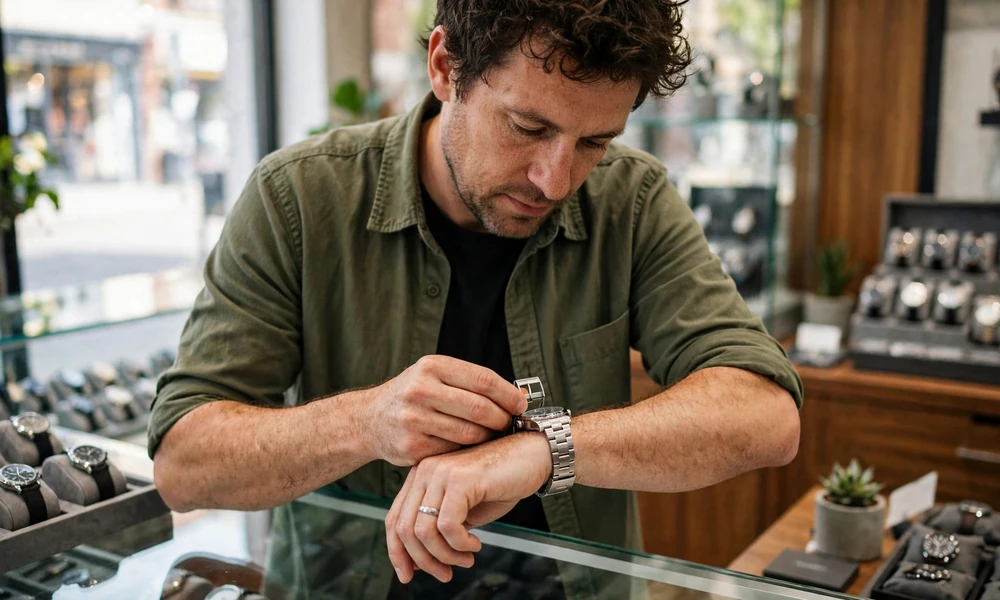
Look next at the movement, because it decides the running costs. A quartz watch is powered by a battery, keeps excellent time, and needs a new battery every two to five years. A solar quartz watch charges from light and can run for months in the dark. An automatic watch is powered by the movement of your wrist, needs no battery, but needs wearing every day or it stops, and it benefits from a service every three to five years. None of these is better in the abstract: they suit different people, and the right one is the one that fits how you live. If you are buying a piece of jewellery as well as a watch, our diamond buying guide follows the same logic, because the questions are the same: what will you wear every day, and what will it cost to keep?
Finally, look at the crystal and the water resistance together. A sapphire crystal resists scratches far better than mineral glass, and it is worth paying for if the watch will be worn daily. For water resistance, treat the numbers literally: 30 metres is rain and splashes, 50 metres is light swimming, 100 metres is regular swimming and snorkelling, and 200 metres is serious water use. A leather strap should not be worn in water at any rating.
The 9 steps to buying a watch in 2027
Measure your wrist before you buy
What we like: A paper strip and a ruler take thirty seconds and remove all guesswork about case size. What to consider: Wrist shape matters too: a flat wrist suits a larger case than a round wrist of the same circumference. Best for: Anyone buying a watch online, where trying it on is not possible. Cost: Nothing. Time needed: Two minutes.
Match the case size to your wrist and your life
What we like: A case between 36 and 42 millimetres suits most wrists, slides under a cuff, and does not catch on sleeves. What to consider: Thickness matters as much as diameter: a case over 13 millimetres thick feels bulky under a shirt. Best for: A first watch, or a watch that will be worn to work every day. Cost: Nothing. Time needed: Ten minutes trying watches on.
Choose the movement for how you actually live
What we like: Quartz is accurate, cheap to run, and needs almost no thought. Automatic is a pleasure to own and needs no battery. Solar is the easiest of all. What to consider: An automatic that is not worn daily stops, and it costs more to service. A quartz watch needs a battery change every few years. Best for: A daily watch you never want to think about, or a mechanical watch for someone who enjoys it. Cost: Quartz from £50, automatic from £200, solar from £80. Time needed: One honest conversation with yourself about how you will use it.
Check the water resistance before you need it
What we like: A 100-metre rating covers swimming, showering, and rain with room to spare, and it costs little more than a 30-metre rating. What to consider: Water resistance is tested on a new watch, and seals wear with age, so a rating is a guide, not a guarantee. Best for: Anyone who swims, showers in their watch, or works outdoors. Cost: Usually no premium for 100 metres over 30 metres. Time needed: Two minutes reading the specification.
Try the strap with your usual clothes
What we like: A metal bracelet is durable and easy to clean, rubber and fabric dry quickly, and leather looks smart for occasions. What to consider: Leather suffers in rain and sweat, metal is heavy and can pinch, and rubber can feel warm in summer. Best for: A watch that will be worn every day, in all weathers. Cost: A replacement strap costs £15 to £80. Time needed: Five minutes wearing the watch with a shirt cuff.
Look at the crystal and the dial in daylight
What we like: Sapphire resists scratches, and a clean dial with clear hands is readable in half a second, which is all the time you ever get. What to consider: Sapphire costs more, and a busy dial with extra sub-dials is harder to read quickly. Best for: A watch that will be worn daily and knocked against desks and doors. Cost: Sapphire adds roughly £50 to £150 to the price. Time needed: Five minutes in daylight, not under shop lights.
Set a budget and compare like with like
What we like: A clear budget stops you paying for a brand name when the specification is the same, and it makes comparisons honest. What to consider: The purchase price is not the whole cost: batteries, straps, and servicing add up over a few years. Best for: Anyone buying their first good watch. Cost: A good quartz watch from £50 to £150, a good automatic from £200 to £500. Time needed: An hour of research, which saves far more than it costs. Compare watches at the same price, with the same movement and the same water resistance, and ask what the extra money actually buys. Our guide to the best luxury fashion brands of 2027 is a useful reminder that a name is worth something, but it is not a substitute for a specification that suits you.
Buy from a shop with a fair returns policy
What we like: A good returns policy lets you wear the watch for a few days and return it if it does not suit you, which is worth more than any discount. What to consider: Some shops will not accept a watch that has been worn, so read the terms before you buy. Best for: An online purchase, where you cannot try the watch on first. Cost: Nothing, if you choose the right shop. Time needed: Five minutes reading the returns terms.
Keep the papers, the box, and the receipt
What we like: The warranty card, the receipt, and the box make servicing, repairs, and any future sale far simpler. What to consider: A warranty is only useful if you know where the papers are, and many warranties are void if the watch is opened by an unauthorised repairer. Best for: Any watch over £100, and every automatic. Cost: Nothing. Time needed: Five minutes putting everything in one place.
Which watch is right for you
Start with your day. If you swim, cycle, or work outdoors, water resistance and toughness come first, and a 100-metre quartz watch with a rubber or fabric strap is the practical answer. If you work in an office and want a watch for occasions, a slim steel watch with a clean dial is the better choice. If you already own a watch you love and want a second one, buy the opposite: a dress watch if you own a sports watch, or a sports watch if you own a dress watch.
Budget is the other honest question. A good quartz watch between £50 and £150 will tell the time accurately for years, and for most people that is enough. An automatic between £200 and £500 is a pleasure to own, and it is worth the money if you enjoy mechanical things. Above that, you are paying for finishing, for a brand, and for the feeling of owning something special, which is a legitimate reason to buy, as long as you know it. If the watch is a gift, our guide to gifts below £300 has more ideas at the same level, and the same rule applies: the gift that is used every day is worth more than the one that impresses for an afternoon.
Finally, take your time. A watch is not an urgent purchase, and the right one will still be there next week. Try a few on, go away, think about which one you keep picturing, and then buy that one.
The caveats that matter
A few honest caveats are worth stating before you buy. Water resistance is tested on a new watch in a laboratory, and the seals wear with age, so a watch that was rated at 100 metres five years ago may not be rated at 100 metres today. A leather strap should never be worn in water, whatever the case rating says.
| Detail | What is known |
|---|---|
| Best case size for most wrists | 36 to 42 millimetres, measured against your own wrist |
| Water resistance, 30 metres | Rain and splashes only, not swimming |
| Water resistance, 100 metres | Regular swimming, showering, and snorkelling |
| Quartz vs automatic | Quartz is accurate and low maintenance; automatic is mechanical and needs daily wear |
| Best crystal for daily wear | Sapphire resists scratches far better than mineral glass |
| Best strap for daily wear | Metal, rubber, or fabric; leather is for occasions, not water |
| Servicing | Automatics benefit from a service every 3 to 5 years; quartz needs a battery every 2 to 5 years |
| What it does not do | No ordinary watch is an investment, and no watch should be bought for resale value alone |
If you have a nickel allergy, check the case and strap materials before buying, and ask the retailer if you are unsure. A rash from a watch is an easy problem to avoid and an annoying one to discover after a week of wear.
Checklist: buying a watch honestly
Use these checks before you buy, and again after a week of wear.
- Check the size: measure your wrist, and confirm the case diameter in the specification, not in a photo.
- Check the movement: quartz for accuracy and low maintenance, automatic for mechanical pleasure, solar for ease.
- Check the water resistance: 100 metres or more if you swim, and remember 30 metres is not a swimming rating.
- Check the dial: it should be readable in half a second, in daylight, without squinting.
- Check the strap: wear it with your usual clothes, and check it is comfortable after a full day, not just five minutes.
- Check the terms: buy from a shop with a fair returns policy, and keep the papers, the box, and the receipt.
Frequently asked questions
How much should I spend on a first good watch?
A good quartz watch costs £50 to £150, and a good automatic costs £200 to £500. Spend what you are comfortable with, and remember that the purchase price is not the whole cost: batteries, straps, and servicing add up over a few years.
Is quartz or automatic better?
Neither is better in the abstract. Quartz is more accurate, cheaper to run, and needs almost no thought. Automatic is a mechanical pleasure, needs no battery, and needs wearing every day. Choose the one that fits how you live.
Can I swim with a 30-metre water-resistant watch?
No. A 30-metre rating covers rain, splashes, and handwashing only. For regular swimming, look for 100 metres or more, and remember that a leather strap should not be worn in water at all.
Should I buy a watch online or in a shop?
A shop lets you try the size, the weight, and the strap on your wrist, which is worth a lot. Online is fine if you know the size you want and the shop has a fair returns policy. If you are unsure, try it on in a shop first, even if you buy it online later.
How often does a watch need servicing?
An automatic benefits from a service every three to five years. A quartz watch needs a battery every two to five years, and a new seal if it is worn in water. A solar watch needs almost no maintenance, though the rechargeable cell will eventually need replacing.
Is a watch a good investment?
For almost everyone, no. A watch bought for daily wear should be judged on how it wears, not on resale value. Only a small number of watches at a very high level hold or gain value, and buying one as an investment is a different decision from buying one to wear.
The bottom line
Buying a watch well comes down to four checks: the size against your wrist, the movement against your routine, the water resistance against your life, and the dial against daylight. Get those four right, and the brand, the strap, and the details will follow. Get them wrong, and no amount of brand prestige will make the watch comfortable.
Measure your wrist, try the watch on, read the specification rather than the advertisement, and buy from a shop that will take it back. The watch you wear every day, without thinking about it, is the one you bought well.