Best Non-Diamond Engagement Rings 2027
A diamond is still the default engagement ring, but it is no longer the only serious choice. More couples in 2027 are choosing a coloured stone, a pearl, or a moissanite, and the reasons are practical as much as romantic. A sapphire costs a fraction of a comparable diamond, an emerald carries a colour no diamond can match, and a morganite gives a soft blush pink that photographs beautifully. These are not compromise rings. They are deliberate choices.
The catch is that non-diamond stones behave differently from diamonds. Some are softer and need a protective setting, some fade in sunlight or cloud with everyday wear, and some are genuinely as hard and durable as a diamond. Others suit occasional wear better than a ring that never comes off. Choosing well means matching the stone to your life, not just to a photograph.
Below are nine non-diamond engagement rings worth considering in 2027, from a classic blue sapphire to a black diamond with a thoroughly modern edge. Each one is described by its stone, setting, who it suits, and what it costs, so you can choose a ring that stays beautiful for years.
Key takeaways
- Non-diamond rings can cost far less than a comparable diamond, and coloured stones offer colour a diamond cannot match.
- Sapphire and moissanite are the most durable choices for everyday wear, while emerald, opal and pearl need more care and a protective setting.
- A bezel or halo setting protects softer stones far better than a high prong setting.
- Always ask whether a stone has been treated: heat treatment is normal for sapphires and rubies, while coatings and dyes are a different matter.
- No non-diamond stone is as hard or as low-maintenance as a diamond, and every coloured stone needs more careful cleaning.
Why non-diamond engagement rings are having a moment
The shift is easy to understand once you look at the numbers. A fine one-carat diamond in a simple gold setting can cost several thousand pounds, while a beautiful blue sapphire of the same size often costs a third as much. For couples who would rather spend on a honeymoon or a home, that maths is persuasive.
Colour is the other reason. A diamond is, by definition, colourless or near-colourless, and its beauty is all sparkle. A sapphire is deep blue, an emerald is green, a ruby is red, and each colour says something personal in a way a clear stone cannot. A sapphire can echo a birthstone or a favourite colour, and a morganite’s pale pink suits people who want something soft and romantic.
Celebrity rings have helped too. When a well-known engagement features a coloured stone, it gives other couples permission to choose one, and the trend has outlasted any single ring. Jewellers now report that a meaningful share of engagement commissions use a coloured centre stone, and the settings available for them have improved enormously. What used to be a niche choice is now mainstream.
How we chose these rings and what to look for
Look first at hardness, because that decides whether a ring survives daily life. Hardness is measured on the Mohs scale, where a diamond is 10. Sapphire and ruby, both forms of corundum, score 9, and moissanite scores 9.25, which makes all three genuinely durable. Emerald scores 7.5 to 8 but is often included and can be brittle, while opal scores 5.5 to 6.5 and pearl is softer still. The harder the stone, the more confidently you can wear it every day.
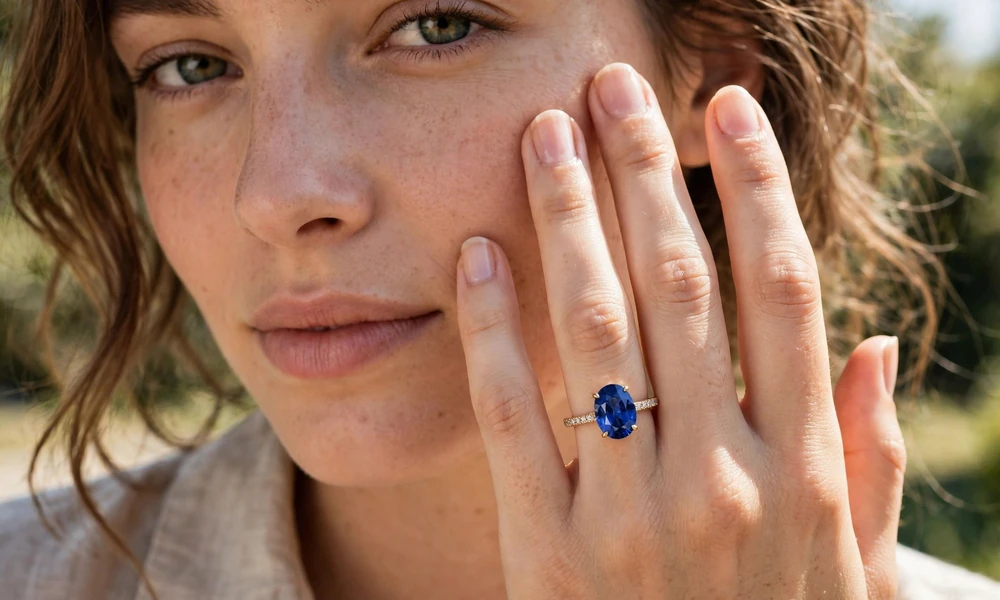
Look next at the setting. A high prong setting shows off a stone beautifully, but it leaves the edges exposed, which is a problem for anything softer than a sapphire. A bezel setting wraps metal around the stone, and a halo of small diamonds adds sparkle while guarding the edges. For emerald, opal and pearl, a protective setting is not a style choice, it is a practical necessity.
Finally, ask about treatment. Most sapphires and rubies have been heat-treated, a standard, permanent process that improves colour. It should be disclosed, and it affects price. Coatings, dyes and fracture filling are different, and they can wear off or change over time, so a stone with those treatments should cost less and be treated gently. A good jeweller will tell you exactly what has been done to your stone. Our roundup of the best engagement rings of 2027 covers the diamond side of the same decision, including settings and budgets, and it is a useful comparison before you commit to a coloured stone.
The 9 best non-diamond engagement rings of 2027
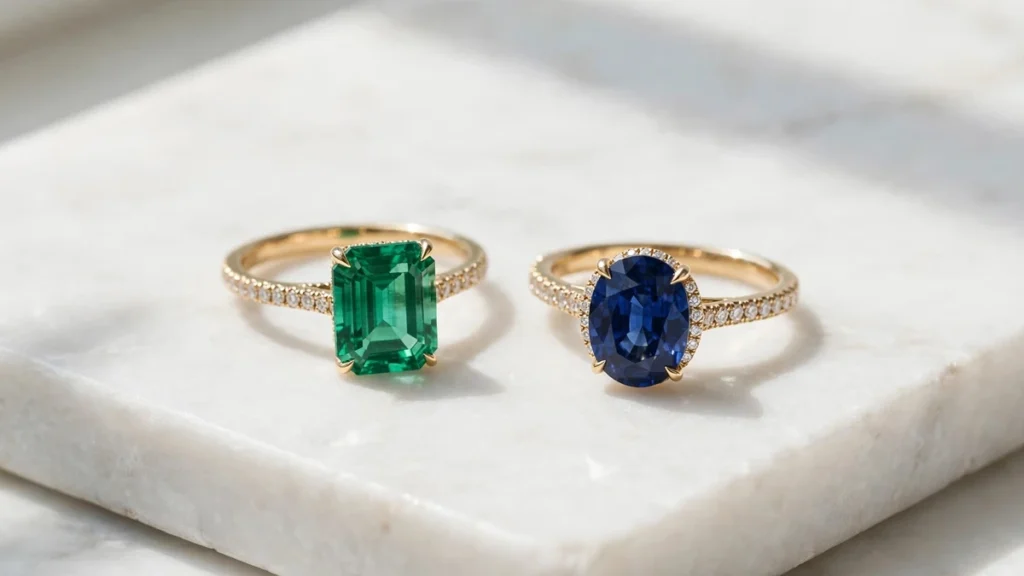
Blue sapphire solitaire
Stone: Blue sapphire, corundum, Mohs 9. Setting: Four-prong solitaire in platinum or 18k gold. Best for: Everyday wear and anyone who wants a classic ring with colour. Price range: £800 to £4,000, depending on size and origin.
The blue sapphire is the safest non-diamond choice and the one jewellers recommend most often: hard, colour-fast, and flattering on almost every skin tone. A deep cornflower blue is the most sought after, but a lighter blue can look fresher and costs less. Choose good clarity and an even colour, and keep the setting simple so the stone does the work.
Emerald in a bezel setting
Stone: Emerald, beryl, Mohs 7.5 to 8. Setting: Bezel in yellow gold, which warms the green. Best for: People who love green and are willing to care for their ring. Price range: £1,000 to £6,000, depending on colour and clarity.
An emerald is the most romantic of the coloured stones, and also the most demanding. Most emeralds have natural inclusions, known as the jardin, and have been oiled to improve clarity. That means you should never clean an emerald with an ultrasonic cleaner or harsh chemicals, and you should have it checked once a year. A bezel setting protects the corners, the most vulnerable part of the stone.
Ruby halo ring
Stone: Ruby, corundum, Mohs 9. Setting: Halo of small diamonds in white gold or platinum. Best for: A bold, red ring with real presence. Price range: £1,200 to £5,000, depending on colour.
A ruby is the red counterpart to the sapphire, just as hard and just as durable, and a halo setting makes it look larger and brighter than it is. The most prized colour is a vivid, slightly pinkish red often called pigeon blood, but a deeper red is more wearable day to day. Heat treatment is standard, so ask for it to be disclosed and priced accordingly.
Morganite in rose gold
Stone: Morganite, beryl, Mohs 7.5 to 8. Setting: Solitaire or halo in rose gold, which flatters the pink. Best for: A soft, romantic ring at a gentle price. Price range: £300 to £1,500.
Morganite is the pale pink member of the beryl family, and it has become one of the most popular non-diamond choices because it looks expensive and costs very little. Its colour is subtle, almost blush, and it works beautifully in rose gold. It is not as hard as a sapphire, so a bezel or halo setting is sensible, and it should be cleaned gently with warm soapy water.
Moissanite solitaire
Stone: Moissanite, silicon carbide, Mohs 9.25. Setting: Solitaire in white gold or platinum, indistinguishable at a glance from a diamond ring. Best for: Anyone who wants the look of a diamond without the price. Price range: £300 to £1,200 for a one-carat equivalent.
Moissanite is the closest thing to a diamond that is not a diamond. It is nearly as hard, it sparkles more, with a fiery, rainbow flash that some people love and others find too much, and it costs a tenth of a comparable diamond. It is lab-created, so it costs far less and avoids mining concerns. If you want a large, brilliant stone on a modest budget, this is the honest answer.
Pearl engagement ring
Stone: Akoya or freshwater pearl, Mohs 2.5 to 4.5. Setting: Low bezel or halo in yellow gold, worn with care. Best for: A vintage-inspired ring, or a second ring for special occasions. Price range: £200 to £1,500.
A pearl engagement ring is beautiful and deeply unfashionable in the best sense, which is exactly why some people love it. But a pearl is soft, scratches easily, and is damaged by perfume, hairspray and acids, including sweat. It suits someone who will take the ring off for housework, gardening and the gym, or who wants it as an occasional ring rather than a daily one. If that sounds like you, a lustrous Akoya pearl in gold is a genuinely lovely choice.
Opal in a protective halo
Stone: Opal, Mohs 5.5 to 6.5. Setting: Bezel with a halo of small diamonds in yellow or rose gold. Best for: Someone who loves colour play and treats jewellery gently. Price range: £400 to £2,500.
No two opals look alike: the stone flashes green, blue, orange and pink as it moves, which makes it mesmerising and impossible to copy. But opal is soft, it contains water, and it can crack if it dries out or takes a hard knock. A protective bezel, a halo of diamonds, and a habit of removing the ring for manual work are all essential. Keep it away from heat and store it away from harder stones.
Aquamarine solitaire
Stone: Aquamarine, beryl, Mohs 7.5 to 8. Setting: Solitaire in white gold or platinum. Best for: A pale blue, airy ring that suits fair skin and spring weddings. Price range: £300 to £1,800.
Aquamarine is a calm, pale blue stone like clear water, and one of the most affordable precious coloured stones. Larger stones are surprisingly inexpensive, so you can have a substantial ring without a substantial budget. It is hard enough for regular wear, though a bezel or low setting is still wise, and it cleans easily with warm soapy water.
Black diamond ring
Stone: Black diamond, Mohs 10. Setting: Pavé or halo in white gold, often with white diamond accents. Best for: A modern, dramatic ring that still has a diamond’s durability. Price range: £500 to £3,000.
A black diamond is a real diamond, just one that is opaque and black rather than clear, and it keeps the full hardness of a diamond while looking completely different. It is a modern, confident choice that pairs well with white diamond accents. Because black diamonds are often treated to achieve their colour, ask for disclosure and check the stone is well set, since treated stones can be more brittle.
Which non-diamond stone is right for you
Start with your life, not the stone. If you work with your hands, garden, lift weights, or never take your ring off, you need sapphire, ruby, moissanite or black diamond, the stones that can take a knock. If you work at a desk and remove your ring for chores, emerald, aquamarine and morganite open up. If you want a ring for special occasions rather than every day, pearl and opal become realistic.
Then think about colour against your skin. Cool blue sapphires and aquamarines flatter fair, cool-toned skin, while warm yellow gold with emerald or ruby suits warmer tones. Morganite’s blush pink is forgiving on almost everyone, and black diamond suits anyone who likes contrast. Try stones on in daylight, not just under shop lights, because shop lighting flatters everything and daylight tells the truth.
Budget matters too. A sapphire ring can be built at almost any price, while a fine emerald is expensive for its size. Moissanite gives you the biggest stone for the money, and morganite and aquamarine give you size and colour for very little. Our diamond buying guide explains the 4Cs and certification in plain terms, and the same ideas apply here: colour and clarity matter more than size, and a certificate is worth asking for on any stone that costs serious money.
The caveats that matter
Coloured stones are not diamonds, and pretending otherwise leads to disappointment. They scratch more easily, need gentler cleaning, and some fade or change colour with heat, light or chemicals. An emerald should never go in an ultrasonic cleaner, an opal should never be left in a hot car, and a pearl should never meet perfume. These small habits are the difference between a ring that lasts and one that does not.
| Detail | What is known |
|---|---|
| Most durable for daily wear | Sapphire, ruby and moissanite, all Mohs 9 or above |
| Needs most care | Pearl and opal, which are soft and easily scratched |
| Best protective setting | Bezel or halo, which guards the stone’s edges from knocks |
| Most common treatment | Heat treatment for sapphire and ruby, standard and permanent |
| What to ask for | Full disclosure of any treatment, and a certificate for expensive stones |
| Cleaning | Warm soapy water and a soft brush; never ultrasonic for emerald, opal or pearl |
| What to avoid | Perfume, hairspray, harsh chemicals and hard knocks, especially for softer stones |
| What it does not do | No non-diamond stone matches a diamond for hardness or low maintenance |
Resale is another honest caveat. A diamond holds its value better than a coloured stone, and a non-diamond ring is usually worth less second-hand than it cost new. That does not matter if you plan to wear it for life, which is the point of an engagement ring. Buy the ring because you love it, not because you expect it to be an investment.
Checklist: choosing a non-diamond engagement ring honestly
Use these checks before you buy.
- Check the hardness: sapphire, ruby and moissanite for daily wear; emerald, opal and pearl only with a protective setting.
- Check the setting: a bezel or halo protects softer stones far better than high prongs.
- Ask about treatment: heat treatment is standard for sapphire and ruby, but coatings and dyes should be disclosed and priced lower.
- Ask for a certificate: a laboratory report is worth it for any stone that costs serious money.
- Try it in daylight: shop lighting flatters every stone, so check the colour in natural light before you commit.
- Plan the care: warm soapy water for most stones, no ultrasonic cleaner for emerald, opal or pearl, and a yearly check.
Frequently asked questions
Is a non-diamond engagement ring a good idea?
Yes, for many people. Sapphire, ruby and moissanite are durable enough for daily wear, and coloured stones offer colour and value a diamond cannot match. Match the stone to your lifestyle and choose a protective setting.
Which non-diamond stone is the most durable?
Moissanite at 9.25 on the Mohs scale, followed by sapphire and ruby at 9. These three are the closest to a diamond for everyday wear, and the stones jewellers recommend most often.
Do non-diamond engagement rings cost less?
Usually, yes. A sapphire or morganite of the same size as a diamond typically costs a fraction of the price, and moissanite costs around a tenth. The saving can go towards a better setting or band, or simply stay in your pocket.
Can I wear an emerald or opal ring every day?
You can, but it needs care. Both stones are softer and more fragile than sapphire, so a bezel setting is important, and you should remove the ring for manual work, gardening and the gym. Have it checked once a year.
What should I ask a jeweller before buying?
Ask whether the stone has been treated, and how. Ask for a laboratory certificate if the stone is expensive, and how it should be cleaned. A good jeweller will answer all of this happily.
Can a non-diamond ring be resized or reset later?
Usually, yes. A gold or platinum band can be resized like any other ring, and a coloured stone can be reset later. Some stones, like opal and pearl, need a jeweller experienced with soft stones, so ask before you commit to a reset. Our guide to the best diamond earrings of 2027 covers the same setting and care questions, if you are building a matching set.
The bottom line
The best non-diamond engagement ring in 2027 is not the cheapest or the most unusual. It is the one that matches your life: a sapphire or moissanite if you want to wear it every day without thinking about it, an emerald or ruby if you love colour and are willing to care for it, a morganite or aquamarine if you want size and softness on a modest budget. Choose the stone for how you live, a setting that protects it, and full disclosure on treatment.
Try stones on in daylight and take your time. An engagement ring is meant to be worn for decades, and the right non-diamond ring is one you will still love when the trend has moved on. That is the honest test.