
Choosing earrings for a wedding dress sounds simple until you are standing in front of a mirror with a dress, a veil, a hairstyle and a dozen pairs of earrings that all looked perfect in the shop. The earrings have to suit the neckline, match the metal of the dress, work with your hair, and stay comfortable for twelve hours or more. Get one of those wrong and the whole look feels slightly off, even if nobody can say why.
That is why this guide is organised by decision, not by product. Start with the neckline, because it sets the scale of the earring. Then match the metal, consider the hairstyle, and think about the venue and the light. Price is a poor guide on its own. Some of the most flattering wedding earrings are simple pearl studs, and some of the most expensive chandeliers are the wrong choice for a high neckline.
Below are nine steps for choosing earrings for a wedding dress in 2027, from the first look at the neckline to the final trial run with the full outfit. Each step is described by what to do, what to avoid, and who it suits best, so you can choose with the whole look in mind, not just the earrings.
Key takeaways
- The neckline sets the scale of the earring: a high neckline needs a small stud or a slim drop, while a strapless or sweetheart neckline can carry a longer drop.
- Match the metal to the dress, not to your other jewellery: ivory and warm white suit gold, while bright white suits silver or platinum.
- Your hairstyle decides how much of the earring shows, so choose the earrings after the hair trial, not before it.
- Comfort matters as much as looks: an earring that hurts by the ceremony will not last to the first dance.
- No earring suits every dress, and a pair that looked perfect in the shop can clash with the veil or the dress detail, so always try everything together before the day.
What choosing wedding-dress earrings actually involves
A wedding dress is a complete look, and the earrings are the smallest part of it, but they sit closer to your face than anything else you wear. That is why they matter out of proportion to their size. A long drop earring can balance a strapless neckline beautifully, and the same earring can tangle in the lace of a high-necked dress. A pearl stud can look quietly perfect with a detailed bodice, and the same stud can disappear entirely against a plain, heavy gown.
The dress itself gives you most of the information you need. Its neckline tells you how long the earring can be. Its colour tells you which metal to choose. Its level of detail tells you how simple or how ornate the earring should be. A heavily beaded bodice needs a quiet earring, while a clean, unadorned dress can carry something more dramatic. The earring should complete the dress, not compete with it.
There is also the practical side. You will wear these earrings for twelve hours or more, through a ceremony, photographs, a meal, and dancing. An earring that is heavy, that catches on the veil, or that pulls on the earlobe will not last the day, however beautiful it is. Comfort is not a compromise. It is part of the choice, and it is worth testing properly.
How we chose this method and what to look for
Look first at the neckline, because it is the single biggest influence on earring scale. A strapless or sweetheart neckline leaves the neck and shoulders bare, so a drop earring has room to move and show. A high neckline, a halter, or a boat neck fills the same space, so a stud or a very slim drop is the better choice.
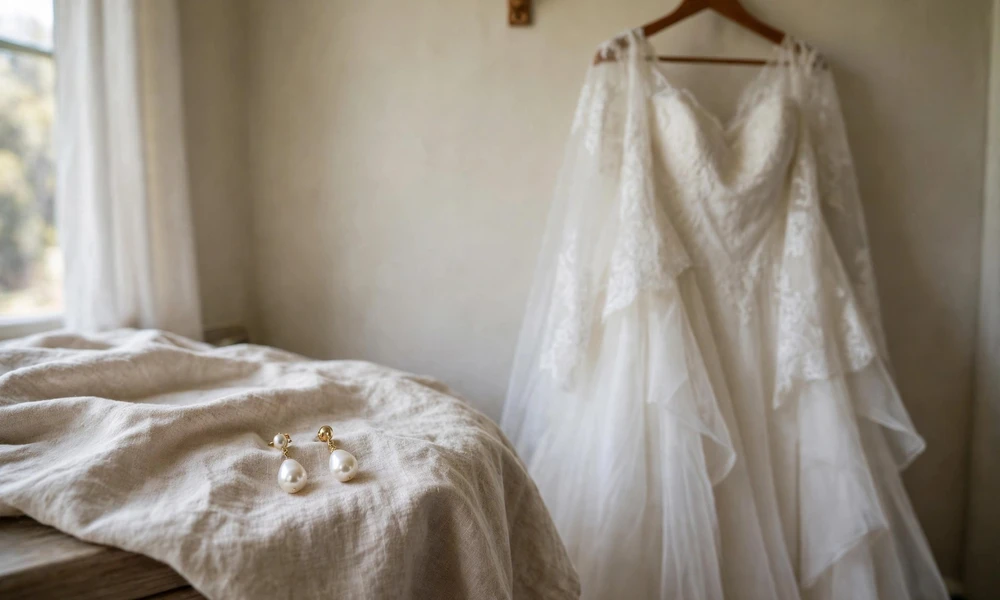
Look next at the metal and the colour. Ivory, champagne and warm white dresses suit gold, rose gold, and warm pearls. Bright white dresses suit silver, platinum, and cool white pearls. If your dress has beading or embroidery, match the earring to the tone of that detail, not to the dress fabric alone.
Finally, look at the whole picture. The earrings, the necklace, the veil, the hair and the dress all need to work together, and the only way to know is to try them together. Our roundup of earrings for weddings is a useful starting point for styles, because it shows how different earring shapes sit with different dresses, and that is exactly the judgement this guide helps you make.
How to choose earrings for a wedding dress: 9 steps
Start with the neckline
What to Do: Hold the earring against the neckline in the mirror and check that it has room to show without touching the fabric. What to Avoid: Long drops with a high neckline or a halter, where they tangle in lace or disappear behind the collar. Best For: Every bride, as the first decision. Time Needed: Ten minutes with the dress on. Standout Tip: A strapless neckline can carry a drop of up to five centimetres; a high neckline suits a stud.
Match the metal to the dress
What to Do: Compare the earring metal against the dress in daylight, and match it to the tone of any beading or embroidery. What to Avoid: Cool silver against a warm ivory dress, or yellow gold against a bright white dress, which both look slightly wrong side by side. Best For: Dresses with visible beading or a strong colour tone. Time Needed: Five minutes in natural light. Standout Tip: Ivory and champagne suit gold; bright white suits silver or platinum.
Consider the hairstyle
What to Do: Choose the earrings after the hair trial, and try them with the hair exactly as it will be on the day. What to Avoid: Long drops with loose hair worn down, where they tangle and disappear, or heavy earrings with a tight updo that leaves the ears fully exposed. Best For: Brides with an updo, a half-up style, or loose waves. Time Needed: The hair trial itself. Standout Tip: An updo shows the earring fully; loose hair needs a shorter, brighter earring to be seen at all.
Let the dress detail set the scale
What to Do: If the bodice is heavily beaded or embroidered, choose a simple earring; if the dress is clean and plain, you can go more dramatic. What to Avoid: A chandelier earring with a beaded bodice, which makes the whole look busy, or a tiny stud with a very plain dress, which can look unfinished. Best For: Dresses with strong beading, lace, or a plain silhouette. Time Needed: Ten minutes with the dress on. Standout Tip: One statement piece per look: if the dress is detailed, the earring should be quiet.
Think about the venue and the light
What to Do: Consider where the ceremony and photographs will happen, and choose stones that catch the light there. What to Avoid: Dark stones in a dim church, or very large reflective earrings in harsh midday sun, which can glare in photographs. Best For: Outdoor ceremonies, evening receptions, and candlelit venues. Time Needed: A few minutes of thought. Standout Tip: Pearls and crystals glow in soft light; diamonds and cubic zirconia sparkle best in bright light.
Light changes how an earring looks more than most brides expect. A pearl glows softly in a candlelit room. A crystal sparkles in sunlight. A dark stone can vanish in a dim church. Think about where you will actually be, and choose the stone for that light.
Try them with the veil
What to Do: Put the veil on with the earrings and the dress, and move your head, turn, and walk a few steps. What to Avoid: Long or wide earrings with a veil that sits close to the face, where they snag the tulle every time you turn. Best For: Brides wearing a veil of any length. Time Needed: Fifteen minutes. Standout Tip: If the earring catches the veil once in the fitting, it will catch it all day.
Balance the necklace, or skip it
What to Do: If you wear a statement earring, skip the necklace or choose a very fine chain; if you wear a statement necklace, choose a simple stud. What to Avoid: A chandelier earring with a heavy necklace and a detailed bodice all at once. Best For: Brides deciding between a necklace and earrings. Time Needed: Five minutes in the mirror. Standout Tip: Earrings and necklace should take turns: one speaks, the other stays quiet.
Test comfort for a long day
What to Do: Wear the earrings at home for several hours, through a meal and some movement, before the wedding day. What to Avoid: Heavy earrings with no test wear, clip-on earrings that pinch, or posts that are too short for your earlobe. Best For: Every bride, without exception. Time Needed: An afternoon at home. Standout Tip: If your earlobes ache after two hours at home, they will ache far more after twelve hours on the day.
Comfort is the step brides skip most often, and the one they regret most. A wedding day is long, and an earring that hurts by the ceremony will be in your handbag by the first dance. Wear the pair at home for a full afternoon. If they are still comfortable, they will last the day.
Do a full trial run
What to Do: Put on the dress, the veil, the hair, the shoes, the earrings and the necklace together, and take photographs in daylight. What to Avoid: Judging the earrings alone in a shop mirror, or trying them for the first time on the wedding morning. Best For: Every bride, as the final check. Time Needed: An hour, a few weeks before the wedding. Standout Tip: Photographs show what the mirror hides: check the earrings in photos, not just in the glass.
Which earring style suits your dress
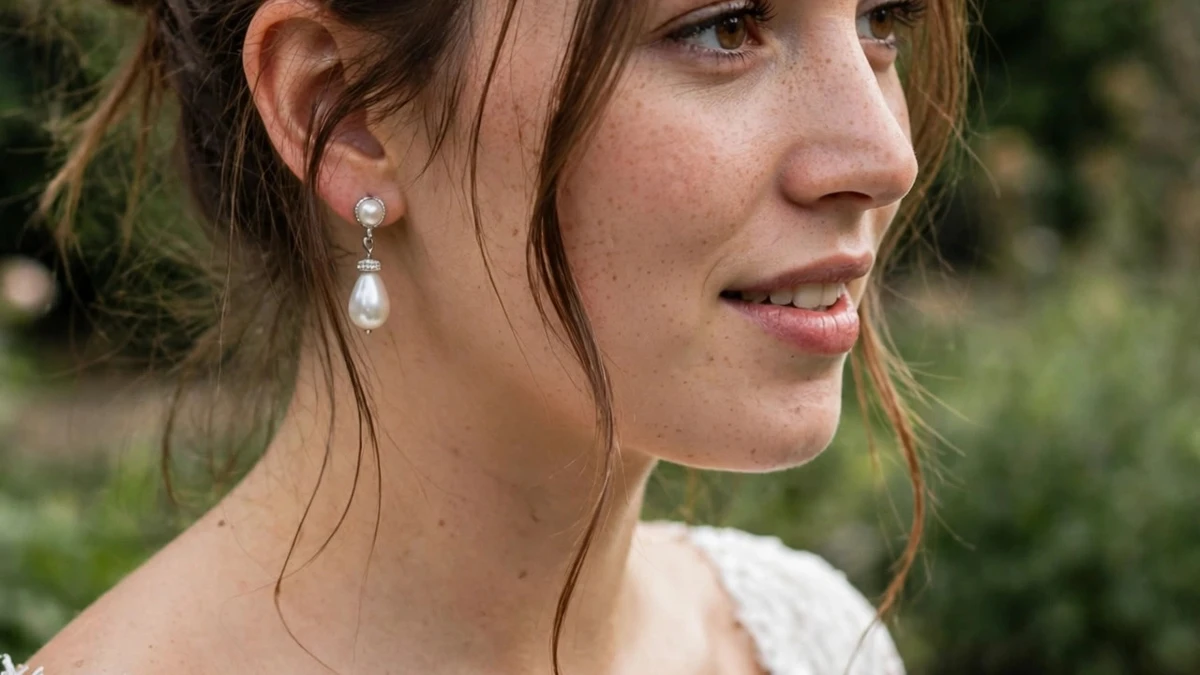
A strapless or sweetheart dress suits a drop earring best, because the bare neck and shoulders give it room. A pearl drop or a crystal drop of three to five centimetres is a classic choice here, and it photographs beautifully. A very long chandelier can work too, but only if the dress is plain enough to let it breathe.
A high neckline, a halter, or a boat neck suits a stud or a very slim drop. The neckline already fills the space, so the earring needs to stay close to the ear. A pearl stud, a small diamond stud, or a slim gold drop is the right scale. Anything longer will tangle in the fabric or disappear behind it.
A dress with sleeves or a detailed bodice suits a simple earring, because the dress is already doing the work. A V-neck or a plunging neckline suits a slightly longer drop, because the open neckline echoes the vertical line of the earring. A roundup of earrings for bridesmaids is a useful comparison here, because bridesmaid earrings are usually chosen for the same neckline logic, only quieter, and seeing the contrast helps you judge how much drama your own dress can carry.
The caveats that matter
The most common mistake is choosing the earrings before the dress is final. Dresses change during fittings: necklines are altered, sleeves are added, beading is adjusted. An earring chosen for the original dress may not suit the final one. Buy the earrings after the last fitting, or at least after the neckline is settled, and keep the receipt until the trial run.
The second mistake is forgetting the photographs. Earrings that look delicate in the mirror can disappear entirely in photographs, and earrings that look bold in the shop can glare in sunlight. Take photographs during the trial run, in the light where the ceremony will happen, and judge the earrings from those. A guide to pearl earrings for everyday is a useful reminder of how pearls photograph, because pearls are the most popular wedding earring and also the easiest to misjudge in a mirror.
| Detail | What is known |
|---|---|
| First decision | The neckline, which sets the scale of the earring |
| Best metal for ivory | Gold or rose gold, matched to the dress tone |
| Best metal for bright white | Silver or platinum, with cool white pearls |
| Best earring for a strapless dress | A drop earring of three to five centimetres |
| Best earring for a high neckline | A stud or a very slim drop |
| Best earring with a veil | A smooth, snag-free stud or small drop |
| Comfort test | Wear the pair at home for several hours before the day |
| Final check | A full trial run with dress, veil, hair and photographs |
If you are buying earrings online, order them early enough for a return. A pair that looks right on a screen can feel wrong on the ear, and a pair that suits one neckline can clash with another. Order early, try them with the dress, and keep the packaging until the trial run is done.
Checklist: before you buy the earrings
Use these checks before you buy, and again at the trial run.
- Check the neckline: does the earring have room to show without touching the fabric?
- Check the metal: does it match the dress tone and any beading, in daylight?
- Check the hair: have you tried the earrings with the hairstyle as it will be on the day?
- Check the veil: does the earring catch the tulle when you turn your head?
- Check the balance: is only one piece, the earring or the necklace, making the statement?
- Check the comfort: have you worn the pair for several hours at home without soreness?
Frequently asked questions
Should the earrings match the engagement ring?
They should sit comfortably with it, but they do not need to match exactly. If your ring is white gold, silver or platinum earrings will look natural. If your ring is yellow gold, gold earrings will look natural. The dress tone matters more than the ring, so match the dress first.
Are pearl earrings right for every wedding dress?
Almost, but not quite. Pearls suit most dresses, from simple to ornate, and they photograph well in soft light. They are less suited to a very modern, minimal dress with sharp lines, where a clean metal drop or a geometric stud can look better. If your dress is classic or romantic, pearls are a safe choice.
Can I wear long earrings with a veil?
Yes, if the earring is smooth and the veil sits away from the face. A slim drop with no hooks or wide parts usually works. A wide chandelier or an earring with a rough setting will snag the tulle. Try the combination and move your head. If it catches once, it will catch all day.
What if my dress has a lot of beading?
Choose a simple earring. A beaded bodice is already a statement, and a dramatic earring will compete with it. A pearl stud, a small diamond stud, or a slim gold drop lets the dress do the talking while the earring quietly finishes the look.
Do I need a necklace if I wear statement earrings?
No. In fact, skipping the necklace is often the better choice with statement earrings, especially with a strapless or sweetheart neckline. A bare neckline with a long drop earring is a classic bridal look, and it photographs cleanly.
When should I buy the earrings?
After the neckline is final and after the hair trial, and at least a few weeks before the wedding, so there is time for a full trial run and a return if needed. Buying early is fine, but do not buy before the dress is settled, or you may end up with earrings for a dress you no longer have.
The bottom line
The best earrings for a wedding dress in 2027 are not the most expensive or the most dramatic. They are the ones that suit the neckline, match the metal of the dress, work with the hair and the veil, and stay comfortable for twelve hours. A pearl drop with a strapless dress, a small stud with a high neckline, and a slim gold drop with an ivory gown are all classic choices for a reason.
Start with the neckline, match the metal in daylight, try everything together with the veil and the hair, and wear the pair at home for an afternoon before the day. That is the honest way to choose earrings you will still love in the photographs years later, instead of earrings you spent the day wishing you had not worn.