A velvet suit is a two-piece suit, jacket and trousers, cut from the same velvet cloth. That single fact is the whole definition, and it is also the reason the garment is so easy to get wrong. Velvet is not a quiet fabric. Its pile catches light, deepens colour and shows every crease, so when the same cloth runs unbroken from shoulder to shoe, there is nothing to hide behind.
The confusion usually starts with the name. People call almost any velvet jacket a velvet suit, and shops do not help, because a velvet blazer is often photographed with matching trousers that are sold separately. A blazer is one piece. A dinner jacket with black wool trousers is a black-tie outfit.
This guide explains the garment itself. It covers what velvet is as a cloth, how a velvet suit is put together, the fibres and cuts you will meet, how colour behaves on pile, when the suit works and when it does not, and how to look after it.
Key takeaways
- A velvet suit is a matched jacket and trousers in the same velvet cloth; a velvet blazer on its own, or a velvet jacket with wool trousers, is a different garment.
- Velvet is a weave, not a fibre: the same suit can be silk, cotton, viscose or polyester velvet, and the fibre decides how it drapes, creases and wears.
- The pile is the point and the problem: it gives velvet its depth and softness, and it is also why the suit marks and crushes.
- Deep, muted colours suit velvet best, because the pile intensifies whatever shade it carries, and pale velvet shows every mark.
- A velvet suit is an evening, cold-weather garment that usually needs dry cleaning.
What a velvet suit actually is
A velvet suit is a tailored two-piece suit in which the jacket and the trousers are made from one cloth. The jacket is usually single-breasted with one or two buttons, and the trousers are usually straight or gently tapered, cut from the same length of velvet so the colour, pile direction and sheen match exactly. That matching is the test. If you hold the jacket and the trousers side by side under a bright light and they do not read as the same colour, they are not a suit, whatever the label says. The same definition covers men’s and women’s versions; only the cut changes.
It helps to place the velvet suit against the two garments it is most often confused with. A velvet blazer is a single jacket, designed to be worn with contrasting trousers, jeans or a skirt, and the contrast is part of the look. A velvet dinner jacket is a formal evening jacket, usually with satin lapels, worn with black wool trousers and a bow tie under black-tie rules. See our guide to how to wear a velvet suit. A velvet suit removes the contrast and bets everything on one fabric and one colour.
The fabric: pile, nap and fibre
Velvet is a construction, not a fibre. It is woven with two layers of cloth joined by short pile threads, which are then cut apart, leaving a dense surface of tiny upright fibres on a base cloth. That change of shade is called the nap, and it is the first thing to understand about any velvet suit: the garment will never be one flat colour, and that is the point.
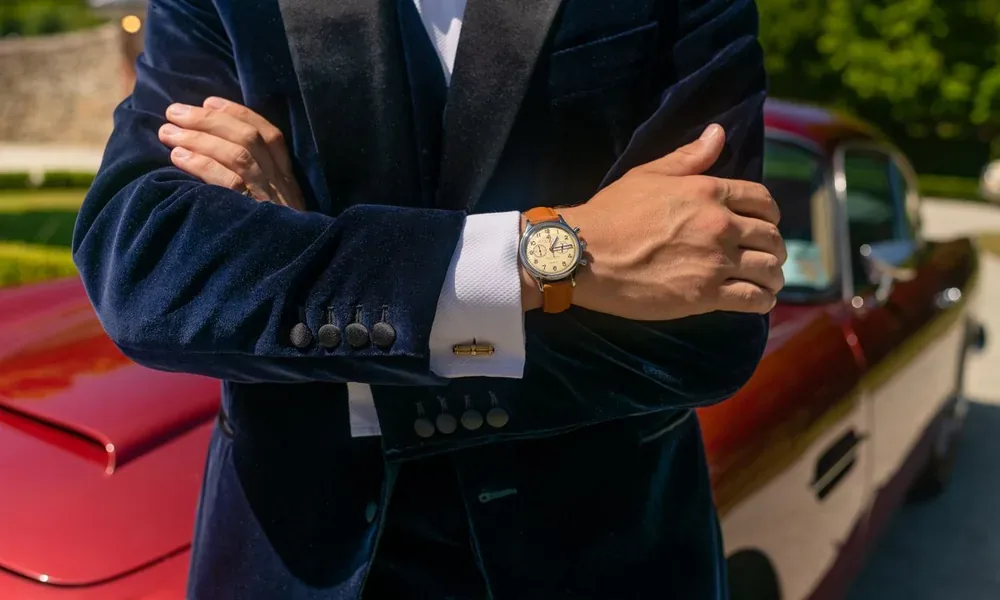
The fibre underneath the pile decides how the suit behaves. Silk velvet is the softest and most fluid, with a liquid shine in evening light, but it is also the most delicate and the hardest to clean. Cotton velvet is the most structured: it holds a sharp shoulder and a clean trouser crease. Viscose velvet sits between the two, softer than cotton and cheaper than silk, but it can water-mark. Polyester velvet is the affordable entry point; it resists crushing better than the natural fibres, but cheap versions look shiny rather than rich, and they do not breathe.
How a velvet suit is built
A velvet suit is built like any tailored suit, but the cloth forces a few choices. The jacket is usually half-canvassed or fully canvassed, with a light internal structure that gives the shoulder its line without fighting the pile. The lapels set the character of the suit. A notch lapel is the quietest choice and the closest to an ordinary suit. A peak lapel is bolder and more formal, and a shawl lapel, usually in satin, is the most formal of all.
The trousers are where a velvet suit most often disappoints. They should be cut from the same cloth as the jacket, with the pile running in the same direction, or the two halves will catch the light differently. A straight or gently tapered leg is the safest shape, breaking once at the shoe.
The main types and cuts of velvet suit
Most velvet suits fall into three shapes. The single-breasted two-piece is the standard: one or two buttons, a notch or shawl lapel, and matching straight trousers. It is the easiest to wear and the easiest to tailor well, and it suits almost every body shape. The double-breasted velvet suit is more dramatic, with overlapping fronts and usually a peak lapel, but velvet shows every wrinkle where the fronts overlap, so it needs a precise fit and a heavier cloth to hold its line.
The three-piece velvet suit adds a waistcoat in the same cloth, and it is the most formal version of the three. It keeps the velvet line unbroken from neck to waist, but it is also the warmest and the least forgiving, because three layers of pile trap heat and show creasing. Crushed velvet and panne velvet are worth a warning: both are pressed to a mottled or shiny surface, both look cheaper than plain velvet, and both are harder to match across jacket and trousers.
Colour in velvet: why the same shade looks different
Colour behaves differently on velvet than on any flat cloth, because the pile reflects light from one angle and holds shadow from another. A burgundy velvet suit looks richer than a burgundy wool suit, a navy velvet suit looks almost black in dim light, and a bright colour in velvet looks louder than the same shade in any other fabric. That is why the safest velvet colours are deep and muted: black, burgundy, emerald, navy, plum and charcoal. They show the depth of the pile without overwhelming the wearer, and they hide lint better than pale shades.
Pale velvet is the hardest to wear. Ivory, blush and pale grey velvet show every mark and fingerprint, and they crease visibly, because the crushed pile reads as a pale line against the uncrushed cloth. Because velvet changes with the light, check the suit in daylight and in warm indoor light, and look at it from more than one angle.
When a velvet suit works, and when it does not
A velvet suit works where evening dress is expected and where the fabric’s warmth and richness suit the setting. Weddings in autumn and winter, formal dinners, theatre openings and festive parties are its natural ground. The common thread is that the event is indoors, in the evening, and in the colder half of the year.
It does not work where velvet’s weaknesses show. A hot day is the clearest no: velvet is warm, it does not breathe well, and it looks out of place in strong sun. A daytime business meeting is another, because velvet reads as evening dress. The season matters as much as the occasion: velvet belongs to autumn and winter, from roughly October to March. See also our look at why velvet is the luxury fabric of 2027.
The caveats that matter
Velvet is a beautiful cloth with real practical limits, and most of them come back to the pile. It crushes where it is pressed, so sitting for a long time, wearing a tight coat, or carrying a bag on the same shoulder all leave marks.
| Detail | What is known |
|---|---|
| What it is | A matched jacket and trousers in the same velvet cloth, one colour, one pile direction |
| Best fibres | Cotton velvet for structure, silk velvet for luxury, blends for everyday wear |
| Best colours | Deep and muted: black, burgundy, emerald, navy, plum, charcoal |
| Hardest colours | Pale shades, which show every mark, and bright shades, which the pile amplifies |
| Best season | Autumn and winter evenings; velvet looks wrong in hot weather |
| Biggest enemy | Rain, which marks the pile, and pressure, which crushes it |
| How to remove creases | Steam from a distance, never iron directly on the pile |
| What no fix rescues | A velvet suit in the wrong size, or jacket and trousers from different cloths |
Check the care label before you buy: most velvet suits are dry-clean only. The same fabric in a different garment is covered in our explainer on what a velvet dress is.
Checklist: before you buy a velvet suit
Run through these checks in the shop, before you pay.
- Check the match: hold the jacket and trousers side by side under bright light and confirm they read as the same colour.
- Check the pile: run your hand across the cloth both ways and look for thin, patchy areas or a grey cast against the nap.
- Check the fit sitting down: sit in the suit for a minute, then stand up and look for pulls, creases and crushed pile
- Check the label: read the fibre content and the care instructions, and confirm you are willing to pay for dry cleaning.
- Check the colour in two lights: look at the suit in daylight and in warm indoor light.
- Check your calendar: if you have no evening occasions the suit will spend its life in the wardrobe.
Frequently asked questions
Is a velvet suit the same as a velvet dinner jacket?
No. A velvet suit is a matched jacket and trousers in the same velvet cloth. A velvet dinner jacket is a single evening jacket, usually with satin lapels, worn with black wool trousers under black-tie rules.
What is a velvet suit made of?
Velvet describes the weave, not the fibre, so a velvet suit can be silk, cotton, viscose, polyester or a blend. Cotton velvet is the most structured, silk velvet is the softest and most luxurious, viscose sits between the two, and polyester is the cheapest and most crush-resistant.
Can you wear a velvet suit in summer?
It is a poor choice for summer. Velvet is warm, it does not breathe well, and it looks out of place in strong sun and heat.
Why does a velvet suit look like two different colours?
Because of the nap. The pile reflects light differently depending on the direction it is brushed, so the same cloth looks lighter one way and darker the other. That is normal for velvet.
How do you clean a velvet suit?
Most velvet suits are dry-clean only, so check the label and follow it. For small marks, brush gently with a soft clothes brush and use a lint roller. Never wash velvet in hot water, never tumble-dry it, and never iron it directly.
How long does a velvet suit last?
A well-made velvet suit in a good cloth can last for years, but it will not age like a wool suit. The pile wears first, usually at the elbows, the seat and the trouser knees, where it goes shiny and flat with repeated pressure.
The bottom line
A velvet suit is a simple idea with demanding consequences: two pieces, one cloth, one colour, and a fabric that shows everything. The pile gives it a depth no flat cloth can match, and the same pile is why it marks, crushes and needs care.
Before you buy, check the match between jacket and trousers, read the fibre content and the care label, and be honest about how many cold-weather evenings you actually have. If the suit passes those checks, it is one of the most striking things a wardrobe can hold.
Note: This guide explains what a velvet suit is as a garment. Fit, fibre and care vary by maker, so always check the label on the suit you are considering
Meet Our Experts
Our fashion editors cover tailoring, fabrics and evening dress, and review garments for construction, cloth and fit before recommending them.
Why Trust BrassSmile
We explain garments from their construction and cloth, not from marketing claims, and we check the details that change how a piece wears, including fibre content, pile, fit and care.
Sources
BrassSmile fashion desk guides on velvet and evening tailoring; fabric and tailoring references on velvet construction and care.