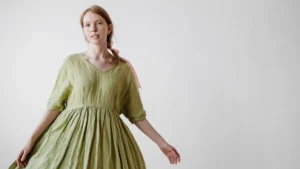
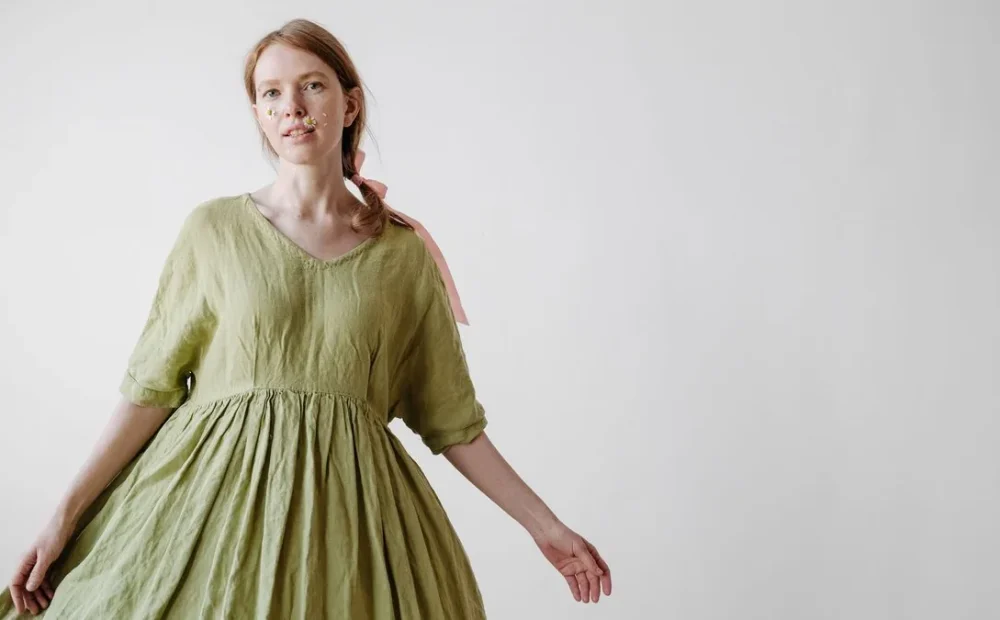
A linen dress asks you to pay more for a dress that wrinkles before lunch. The price looks high for something that will never stay smooth, and the fabric looks plain for something sold as a luxury. It is easy to walk past it, buy a cheaper cotton dress instead, and feel sensible about it.
Yet linen dresses keep selling, summer after summer, to women who already own one. First-time buyers hesitate over the price and the creases. Repeat buyers rarely talk about either. They talk about the hot days when it was the only dress they reached for, and the way it still looked right after three or four summers of hard wear. The question is not whether linen is a good fabric. The question is whether the dress earns its price in your wardrobe, worn the way you actually live.
This is an honest verdict, not a sales pitch. A linen dress is worth it for a lot of women in 2027, and a waste of money for others. It depends on your climate, your tolerance for wrinkles, how often you would really wear it, and what you buy. Below is the case for it, the maths, the situations where it fails, and the checks that separate a good one from a bad one.
Key takeaways
- A linen dress earns its price in warm weather: it breathes better than cotton or rayon, so it gets worn on days other dresses stay in the wardrobe.
- Cost per wear, not the price tag, is the fair test: a dress worn thirty times a summer for three summers costs less per wear than a cheaper dress worn twice.
- Cloth and cut matter more than the label: a linen-rich fabric, a mid-weight cloth, and a shape with room to move are what make it comfortable.
- Linen creases by nature, because flax fibres have almost no elasticity. Anyone who wants a permanently smooth dress should not buy one.
- The verdict depends on the buyer: the same dress can be a bargain for a warm-climate wearer and a mistake for someone who needs a sharp, formal dress in a cold city.
What a linen dress is worth paying for
The value starts with heat. Linen is woven from flax, whose fibres are hollow, long, and strong. Air moves through the weave, and the fabric can absorb around a fifth of its own weight in moisture before it feels damp, far more than cotton. That is why a linen dress feels cool on a humid afternoon when a synthetic dress feels clammy: it is the one dress fabric that genuinely works in high summer, and it keeps working when the day gets hotter.
The second is drape without fuss. A good linen dress falls in a clean, relaxed line without clinging, and it holds the shape it was cut in rather than following every curve of the body. A wrap, shirt, or A-line cut gives it structure, while the fabric itself stays light and airy. It looks put together with almost no effort, which is the whole point of a summer dress: one garment, no layering, no tugging, no adjusting.
The third is longevity. Linen yarn is about 30 per cent stronger than cotton yarn of the same weight, and stronger still when wet. A well-made linen dress does not fall apart; it softens. The cloth relaxes over the first season, the creases settle into a lived-in texture, and the colour fades gently rather than wearing thin. It looks better broken in than it did on the rail, and that is rare in a dress at any price.
What to look for before you pay
The worth-it question is really a buying question: a bad linen dress is never worth it at any price. First, check the fibre content. Pure linen gives the most breathability and wrinkles the most; a linen-cotton blend, often around half and half, creases less and feels softer while keeping most of the airflow. Beware a label that says linen while the cloth is mostly polyester: you pay the linen price and get a sweaty, synthetic feel.

The second check is weight and cut. Cloth between about 160 and 200 grams per square metre is the sweet spot for a dress: lighter cloth can look flimsy and turn sheer in bright sun, while heavier cloth holds its shape but gives up some cooling. Cut matters just as much, because linen does not forgive a bad shape the way a stretch fabric does. A dress that skims the body looks better in linen than one that is too tight or too boxy. Our guide to choosing the perfect linen dress walks through each of these checks in detail, including the weight, the weave, and the signs of good finishing.
The third check is the finish. Look at the seams, the hem, and the lining: neat, flat seams, a bodice that is lined where it needs to be, and buttons that are sewn on properly rather than hanging by a thread. Hold the dress up to the light before you buy it. A very thin linen can look transparent in bright sun, while a mid-weight linen holds its shape and keeps you covered. Try it on sitting down as well as standing, since linen creases most where you bend.
The cost-per-wear maths
Cost per wear is the only honest way to judge a linen dress: divide what you paid by the number of times you wear it. The numbers below are illustrative, using round figures, but the pattern holds at most price points. A $60 dress worn ten times costs $6 a wear; a $150 dress worn sixty times across three summers costs $2.50 a wear. The expensive dress is the cheaper one, provided the wears actually happen.
Count your warm months honestly: with four or five months warm enough for linen, and a dress reached for twice a week, that is roughly forty wears a year before holidays and evenings out. Over three summers, that is more than a hundred wears, and even a premium dress lands at a few dollars per wear. In a cool climate with six weeks of real summer, the same dress might see fifteen wears a year, and the maths flips: neither the cheap nor the expensive one earns its price.
Care costs belong in the same calculation, and linen is kinder than its reputation. Many linen dresses can be machine washed on a gentle cycle, and they need steaming rather than constant dry cleaning, which keeps the running cost low. A dress that survives four summers costs half as much per wear as the same dress replaced after two. If you want to see what the money buys in practice, our best linen dresses of 2027 compares the silhouettes side by side, from simple midis to breezy maxis.
When a linen dress is not worth it
There are real situations where a linen dress is the wrong purchase. The table is the short version: if your situation matches a row on the left, the verdict on the right is probably correct, whatever the price.
| Situation | Verdict |
|---|---|
| You need a sharp, formal dress for work | Not worth it: too relaxed and crease-prone for strict dress codes |
| You live in a cold or cool climate | Not worth it: too few warm days to earn the price back |
| You hate wrinkles and iron everything | Not worth it: linen will frustrate you every time you wear it |
| You want one dress for all four seasons | Not worth it: a warm-weather fabric with little warmth in winter |
| Your budget only stretches to one dress | Think twice: a versatile cotton dress covers more seasons |
| You wear a dress twice a week in warm weather | Worth it: the cost per wear falls fast at that frequency |
| You spend summers outdoors or on holiday | Worth it: it is the most comfortable dress option in the heat |
| You already own good dresses for cooler months | Worth it: linen fills the warm-weather gap nothing else covers |
Linen is worth it when it solves a problem you actually have, staying cool and comfortable in the heat, and when you will wear it often enough for the price to spread thin. The dearest linen dress is still the wrong dress for a cold-climate office, and the cheapest is still a bargain for someone who wears it forty times a summer.
Before you buy: a quick checklist
- Check the label: linen should be the main fibre, not a token percentage.
- Feel the cloth: dry, cool, and textured, not stiff like cardboard or slick like plastic.
- Hold it to the light: a mid-weight cloth should not turn see-through in bright sun.
- Look at the seams and lining: neat finishing and a lined bodice where it counts.
- Try it sitting down: it should skim the body without pulling or gaping.
- Count your warm months honestly: under two months of linen weather a year makes the price hard to justify.
Frequently asked questions
Are linen dresses worth the money in 2027?
For most warm-weather wearers, yes. Linen is the coolest natural dress fabric, and it lasts longer than cotton, so a dress worn twice a week through a warm season works out at a few dollars per wear over three summers. Worn twice a year, no dress at any price is worth it.
Why are linen dresses so expensive?
Flax is slow and labour-intensive to turn into cloth: the stems must be retted, broken, combed, and spun. Good linen comes from long-staple flax, and a well-cut dress takes more skilled work than a simple jersey one. You are paying for fibre, cloth, and construction, not just the label.
Do linen dresses always wrinkle?
Yes, and that is not a defect. Flax fibres have almost no elasticity, so once they bend they stay bent until steamed or washed. Blends wrinkle less than pure linen. Choose a relaxed cut and a mid-tone colour, where creases read as texture rather than mess, and accept the rumple as part of the look.
How long does a linen dress last?
A well-made linen dress should last many summers with normal care: linen is one of the strongest natural fibres and grows stronger when wet. What usually ends its life is the fit going out of date, a stain that will not lift, or years of hard dry cleaning. Gentle washing, steaming, and proper hanging will add seasons to it.
Is a linen dress better than a cotton dress?
For heat, yes: linen breathes better and absorbs more moisture before feeling damp. For a smooth, tidy look, cotton wins, because it creases less and holds a pressed line. For drape and coolness on the hottest days, linen is the better fabric. Each earns its place for a different job, and linen’s job is warm weather.
Can you wear a linen dress to a wedding?
Yes, in most cases: summer weddings are where linen dresses earn their keep. A midi in a soft colour with simple sandals suits a daytime or outdoor wedding, while a darker linen dress works for the evening. Our guide to styling a linen dress covers shoes, belts, and layers for different occasions. Skip linen only for strictly formal dress codes such as black tie.
The bottom line
A linen dress is worth it when it matches your life: warm months, regular wear, and a wardrobe that needs a dress for the heat. It does a job no other dress does well, it lasts, and the cost per wear falls fast once it becomes the dress you reach for all summer. The price stings once; the comfort pays back every time you wear it.
It is not worth it as a status purchase, a one-off, or a formal dress, and it is never worth it in a cheap, mostly synthetic cloth. Buy the best construction you can afford, in a colour you will wear weekly, and wear it without apologising for the creases. Like other linen pieces, it rewards people who live with it. If that sounds like you, the dress is worth every cent.
Note: Prices and wear counts here are illustrative examples, not surveyed market data, and vary with brand, size, and seller. Fabric weights and care guidance are general ranges. Check the label, the fibre content, and the returns policy before buying.
Meet Our Experts
BrassSmile’s fashion editors cover fabrics, tailoring, and seasonal dressing, judging every piece on how it wears across a season.
Why Trust BrassSmile
We judge clothes by wear, not launch hype: construction, cloth, care, and cost per wear, with the caveats stated plainly.
Sources
Textile references on flax fibre properties and linen care; BrassSmile’s linen guides.