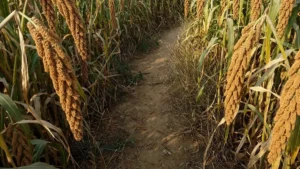
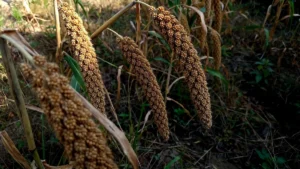
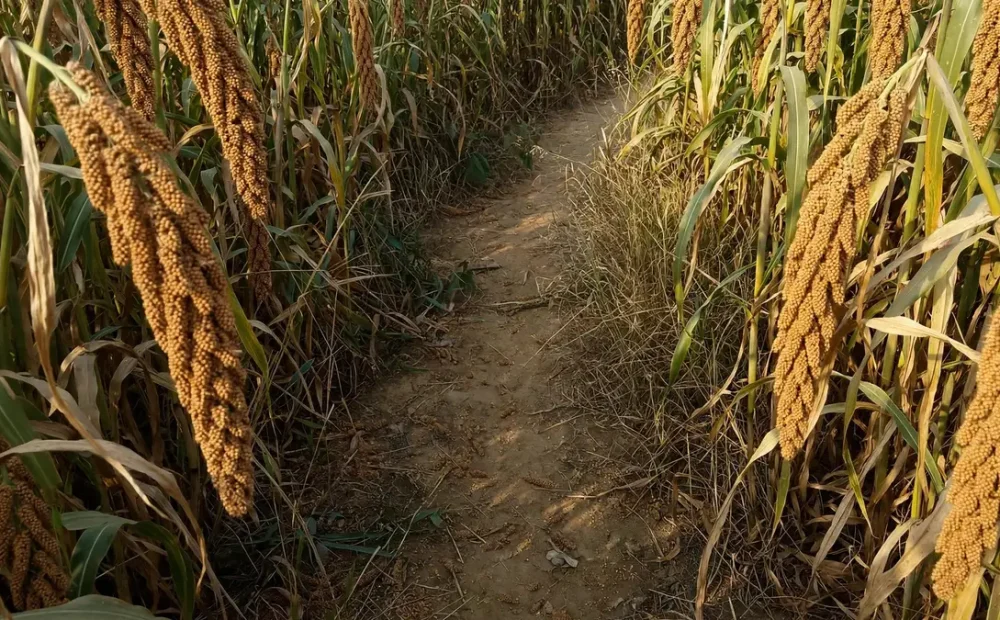
Millet is the grain that feeds the driest places on earth. It is not one crop but a family of small-seeded grasses — pearl millet in the Sahel and western India, finger millet in the highlands of East Africa and southern India, foxtail millet on the plains of northern China, proso millet on the high plains of America. Where wheat needs rain and rice needs standing water, millet gets by on thin soil and a short season, ripening in as little as two months from sowing.
A millet farm retreat takes you to the places where that grain is still daily bread rather than a health-food shelf. You sleep in a farmhouse room or a small guest cabin, eat the grain the farm grows, and join the harvest as it happens. The work is simple and physical, and the food that follows is the point of the trip, from bajra rotis in Haryana to tô in West Africa to foxtail millet porridge in Hebei.
Below are nine millet farm retreats worth considering in 2027, from a pearl millet farm in Haryana to a proso millet farm in Nebraska. Each stay below is covered by its strengths, its drawbacks, and the traveller it suits best, so you can choose by the way you like to travel rather than by a place on a map.
Key takeaways
- Millet ripens in late summer and autumn in most regions, and the exact week moves with the dry season, so confirm dates with the farm before booking flights.
- Most millet farms are small family farms, so expect plain rooms, shared meals and early mornings instead of hotel service.
- The grain is naturally gluten-free, which makes the farm kitchen friendly to travellers who avoid wheat, though cross-contact in a shared kitchen is still possible.
- The harvest work is hands-on and dusty, with sickles, threshing and winnowing, so sturdy shoes and a hat matter more than rain gear.
- No farm can guarantee a harvest on a set date, and a trip built around one threshing day can leave you in an empty field if the rains arrive early or late.
What a millet farm retreat actually is
A millet farm retreat is a stay on a working millet farm, usually two to five nights, where the farm is the reason for the trip rather than a backdrop. You sleep in a farmhouse room or a small guest cabin, eat meals cooked from the farm’s own grain, and join in the work of the season — walking the rows, cutting the stalks once the heads are dry, threshing them, and winnowing the grain so the wind takes the chaff away.
Millet itself is one of the oldest farmed grains, grown in Africa and Asia for thousands of years. Pearl millet began in the Sahel, finger millet in the highlands of East Africa, foxtail millet in northern China, and each one travelled with the people who grew it.
Most of these farms sit in dry country. The Sahel, the Deccan plain, the North China plain and the American high plains are all hot by midday, and the work is done in the cooler hours of the morning and the late afternoon.
How we chose these stays and what to look for
We looked first at where millet actually grows well, not where it is marketed well. A real millet farm has fields you can walk through, a harvest you can join, and a kitchen that cooks the grain it grows.
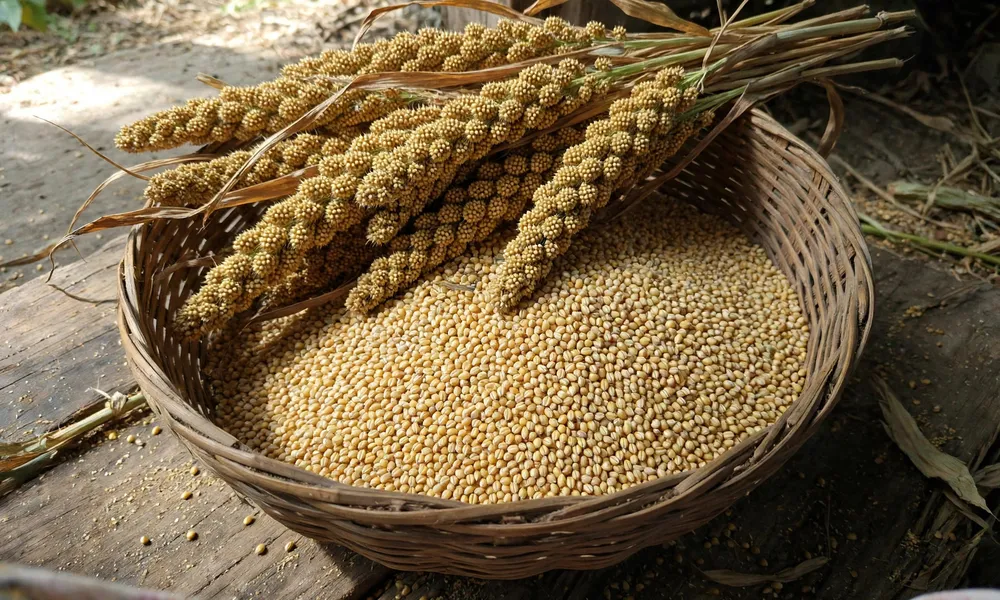
The strongest farms keep numbers low, usually fewer than a dozen guests at a time, so the harvest work stays genuine instead of being put on for visitors. They also state clearly what the nightly rate includes — meals, transport from the nearest town, and guided walks come with the price, rather than being added when you arrive. A farm that answers questions about the harvest, the food and the heat in straightforward language is usually a farm that looks after its guests well. Our roundup of sesame farm retreats uses the same check, and it is the easiest way to tell apart two farms that look alike on paper.
The 9 best luxury millet farm retreats of 2027
Hisar, Haryana, India — Pearl Millet on the Indo-Gangetic Plain
What we like: The heartland of Indian pearl millet, where bajra is the everyday grain and the farm’s kitchen turns it into rotis on a griddle twice a day. The farm is family-run and generous, the rooms are simple and clean, and the harvest moves fast enough that a guest can see the whole cycle, from cutting to winnowing, in a single stay.
What to consider: The plain is hot by midday and the harvest weeks are short, so the farm’s dates matter more here than on most stays on this list. Style: Indo-Gangetic plain farm stay. Best for: First-time millet travellers. Price range: $55–$85 per night. Standout feature: Bajra rotis made on the farm griddle, from grain cut that morning.
Niamey, Niger — Pearl Millet on the Sahel
What we like: Pearl millet grown where it began, on the edge of the Sahel, where the crop’s drought tolerance is not a selling point but a necessity. The farm belongs to a cooperative, so your stay supports several families at once, and the broad river plain gives the landscape a scale few farms on this list can match.
What to consider: The Sahel is hot and dry and the roads are rough, so this stay suits travellers who are happy with basic conditions. Style: Sahel cooperative farm stay. Best for: Travellers who want to see millet at its toughest. Price range: $90–$120 per night. Standout feature: Cooperative-grown pearl millet on the Sahel plain, where the grain feeds the whole village.
Kaduna, Nigeria — Millet in the Northern Guinea Savanna
What we like: The centre of Nigeria’s millet country, where the grain is the staple food and the markets are full of it. The farm grows millet beside sorghum and groundnuts, so the meals are varied, and the old city of Kaduna is a short drive away for a market morning.
What to consider: The savanna heats up by midday and the harvest weeks are brief, so getting the timing right matters more here than at most farms on this list. Style: Savanna farm stay. Best for: Travellers who enjoy markets and food culture. Price range: $125–$155 per night. Standout feature: A savanna farm where millet shares the fields with sorghum and groundnuts.
Thiès, Senegal — Millet Fields of the Peanut Basin
What we like: Millet grown in the peanut basin, where the two crops rotate through the same sandy fields and the farm’s kitchen cooks both. The farm is small and welcoming, the threshing is done by hand in the yard, and the Atlantic coast is close enough for a second day out.
What to consider: The basin is sandy and the wind carries dust through the yard at threshing time, so pack clothes you do not mind getting dirty. Style: Peanut basin farm stay. Best for: Cooks who want the grain-and-groundnut tradition. Price range: $160–$190 per night. Standout feature: Hand threshing in the farmyard, with millet and groundnuts from the same fields.
Moundou, Chad — Millet in the Southern Savanna
What we like: Millet grown in Chad’s green south, where the rains are kinder and the fields run wider than anywhere else on this list. The farm keeps cattle alongside the grain, so the stay mixes harvest work with herding life, and the nights are cool enough for a fire.
What to consider: The south is a long drive from the capital and the roads are slow, so the farm is a journey in itself rather than a quick stop. Style: Southern savanna farm stay. Best for: Travellers who want a slow, green harvest. Price range: $195–$225 per night. Standout feature: Wide millet fields in Chad’s green south, with cattle and a cool evening fire.
El Obeid, Sudan — Millet in North Kordofan
What we like: Millet grown in North Kordofan, where the grain is milled into flour for the flatbreads that anchor every meal. The farm is close to old market towns, and the threshing demonstration is different from the hand work of West Africa, with oxen still used to tread the grain.
What to consider: Kordofan is dry and the harvest window is narrow, so the farm’s dates are the whole trip. Style: Kordofan farm stay. Best for: Travellers who want old market towns with the harvest. Price range: $230–$260 per night. Standout feature: Oxen threshing in North Kordofan, with millet flour milled on the farm.
Mekelle, Tigray, Ethiopia — Finger Millet in the Northern Highlands
What we like: Finger millet grown on the terraces of the northern highlands, where the grain’s small red heads are a familiar sight on every hillside. The farm is close to old rock churches, and the terraced landscape makes a natural second day out.
What to consider: The terraces are steep and the altitude is high, so take the first day slowly and drink more water than usual. Style: Highland terrace farm stay. Best for: Walkers who like old terraces and church history. Price range: $265–$295 per night. Standout feature: Finger millet terraces in the northern highlands, beside rock churches cut into the cliffs.
Hebei, China — Foxtail Millet on the North China Plain
What we like: Foxtail millet grown on the North China plain, where the grain’s Chinese name is on every menu and a cooking tradition that goes back centuries turns it into porridge and cakes. The farm is small and family-run, and the millet porridge made on the farm’s own stove is worth the trip alone.
What to consider: The plain is dusty at harvest time and the farm’s rooms are simple, so this is a stay for travellers who like plain food and plain rooms. Style: North China plain farm stay. Best for: Travellers who want the porridge tradition. Price range: $300–$335 per night. Standout feature: Foxtail millet porridge made on the farm stove, from grain cut that morning.
Nebraska, United States — Proso Millet in the Sandhills
What we like: The easiest millet farm stay to pair with a longer American road trip, with wide high-plains fields, a farming culture that grows the grain at scale, and a farmhouse that cooks it into breads and breakfast bowls. The harvest is partly mechanised, which makes the threshing demonstration different from the hand work of Africa and Asia.
What to consider: The plains are windy and the season runs late, so an early cold snap can cut it short. Style: High-plains grain farm stay. Best for: Road-trippers who love open highways. Price range: $340–$375 per night. Standout feature: Broad-acre proso millet on the high plains, with a working harvester and a farm kitchen that bakes with its own flour.
Which millet region fits your trip
If this is your first millet trip, start in Haryana. The stay is the cheapest on this list and the most rooted in the grain’s Indian story, and the Niamey stay pairs the harvest with a Sahel landscape that fills a slow evening.
If you want West Africa, the Kaduna stay is the classic choice, with markets and food culture in the same region. Our roundup of quinoa farm retreats makes the same point: pick the journey you will actually enjoy, not just the destination.
If food is the point, look to China or Ethiopia. The Hebei kitchen does more with foxtail millet porridge than any other farm on this list.
The caveats that matter
Millet farming depends on the weather in a way that catches first-time visitors by surprise. Farms give their best estimate, not a promise, and a trip built around a single threshing day is a risk.
| Detail | What is known |
|---|---|
| Best time to visit | Late summer and autumn, when the grain heads are dry and heavy; the exact week moves with the dry season |
| What the work involves | Cutting stalks with a sickle, threshing the heads, and winnowing the grain in the wind |
| How long a stay runs | Two to five nights on most farms, with the harvest work in the cool morning hours |
| Who should take care | Travellers with dust allergies, heat sensitivity, or limited mobility on steep terraces |
| What the kitchen serves | Flatbreads, porridge and grain bowls made from the farm’s own millet, often with vegetables and pulses |
| Gluten-free note | Millet itself has no gluten, but a shared farm kitchen may handle wheat, so ask before you book |
| What to pack | Sturdy shoes, a wide hat, long sleeves for the sun, and clothes you do not mind getting dusty |
| What it does not do | It does not guarantee a harvest day, a set menu, or hotel-style service on a working farm |
If you have a dust allergy, a wheat allergy, or a health condition that heat makes worse, talk to the farm before you book. A quick question about the kitchen and the threshing yard before you book can save you a difficult stay, and a farm that answers it openly is usually one worth visiting. Our roundup of amaranth farm retreats makes the same point.
Checklist: booking a millet farm stay honestly
Use these checks before you book, and again the week before you travel.
- Confirm the harvest week with the farm in writing, and ask what the plan is if the grain is not ready when you arrive.
- Ask what the nightly rate includes: meals, transport from the nearest town, and guided walks should be covered, not added later.
- Ask what the kitchen cooks and whether it can cope with a gluten-free or vegetarian request.
- Check the room: a farmhouse room is simple by nature, so ask about the bed, the bathroom and the fan before you arrive.
- Pack for dust and sun: sturdy shoes, a wide hat, long sleeves, and clothes that wash easily.
- Keep a day free at the end for the nearest town, so a moved harvest still leaves you with a good trip.
Frequently asked questions
When does millet ripen in the Sahel and in India?
In the Sahel, pearl millet usually ripens in October and November, after the short rains end. In India, the kharif crop is ready in October and November too, though the exact week moves with the monsoon. Ask the farm for its best estimate and book flights that can shift by a few days.
Do farms cook the grain guests help to thresh?
Usually yes. Most farms cook the grain from the same harvest you helped with, often the same evening, as flatbread, porridge or a grain bowl.
Is the threshing safe for children to join?
Older children can join the winnowing and the lighter work, which is safe and easy to learn. Sickle cutting and oxen threshing are for adults, and small children are better kept near the kitchen or the yard while the cutting happens.
What should I pack for a dry millet harvest?
Sturdy closed shoes, a wide hat, long sleeves, sunscreen, and clothes you do not mind getting dusty. A light scarf helps at threshing time, when the chaff floats in the air. Leave the rain gear at home; the farms are dry by harvest time.
What is the nightly rate on a millet farm?
On this list, from $55 to $375 a night, with meals usually included. The cheapest stays are the Indian and Sahelian farms, and the dearest are the American and Chinese stays, where the rooms are larger and the transport is longer.
Where is most of the world’s millet grown?
India grows the most millet in the world, followed by Niger, China, Nigeria, Mali and Sudan. Pearl millet leads in Africa and India, finger millet in East Africa and southern India, foxtail millet in northern China, and proso millet in the United States and Central Asia.
The bottom line
The best millet farm retreat in 2027 is not the most expensive or the most famous. It is the one where the grain is genuine, the kitchen cooks it, and the harvest week matches your travel dates. For a first trip, Haryana is the cheapest stay and the most welcoming one. For the grain’s own story, Niamey is the stay that puts you where millet first grew.
Choose one region, confirm the harvest week in writing, pack for dust and sun, and judge the stay on the food and the work, not on the room. That is the honest way to enjoy a millet farm, without the disappointment that comes from expecting a hotel on a working farm.