A millet farm escape is a short trip built around a grain most travellers have never seen growing. You travel to a farm where millet is the staple crop, stay in a farmhouse room, and join the harvest for a few days. It is not a resort holiday and it is not a tour. It is a working farm that takes guests, and the best way to enjoy it is to arrive ready to work a little, eat what the farm cooks, and let the harvest set the pace of the day.
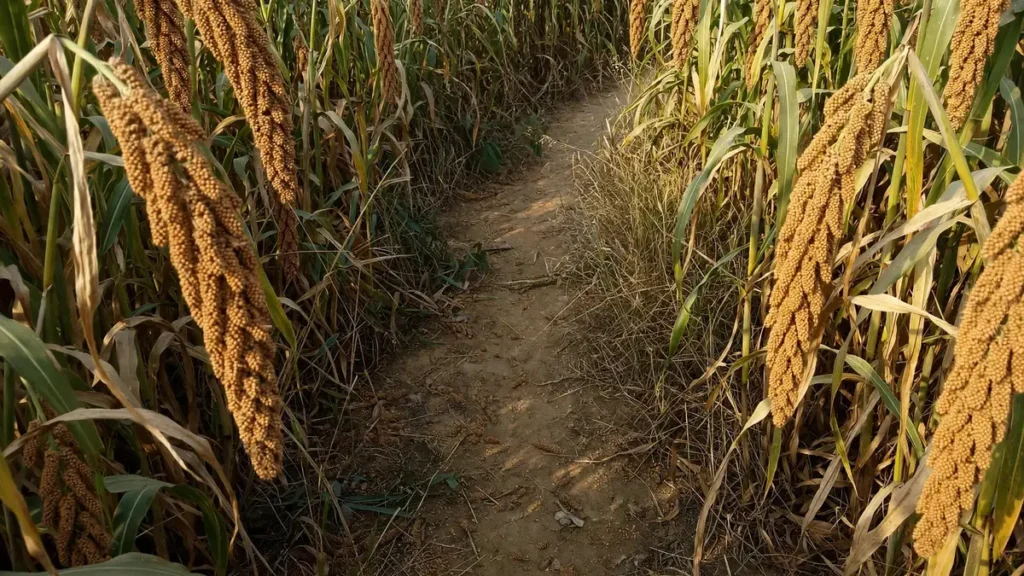
The grain itself is what makes the trip different. Millet ripens fast, grows in dry soil, and feeds villages across the Sahel, India, China and the American plains. A millet field at harvest is a field of golden heads bending under their own weight, and the work of cutting, threshing and winnowing it is work that has barely changed in thousands of years.
This guide walks through the nine steps that turn a vague idea into a booked trip: picking the millet type, finding the farm, timing the harvest, packing for dust and heat, and leaving room for the plan to move when the grain does.
Key takeaways
- Pick the millet type first, because pearl, finger, foxtail and proso millet grow in different places and ripen in different weeks.
- The harvest week moves with the dry season, so book flights that can shift and confirm the date with the farm twice.
- Most millet farms are small family farms, so expect plain rooms, shared meals and early starts instead of hotel service.
- The work is hands-on and dusty, with sickles, threshing and winnowing, so sturdy shoes and a hat matter more than rain gear.
- No farm can guarantee a harvest on a set date, and a trip built around one threshing day can leave you facing an empty field if the rains arrive early or late.
What a millet farm escape involves
A millet farm escape is a stay of two to five nights on a working millet farm, where the farm is the reason for the trip rather than a backdrop. You sleep in a farmhouse room or a small guest cabin, eat meals cooked from the farm’s own grain, and take part in the season’s work — walking the rows, cutting the stalks when the heads have dried, threshing them, and winnowing the grain until the wind has taken the chaff.
The days are simple. Work happens in the cool morning hours, the kitchen cooks the grain at midday, and the afternoon is for rest, a walk, or a visit to the nearest market. Evenings are for the table, and the table is where the grain earns its keep, from bajra rotis in India to tô in West Africa to foxtail millet porridge in northern China.
The trip suits travellers who like plain food, early mornings and honest work. It does not suit travellers who want a spa, a set menu, or a schedule that never moves. The harvest moves, and a good millet escape moves with it.
How to plan it and what to look for
Start with the grain, not the map. Pearl millet grows in the Sahel and western India, finger millet in the highlands of East Africa and southern India, foxtail millet on the plains of northern China, and proso millet on the high plains of America. Each one ripens in a different week, and each one is cooked differently, so the type you pick decides the country, the season and the food.

Look next at how the farm looks after its guests. Good farms keep their groups small, usually no more than a dozen guests at once, so the harvest work is honest labour rather than a show put on for visitors. They also set out clearly what the nightly rate covers — meals, transport from the nearest town, and guided walks are included in the price, not charged on arrival. A farm that answers questions about the harvest, the food and the heat openly and directly is usually one that treats its guests well. Our guide to planning a sesame farm escape applies the same test, and it is the simplest way to choose between two farms that look alike on paper.
The 9 steps to plan a millet farm escape
Let the millet type decide the country
What to do: Choose between pearl, finger, foxtail and proso millet, then let the type choose the country. Pearl millet points to the Sahel or western India, finger millet to East Africa or southern India, foxtail millet to northern China, and proso millet to the American high plains. What to avoid: Picking a country first and hoping the grain is there. Best for: Travellers who want the food to match the field. Time needed: An evening of reading. Standout tip: Learn the local name for the grain — bajra, ragi, xiaomi — before you search, because farms use the local name, not the English one.
Find out how the threshing is done by hand
What to do: Ask whether the threshing is done by beating, trampling or oxen, and whether guests can take part. Hand threshing is the part of the harvest most guests remember, and a farm that welcomes you into it is a farm that treats guests as helpers, not spectators. What to avoid: Assuming every farm threshes the same way. Best for: Travellers who want real work. Time needed: One email. Standout tip: Ask who does the threshing on the farm — the answer tells you whether the work is shared or staged.
Check whether the kitchen mills its own grain
What to do: Ask whether the farm mills its millet into flour, and whether the kitchen cooks the grain from the same harvest you will help with. A farm that mills its own grain usually cooks it well, and the meal the same evening is often the best food of the trip. What to avoid: Booking a farm whose kitchen buys its flour from town. Best for: Cooks and food lovers. Time needed: One email. Standout tip: Ask for the dish the farm is proudest of, and plan your stay around the day it is cooked.
Wear long sleeves and closed shoes for the harvest
What to do: Pack sturdy closed shoes, a wide hat, long sleeves, sunscreen, and clothes you can wash easily. A light scarf helps at threshing time, when the chaff floats in the air, and a water bottle is worth more than a second camera lens. What to avoid: Packing rain gear or white clothes for a dry harvest. Best for: Every traveller on this list. Time needed: An hour of packing. Standout tip: Bring a pair of shoes you do not mind ruining, because threshing dust gets into everything.
Learn one millet recipe from the region
What to do: Learn one dish — bajra roti, ragi mudde, tô, or foxtail millet porridge — before you travel, so you know what to ask for and how to eat it. A little knowledge turns a meal into a conversation with the cook. What to avoid: Arriving with no idea what the grain becomes on the plate. Best for: Travellers who enjoy food culture. Time needed: An evening of reading. Standout tip: Learn the greeting in the local language too, because the kitchen is where the farm’s hospitality lives.
Visit the local market with the farm’s neighbours
What to do: Keep one morning free for the nearest market, where the grain is sold, the flour is milled, and the farm’s neighbours shop. Markets are where a millet region shows its real life, and they are worth more than a second day in the fields. What to avoid: Filling every hour with farm work and leaving no time for the town. Best for: Travellers who like markets and people. Time needed: A morning. Standout tip: Buy a bag of the farm’s own flour at the market stall, if the farm sells there, and take it home.
Buy a bag of the farm’s own flour
What to do: Ask whether the farm sells flour, grain or seed to visitors, and whether it can pack it for travel. A bag of the farm’s own millet flour is the best souvenir on this trip, and it cooks well at home. What to avoid: Buying grain from a town shop and assuming it came from the farm. Best for: Cooks who want to keep the trip going. Time needed: Ten minutes at the farm shop. Standout tip: Ask the cook for the recipe to go with the flour, and write it down before you leave.
Save your final day for town
What to do: Keep the last day for the nearest town, with a slow morning, a long lunch, and time to walk. A town day turns a moved harvest into a good trip instead of a wasted one, and it gives the farm a buffer if the threshing runs late. What to avoid: Booking a flight home for the morning after the harvest. Best for: Travellers who like a soft landing. Time needed: A day. Standout tip: Stay in the town the night before your flight, so a slow farm road cannot make you miss it.
Confirm the harvest week twice before booking flights
What to do: Confirm the harvest week when you first enquire, and confirm it again the week before you travel. Millet ripens fast and the week moves with the dry season, so a second check catches a moved harvest before your flights are fixed. What to avoid: Booking non-changeable flights around a single harvest date. Best for: Every traveller on this list. Time needed: Two emails. Standout tip: Ask the farm what happens if the grain is not ready — a good farm will have a second activity ready, and a bad one will not answer.
Picking the right season and region
If this is your first millet trip, go in October or November. The Sahel and India both harvest in those months, the weather is dry, and the work is at its busiest. The Haryana stay is the cheapest on this list and the most welcoming, and the Niamey stay pairs the harvest with a Sahel landscape that fills a slow evening.
If you want China, go in September or October, when the foxtail millet is cut on the North China plain and the porridge season begins. If you want America, go in August or September, when the proso millet comes off the high plains and the harvest is partly mechanised. Our guide to planning a quinoa farm escape uses the same idea: choose the season first, then the country, not the other way round.
If food is what matters most, look to India or China. The Haryana kitchen does more with bajra rotis than any other farm on this list, and the Hebei stay pairs the grain with a porridge tradition that is generous and varied.
The caveats that matter
Millet farming depends on the weather in a way that surprises people on their first visit. Farms offer their best estimate, not a promise, and a trip built around a single threshing day is a risk.
| Detail | What is known |
|---|---|
| Best time to travel | Late summer and autumn, when the grain heads are dry and heavy; the exact week moves with the dry season |
| How far ahead to book | Two to three months ahead for the harvest weeks, and sooner for the small family farms |
| How long a stay runs | Two to five nights on most farms, with the harvest work in the cool morning hours |
| Who should take care | Travellers with dust allergies, heat sensitivity, or limited mobility on steep terraces |
| What the work involves | Cutting stalks with a sickle, threshing the heads, and winnowing the grain in the wind |
| Gluten-free note | Millet itself has no gluten, but a shared farm kitchen may handle wheat, so ask before you book |
| What to pack | Sturdy shoes, a wide hat, long sleeves for the sun, and clothes you do not mind getting dusty |
| What it does not do | It does not guarantee a harvest day, a set menu, or hotel-style service on a working farm |
If you have a dust allergy, a wheat allergy, or a health condition that heat makes worse, talk to the farm before you book. One quick question about the kitchen and the threshing yard before you book can prevent a difficult stay, and a farm that answers it frankly is usually worth visiting. Our guide to planning an amaranth farm escape makes the same point, because the grain changes and the advice does not.
Checklist: before you book a millet farm escape
Use these checks before you book, and again the week before you travel.
- Pick the millet type first, because the type decides the country, the season and the food.
- Confirm the harvest week with the farm in writing, and ask what the backup plan is if the grain is not ready when you arrive.
- Ask what the nightly rate includes: meals, transport from the nearest town, and guided walks should be covered by the price, not added later.
- Ask what the kitchen cooks and whether it can manage a gluten-free or vegetarian request.
- Pack for dust and sun: sturdy shoes, a wide hat, long sleeves, and clothes that are easy to wash.
- Save a day at the end for the nearest town, so a moved harvest still leaves you with a good trip.
Frequently asked questions
When should I book a millet farm stay?
Two to three months ahead for the harvest weeks, and sooner for the small family farms, which take only a handful of guests. The cheapest stays book out first, because the harvest weeks are short and the rooms are few.
Does the harvest work need real fitness?
Moderately fit is enough. The cutting is done with a sickle and takes a steady arm, the threshing is rhythmic rather than heavy, and the winnowing is light work that anyone can learn. If you have a bad back or a dust allergy, tell the farm and ask for the kitchen work instead.
What if the harvest week shifts after I book?
Ask the farm before you book. A good farm will have a second activity ready — a market visit, a cooking lesson, or a walk through the fields — and will tell you plainly. A farm that cannot answer is a farm to avoid, because the harvest moves often and the plan should move with it.
Can I eat millet if I avoid gluten?
Millet itself has no gluten, so the grain is safe on its own. The risk is a shared farm kitchen that also handles wheat flour, so ask the farm about cross-contact before you book, and tell the cook when you arrive.
Is there a reason to visit a millet farm outside harvest?
Yes, if you go for the food and the place rather than the work. The kitchen cooks millet all year, the markets run all year, and the landscape is worth a slow walk. What you lose outside harvest is the threshing itself, which is the part most guests remember.
How much does a full week on a millet farm run to?
On this list, a week runs from about $400 on the cheapest Indian and Sahelian farms to about $2,600 on the dearest American and Chinese stays, with meals usually included. Add flights, transport from the nearest town, and a night in town at the end.
The bottom line
The best millet farm escape in 2027 is not the most expensive or the most famous. It is the one where the grain is real, the kitchen cooks it, and the harvest week falls on your travel dates. For a first trip, Haryana is the cheapest stay and the friendliest one. For the grain’s own story, Niamey puts you where millet first grew.
Pick the millet type, confirm the harvest week twice, pack for dust and sun, and leave a free day at the end. That is the honest way to plan a millet farm escape, without the disappointment that comes from expecting a hotel on a working farm.