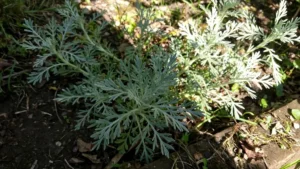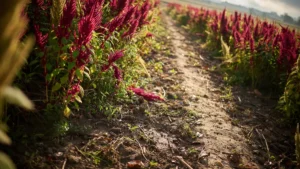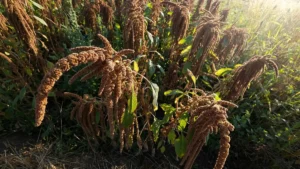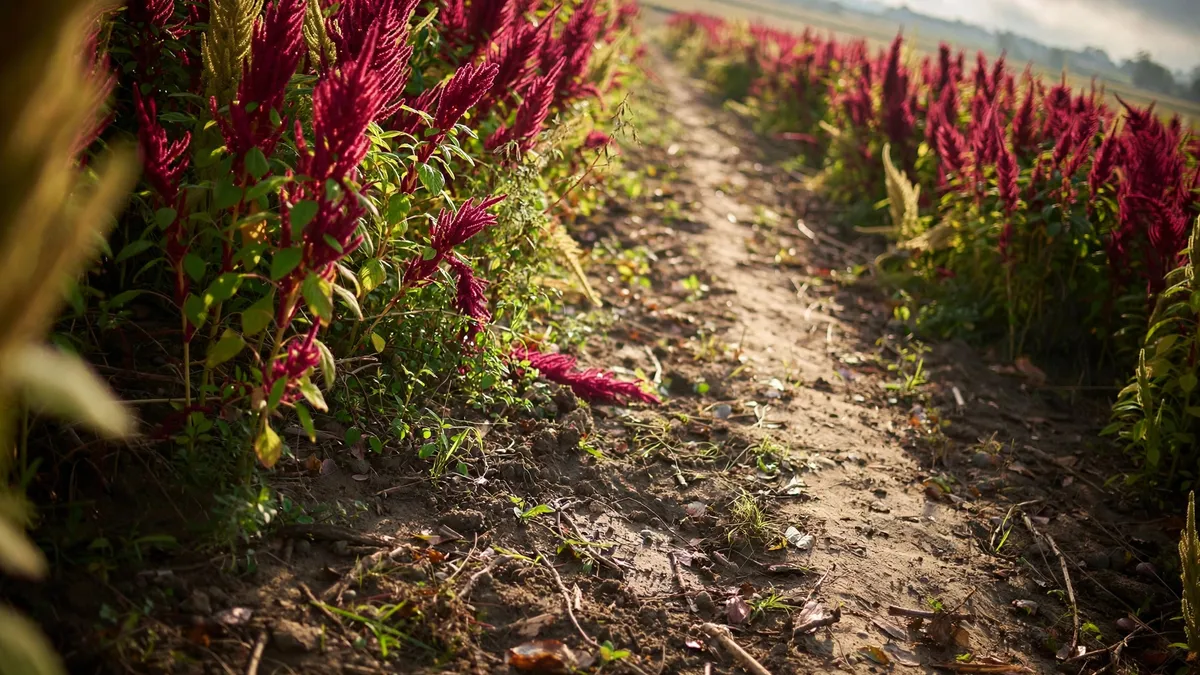

An amaranth farm escape is not a holiday you can plan by the calendar alone. The crop sets the dates, the heat sets the pace, and the farm sets the rules. Get those three things right and the trip runs itself: you arrive rested, the seed heads are dry, and the farm has time for you. Get them wrong and you spend the week chasing a harvest that finished early or never started.
The good news is that planning an amaranth trip is mostly a matter of asking the right questions early. Farms that grow amaranth are used to visitors who arrive in the wrong clothes, on the wrong week, and they will tell you plainly what to do differently if you ask.
Use this guide next to a farm’s own information, not in place of it. A farm knows its fields, its weather and its kitchen better than any article can, and a short email exchange with the farm is worth more than a week of reading about amaranth in general.
Key takeaways
- Choose the harvest month first, then the region, then the farm — the crop’s calendar decides the trip, not the map.
- Book the farm stay before the flights, because harvest-week rooms go first and flights are easier to move than a harvest.
- Ask whether the leaf harvest is part of the stay, or you may miss the green half of the amaranth kitchen.
- Ask for the harvest dates and the rate breakdown in writing, so a shifted harvest does not turn into a dispute.
- No plan survives a late rain or a flattened field, so keep a spare day and a nearby town in the itinerary.
What an amaranth farm escape involves
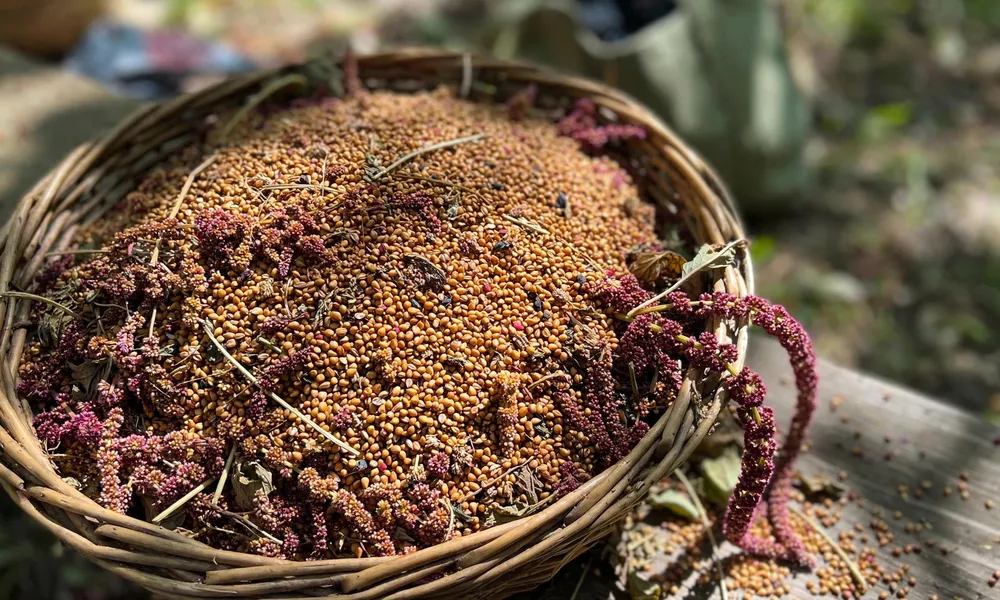
An amaranth farm escape is a short working stay, usually three to five nights, on a farm that grows amaranth as a real crop. You sleep in a farmhouse room or a small guest cabin, eat with the household, and join the season’s work. That work is simple and physical: walking the rows to check the seed heads, cutting them when they are dry, threshing them on a canvas sheet, and winnowing the grain so the wind carries off the chaff.
Amaranth seed comes from a plant in the same family as spinach and beetroot, which is why the leaves are food as well as the grain. It was domesticated in Mesoamerica thousands of years ago, and it still grows best where the sun is strong and the soil is poor. Its leaves are food too, picked young and cooked like spinach, which is why the same plant feeds the table twice.
Most amaranth farms sit in warm country, from the Mexican highlands to the Kenyan lakeshore, and the farms in Iowa and the Himalayan hills are warm by midday too. That heat shapes the trip: the early starts, the long midday rest, the need for water and a hat, and the habit of working in the cool hours. An escape that ignores the heat wastes its first two days.
How to plan it and what to look for
Begin with the harvest month, not the destination. In Mexico and Guatemala the harvest falls in late summer and autumn; in the Andes it falls in spring; in the Himalayan hills it depends on the valley and the year. A farm that puts a harvest week in writing, and explains what happens if the week moves, is a farm that has done this before.
Look next at what the stay actually covers. Meals, transport from the nearest town, and any guided walks should be written into the price, not discovered on arrival. Small farms are usually honest about this, and a farm that answers questions about the harvest, the food and the heat in plain language is usually a farm that runs a good stay. Our guide to planning a sesame farm escape makes the same point, and it is the handiest habit in farm travel: get the practical answers in writing before you pay.
Finally, look at the journey around the farm, not just the farm itself. An amaranth stay works best when the farm is within reach of a town with a market, a clinic and a place to spend a slow day.
The 9 steps to plan an amaranth farm escape
Work out when the seed heads dry, then pick your dates
What to do: Find the harvest month first, then pick a region that harvests in a month you can travel. Mexico and Guatemala harvest in late summer and autumn, the Andes in spring, and the other regions vary by valley and year.
What to avoid: Picking a region for its photographs, then discovering its harvest falls in a month you cannot travel. Best for: Travellers whose holiday dates cannot move. Time needed: A single evening, plus one email to the farm. Standout tip: Ask for the previous year’s harvest dates as well — they show how far the week can shift.
Wait for the farm to confirm before booking any travel
What to do: Reserve the farm first, get the harvest week in writing, and only then book flights. Rooms during harvest week are few, and they go to the people who ask earliest.
What to avoid: Grabbing a cheap flight before the farm room is secured. Best for: Anyone travelling in late summer or autumn. Time needed: About a week of messages, with replies usually inside two days. Standout tip: Ask the farm to keep the room for two days while you sort out flights.
Ask whether the leaf harvest is part of the stay
What to do: Ask the farm whether the young leaves are picked and cooked during your stay, and whether you can join the picking. In Kenya and Nepal the leaves are a daily food; in Mexico and Iowa the grain is the point.
What to avoid: Arriving expecting leafy greens and finding a farm that grows the grain only. Best for: Anyone who enjoys cooking with the harvest. Time needed: One question in your first email to the farm. Standout tip: The leaves are best picked young and small — ask the farm to show you which ones to cut.
Choose footwear with grip for uneven ground
What to do: Pack light layers you can add and remove, a hat, sunscreen, a water bottle and sturdy shoes with grip. The morning will be cool, the midday heat will be strong, and the threshing floor will be dusty.
What to avoid: Packing for one temperature, or bringing smart clothes that cannot survive a dusty threshing floor. Best for: Anyone who has never farmed in a warm climate. Time needed: One evening, packing against the farm’s own advice. Standout tip: A bandana helps twice over — against the dust at threshing and against the sun at noon.
Learn to pop the grain on your first day
What to do: Ask the farm to show you how to pop amaranth on your first day: a hot dry pan, a spoonful of grain, and a lid, with the seeds bursting in seconds. Once you can pop it, you can taste the harvest at every meal.
What to avoid: Waiting until the last day to learn the popping, and leaving without ever tasting the grain you helped harvest. Best for: Travellers who want every stage of the harvest. Time needed: Half an hour in the farm kitchen. Standout tip: Popped amaranth keeps for weeks in a jar, so learn the trick early and take some home.
Check what seed, flour and popped grain you can take home
What to do: Ask the farm what you can buy to take home: dried seed, milled flour, or popped grain in a jar. Ask about customs rules too, because some countries restrict unprocessed seed.
What to avoid: Filling a bag with unwashed grain at the last minute and having it taken at the airport. Best for: Travellers who want edible souvenirs. Time needed: One question in your first email, and ten minutes at the farm shop. Standout tip: Buy the flour the farm mills, not the prettiest bag — the farm knows which variety bakes best.
End the trip with a market morning
What to do: Keep the final morning free and walk to the nearest market. Buy grain, dried herbs and whatever the farm points to, and let the farm show you what to look for.
What to avoid: Cramming the last morning with field work and then hurrying to the airport with a sack of dusty grain. Best for: Shoppers who like a slow last morning. Time needed: One morning, with the lift sorted the evening before. Standout tip: Take the farm’s advice on which sack to buy — the prettiest one is rarely the best cooking grain.
A market morning is the right way to end a farm trip.
Plan around the Day of the Dead if the dates allow
What to do: If you can travel in late October, ask whether the farm marks the Day of the Dead, when amaranth skulls and alegría appear in the markets of Tlaxcala and Puebla. The festival week is the liveliest time to visit, and the farm will know the dates.
What to avoid: Arriving in festival week without a booking, when the small farms and the town rooms are already full. Best for: Travellers who like festivals and food culture. Time needed: Book three to six months ahead for festival week. Standout tip: The markets sell amaranth skulls for a few days only — buy them early in the week.
Book a hotel night in town after the farm
What to do: Add one unplanned day in the nearest town after the farm stay, before your flight home. Sleep late, eat well, and let your body come down from the heat and the early starts.
What to avoid: Booking a flight for the morning after the farm stay, when you are tired, dusty and still on farm time. Best for: Anyone flying home from a warm-climate trip. Time needed: A whole day, with a town hotel already booked. Standout tip: Spend the day washing and repacking, not adding another outing.
Picking the right season and region
Season matters more than region for an amaranth trip. The Mexican harvest in late summer and autumn is the classic window, with dry days, hot middays and fields at full colour. The Andean harvest in spring suits travellers who cannot get away in autumn. India and Nepal vary by valley, so the farm’s own dates matter more than any general calendar.
The region decides what the journey around the farm looks like. The Tlaxcala stay pairs the harvest with a volcano, Oaxaca pairs it with markets and craft towns, and the Himalayan terraces pair it with walking. If the harvest shifts, a good second attraction saves the trip, and a farm near a town with a market and a clinic beats a farm with a prettier view. Our guide to planning a quinoa farm escape uses the same test, and it holds for every farm crop: the farm is why you go, but the region is what carries the trip when the weather turns.
Think about heat honestly. If you struggle in strong sun, pick a cooler farm — the Guatemalan highlands or the Himalayan slopes — rather than the Kenyan lakeshore. If you are comfortable in the heat, the lowland farms give you the most dramatic amaranth country on earth.
The caveats that matter
Amaranth farming is weather-dependent, and the harvest window is short. A late rain can push the harvest back by two weeks, a heavy storm can flatten the seed heads overnight, and a farm can only give you its best estimate. Travellers who build their whole trip around a single threshing day are gambling, and the farm is not to blame when the weather wins.
| Detail | What is known |
|---|---|
| Best harvest window | Late summer to autumn in Mexico and Guatemala; spring in the Andes; winter in the Himalayan hills |
| How far ahead to book | Three to six months for Mexican harvest weeks; two months for other regions |
| Heat to expect | Hot middays in Mexico, Kenya and Bolivia; cooler in the Guatemalan highlands and Himalayan slopes |
| How long to stay | Three to five nights, with the harvest work in the cool morning hours |
| What to pack | Light layers, a hat, sunscreen, a water bottle and sturdy shoes with grip |
| What the rate should cover | Meals, transport from the nearest town and guided walks, listed in writing |
| Who should take care | Anyone with a grain or seed allergy, and anyone who struggles in strong heat |
| What can go wrong | Late rain, a flattened field, a shifted harvest, and heat exhaustion on day one |
If you take regular medication, are pregnant, or have a grain or seed allergy, talk to your clinician before travelling to a grain farm, and tell the farm about the allergy before you arrive. A kitchen that knows in advance can cook around an allergy; one that learns at the table cannot.
Checklist: before you book an amaranth farm escape
Use these checks before you pay, and again a week before you travel.
- Get the harvest week confirmed in writing, with the farm’s plan if the dates move.
- Get the rate in writing: meals, transport from the nearest town, and guided walks should all be written down.
- Ask whether the leaf harvest is included, and whether you can join the picking.
- Make sure your insurance covers travel to a remote farm and evacuation if needed.
- Send the farm your allergies and dietary needs ahead of arrival, not at the table.
- Read the cancellation terms: a stay that cannot shift your dates when the harvest moves is a risk, not a bargain.
Frequently asked questions
What is the booking window for an amaranth farm escape?
Three to six months ahead for Mexican harvest weeks, when the small farms fill up fast. Two months is usually enough elsewhere, but the harvest-week rooms still go first. Book the farm before the flights, and ask for the harvest week in writing.
Is altitude a problem on amaranth farms?
Usually not, because most amaranth farms sit low or at mid-altitude. The Sacred Valley stay is the exception, at around 2,800 metres, where a slow first day is sensible. Heat is the bigger challenge on most amaranth farms, not height.
Is there anything to do on the farm outside harvest week?
Yes, if you go for the landscape, the food and the walking instead of the harvest itself. The fields are green and quiet outside harvest season, and the farm kitchen still cooks with stored grain and fresh leaves. But if the harvest is why you are going, wait for the harvest week.
Can the farm move my dates if the harvest shifts?
It happens, usually after a dry spell or a heavy storm. Ask the farm how it handles a moved harvest when you book: a good farm will move your dates, suggest a nearby farm, or offer a different week. Keep a spare day in the plan either way.
Are children welcome on an amaranth farm?
Children of eight and older usually enjoy the work, the animals and the meals. Smaller children find the heat and the early starts hard. Ask the farm if it has welcomed children before, and what their days look like.
How much money should an amaranth trip take?
Most stays on this list run from $70 to $440 a night, usually including meals, for three to five nights. Add flights, transport to the farm, and a night in town on either side. A realistic total for a week, excluding long-haul flights, is $900 to $2,800.
The bottom line
Planning an amaranth farm escape comes down to three decisions: the harvest month, the farm, and the heat. Get the month right by asking the farm, book the farm before the flights, and give yourself a slow first day in the sun before any work. Everything else — the packing, the market morning, the slow day in town — follows from those three decisions.
Keep the plan simple and leave a spare day. The farm sets the calendar, the weather sets the harvest, and the traveller who accepts both enjoys the better trip. Our guide to planning a safflower farm escape makes the same point about harvest timing, and it holds for every farm crop: ask the farm, trust its answer, and leave room for the season to move.