
Wormwood is the bitter herb behind absinthe, and in perfume it smells exactly like its history suggests: green, dry, and slightly dangerous. The plant is Artemisia absinthium, a silvery-grey herb that grows wild across Eurasia, and its name on a note list is one of the rarest sights in modern perfumery.
The note is rare for a reason. The oil is fierce, bitter and closely regulated, so most houses pick simpler green materials instead. When wormwood does appear, it is usually a small dose in the heart or the base, lending a dry herbal edge that makes everything around it smell sharper and older.
What follows is a plain guide to the herb itself, the route it takes into a bottle, and how to read it when it appears under its other name, absinthe, so a genuine wormwood perfume is easy to tell from a green scent that only flirts with the idea.
Key takeaways
- Wormwood is Artemisia absinthium, the bitter herb that gives absinthe its name and its green bite.
- The note smells bitter, green and dry, with a herbal sharpness and a faint smoky edge.
- Wormwood usually appears in small doses in the heart or base, where it sharpens the rest of the scent.
- The word absinthe on a note list almost always means wormwood is inside the formula.
- No note list replaces a skin test, because wormwood’s bitterness reads very differently from one wearer to the next.
What wormwood is, and where it comes from
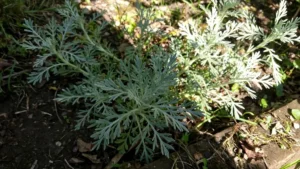
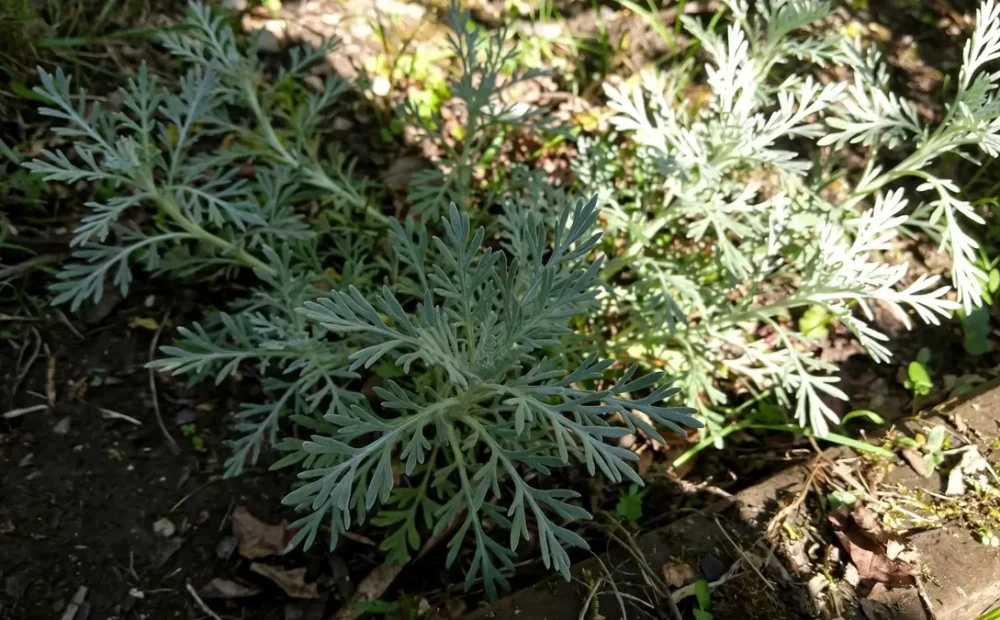
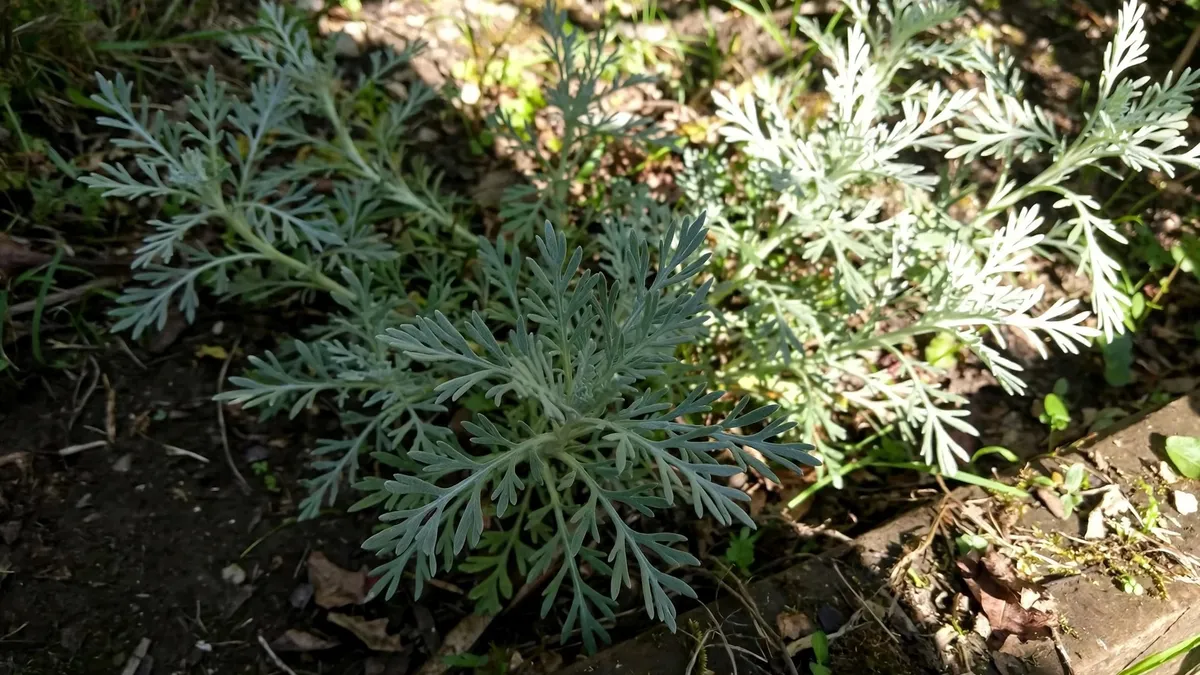
Wormwood is Artemisia absinthium, a perennial herb in the daisy family that grows wild on dry, rocky ground across Europe and Central Asia, and has since spread to North America. The plant is easy to recognise: silvery-grey leaves, finely divided like lace, and small yellow flower heads that carry almost no scent of their own. The smell lives in the leaves and the flowering tops, and it is bitter from the first touch.
The bitterness is the point. Wormwood’s name in Greek, apsinthion, means undrinkable, and the plant has been used as a bitter medicine since ancient Egypt and Greece, where it was taken for digestion and fevers. The same bitterness went into wine: vermouth takes its name from the German word for wormwood, wermut, because the herb was its original flavouring.
In perfume, wormwood is the herb behind absinthe, and the two names are used almost interchangeably on note lists. For the closest comparison, see our guide to what a yarrow perfume is: yarrow is a daisy-family relative that shares some of wormwood’s chemistry and some of its reputation for bitterness.
How wormwood ends up in a perfume bottle
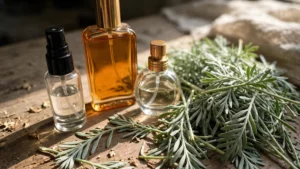
The route into a bottle is steam distillation of the leaves and flowering tops, which yields a dark green, fiercely bitter oil. Perfumers use far less of it than of most herbal oils. Even a small measure can dominate a blend, and an over-generous hand leaves the whole composition smelling of a pharmacy shelf.
Once blended, wormwood generally finds its place in the heart or the base. It is too dry and too bitter to open a scent, and its green edge is not the bright freshness that lifts a top note. It works underneath instead, giving woods, leather and resins a dry herbal spine, and making sweet or floral notes beside it smell sharper by contrast.
Perfumery places a ceiling on how much wormwood a bottle may hold. The oil carries thujone, a compound regulators cap in finished products, so the dose stays small by rule as well as by taste. That is another reason a bottle listing wormwood rarely lets it lead.
Nine facts about wormwood in perfume
Wormwood is the herb behind absinthe
Absinthe, the green spirit that haunted Paris cafes in the nineteenth century, takes its name and its character from wormwood. The herb is the first botanical in the traditional recipe, steeped in alcohol with anise and fennel, and it is wormwood that gives the drink its bitter edge and its pale green colour. When a perfume lists absinthe as a note, it is naming this same herb in a different form.
What it shows: The absinthe name on a note list is a wormwood signal, not a separate ingredient. What to consider: A perfume that calls itself absinthe may smell more of anise than of wormwood, because the drink’s recipe is a blend.
The scent is bitter, green and sharply dry
The first thing you smell in wormwood oil is bitterness, not the soft green of cut grass or the sweet green of basil, but a dry, almost dusty bitterness with a herbal sharpness underneath. There is a faint smoky edge, a trace of camphor, and nothing sweet to soften it. That dryness is what makes wormwood useful: it dries out a composition the way a pinch of salt sharpens a dish.
What it shows: That dry bitterness is wormwood’s calling card, unlike any sweeter green herb. What to consider: If you dislike bitter smells, wormwood will not win you over with time, because the bitterness is the note, not a phase.
Thujone gave wormwood its dangerous reputation
Wormwood’s reputation comes from thujone, a compound in the oil that in large amounts affects the nervous system. In the nineteenth century, heavy absinthe drinkers developed tremors and hallucinations, and the blame fell on thujone, though later research suggests the alcohol itself did most of the damage, and that historical thujone levels were lower than the legend claimed. The scare was enough: absinthe was banned in France in 1915 and in the United States in 1912, and the bans lasted for most of a century.
What it shows: The dangerous reputation is real history, but the chemistry behind it was exaggerated. What to consider: A perfume contains only a fraction of the oil, and the thujone in it is capped by regulation, so the scare does not carry over to a bottle.
Artemisia is a whole family, not one plant
Wormwood is one of more than four hundred species in the genus Artemisia, and its relatives turn up in perfume under their own names. Tarragon is Artemisia dracunculus, mugwort is Artemisia vulgaris, and southernwood is Artemisia abrotanum, while sweet wormwood, Artemisia annua, is the source of artemisinin, the antimalarial drug. They share a bitter-green character but smell distinct, and a note list that says artemisia without a species is naming the family, not the plant.
What it shows: That shared ancestry is why wormwood blends easily with tarragon and mugwort. What to consider: A note list that names only artemisia may be using any of its relatives, so the exact smell is not guaranteed.
Wormwood sharpens a scent instead of leading it
Perfumers rarely build a perfume around wormwood. The note is too bitter and too dry to carry a composition on its own, and it works best as a sharpening agent: a small dose in the heart or base that makes the woods smell drier, the leather smell older, and the resins smell less sweet. The perfumes that list it most often are dark, woody or leathery compositions where the bitterness reads as depth rather than as medicine.
What it shows: Wormwood’s job in a blend is to add edge, not to be the smell you notice first. What to consider: A perfume that lists wormwood first on the pyramid may still hide it behind woods and amber.
The note changes as the perfume dries down
Wormwood is at its most bitter in the opening, and the bitterness softens as the perfume dries down. The green herbal edge fades first, leaving a dry, slightly smoky warmth that sits close to the skin, and by the late drydown the wormwood has often disappeared into the woods and resins underneath it. That arc is why a wormwood perfume can smell harsh on a paper strip and quietly elegant an hour later.
What it shows: The softening belongs to the note itself, not to a weak perfume. What to consider: A first-spray verdict will usually make a wormwood perfume seem harsher than an hour of wear proves it to be.
Absinthe on a pyramid means wormwood is inside
On a perfume’s note pyramid, the word absinthe is a shorthand for wormwood. Perfumers use the drink’s name because it sounds better than the herb’s, and because it tells the wearer what to expect: green, bitter, herbal, a little boozy. The practice is common enough that a note list can say absinthe without ever saying wormwood, and the two words mean the same ingredient in practice. A few houses do use a synthetic absinthe accord with no wormwood at all, but that is the exception.
What it shows: Reading absinthe as wormwood lets you decode note lists that never mention the herb. What to consider: The boozy character of absinthe in a pyramid is often anise and fennel beside the wormwood, not the wormwood alone.
Woods, leather and resins are wormwood’s best partners
Wormwood’s best partners are the dark materials: cedar and sandalwood, leather, benzoin and labdanum, amber and incense. The woods give the bitterness something dry to lean against, the leather turns it into an old-book smell, and the resins keep it from fading too fast. Sweet notes fight it. Vanilla and tonka can make wormwood smell medicinal, and bright citrus can make it smell sour, so the best wormwood perfumes stay in the dark half of the palette.
What it shows: The dark palette is where wormwood earns its place, and it is why most wormwood perfumes are woody or leathery. What to consider: A wormwood perfume with a sweet gourmand base is a gamble, because the two characters pull in opposite directions.
The herb grows wild from Europe to Central Asia
Wormwood grows wild on dry roadsides, rocky slopes and waste ground from western Europe through to Central Asia, and it has naturalised in North America, where it arrived as a medicine plant. It needs little water and poor soil, and it spreads easily, which is why it is common as a plant and rare as a perfume note: the difficulty is not finding the herb but using it well. Most perfumery oil comes from cultivated plants in Europe, distilled where the herb grows wild.
What it shows: The herb’s abundance makes its rarity in perfume a matter of craft, not supply. What to consider: Wild wormwood and cultivated wormwood smell the same in principle, but the oil’s strength varies with soil and season.
Wormwood, yarrow, and absinthe: telling them apart
Of the three, yarrow is the nearest relative. It belongs to the same daisy family and shares some of the same bitter chemistry, but it smells softer: camphor and green herbs with a faint floral facet underneath, where wormwood stays drier and more uncompromising. Yarrow bottles tend to read greener and gentler than wormwood ones, and smelling the pair side by side is the quickest way to learn the difference.
Absinthe is not a separate note, it is wormwood under a prettier name. The confusion comes from the drink, a blend of wormwood, anise and fennel, so an absinthe note in a perfume can smell more of anise than of wormwood. Green and bitter with a sweet liquorice edge means the anise is doing the talking; dry and herbal with no sweetness at all means the wormwood is. Our roundup of the best lilac perfumes of 2027 shows the opposite end of the floral scale, where a flower note is soft and sweet rather than bitter and dry.
Tansy is the third cousin, more bitter than wormwood and almost never used in modern perfume. Tansy carries the same thujone chemistry and dry herbal character, only harsher, so an intensely bitter, almost acrid bottle is likelier to be tansy than wormwood. Beneath its bitterness, wormwood keeps a smoky warmth tansy never shows, which makes it the easier of the two to wear.
The caveats that matter
A note list is a weak guide to what a wormwood perfume will actually smell like. Dose, placement and skin behaviour are all missing from a note list, so it cannot tell you how much wormwood is in the bottle, whether the herb leads or hides, or how the bitterness will read on you. This note sorts wearers into two camps, a dry herbal lift for some and medicine in a bottle for others, and the split only appears after a day of wear. The same testing problem shows up with chervil, another rare green herb covered in our guide to what a chervil perfume is, and the same advice applies here.
| Detail | What is known |
|---|---|
| What wormwood is | Artemisia absinthium, a bitter-green herb in the daisy family |
| The key molecules | Thujone, camphor, sabinyl acetate and 1,8-cineole |
| Where it usually sits | Heart or base note in most perfumes, rarely on top |
| How long it lasts | The bitter edge fades within an hour or two |
| How it differs from yarrow | Drier and more bitter, with a smoky edge instead of a floral facet |
| How it differs from absinthe | It is the same herb; absinthe is the drink’s name on a note list |
| What it pairs with | Cedar, sandalwood, leather, benzoin, labdanum and amber |
| How to test it | Spray once on the wrist and wear it from morning to evening before deciding |
Checklist: smelling a wormwood perfume honestly
- Confirm wormwood, or absinthe, appears in the published note list, not only in the brand’s marketing copy.
- Find where it sits in the pyramid: a heart placement means a dry herbal spine, a base placement means a smoky warmth underneath.
- Wear a single spray for a full hour before judging it, because the opening bitterness is not the whole story.
- Compare it side by side with a yarrow perfume to learn the cousins apart.
- Try it on a warm day and a cool one, since heat makes the bitter edge read more medicinal.
- Buy the smallest size first, because few notes divide wearers as sharply as this one.
Frequently asked questions
What is the first thing you smell in a wormwood perfume?
Dry and bitter-green, with a herbal sharpness, a faint smoky edge and a trace of camphor, and nothing sweet to soften it. The bitterness peaks in the first hour, then settles into a dry warmth over woods or leather. Most of the time it plays a supporting role in the heart or base, sharpening rather than leading.
Does absinthe on a note list mean the perfume contains wormwood?
Not quite. Absinthe is a spirit made from wormwood, anise and fennel, and wormwood is only one of its botanicals. In perfume, though, absinthe on a note list almost always means wormwood is in the formula, since perfumers borrow the drink’s name for the herb. Sweet and liquorice-like means the anise is leading; dry and bitter means the wormwood is.
What keeps wormwood out of most perfumes?
The oil is fiercely bitter, the dose is tiny, and wearers split over the smell. Because regulators cap thujone in finished perfumes, perfumers dose it lightly, and most houses pick easier green notes instead.
Should I worry about thujone in a wormwood perfume?
Regulators cap the thujone in wormwood oil, and finished perfumes from established houses formulate inside those limits. Patch testing is still wise for sensitive skin, and for anyone allergic to daisy-family plants, since wormwood shares a family with ragweed and chamomile.
How long does wormwood stay on skin once sprayed?
Within an hour or two the bitter green edge is gone, while the woods, leather or amber below it carry on. A woody base keeps a wormwood perfume going till nightfall; a light herbal frame lets it fade by mid-afternoon.
Which notes sit best beside wormwood?
Cedar, sandalwood, leather, benzoin, labdanum and amber. The woods and leather give the bitterness something dry to lean against, and the resins keep it from fading too fast. Bright citrus and sweet gourmand notes clash with wormwood instead of flattering it.
The bottom line
Wormwood is a note for wearers who want their perfume dry, herbal and a little uncompromising: a roadside herb with a banned drink’s name, a thujone reputation, and a smell that has divided noses for more than a century. It stays one of the rarest named notes in modern perfumery, and that rarity is part of its pull.
Wear it once, from morning to evening, and let the drydown decide. If the bitterness settles into a warmth you keep reaching for, wormwood earns its place; if it still smells like medicine at dusk, it never will.