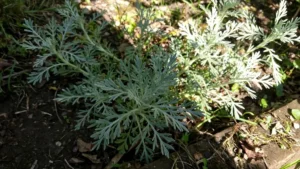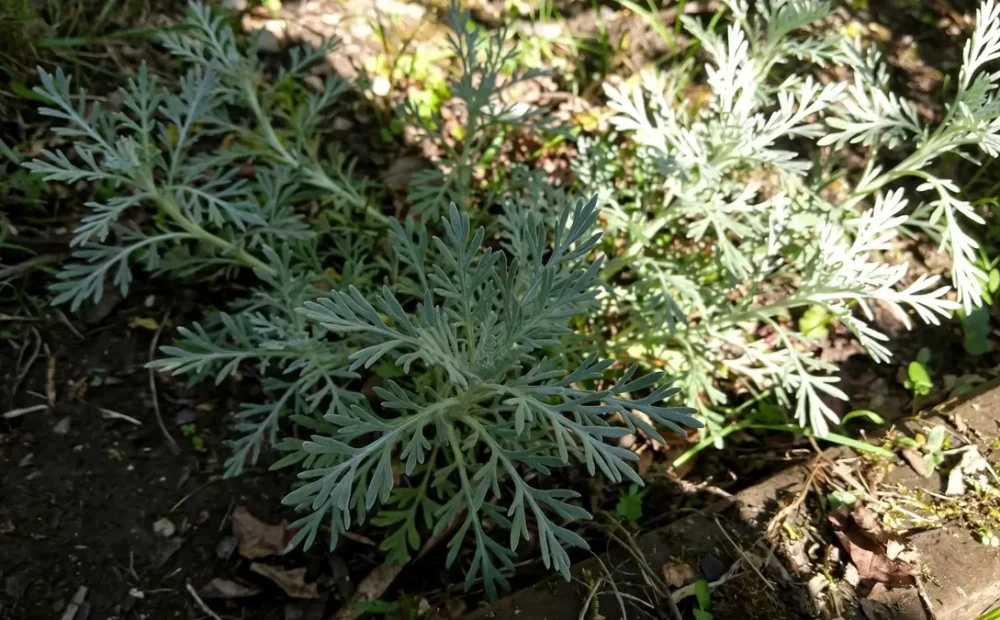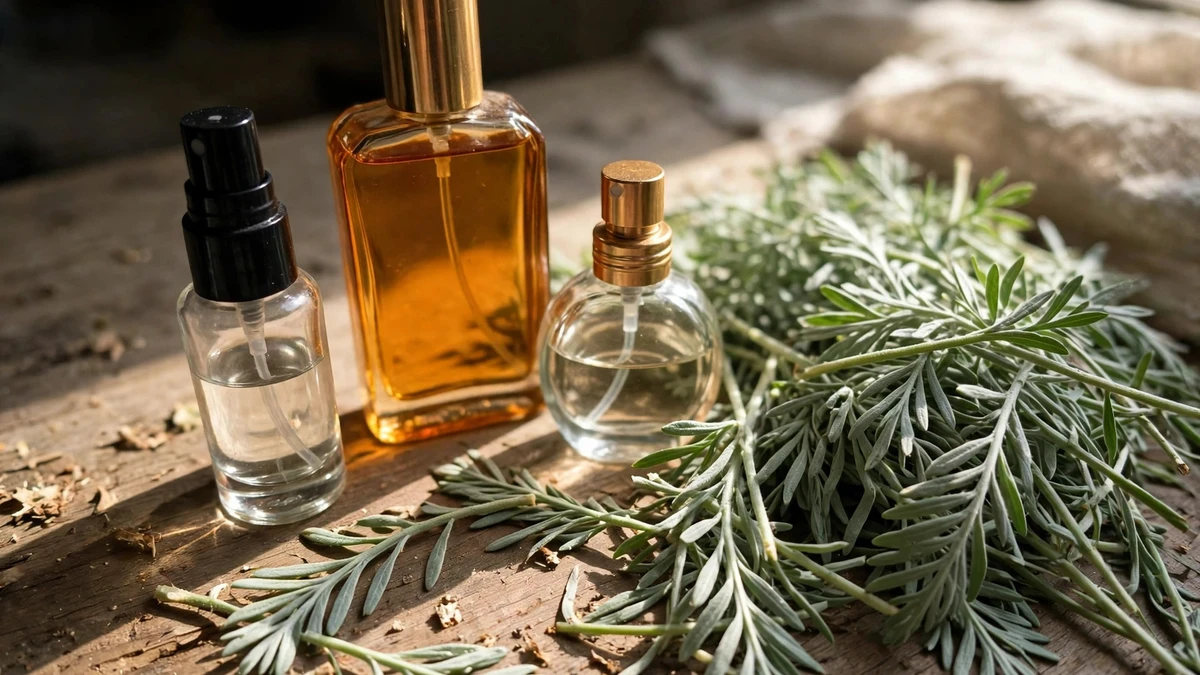
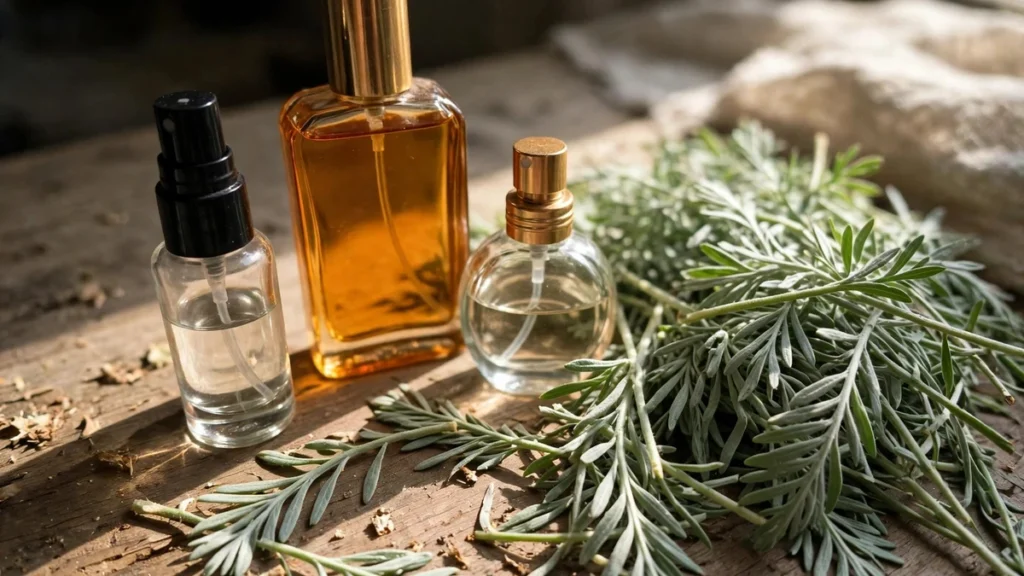
Wormwood is the bitterest herb in the perfumer’s palette, and one of the least forgiving. It is the plant that gave absinthe its green colour and its dangerous reputation, a grey-green herb with feathery leaves that grows wild on dry hillsides from Spain to Kazakhstan. In a bottle it smells nothing like a flower: dry, herbal and sharply bitter, with a camphor edge that can read as medicine or as magic, depending on the dose.
That bite is exactly why perfumers keep coming back to it. A small amount lifts a composition the way salt lifts food, cutting sweetness and sharpening woods. Too much turns the whole scent harsh and medicinal, which is why the nine bottles below dose it with such care, and why the price runs from twenty dollars to more than four hundred.
Below are nine perfumes that genuinely list wormwood as a named note, each one checked against its published note list, with what each bottle does with the herb and what to watch for before you buy.
Key takeaways
- Wormwood is Artemisia absinthium, a bitter-green herb in the daisy family, and it usually enters a perfume as a top or heart note.
- The note smells dry, herbal and sharply bitter, with a camphor edge and almost no sweetness.
- Wormwood perfumes are uncommon, so the nine below span budget houses, indie brands and luxury names.
- Prices run from $20 to $465, and the cheapest bottles are often the most direct about the note.
- No note list replaces a skin test, because wormwood’s bitter edge can read very differently on warm skin.
What wormwood actually smells like in a bottle
Wormwood in a bottle smells green in a way that has nothing to do with leaves or cut grass. It is dry and bitter, with a sharp herbal edge and a camphor warmth that recalls eucalyptus and old medicine cabinets. There is no floral softness underneath and no sweetness to round it off, which is why a first spray can surprise anyone expecting a gentle herbal scent.
That dryness is what makes wormwood useful: in small amounts it cuts through sweetness, gives woods a green backbone, and keeps leather from turning heavy. Dosed without restraint it swamps the blend with bitterness, so every bottle below keeps the amount deliberately small.
Where wormwood sits in the pyramid changes everything about it. As a top note it is a sharp green flash that fades within minutes; as a heart note it becomes the steady bitter core of the scent. Our roundup of the best sweet pea perfumes shows the same effect, because a note in the heart behaves very differently from the same note on top.
How we chose these nine and what to look for
Every pick below lists wormwood in its published note list, checked against Fragrantica and brand descriptions before it was included. Nothing made the list on a guess, a slogan, or a name that merely sounded botanical. Three perfumes on wormwood-note lists were left out because their prices could not be verified anywhere.
When you compare the nine, look first at where wormwood sits. A top-note wormwood gives a sharp green opening and then steps aside; a heart-note wormwood stays through the middle of the wear and shapes the scent you live with. Then check the bottle size, because the nine below run from 25 ml to 100 ml, and a low price on a small bottle can cost more per millilitre than a higher price on a large one.
Finally, test before you commit. Wormwood’s bitter edge softens on some skin and sharpens on others, and the difference between a green herbal scent and a medicinal one can come down to an hour of wear.
The 9 best wormwood perfumes of 2027
Eau de Neige — Fragrance World
What we like: The lowest-priced bottle in this list, and the one that puts wormwood right at the front. Citrus and wormwood give it a cold, clean start, and mint and amber keep it fresh rather than medicinal. It smells like a winter morning in a bottle, crisp, green and slightly icy.
What to consider: The wormwood fades fast, and the drydown is mostly musk and patchouli, so this is a short-lived introduction rather than a long wear. Best For: Men who want a cheap cold green aromatic and a first taste of wormwood. Material: Wormwood, citrus, mint, amber, incense, musk, patchouli. Price Range: $20–$28 for 100 ml. Standout Feature: The cheapest wormwood perfume in this list, and the only one where wormwood opens the scent.
Eau de Neige is the lowest-risk way to learn whether you like wormwood at all.
Mystic Newlands — In The Box
What we like: A dark oriental built on olibanum and amber, with wormwood in the heart adding a bitter green thread that stops the resins from turning syrupy. Cardamom and saffron warm the opening, and the drydown is deep and smoky, with oud and vanilla underneath.
What to consider: It is intense and resinous, and the wormwood heart note can read harsh in the first half hour. Best For: Night wear and anyone who likes dark, resinous orientals. Material: Wormwood, olibanum, cardamom, elemi, patchouli, cumin, saffron, amber, oud, vanilla. Price Range: $50–$60 for 100 ml. Standout Feature: The only wormwood perfume here built as a dark oriental.
Mystic Newlands suits wearers who want their wormwood wrapped in smoke and resin.
Absinthe — Headspace
What we like: A leather scent with wormwood at its core, built on violet leaf and narcissus with a supple leather accord and a vetiver base. The wormwood gives the opening a green, slightly feverish bite that stops the leather from turning heavy, and the whole scent smells like a crowded room at midnight.
What to consider: The 30 ml bottle is small for the price, and the leather can dominate on warm skin. Best For: Evening wear and leather lovers. Material: Wormwood, violet leaf, narcissus, leather, styrax, patchouli, vetiver. Price Range: $95–$110 for 30 ml. Standout Feature: The only wormwood perfume here built around leather.
Absinthe is the most theatrical wormwood in this list, and the best one for a night out.
Gaea — Centauri Perfumes
What we like: An earthy green built on honey and green leaves, with wormwood in the middle adding a bitter herbal edge that keeps the honey from turning sweet. Apple and tuberose give it a strange, almost fermented fruitiness, and the drydown is woody, with patchouli and ambergris underneath.
What to consider: It is discontinued, so bottles come from resale, and the opening can smell sharp, almost vinegary, for the first few minutes. Best For: Earthy green lovers and anyone who wants wormwood with honey. Material: Wormwood, honey, earthy notes, green leaves, apple, tuberose, rose, orris root, patchouli, ambergris, lavender, cedar. Price Range: $140–$152 for 30 ml. Standout Feature: The only wormwood perfume here built around honey and earth.
Gaea is the strangest wormwood in this list, and the one most likely to surprise you.
Absinth — Nasomatto
What we like: The purest wormwood statement here, built on green notes and vetiver with almost nothing else in the way. The herb gives the opening a bitter, almost alcoholic bite, and the drydown is dry and woody, like vetiver roots soaked in green liquor.
What to consider: It is stark and uncompromising, and the 30 ml extrait is expensive for a scent this minimal. Best For: Minimalists and wearers who want wormwood without decoration. Material: Wormwood, green notes, vetiver. Price Range: $185–$200 for 30 ml. Standout Feature: The most concentrated wormwood in this list, in an extrait with almost no other notes.
Absinth is the wormwood for people who want the herb on its own terms.
Saga of the Silk Road — Aura of Kazakhstan
What we like: A spiced oriental built on black pepper, myrrh and incense, with wormwood at the top adding a dry, grassy bite that recalls the steppe itself. Red wine and resins give the middle a dark, almost boozy warmth, and the drydown is rich with tolu balsam and sandalwood.
What to consider: It is a 95 ml bottle at a niche price, and the wormwood top note fades within the first hour. Best For: Spiced oriental lovers and cold-weather wear. Material: Wormwood, black pepper, myrrh, incense, spices, red wine, resins, tolu balsam, sandalwood, ambergris. Price Range: $205–$225 for 95 ml. Standout Feature: The only wormwood perfume here built around a caravan story.
Saga of the Silk Road is the wormwood for people who like their spice with a story attached.
L’Heure Vertueuse III — Cartier
What we like: The most elegant wormwood here, set against verbena, thyme and mastic with lavender and rosemary keeping it aromatic rather than bitter. The wormwood reads as a green, almost medicinal freshness that soothes rather than stings, and the whole scent smells like a herb garden in the early morning.
What to consider: It comes from Cartier’s exclusive Les Heures line, so it is rarely discounted, and the scent is light, so it needs reapplying through the day. Best For: Aromatic green lovers and Cartier collectors. Material: Wormwood, verbena, thyme, mastic, lavender, rosemary. Price Range: $245–$265 for 75 ml. Standout Feature: The only wormwood perfume here from a major luxury house.
L’Heure Vertueuse III is the gentlest wormwood in this list, and the easiest to wear every day.
Douce Amere — Serge Lutens
What we like: A bitter-sweet oriental built on artemisia and absinthe, with vanilla, tiare flower and lily in the heart and cinnamon and sugar underneath. The wormwood gives the opening a green, woody bitterness that holds the sweetness in check, and the whole scent smells like a lily wrapped in spun sugar.
What to consider: It is the sweetest wormwood here, and the sugar and vanilla can overwhelm the herb on warm skin. Best For: Bitter-sweet lovers and Serge Lutens collectors. Material: Artemisia, absinthe, vanilla, tiare flower, lily, cinnamon, jasmine, sugar. Price Range: $285–$300 for 75 ml. Standout Feature: The only wormwood perfume here that pairs the herb with white flowers and sugar.
Douce Amere is the wormwood for people who like their bitterness with a sweet edge.
Agar Parisien — Agar Aura
What we like: The most opulent wormwood here, set between rose, bergamot and grapefruit on top and a deep oud, oakmoss and ambergris base, with wormwood in the middle adding a bitter green thread that keeps the oud from turning heavy.
What to consider: It is sold as a 25 ml extrait at a very high price, and the oakmoss content means anyone with a moss allergy should avoid it. Best For: Oud lovers and collectors of artisanal extraits. Material: Wormwood, rose, bergamot, grapefruit, Thailand oud, Peru balsam, coumarin, oakmoss, cedar, ambergris. Price Range: $440–$465 for 25 ml. Standout Feature: The most expensive wormwood perfume in this list, and the only extrait built on oud.
Agar Parisien is the wormwood for people who want the herb at its most luxurious.
Which wormwood perfume is right for you
For a first taste, begin with the cheapest bottle or the calmest one. Eau de Neige costs little and shows the herb plainly, Mystic Newlands shows it at its darkest inside an oriental, and L’Heure Vertueuse III shows it at its most wearable inside a calm aromatic green.
For an evening, pick the bottles that commit to the note. Absinth lets it stand almost alone, Saga of the Silk Road lets it open a spiced oriental, and Agar Parisien lets it darken an oud extrait. Our roundup of the best star anise perfumes follows the same logic: a sharp note is easier to judge in a simple composition than in a dark, heavy one.
The caveats that matter
Buying a wormwood perfume on the strength of a note list alone is a gamble. The list cannot tell you how much wormwood is actually in the bottle, whether the herb was dosed as a whisper or a shout, or how the bitter edge will behave on your skin. Opinion on this note runs in two directions: some wearers take to the bitter green bite straight away, others find it too clinical to enjoy, and only a day of wear shows which camp you fall into. Our explainer on what a chervil perfume is covers a close relative with the same daisy-family chemistry, and the same testing advice applies here.
| Detail | What is known |
|---|---|
| What wormwood is | Artemisia absinthium, a bitter-green herb in the daisy family |
| Where it usually sits | Top note in most perfumes, heart note in a few |
| What it smells like | Dry, bitter-green and camphoraceous, with almost no sweetness |
| How long it lasts | The bitter edge fades in an hour or two; the woody base carries on |
| What it pairs with | Woods, leather, resins, amber and spices |
| What to watch for | The bitter edge can read medicinal on warm skin |
| What it does not do | It does not smell floral or sweet on its own |
| How to test it | One spray on skin, worn for a full day, before buying a bottle |
Checklist: choosing a wormwood perfume honestly
- Look for wormwood in the official note pyramid, and ignore bottles that only mention the herb in an advert.
- Find the note’s place: an opening wormwood is a sharp flash, a middle one shapes the whole wear.
- Wear one spray for a full day before deciding, because the bitter edge shifts as the scent settles.
- Work out the cost per millilitre before comparing prices, since these bottles run from 25 ml to 100 ml.
- Test it beside a herbal scent you already wear, so you can hear what the wormwood itself is doing.
- Start with the smallest size on offer, because bitter greens split opinion faster than any other family.
Frequently asked questions
Why is wormwood almost never named on a note list?
Because the note is hard to dose and easy to get wrong. A little wormwood sharpens a scent, but a little too much turns it harsh and medicinal, so most houses either leave it out or hide it inside an absinthe accord without naming it.
Can wormwood make a perfume smell like medicine?
Yes, and that is the main risk with this note. Wormwood’s camphor edge can read as medicinal on warm skin, especially in the first ten minutes. The effect usually softens as the top notes fade, but if it still smells like a medicine cabinet after an hour, that bottle is not for you.
Is the wormwood in perfume the same plant as in absinthe?
Yes. The plant is Artemisia absinthium, the same herb that gives absinthe its bitterness and its green colour. In perfume it is used as an oil in tiny amounts, and the finished scent carries none of the drink’s intoxicating effect.
How do I wear a bitter green perfume without it turning harsh?
Use one spray, not three, and put it on skin rather than clothes, where the warmth softens the bitter edge. A wormwood scent also sits better over a plain moisturiser than over a scented lotion. If the opening still feels too sharp, try it in cool weather, when the bitterness reads as freshness rather than medicine.
Does wormwood last on skin, or does it fade fast?
The wormwood itself fades fast. As a top note it is mostly gone within an hour, and even as a heart note its bitter edge softens after two or three hours. What lasts is the base it sits over, usually woods, amber or musk, which is why a wormwood perfume built on vetiver will carry into the evening while a light citrus one will not.
Which wormwood bottle is the safest blind buy?
Eau de Neige, because it costs the least and shows the note most plainly. If you like it, you know wormwood suits you, and if you do not, you have spent very little to learn it.
The bottom line
Wormwood is a note for people who like their green scents dry rather than sweet, and their perfume with a little bitterness in it. The nine bottles above cover every way the herb is used, from a cheap cold cologne to an artisanal oud extrait.
Begin with the cheapest bottle, wear it for a full day, and only then decide whether the bitterness belongs in your collection. The note is uncommon enough that a blind buy is a gamble, but it is distinctive enough that one good wear will tell you whether it earns a place on your shelf.