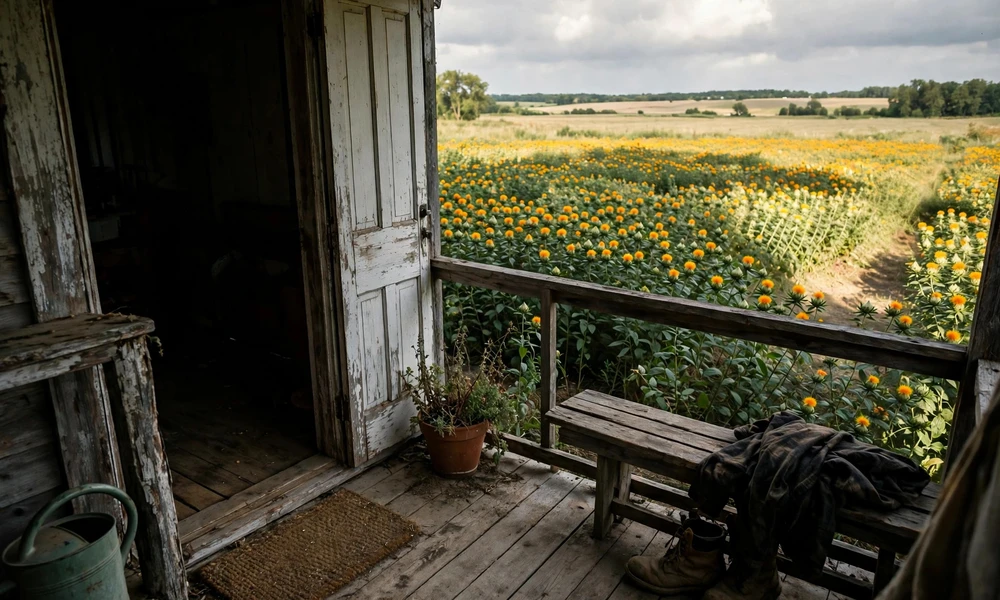
Safflower does not wait for you. The flower heads open orange for a few weeks in summer, and once the petals fade the colour is gone, so a farm that grows safflower plans its whole year around a bloom that can move by a week with the weather. That narrow window is what makes a safflower farm escape both tricky to arrange and unlike any other farm holiday: you cannot pick your dates and hope the crop cooperates.
Once you let the farm set the calendar, the rest of the planning is simple. Flights, rooms and transfers all follow the bloom week, and a trip built that way feels completely different from one built around a hotel’s availability. The reward is a harvest you join with your own hands, in a field that turns orange for a few short weeks.
The nine steps below take you from finding the bloom dates to buying oil on the last day. Work through them in order and you will reach the right farm in the right week, with a day to spare.
Key takeaways
- Fix the bloom week first — flights, rooms and transfers all follow it.
- The orange bloom lasts a few weeks in summer, and the seed harvest comes months later in autumn.
- Get the included list in writing before you pay, and settle transfers before flights.
- Bring gloves, long sleeves, closed shoes and clothes you can ruin, and keep the first afternoon light.
- A daisy or ragweed allergy rules these stays out; no farm can make its fields or kitchen safe.
What a safflower farm escape involves
A safflower farm escape is a short trip built around the safflower harvest. You stay on or beside a working safflower farm, join the petal picking and the dyeing, eat meals cooked in the farm’s oil, and learn how safflower goes from a thistle in the field to oil, dye and dinner. Mornings are physical and afternoons move slowly.
The crop sets the shape of the trip. Safflower carries its colour in flower heads that open orange for a few weeks, so the harvest is a race: petals are picked while the colour is fresh, dried for dye, and the seed is gathered months later when the heads dry and brown. A stay that offers picking, dyeing, threshing and pressing is a genuine safflower farm escape. A stay that offers only a tour and a tasting is a pleasant rural break, not the same trip.
That narrow window is also why the planning works differently from other farm holidays. Our guide to planning a sesame farm escape is about a cutting week that can shift by days, while a safflower escape is about a bloom that can move by a week, once the summer heat arrives. The cashew escape in our cashew farm escape guide is about a tropical nut with a long season, and safflower is the opposite: a short, bright bloom that rewards travellers who plan around it.
How to plan it and what to look for
Start by choosing the farm, not the flight. A good safflower farm stay will publish its bloom window, name the variety in the ground, and answer questions about the harvest honestly. Look for a farm that grows safflower at scale, lets guests join the picking, and dyes with its own petals.
Then look closely at what the rate actually covers. Breakfast and at least one harvest activity should be in the rate, and the farm should put that in writing. Transfers are the usual surprise: many safflower farms sit an hour or more from the nearest town. Get the complete list before you pay, and judge stays on what is included rather than the headline nightly rate.
Finally, judge the room by farm-stay standards. What you want is a clean room, a proper bed, steady water and a quiet night. A spa, a pool or a minibar are unnecessary here, and a farm that pays for those is usually spending less on the farming. The pecan escape in our pecan farm escape guide makes the same point, and it holds doubly for safflower, where the work is prickly and the rooms should be simpler.
The 9 steps to plan a safflower farm escape
Get the bloom dates from the farm in writing
What to do: Email the farm and ask for its bloom window in writing, then check those dates against the variety in the ground and the summer heat. What to avoid: Paying for flights before you know the bloom dates, because they almost never line up by luck. Best for: Every traveller, on every safflower trip. Time needed: One afternoon of emails. Standout tip: Ask for the bloom dates and the petal-picking week, not just the harvest month.
The bloom is the whole trip. A farm that blooms in late July will have green plants in June and brown heads in September. Get the dates confirmed in writing, ask what happens when heat brings them forward, and only then look at flights.
Let the dye or the oil choose your region
What to do: Choose Konya or Shymkent for safflower at full scale, Ujjain or Solapur for dye and oil, and Yuzhong for a hillside stay with silk dyeing. What to avoid: Choosing a stay from its photos and finding the farm grows a different crop. Best for: Travellers choosing between the nine regions in our roundup. Time needed: An evening of reading. Standout tip: Match the region to the harvest you want, not the cheapest flight.
Every safflower region uses the crop differently. Turkey presses oil, India dyes cloth, Kazakhstan dyes wool, and Gansu dyes silk. Read the farm’s dye work before its room photos, and the region will choose itself.
Ask for a written breakdown of what the rate covers
What to do: Ask for a written list of what the nightly rate covers: breakfast, farm activities, meals, transfers, and any dyeing sessions. What to avoid: Assuming a farm activity is included just because it appears in the photos. Best for: Anyone choosing between two farms at different prices. Time needed: Half an hour per farm. Standout tip: Judge stays by the included list, not the headline rate.
Two farms at the same nightly rate can deliver very different trips. One includes breakfast, picking, dyeing and a farm dinner, while the other includes breakfast and a tour. Only the written list lets you compare them fairly.
Work out the journey from the nearest town
What to do: Ask how far the farm is from the nearest town and airport, whether it offers transfers, and what a local taxi costs. What to avoid: Reaching a rural station with no onward transport and no phone signal. Best for: Travellers heading to remote farms in Kazakhstan, Montana or Gansu. Time needed: One hour of planning. Standout tip: Take the farm’s own transfer when one is offered, even at a higher price.
Safflower farms sit a long way from towns, and the final stretch is usually the hardest part of the journey. A farm transfer costs more than a local taxi, but it arrives on time, it knows the track, and it waits when your flight runs late. On the remote stays here, that reliability is worth more than the saving.
Pack gloves first, then everything else
What to do: Pack thick gloves, long sleeves, closed shoes with grip, a wide hat, sun cream, and two sets of field clothes you do not mind ruining. What to avoid: Packing white trainers, open sandals, or one good outfit for the whole stay. Best for: Anyone on a first farm stay. Time needed: An evening of packing. Standout tip: Keep the field clothes in a separate bag so dust and dye never touch your clean clothes.
Safflower is a thistle, and its leaves and bracts are spiny. Gloves matter because the picking happens by hand, and long sleeves matter because the plants reach waist height. Pack as though you will work in a thistle field, because that is the plan.
Get there the night before picking starts
What to do: Arrive the evening before, sleep well, and be in the field when the picking starts, usually just after sunrise. What to avoid: Arriving at midday and spending day one watching other people work. Best for: Travellers staying only two or three nights. Time needed: One early morning. Standout tip: Ask the host the night before what time the pickers start, and set two alarms.
The pick is the heart of the trip, and it happens early, before the heat. Arrive the night before, eat with the host, and be there when the first heads come off. A morning in the orange field teaches you more about safflower than a week of reading.
Use the midday heat for dyeing, not picking
What to do: Use the hot hours for dyeing cloth, pressing oil, and cooking with the host. What to avoid: Picking through the midday heat, which is miserable and slow. Best for: Anyone who cares about the dye as much as the fieldwork. Time needed: Two or three afternoons. Standout tip: Learn one dye properly, such as safflower red on cotton, and do it yourself.
Afternoons on a safflower farm belong at the dye vat. Dyeing is rhythmic and sociable, pressing is quick, and cooking is where the seed turns into a meal. Master one dye properly, and you take home a skill, not just a photograph.
Leave the last morning for packing, not buying
What to do: Buy safflower oil, dyed cloth and dried petals on the second day, and ask the farm to seal jars for travel. What to avoid: Leaving it until the morning you go, when the farm shop may be closed. Best for: Travellers who want to cook and dye with the crop at home. Time needed: Half an hour. Standout tip: Buy oil the farm pressed this week, not a bottle pressed last season.
The farm shop keeps farm hours, so the morning you leave is the worst time to shop. Buy on the second day, while the pressing is still fresh. Look up your destination’s food import rules first, and ask the farm to seal every jar properly.
Add a rest day in the nearest town before flying home
What to do: Add one spare day after the stay, in the nearest town, before your flight home. What to avoid: Flying out the morning after the harvest, when you will be tired and dusty. Best for: Travellers flying home from a faraway farm. Time needed: One extra night. Standout tip: Use the spare day to wash, rest, and eat a meal cooked by somebody else.
Harvest days are hard work, and the morning after is the worst time to catch a flight. A spare day in the nearest town gives you time to wash the dust off and sleep properly. It is the cheapest insurance on the whole trip.
Picking the right season and region
The northern hemisphere bloom runs through the summer, and that is the window for Konya, the Yaqui Valley, Fort Benton, Ujjain, Shymkent, Solapur and Williston, with the seed harvest following in the autumn. The precise weeks shift with the heat, so get this year’s dates from the farm and plan the trip around them.
The season shapes comfort as much as it shapes the harvest. Summer on the Anatolian steppe and in the Deccan is extremely hot, and the best months are the ones when the bloom is open but the heat has eased. The Kazakh steppe is best in early summer, while Montana and North Dakota suit the long northern summer, when the days are warm and the nights are cool.
Together, region and season decide what ends up on the table. A July stay in Konya means oil pressed that week, an August stay in Ujjain means cloth dyed that morning, and a September stay in Yuzhong means silk drying on the terrace. Pick the season that serves the harvest you want, and leave the rest to the farm.
The caveats that matter
A daisy or ragweed allergy is the hard limit on this trip, and it is worth repeating plainly. Safflower farms grow, pick, dye, press and cook safflower in the open air. The pollen hangs in the air, the petals are in the dye vat, and no amount of cleaning changes that. If you or anyone travelling with you has a daisy or ragweed allergy, do not book a safflower farm stay. No version of this trip is safe for a guest with that allergy.
| Detail | What is known |
|---|---|
| Best time to go | The summer bloom for petals; the autumn weeks for seed |
| Who should not book | Anyone with a daisy or ragweed allergy, or anyone who cannot walk field rows |
| What is usually included | Breakfast, a harvest activity, and a farm meal on most stays |
| What costs extra | Transfers, longer harvest days, dyeing sessions and riding trips |
| How physical it is | Picking petals is light; threshing and pressing take real effort |
| What to pack | Gloves, long sleeves, closed shoes, a hat, and spare field clothes |
| How far ahead to book | Two to three months ahead for bloom weeks, which sell out first |
| What it does not offer | A resort stay, a kitchen free of safflower, or a harvest outside the season |
Thorns and heat are the other honest warnings. Picking happens in the sun, the plants are spiny, and a safflower farm in summer is not a gentle place. Carry water through the morning, and switch to the shaded dye work when the midday heat peaks.
Checklist: before you book a safflower farm escape
Use these checks before you pay.
- Ask for the bloom dates first, then plan around them rather than the cheapest flight.
- Ask for a written breakdown of breakfast, activities, meals, transfers and dyeing sessions.
- Ask how the farm deals with thorns and heat, and whether afternoons offer dye work.
- Check the room by farm standards, not hotel ones: clean and quiet will do.
- Tell the farm about dietary needs in advance, but do not ask it to be safflower-free.
- Pack gloves, long sleeves, closed shoes, a hat and spare field clothes.
Frequently asked questions
How far ahead should I book a safflower farm escape?
Two to three months for the bloom weeks, which sell out first. Get the bloom dates from the farm first, then build the trip around them.
What if the heat brings the bloom forward?
It often does, by a few days. A good farm will send the new dates quickly, so keep your flights flexible and leave a spare day in the plan.
Is a safflower farm worth visiting outside bloom season?
You can, but the stay is quieter: the fields are green or brown, and the dye vat is cold. The bloom weeks are when the farm is at its best.
Will the language barrier matter on a safflower farm stay?
No, but a few words help. Most hosts speak enough English for the harvest, and the work needs little translation.
Is a safflower farm escape good for children?
Often yes. Petal picking and dyeing are safe and easy, while pressing suits older children, so ask which jobs fit their ages.
How much should I budget for a safflower farm escape?
Nightly rates run from about $90 in Konya to about $505 at the Yuzhong farm. Add transfers and a spare night in town, and budget for oil and dyed cloth to take home.
The bottom line
The best safflower farm escape in 2027 is the one whose bloom dates match your trip and whose farm grows the crop at scale. Konya and Shymkent suit a first safflower trip, Ujjain and Solapur suit dye lovers, and Yuzhong suits travellers who want a hillside stay.
Plan around the bloom, pack gloves and long sleeves, and be honest with the farm about what you can manage. Do that, and a safflower farm escape gives you a morning in the orange fields, an afternoon at the dye vat, and a meal made from a seed you helped to bring in.