Selvedge denim is the quiet end of men’s jeans. The appeal is in the cloth itself: denim woven on an old shuttle loom so the edge finishes itself, a tight weave that starts stiff and slowly moulds to the person wearing it, and a fade that comes from actual use rather than a factory.
The difference is real, but it is easy to overstate. A good selvedge jean is not automatically better than a good regular jean.
Below are nine selvedge jeans worth considering in 2027, from an entry-level pair under $110 to a Japanese-made pair past $330. Each pick below covers what it does well, what to watch for, and who it suits best.
Key takeaways
- Selvedge means the denim was woven on a shuttle loom, which finishes the edge of the fabric cleanly instead of fraying it.
- Most selvedge jeans start stiff and need two to four weeks of regular wear before they feel comfortable.
- Sanforized selvedge barely shrinks after washing, while unsanforized selvedge can shrink up to two inches in the waist and length.
- Weight is measured in ounces: 12 to 14 ounce denim suits most men, while 15 ounce and above feels noticeably heavier and takes longer to break in.
- No selvedge jean is worth buying in the wrong fit, and a high price does not fix a cut that fights your body.
What selvedge actually means
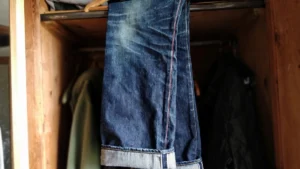
The word selvedge comes from “self-edge”. On a traditional shuttle loom, the weft thread passes back and forth in one continuous movement, which seals the edge of the fabric instead of leaving a cut, fraying side. That finished edge is usually marked with a coloured line, most often red, and it shows when you cuff the hem.
Shuttle looms are slow. A modern projectile loom can weave far more denim in a day, which is why most jeans are made on them.
The other thing to know is that selvedge denim is usually raw, meaning it has not been washed or distressed before sale. The deep indigo colour is at its darkest when new, and it fades where the fabric creases and rubs: behind the knees, at the pockets, along the thighs. They are a record of how you actually wear the jeans, and no two pairs end up looking the same.
How we chose these jeans and what to look for
Skinny, slim, tapered and straight cuts all exist in selvedge, and the right one depends on your build and what you wear with it.
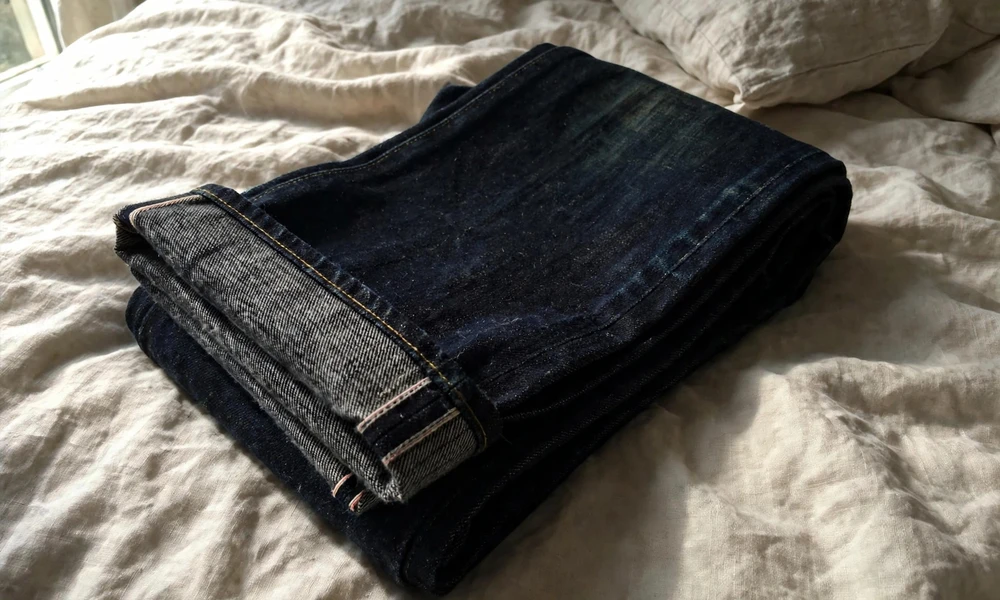
Look next at the weight and whether the denim is sanforized. Weight is measured in ounces per square yard, and most selvedge jeans sit between 12 and 16 ounces. Sanforized denim has been pre-shrunk, so what you buy is close to what you keep. Unsanforized denim, often labelled shrink-to-fit, can lose an inch or two in the waist and length after the first soak, so it is usually bought a size up.
Finally, look at where the denim comes from and how the jeans are made. Japanese mills such as Kuroki and the Okayama workshops supply much of the best selvedge cloth, Italian mill Candiani supplies the European end, and a small number of American mills still weave it too. Our guide to the best tapered jeans for men is a useful comparison if you want to see how a tapered cut behaves in regular denim before committing to a rigid selvedge version.
The 9 best selvedge jeans for men of 2027
Unbranded UB101 Skinny Fit Heavyweight Selvedge
What we like: The cheapest honest entry into selvedge, with a 14.5 ounce Japanese selvedge fabric, a clean skinny cut and chain-stitched hems, for less than a hundred dollars in most stores.
What to consider: The skinny cut is unforgiving in rigid denim, and the fit runs small, so most men should size up one. The branding is deliberately minimal, which some men like and others find plain. Best For: First-time selvedge buyers who want the real cloth at the lowest price. Material: 14.5 oz sanforized Japanese selvedge denim, all cotton, with a right-hand twill weave. Price Range: $88–$105. Standout Feature: Genuine 14.5 oz selvedge at a price where most brands sell ordinary stretch denim.
The fabric is the real thing at a low price, but the skinny fit is unforgiving, so try your usual size and one up.
Brave Star Slim Straight Selvedge
What we like: American-made selvedge at a working price, cut in a slim straight shape that suits more builds than a skinny jean, with a button fly and a leather patch that ages well.
What to consider: The lighter weights feel less substantial than the heavyweight options, and the range of fabrics changes often, so a favourite cloth can sell out without warning. Best For: Men who want American-made selvedge without paying Japanese prices. Material: 14 oz selvedge denim from Cone Mills and Japanese mills, 100% cotton, sewn in Los Angeles. Price Range: $115–$130. Standout Feature: Cut and sewn in downtown Los Angeles, with a slim straight block that works on most frames.
The slim straight cut suits most builds, and the lighter cloth breaks in faster than the heavyweight versions.
Levi’s 501 Original Selvedge
What we like: The most famous jean shape in the world, cut in rigid selvedge denim with a button fly, a straight leg and the red tab, from the brand that invented the five-pocket jean.
What to consider: The straight leg is roomier than a modern slim cut, and the rigid fabric needs a few weeks before it stops feeling like cardboard. Some washes are made overseas, so check the label if origin matters to you. Best For: Men who want the classic 501 shape with proper selvedge cloth. Material: 100% cotton rigid selvedge denim woven on a shuttle loom, with a button fly and five-pocket styling. Price Range: $150–$165. Standout Feature: The 501 block, unchanged in spirit since 1873, in genuine selvedge denim.
The straight leg and regular rise suit almost every body, and the selvedge version adds the dense cloth and slow fade the standard 501 never had.
Taylor Stitch Slim Jean in Organic Selvedge
What we like: A modern slim jean in 14 ounce organic cotton selvedge, with a clean silhouette, a button fly and a leather patch, from a San Francisco brand that crowdfunds its runs.
What to consider: The slim cut runs narrow through the thigh, and the organic denim fades a little faster than conventional selvedge, which suits some men and disappoints others. Best For: Men who want organic cotton and a contemporary slim shape. Material: 14 oz organic cotton selvedge denim, 100% organic cotton, with copper rivets and a button fly. Price Range: $170–$182. Standout Feature: Certified organic cotton selvedge in a modern slim cut, at a mid-range price.
Better cloth and construction than the mass brands, without the Japanese price tag, in the brand’s most wearable cut.
Naked & Famous Weird Guy Indigo Selvedge
What we like: A regular tapered fit in 14.5 ounce Japanese selvedge, made in Canada, with a mid rise and a leg that narrows gently from the knee, which flatters most builds.
What to consider: The Weird Guy is a popular fit, so the most common sizes sell out quickly, and the denim is sanforized but still stiff for the first two weeks. Best For: Men who want a tapered leg without a skinny thigh. Material: 14.5 oz Japanese selvedge denim, 100% cotton, rope-dyed indigo, made in Canada. Price Range: $185–$195. Standout Feature: The Weird Guy block: a mid rise and a gentle taper that has become a default for raw denim fans.
Fitted through the hips and thighs without squeezing, then tapering to a clean ankle, it works with both boots and trainers.
Benzak B-01 Slim
What we like: A slim tapered jean in 15 ounce Italian selvedge from Candiani, made in Portugal, with a right-hand twill and a leather patch that gives it a distinctly European feel.
What to consider: Fifteen ounces is noticeably heavy in summer, and the slim taper needs a careful size choice because there is no stretch in the fabric. Best For: Men who want European selvedge with a refined, slim taper. Material: 15 oz Candiani selvedge denim, 100% cotton, right-hand twill, woven in Italy and sewn in Portugal. Price Range: $199–$212. Standout Feature: Candiani Italian selvedge, a mill that supplies some of the best denim in Europe.
A proper slim tapered jean, not a fashion skinny, in Candiani cloth with a clean, even indigo that fades into soft, high-contrast lines.
3sixteen ST-100x Slim Tapered
What we like: A slim tapered jean in 14.5 ounce custom selvedge from Kuroki Mills, cut and sewn in the United States, with a soft hand inside and a fit that has been refined over nearly two decades.
What to consider: The price is a real step up from the mid-range picks, and the waist can stretch up to an inch in the first two weeks, so sizing down one is usually the right call. Best For: Men ready to pay for a benchmark American selvedge jean. Material: 14.5 oz selvedge denim woven exclusively for 3sixteen by Kuroki Mills in Okayama, 100% cotton, sanforized. Price Range: $260–$275. Standout Feature: Custom Kuroki cloth, made exclusively for 3sixteen, with a fit refined since 2008.
Cloth woven to 3sixteen’s own specification, careful construction, and one of the best-proportioned slim tapers in selvedge.
Momotaro 0705SP Tight Straight
What we like: A tight straight jean in 15.7 ounce Zimbabwe cotton selvedge, made in Okayama, Japan, with the brand’s signature white battle stripes on the back pocket and a pink selvedge edge.
What to consider: The fabric is very stiff for the first month, and the tight straight cut is narrower than the name suggests, so check the measurements rather than trusting your usual size. Best For: Men who want the most famous Japanese selvedge jean. Material: 15.7 oz Zimbabwe cotton selvedge denim, 100% cotton, one-washed in seawater, made in Okayama, Japan. Price Range: $280–$310. Standout Feature: The 0705SP is the house cut of Japan’s most famous denim brand, with battle stripes and a pink selvedge line.
Dense, heavy 15.7 ounce cloth with dramatic fades and unmistakable details, from the white stripes to the pink selvedge edge.
Pure Blue Japan XX-013 Slim Tapered
What we like: A slim tapered jean in 14 ounce Okayama selvedge with a famously slubby texture, made in Japan, with a small embroidered leaf on the back pocket and a deep, uneven indigo that fades beautifully.
What to consider: The slubby texture is not for everyone, and the price puts it firmly in enthusiast territory, with no room for a sizing mistake. Best For: Men who want the most characterful selvedge cloth in this list. Material: 14 oz slubby selvedge denim woven in Okayama, 100% cotton, with a textured, uneven yarn and a slim tapered cut. Price Range: $335–$350. Standout Feature: The slub texture: an uneven, hand-woven look that gives the fades extra depth.
The slub yarn creates a bumpy, irregular surface, so the fades come out with more texture and variation than any other pair here.
Which selvedge jean is right for you
Under $130, the Unbranded UB101 and the Brave Star Slim Straight give you genuine selvedge cloth and honest construction, and either one is a fair way to find out whether raw denim suits you.
Then think about your patience. Raw selvedge rewards men who wear the same pair often and wash it rarely, because the fades need time and friction to develop. Our guide to the best straight-leg jeans for men covers the shape that suits most selvedge beginners, because a straight leg is the most forgiving cut while the cloth is still stiff.
Finally, think about your climate. Heavyweight selvedge above 15 ounces is a pleasure in autumn and winter and a burden in a hot summer, because the dense weave holds heat.
The caveats that matter
Selvedge denim is not a miracle fabric. It is still cotton, it still wears out, and it still needs care.
| Detail | What is known |
|---|---|
| What selvedge means | Denim woven on a shuttle loom, with a finished self-edge instead of a cut, fraying side |
| Typical weight | 12 to 16 ounces per square yard; 12 to 14 ounces suits most men year-round |
| Break-in time | Two to four weeks of regular wear before the denim softens and moulds to you |
| Sanforized vs unsanforized | Sanforized barely shrinks; unsanforized can shrink up to two inches in waist and length |
| How often to wash | As rarely as practical; many wearers go a month or more between washes |
| How to wash | Inside out, cold water, mild detergent, then hang dry; avoid the tumble dryer |
| Who should avoid raw selvedge | Men who need stretch, men who wash jeans weekly, and anyone who wants instant comfort |
| What it does not do | It does not last forever, it does not fit itself, and it does not make a bad cut good |
Washing deserves a word of its own. Raw selvedge should be washed inside out in cold water with a mild detergent, then hung to dry. Our guide to the best slim jeans for men is worth a look if you want a slimmer shape in a more forgiving fabric, because a slim selvedge jean is the hardest fit to get right on a first buy.
Checklist: buying selvedge jeans honestly
Use these checks before you buy, and again after two weeks of wear.
- Check the fit first: measure your best pair and compare it with the brand’s size chart, not with the size on the label.
- Check whether the denim is sanforized: if it is not, expect shrinkage and buy a size up in the waist and length.
- Check the weight: 12 to 14 ounces for year-round wear, 15 ounces and above for cold weather only.
- Check the edge: turn the cuff up and look for the finished selvedge line, which is the point of the whole exercise.
- Wear them for two weeks before judging: the stiffness fades, the waist gives a little, and the creases start to set.
- Plan the first wash: inside out, cold water, mild detergent, hang dry, and no tumble dryer.
Frequently asked questions
What is selvedge denim?
Selvedge denim is woven on a traditional shuttle loom, which passes the weft thread back and forth in one continuous movement and finishes the edge of the fabric cleanly. That finished edge, usually marked with a coloured line, is the selvedge.
Do selvedge jeans need to be washed differently?
Yes, gently. Wash them inside out in cold water with a mild detergent, and hang them to dry. Avoid hot water and the tumble dryer, which can shrink the denim and set creases in the wrong places.
How long do selvedge jeans last?
A well-made pair can last five to ten years of regular wear,
Should I size down in selvedge jeans?
It depends on the denim. Sanforized selvedge barely shrinks, so buy your usual size, or one down if the brand’s waist stretches with wear. Unsanforized selvedge can shrink up to two inches, so buy a size up. Always check the brand’s own sizing advice, because it varies more than with regular jeans.
Are selvedge jeans worth the extra money?
For men who wear one pair often and like the way raw denim fades, yes. For men who rotate many pairs, wash weekly, or need stretch, the extra money buys little that they will notice.
Can I wear selvedge jeans every day?
Yes, and most enthusiasts do. Daily wear is what creates the fades, because the creases set where your body bends the fabric.
The bottom line
The best selvedge jean in 2027 is not the most expensive one. It is the one that fits you, in a weight you can wear all year, from a mill whose cloth you trust. For a first pair, the Unbranded UB101 or the Brave Star Slim Straight will tell you whether raw denim suits you, for less than $130. For a pair you will keep for years, the 3sixteen ST-100x or the Momotaro 0705SP are the benchmarks, and the Pure Blue Japan XX-013 is the most distinctive cloth of the lot.
Buy the fit first and the fabric second, wear the jeans often, wash them rarely, and give them a month before you judge them. That is the honest way to get what selvedge is good at, without paying a premium for a pair that never leaves the drawer.