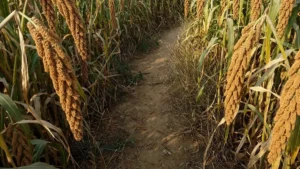
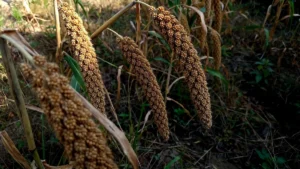
Sorghum is the crop that thrives where other grains give up. It grows in dry soil, under a hard sun, on land that wheat and maize would leave bare, and it has fed families across Africa, India, China and the American plains for thousands of years. Its grain heads stand tall and rust-red in late summer, and a sorghum field at harvest time is one of the most striking sights in farming: row after row of heavy heads bending under their own weight.
A sorghum farm retreat takes you to the places where that crop is still a way of life rather than a commodity. You stay on a working farm, eat the grain the farm grows, and join the harvest as it happens. The work is straightforward and physical — cutting the heads, threshing them on a sheet, winnowing the grain in the wind — and the food that follows is the point of the trip, from Sudanese kisra to Deccan jowar bread to sorghum syrup poured over breakfast in Kansas.
Below are nine sorghum farm retreats worth considering in 2027, from a high-plains farm in Kansas to a pampas estancia in La Pampa. Each one is described by what it does well, what to watch for, and who it suits best, so you can pick a stay that fits how you like to travel, not just a place on a map.
Key takeaways
- Sorghum ripens in late summer and autumn in most regions, and the exact week moves with the dry season, so confirm dates with the farm before booking flights.
- The grain is drought-tolerant by nature, which means the farms are hot and dry by midday, and water, shade and a hat matter more than rain gear.
- Sorghum is cooked differently in every region, from flatbreads to porridge to syrup, so ask what the farm kitchen makes before you arrive.
- Most sorghum farms are working farms first and guest stays second, so expect simple rooms, shared meals and early mornings rather than hotel service.
- No farm can promise a harvest on a fixed date, and a trip built around one threshing day can end in an empty field if the rains come early or late.
What a sorghum farm retreat actually is
A sorghum farm retreat is a stay on a working sorghum farm, usually two to five nights, where the farm is the reason for the trip rather than a backdrop. You sleep in a farmhouse room or a small guest cabin, eat meals cooked from the farm’s own grain, and take part in the work of the season: walking the rows, cutting the grain heads when they are dry, threshing them, and winnowing the grain so the wind carries off the chaff.
Sorghum itself is a cereal grain that began in Africa, in the dry country of what is now Sudan and Ethiopia, and spread from there to India, China and the Americas.
Most of these farms sit in dry country. The Kansas high plains, the Nigerian savanna, the Deccan plateau and the Argentine pampas are all hot by midday, and the work is done in the cooler hours.
How we chose these stays and what to look for
We looked first at where sorghum actually grows well, not where it is marketed well. A real sorghum farm has fields you can walk through, a harvest you can join, and a kitchen that cooks the grain it grows — milled into flour, stirred into porridge, or pressed into syrup.

We looked next at how the stay is run. The best farms keep groups small, usually under twelve guests, so the harvest work is real rather than staged for visitors. They also spell out plainly what the nightly rate covers: meals, transport from the nearest town, and guided walks are part of the price, not added on arrival. A farm that answers questions about the harvest, the food and the heat in plain words is usually a farm that runs a good stay. Our roundup of sesame farm retreats applies the same test, and it is the simplest way to choose between two farms that look alike on paper.
The 9 best sorghum farm retreats of 2027
Kansas, United States — Sorghum on the High Plains
What we like: The heartland of American grain sorghum, with wide fields running to the horizon and a farming culture that treats the crop as a point of pride. The farm mills its own flour, and the kitchen bakes with it daily, so the grain you cut in the morning is in your bread by supper.
What to consider: The plains are windy and the sun is strong, so this is a stay for travellers who like open country and big skies. Style: High-plains grain farm stay. Best for: First-time sorghum travellers. Price range: $65–$95 per night. Standout feature: Hand-cut sorghum on the high plains, with farm-milled flour baked in the farm kitchen.
South Dakota, United States — Sorghum on the Northern Plains
What we like: A cooler northern sorghum farm, where the crop grows shorter and the harvest comes earlier in the year. The farm is family-run and generous, the rooms are simple and clean, and the prairie sunsets are the best on this list.
What to consider: The season runs short and an early cold snap can cut it, so the farm’s dates matter more here than anywhere else on this list. Style: Northern-plains family farm stay. Best for: Travellers who want a quiet prairie stay. Price range: $100–$130 per night. Standout feature: Early-season sorghum on the northern plains, with prairie sunsets over the fields.
Kano, Nigeria — Sorghum in the Northern Belt
What we like: The centre of Nigeria’s sorghum country, where the grain is the staple food and the markets are full of it. The farm grows sorghum beside millet and groundnuts, so the meals are varied, and the old city of Kano is a short drive away.
What to consider: The savanna is hot by midday and the harvest weeks are short, so timing matters more here than on most farms on this list. Style: Savanna farm stay. Best for: Travellers who like markets and food culture. Price range: $135–$165 per night. Standout feature: A savanna farm where sorghum shares the fields with millet and groundnuts.
N’Djamena, Chad — Sorghum on the Sahel Plain
What we like: Sorghum grown on the edge of the Sahel, where the crop’s drought tolerance is not a selling point but a necessity. The farm is run by a cooperative, so the stay supports several families, and the river plain gives the landscape a breadth few farms on this list can match.
What to consider: The Sahel is hot and dry, and the roads are rough, so this is a stay for travellers who are comfortable with basic conditions. Style: Sahel cooperative farm stay. Best for: Travellers who want to see sorghum at its toughest. Price range: $170–$200 per night. Standout feature: Cooperative-grown sorghum on the Sahel plain, where the grain feeds the whole village.
Telangana, India — Jowar on the Deccan Plateau
What we like: Terraced jowar on the dry Deccan, with the grain’s Indian name on every menu and a cooking tradition that goes back centuries. The farm is small and family-run, and the jowar rotis made on the farm’s own griddle are worth the trip alone.
What to consider: The plateau is hot and the roads into the villages are narrow and slow, so travel takes longer than the map suggests. Style: Deccan plateau farm stay. Best for: Cooks who want the flatbread tradition. Price range: $205–$240 per night. Standout feature: Jowar rotis made on the farm griddle, from grain cut that morning.
Shaanxi, China — Gaoliang Terraces Above the Yellow River
What we like: Gaoliang, the Chinese name for sorghum, grown on the yellow loess terraces of Shaanxi, with cave dwellings nearby and a distilling tradition that turns the grain into the region’s famous liquor. The farm is close to old villages, and the terraced landscape makes a natural second day out.
What to consider: The terraces are steep and the loess dust gets everywhere, so pack clothes you do not mind getting dirty. Style: Loess-terrace farm stay. Best for: Walkers who like old terraces and village history. Price range: $245–$280 per night. Standout feature: Gaoliang terraces on the loess plateau, beside villages that still distil the grain.
Gaoliang is the Chinese name for the same grain, and the farm’s sorghum liquor is a point of local pride.
Inner Mongolia, China — Sorghum on the Northern Steppe
What we like: Sorghum grown on the open steppe, where the fields meet the grassland and the horizon never ends. The farm keeps horses and sheep alongside the grain, so the stay mixes harvest work with steppe life, and the nights are cool enough for a fire.
What to consider: The steppe is windy and the distances are long, so the farm is a long drive from the nearest town. Style: Steppe farm stay. Best for: Walkers who want open country from the farm gate. Price range: $285–$320 per night. Standout feature: Steppe sorghum with horses and sheep, and cool nights around the fire.
Darling Downs, Queensland, Australia — Sorghum on the Downs
What we like: Australia’s sorghum belt, with rich black soil, broad fields and a farming culture that grows the grain at scale. The farm is well run and comfortable, the harvest is partly mechanised, and the threshing demonstration is different from the hand work of Africa and Asia.
What to consider: The Downs are hot in summer and the harvest window is short, so the farm’s dates are the whole trip. Style: Downs grain-farm stay. Best for: Road-trippers who enjoy open highways. Price range: $325–$360 per night. Standout feature: Broad-acre sorghum on the Downs, with a working harvester and a farm kitchen that bakes with its own flour.
La Pampa, Argentina — Sorghum on the Pampas
What we like: The easiest sorghum farm stay to pair with a longer South American trip, with wide pampas fields, gaucho culture and a farmhouse that cooks the grain into stews and breads. The harvest is mechanised, which makes the threshing demonstration different from the hand work of West Africa.
What to consider: The pampas are windy and the season runs late, so an early cold snap can cut it short. Style: Pampas estancia stay. Best for: Travellers who want gaucho culture with the harvest. Price range: $365–$410 per night. Standout feature: Pampas sorghum on a working estancia, with gaucho cooking and a farm kitchen that bakes with its own flour.
Which sorghum region fits your trip
If this is your first sorghum trip, start in Kansas. The stay is the cheapest on this list and the most rooted in the grain’s American story, and the South Dakota stay pairs the harvest with prairie sunsets that fill a slow evening.
If you want Africa, the Kano stay is the classic choice, with markets and food culture in the same region, while N’Djamena suits travellers who prefer a cooperative farm and a Sahel landscape to a famous view. Our roundup of quinoa farm retreats uses the same idea: choose the journey you actually enjoy, not just the destination.
If food is the point, look to India or China. The Telangana kitchen does more with jowar flatbread than any other farm on this list, and the Shaanxi stay pairs the grain with a distilling tradition that is generous and varied.
The caveats that matter
Sorghum farming is weather-dependent in a way that surprises first-time visitors. Farms give their best estimate, not a promise, and a trip built around one threshing day is a gamble.
| Detail | What is known |
|---|---|
| Best harvest window | Late summer to autumn in the United States and Argentina; the dry season in West Africa; winter in the Deccan |
| Altitude of most farms | Low to mid-altitude on the plains and savanna; higher on the loess plateau of Shaanxi |
| How long to stay | Two to five nights; one night is not enough to learn the harvest |
| Who should take care | Anyone with a grain or seed allergy, and anyone who struggles in strong heat |
| Food to expect | Flatbreads, grain porridge, sorghum flour bread, and syrup in the American stays |
| What the grain needs | The grain heads must be fully dry before threshing, or the grain will not separate |
| When to book | Three to six months ahead for harvest weeks in Kansas and the Downs; two months for other regions |
| What a stay does not do | It does not guarantee a harvest on a fixed date, and it is not a hotel with room service |
If you take regular medication, are pregnant, or have a grain or seed allergy, check with your clinician before travelling to a grain farm, and tell the farm about the allergy before you arrive. A farm kitchen told in advance can cook around an allergy; one that learns at the table cannot.
Checklist: booking a sorghum farm stay honestly
Use these checks before you pay, and again a week before you travel.
- Get the harvest dates in writing: ask the farm for the expected harvest week, and what happens when it shifts.
- Check what the rate includes: meals, transport from the nearest town, and guided walks should be spelled out, not assumed.
- Check whether the farm mills its own flour: some farms mill daily, others buy flour in.
- Check the heat: ask how hot the farm gets at midday and whether the rooms stay cool in the afternoon.
- Check the food: tell the farm about allergies and food needs before you arrive, not once you sit down to eat.
- Check the cancellation terms: a stay that cannot move your dates when the harvest shifts is a risk, not a bargain.
Frequently asked questions
What month is sorghum ready to cut?
Usually late summer to autumn in the United States and Argentina, after the grain heads have dried and turned from green to rust-red or gold. The precise week depends on the dry season, so the farm’s own estimate counts for more than any calendar. Get the harvest week in writing at booking time.
Will the farm cook what I help thresh?
Yes, and most farms make a point of it. The grain you thresh is usually dried, winnowed and cooked the same day or the next, milled into flour or stirred into porridge, so you taste the harvest you helped bring in.
Is the harvest work suitable for children?
Older children, usually eight and up, tend to enjoy the work, the animals and the meals. Younger children find the heat and the early mornings hard. Ask the farm whether children have stayed before, and what their days look like.
How do I pack for a sorghum farm stay?
Light layers, sun protection and solid shoes. Mornings are cool, the midday heat is strong, and the ground is uneven underfoot. Pack a hat, sunscreen, a water bottle and shoes that grip.
What does a night on a sorghum farm cost?
Most stays on this list run from $65 to $410 a night, usually including meals. The Kansas homesteads are the cheapest, the remote steppe and pampas stays the most expensive, and flights and transport are almost always extra.
Where else in the world grows sorghum?
Sudan, Ethiopia, Mali, Mexico and Brazil all grow real sorghum on working farms, and the harvest work is the same. Choose for the farming itself, not the scenery.
The bottom line
The best sorghum farm retreat in 2027 is not the most expensive or the most remote. It is the one where the harvest is genuine, the farm answers questions plainly, and the region offers something to do when the weather shifts the dates. For a first trip, Kansas is hard to beat: the stay is cheap and rooted in the grain’s American story, and South Dakota pairs the harvest with prairie sunsets.
Book the harvest week, not just the farm, and leave a spare day for heat and a spare day for weather. Arrive unhurried, eat what the farm kitchen cooks, and let the grain set the pace. That is the honest way to enjoy a sorghum farm stay, without the disappointment of a harvest that never quite arrives. Our guide to safflower farm retreats makes the same point about harvest timing, and it holds for every farm crop: the farm sets the calendar, and the traveller who accepts it has the better trip.