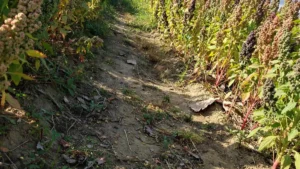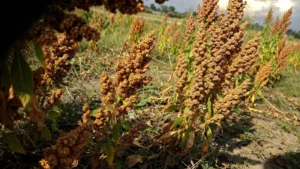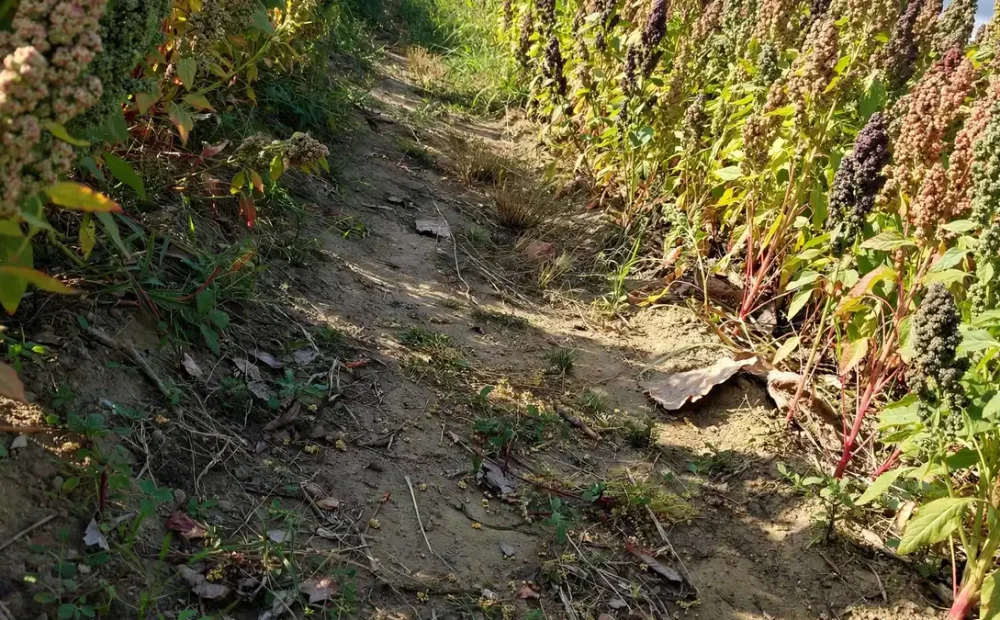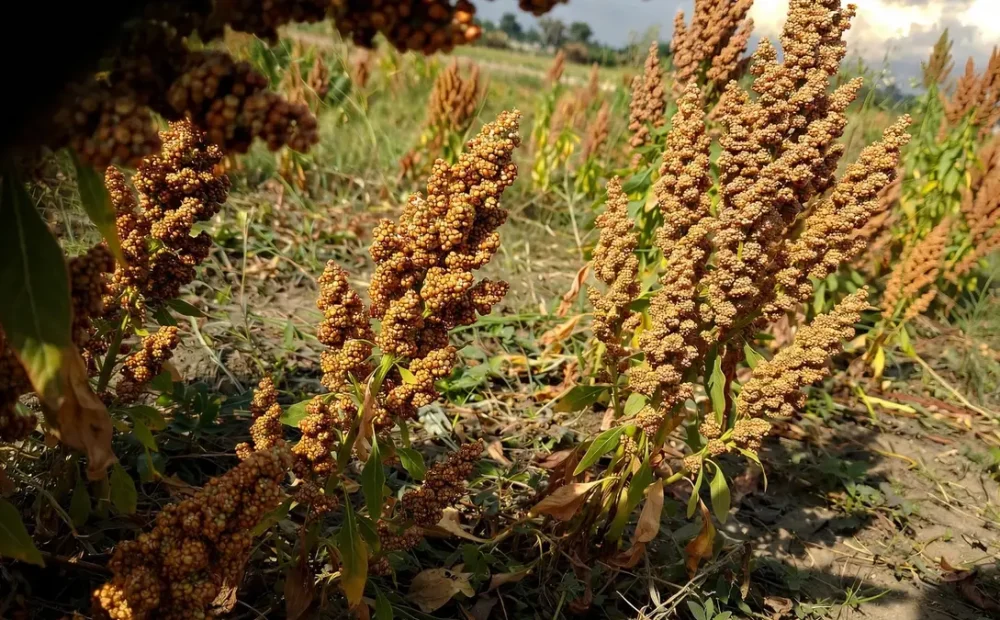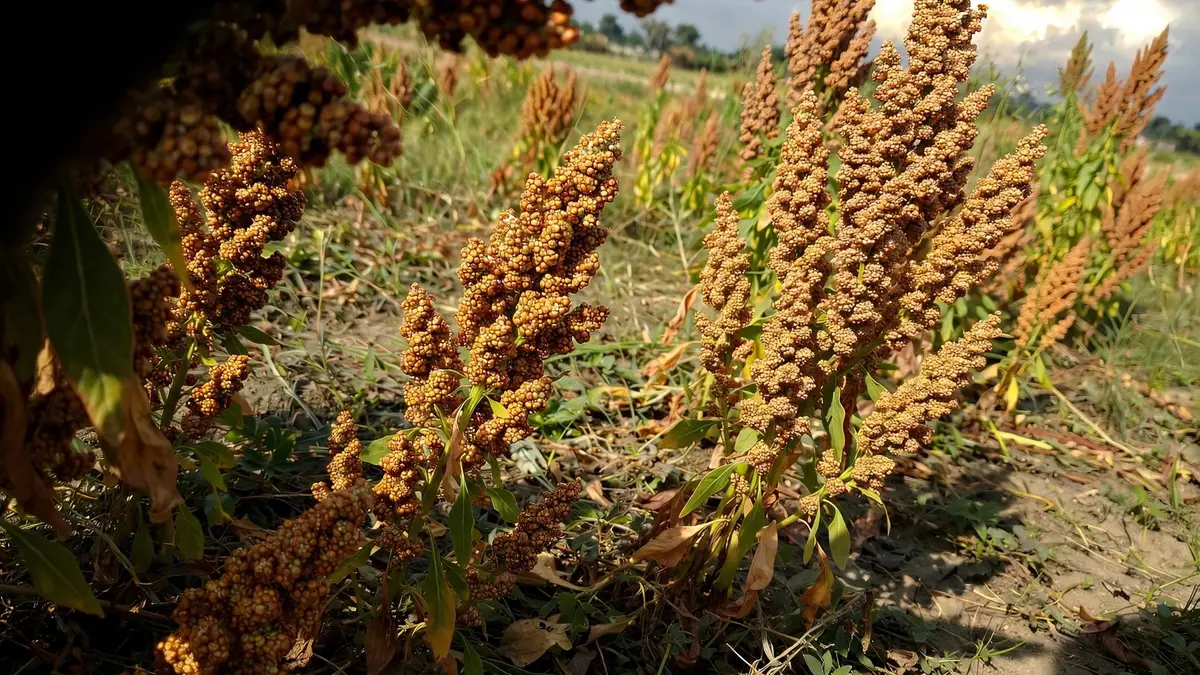

Quinoa grows where almost nothing else will. On the high plains of Bolivia and Peru it stands through frost, thin air and salty soil, turning from green to rust-red and gold as the grain ripens. A quinoa farm retreat puts you in the middle of that landscape for a few days, sleeping on the farm, eating what the farm grows, and joining the harvest when the timing is right.
Nobody comes here for luxury in the usual sense. There is no spa menu and no infinity pool at the end of a quinoa field. What you get instead is altitude light, wide horizons, food cooked from the day’s harvest, and farmers who have grown this grain for generations. The best stays are simple, warm and well run, with a bed that keeps out the cold and a kitchen that knows what to do with a sack of freshly threshed grain.
Below are nine quinoa farm retreats worth considering in 2027, from a salt-flat homestead in Bolivia to a terrace farm in the Himalayas. Each one is described by what it does well, what to watch for, and who it suits best, so you can choose a region that matches how you travel, not just a name on a map.
Key takeaways
- Quinoa harvest season runs roughly from April to June on the South American Altiplano, and the exact week moves with the rains, so confirm dates with the farm before booking flights.
- The best quinoa farm stays are small and working farms, not resorts, so expect simple rooms, shared meals and early mornings.
- Altitude is the real challenge: most quinoa country sits above 3,000 metres, and a day or two to adjust makes the whole trip easier.
- Quinoa is gluten-free and a complete protein, which makes farm cooking easy to enjoy, but tell the farm about allergies in advance.
- No farm can promise a harvest on a fixed date, and a trip timed only for one harvest day can end in an empty field if the rains come late.
What a quinoa farm retreat actually is
A quinoa farm retreat is a stay on a working quinoa farm, usually two to five nights, where the farm is the point of the trip rather than a backdrop. You sleep in a farmhouse room or a small guest cabin, eat meals cooked from the farm’s own produce, and take part in the work of the season: walking the rows, cutting the grain heads, threshing them on a stone floor or a canvas sheet, and winnowing the grain in the wind.
Quinoa itself is a seed, not a cereal, from a plant related to spinach and beetroot. It was domesticated around Lake Titicaca thousands of years ago and remains a staple across the Andes. White, red and black varieties ripen at slightly different times, so a field can look patchworked in late autumn.
Most of these farms sit high. The Bolivian and Peruvian Altiplano runs at 3,600 to 4,000 metres, and even the newer quinoa regions in Colorado and Saskatchewan sit well above sea level. It also means you should plan for altitude the way you would plan for weather: arrive slowly, drink water, and keep the first day gentle.
How we chose these stays and what to look for
We looked first at where quinoa actually grows well, not where it is marketed well. A real quinoa farm has fields you can walk through, a harvest you can join, and a kitchen that cooks the grain it grows.

We looked next at how the stay is run. The best farms keep groups small, usually under twelve guests, so the work of the harvest is real and not a performance. They also give a straight answer about what the nightly rate covers: meals, transport from the nearest town, and any guided walks should be in the price, not added on arrival. A farm that answers questions about altitude, food and harvest dates in plain language is usually a farm that runs a good stay.
Finally, we looked at the region, not just the farm. A quinoa trip works best when the farm sits near something else worth seeing — a salt flat, a lake, a market town — so a rainy day or a shifted harvest still leaves you with a good trip. Our guide to sesame farm retreats follows the same rule, and it is the single most useful check when you are choosing between two farms that look alike on paper.
The 9 best quinoa farm retreats of 2027
Salar de Uyuni, Bolivia — Quinoa on the Edge of the Salt Flats
What we like: The setting is unmatched: red quinoa fields running to the white edge of the salt flat, with flamingo lagoons a short drive away. The farm grows quinoa real, and the harvest is done by hand with the whole household involved.
What to consider: The altitude is serious, around 3,650 metres, and the nights are cold even in harvest season. Style: Salt-flat homestead stay. Best for: First-time quinoa travellers. Price range: $75–$110 per night. Standout feature: Hand-harvested quinoa real beside the largest salt flat on earth.
Puno, Lake Titicaca, Peru — Quinoa Terraces Above the Lake
What we like: Terraced fields above the lake, with stone-walled plots that have grown quinoa for centuries. The farm is close to Puno town, and the lake islands make a natural second day out.
What to consider: The terraces are steep and the paths are uneven, so this is not a stay for anyone unsteady on their feet. Style: Lakeside family farm stay. Best for: Families with older children. Price range: $115–$150 per night. Standout feature: Ancient terraces with the lake spread out below the fields.
Chimborazo, Ecuador — Quinoa Fields Below the Volcano
What we like: The volcano dominates every view, and the quinoa here grows on slopes that catch the afternoon sun. The farm is run by a cooperative, so the stay supports several families.
What to consider: The slopes are exposed to wind, and the weather can change in an hour. Style: Volcano-slope farm stay. Best for: Photographers chasing harvest colour. Price range: $155–$190 per night. Standout feature: A snow-capped volcano rising above red and gold quinoa rows.
San Luis Valley, Colorado — Quinoa on the High Desert Floor
What we like: The easiest quinoa farm stay to reach from the United States, with a wide valley floor, mountain views on both sides, and a growing community of grain farmers. The altitude is high but the roads are good.
What to consider: The valley is dry and the sun is strong, so dehydration sneaks up fast. Style: High-desert ranch stay. Best for: Slow travellers who like long drives. Price range: $195–$230 per night. Standout feature: A working grain valley with the Sangre de Cristo mountains behind the fields.
Boyacá, Colombia — Quinoa Among the Potato Fields
What we like: Green hills, cool air and a farming culture that treats quinoa as one crop among many. The farm grows quinoa beside potatoes and broad beans, so the meals are varied.
What to consider: The harvest is smaller and less dramatic than on the Altiplano, and the grain here is mostly white. Style: Andean village homestay. Best for: Walkers and market lovers. Price range: $235–$270 per night. Standout feature: A village stay where quinoa shares the fields with potatoes and beans.
Saskatchewan, Canada — Quinoa on the Northern Prairie
What we like: The northernmost quinoa on this list, grown on a prairie farm that also keeps bees and grows lentils. The harvest is mechanised, which makes the threshing demonstration different from the hand work of the Andes.
What to consider: The season is late and short, and a cold snap can end it early. Style: Prairie grain-farm stay. Best for: Cooks who want hands-on threshing. Price range: $275–$310 per night. Standout feature: Prairie-scale quinoa with a working combine and a honey harvest beside it.
This stay suits people who like the machinery of farming as much as the food.
Kullu Valley, Himachal Pradesh — Quinoa on Himalayan Terraces
What we like: Terraced quinoa high above a river valley, with snow peaks in the distance and apple orchards on the lower slopes. The farm is small and family-run.
What to consider: The roads into the valley are narrow and slow, and the monsoon can delay travel. Style: Himalayan terrace stay. Best for: Trekkers combining a farm with trails. Price range: $315–$350 per night. Standout feature: Quinoa terraces cut into a Himalayan valley above an apple-growing village.
Quinoa is a newcomer here, grown as a high-value crop on land that once grew only millet and barley.
High Atlas, Morocco — Quinoa in the Mountain Valleys
What we like: Quinoa grown in irrigated valley plots below red mountain walls, with Berber villages a short walk away. The farm stay is warm and generous, and the food is excellent.
What to consider: The valleys are hot by midday and cold at night, so packing is a balancing act. Style: Atlas mountain farm stay. Best for: Food lovers curious about Moroccan grains. Price range: $355–$395 per night. Standout feature: Irrigated quinoa plots under the red walls of the High Atlas.
The kitchen here is the reason to come, with quinoa in salads, tagines and bread.
Shanxi, China — Quinoa on the Loess Plateau
What we like: The oldest quinoa-growing country outside the Andes, with terraced fields cut into deep yellow loess soil. The farm stay is quiet and remote, and the food is simple and filling.
What to consider: The plateau is dry and dusty, and English is rarely spoken on the farm, so a guide or translator matters. Style: Loess-plateau farm stay. Best for: Travellers who want a quiet, remote week. Price range: $400–$450 per night. Standout feature: Terraced quinoa on the deep yellow soils of the Loess Plateau.
This is the most remote pick on the list and the most rewarding for travellers who like silence.
Which quinoa region fits your trip
If this is your first quinoa trip, start on the Altiplano. The Salar de Uyuni stay is the cheapest on this list and the most dramatic, and the Puno terraces are the easiest to reach, with a town nearby and lake trips to fill a slow day.
If you want something closer to home, the North American options are strong. The San Luis Valley stay in Colorado is a straightforward drive and a real working valley, while Saskatchewan suits travellers who enjoy the machinery and scale of prairie farming. Our roundup of cashew farm retreats uses the same idea of matching the region to the traveller, and the principle holds here: pick the journey you actually enjoy, not just the destination.
If food is the point, look to Morocco or Colombia. The High Atlas kitchen does more with quinoa than any other farm on this list, and the Boyacá stay pairs the grain with a village food culture that is generous and varied. If walking matters more than food, the Himalayan terraces and the Ecuadorian slopes are the picks, with trails that start at the farm gate.
The caveats that matter
Quinoa farming is weather-dependent in a way that surprises first-time visitors. A late rain can push the harvest back by two weeks, and an early frost can end it in a night. Farms give their best estimate, not a promise, and a trip built around a single harvest day is a gamble.
| Detail | What is known |
|---|---|
| Best harvest window | Late April to June on the Altiplano; late summer and autumn in North America and Asia |
| Altitude of most farms | 3,000 to 4,000 metres in the Andes; lower in Colorado, Saskatchewan and Morocco |
| How long to stay | Two to five nights; one night is not enough to adjust to the altitude |
| Who should take care | Anyone with heart or breathing conditions, and anyone who has struggled with altitude before |
| Food to expect | Quinoa soup, grain salads, porridge and bread, plus local vegetables and eggs |
| What the grain needs | The saponin coating must be rinsed off before cooking, or the grain tastes bitter |
| When to book | Three to six months ahead for Altiplano harvest weeks; two months for other regions |
| What a stay does not do | It does not guarantee a harvest on a fixed date, and it is not a hotel with room service |
If you take regular medication, are pregnant, or have a heart or breathing condition, check with your clinician before travelling to 3,000 metres or higher. Altitude affects people unpredictably, and a farm stay is a long way from a hospital if something goes wrong.
Checklist: booking a quinoa farm stay honestly
Use these checks before you pay, and again a week before you travel.
- Check the harvest dates in writing: ask the farm for the expected harvest week, and what happens if it moves.
- Check what the rate covers: meals, transport from the nearest town, and guided walks should be listed, not assumed.
- Check the altitude and the nearest clinic: know how high the farm sits and how far help is.
- Check the room: ask for a heated room with a proper bed, not a cold outbuilding.
- Check the food: tell the farm about allergies and dietary needs before you arrive, not at the table.
- Check the cancellation terms: a farm stay that cannot move your dates when the harvest moves is a risk, not a bargain.
Frequently asked questions
Which month brings the Altiplano quinoa harvest?
Usually late April to June, after the grain heads have dried and turned from green to red or gold. The exact week depends on the rains, so the farm’s own estimate matters more than any calendar. Ask for the harvest week in writing when you book.
Will the farm let me eat the grain I thresh?
Yes, and most farms make a point of it. The grain you thresh is usually rinsed, dried and cooked the same day or the next, so you taste the harvest you helped bring in.
Are quinoa farm stays suitable for children?
Older children, usually eight and up, tend to enjoy the work and the animals. Younger children struggle with the altitude and the early mornings. Ask the farm whether it has hosted children before, and how the days are structured for them.
What belongs in the bag for a high-altitude farm stay?
Layers, sun protection and sturdy shoes. Mornings are cold, midday sun is strong, and the ground is uneven. Pack a warm jacket, a hat, sunscreen and shoes with grip.
What will a quinoa farm retreat cost me per night?
Most stays on this list run from $75 to $450 a night, usually including meals. The Altiplano homesteads are the cheapest, the remote Asian and Moroccan stays the most expensive, and flights and transport are almost always extra.
Is quinoa grown outside South America worth visiting?
Yes, if you choose for the farming rather than the scenery. Colorado, Saskatchewan, Morocco and China all grow real quinoa on working farms, and the harvest work is the same.
The bottom line
The best quinoa farm retreat in 2027 is not the most expensive or the most remote. It is the one where the harvest is real, the farm answers your questions plainly, and the region gives you something to do if the weather moves the dates. For a first trip, the Altiplano is hard to beat: the Salar de Uyuni stay is cheap and dramatic, and Puno is easy to reach with a town and a lake nearby.
Book the harvest week, not just the farm, and give yourself a spare day for altitude and a spare day for weather. Arrive slowly, eat what the farm cooks, and let the grain set the pace of the trip. That is the honest way to enjoy a quinoa farm stay, without the disappointment of a harvest that never quite arrives. Our guide to pecan farm retreats makes the same point about harvest timing, and it holds for every farm crop: the farm sets the calendar, and the traveller who accepts that has the better trip.