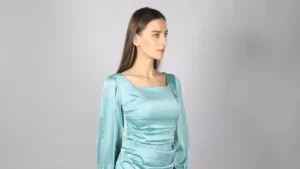
A satin dress is a dress cut from satin, a fabric defined by its weave rather than its fibre. The word satin names the way the threads are woven, not what they are made of, so a satin dress can be silk, polyester, viscose, or a blend, and two dresses that look alike on the rail can behave very differently when worn.
What makes a satin dress recognisable is the surface. One face of the cloth is smooth and glossy, catching the light as the wearer moves, while the other face is matte and dull. That shine, together with the way the fabric falls in soft, liquid folds, is the whole identity of the garment. A dress in a matte fabric with the same cut is simply a different dress.
The name causes most of the confusion around the garment. Satin is sold as if it were a fibre, silk is claimed for dresses that contain none, and weaves are named as if they were types of fabric.
Key takeaways
- A satin dress is defined by its weave, not its fibre: the same shine can come from silk, polyester, viscose, or a blend.
- Charmeuse is the fluid, high-shine satin of slip dresses; duchess and mikado are the heavy, structured satins of gowns.
- The usual cuts are the slip, the bias cut, the A-line, the wrap, and the shirt dress, and the weave decides which cut works.
- Satin shows creases, water spots and lines underneath it more readily than matte fabrics do.
- A satin dress is not an investment piece, and no fibre or weave makes satin crease-proof or waterproof.
What a satin dress actually is
A dress, in the plainest sense, is a one-piece garment that covers the torso and extends over the legs, with a bodice, a waist or waistline, and a skirt in a single piece. A satin dress keeps that shape and makes it from satin. The parts are simple. There is a bodice, shaped to the upper body, a skirt that falls from the waist or the hip, and usually a fastening at the back or the side, with sleeves, straps, or neither.
The fabric is what gives the dress its name, and the fabric is a weave. In a satin weave, long floats of yarn pass over several crossing yarns before they anchor, so the surface is smooth and unbroken. Light reflects off that unbroken surface instead of scattering, which is why satin shines, and why it feels cool and slippery to the touch. Turn the cloth over and the same weave shows its other face: matte, slightly rougher, and dull.
The fabric underneath the shine
The fibre underneath the weave decides how a satin dress feels, breathes and ages, and the label should name it plainly. Silk satin is the luxury standard. It breathes, regulates temperature, and drapes with a soft, liquid weight, and its glow is deeper and less harsh than a synthetic shine. It is also expensive, spots easily, and usually needs hand washing or dry cleaning.

Polyester satin is the most common satin in 2027. It is affordable, durable, colourfast and more resistant to creasing than silk satin, and many polyester satin dresses can be gently washed at home if the label allows it. The trade-offs are breathability and static: it can feel warm, cling to the skin, and reflect light with a harsher glare than silk. Our comparison of silk vs satin sets out how the fibre and the weave each change what a garment feels like.
The type of satin is the second thing the label can tell you. Charmeuse is light, fluid and very glossy, with a matte back, and it is the satin of slip dresses and bias cuts. Duchess satin is heavy, firm and structured, and it holds the shape of ball gowns and sculpted bodices. Mikado is thick and crisp with a lightly textured surface, and it suits architectural shapes and A-line gowns. Crepe-back satin is satin on one face and crepe on the other, giving a quieter shine for daytime.
The cuts and silhouettes a satin dress takes
The most familiar cut is the slip dress: a simple, sleeveless dress with thin straps, cut on the bias so the fabric falls in a fluid line. The bias cut runs diagonally across the weave, which lets the cloth stretch and drape around the body instead of holding its own shape. It is satin at its most fluid, and it needs a lining, or a fabric with enough weight, to keep it from clinging.
The A-line is the opposite in structure. It fits through the bodice and waist, then opens gradually towards the hem, so the fabric sits smooth over the hips and the skirt holds its own line. It is the cut that suits the heavier satins best, because duchess and mikado have enough body to hold the flare without collapsing.
The wrap dress closes by overlapping one front panel over the other and tying at the waist, so the fit is set by the tie rather than by a fixed seam. The shirt dress borrows the collar, button front and cuffs of a shirt, and its structure makes it the most formal-looking of the satin cuts. The column dress is a straight, narrow shape from shoulder to hem, elegant and simple, and it shows the fall of the fabric more plainly than any other cut. The same satin weave appears in blouses too, where the cloth behaves the same way on a smaller scale, as our guide to what a silk blouse is describes.
Satin dress vs slip dress, silk dress, and lookalikes
A satin dress and a slip dress overlap, and the difference is one of scope. A slip dress is a cut, a simple sleeveless dress with thin straps, and it can be made from satin, silk, velvet or any fluid fabric. A satin dress is a fabric, and it can be cut as a slip, an A-line, a wrap or a shirt dress. A satin slip dress is both at once, and it is the shape most people picture when they hear the term.
A silk dress is a different claim again. Silk is a fibre, and a silk dress is a dress made from silk in any weave: plain, crepe, twill or satin. A silk satin dress is a silk dress and a satin dress at the same time. A polyester satin dress is a satin dress and not a silk dress. The label should state the fibre, and a label that says only satin or silky is not claiming silk at all.
The lookalikes are the fabrics that shine without being satin. Velvet has a pile, a dense nap of cut fibres that gives it a soft, deep glow and a matte direction, and it holds structure where satin flows; a velvet dress is the structured evening alternative to a satin one, as our guide to what a velvet dress is explains. Chiffon is a sheer, lightweight plain weave with a matte surface, and a chiffon dress floats rather than drapes.
The caveats that matter
Satin is a beautiful fabric with honest limits, and most of them follow from the weave itself. The smooth, unbroken surface that makes satin shine also shows what other fabrics hide: creases from sitting, water spots where a drop has dried, and the lines of whatever is worn underneath.
| Detail | What is known |
|---|---|
| What it is | A dress cut from satin, a weave with a glossy face and a matte back |
| Fibre | Silk, polyester, viscose, or a blend; the label should name it |
| Most fluid satin | Charmeuse, light and very glossy, for slips and bias cuts |
| Most structured satin | Duchess and mikado, heavy and firm, for gowns |
| Usual cuts | Slip, bias cut, A-line, wrap, shirt dress, column |
| Lengths | Mini, midi and maxi describe length only |
| Care in brief | Cool hand wash or dry clean, steam rather than a hot iron |
| What it is not | Not a fibre, not always silk, not a slip dress by definition |
Care follows from the fibre, not from the shine. Silk satin is washed cool, with a mild detergent, and dried away from direct sun, because heat and harsh chemicals damage protein fibres. Polyester satin is sturdier, but a hot iron can leave a permanent shine mark on any satin, and steam is the safer way to release creases. Satin dresses are best hung rather than folded, so the fabric does not take hard creases along a fold line.
Checklist: reading a satin dress honestly
Use these checks to read what a dress is, not what its name suggests.
- Check the weave: one face should be smooth and glossy, the other matte and dull.
- Check the fibre: the label should name silk, polyester, viscose, or a blend with percentages.
- Check the satin type: charmeuse for fluid slips, duchess or mikado for structured gowns.
- Check the lining: a lined bodice keeps satin from clinging and gives the dress its fall.
- Check the seams: French seams or clean overlocked edges, and a hem that sits evenly.
- Check the care label: it should give instructions you can actually follow.
Frequently asked questions
Is satin a fabric or a fibre?
Satin is a weave, not a fibre. It describes a way of weaving threads so one face of the cloth is smooth and glossy. A satin dress can be woven from silk, polyester, viscose, or a blend, and the fibre decides how it feels and how it should be cared for.
Is every satin dress made of silk?
No. Early satin was silk, and silk satin is still the standard, but most satin dresses in 2027 are polyester or a blend. A label that says only satin or silky is not claiming silk at all; only a fibre statement such as 100 percent silk does that.
What is the difference between a satin dress and a slip dress?
A slip dress is a cut, a simple sleeveless dress with thin straps, while a satin dress is a fabric. A satin slip dress is both at once. A slip dress can also be made from silk, velvet or chiffon, and a satin dress can be cut as an A-line, a wrap, a shirt dress or a column.
Why does satin crease and show water spots?
The smooth, unbroken surface that makes satin shine also shows what matte fabrics hide. Creases form where the fabric is folded or pressed, and a drop of water dries into a visible ring on the glossy face. Steaming releases creases, and hanging a dress rather than folding it keeps hard fold lines from forming.
Can a satin dress be washed at home?
It depends on the fibre, not the shine. Many polyester satin dresses can be gently washed at home if the label allows it, while silk satin usually needs cool hand washing or dry cleaning. Hot water, harsh detergents, wringing and tumble drying damage silk, and a hot iron can mark any satin.
What is the difference between satin and velvet?
Satin is a smooth weave with a glossy face, while velvet has a dense pile of cut fibres that gives it a soft, deep glow. Satin flows and drapes in liquid folds; velvet holds structure and feels warm and plush. Both are evening fabrics, but they behave in opposite ways.
The bottom line
A satin dress is a dress cut from satin, a weave with a glossy face and a matte back, worked in silk, polyester, viscose, or a blend. The weave gives it the shine and the drape, the fibre decides how it feels and how it is cared for, and the cut, slip, A-line, wrap, shirt dress or column, decides the shape it takes.
Once those three things are separated, the rest falls into place. The lookalikes are divided by a single question about fibre or weave, the care follows from what the fibre is, and the limits, creasing, water spots and snagging, follow from the weave itself.
Note: This article defines what a satin dress is; it is not a styling, picks or buying guide. For dresses to consider, see our best satin dresses, and for wearing one, see our guide to how to wear a satin dress.
Meet Our Experts
Our fashion editors cover fabrics, cuts and garment construction, and check fibre and weave claims against the label and the cloth itself.
Why Trust BrassSmile
We describe garments from their construction, fibre and weave, not from marketing copy, and we separate what a fabric is from what a label claims it is.
Sources
Fibre and weave definitions follow standard textile references; satin types and care guidance follow manufacturer care labels and published textile guides.