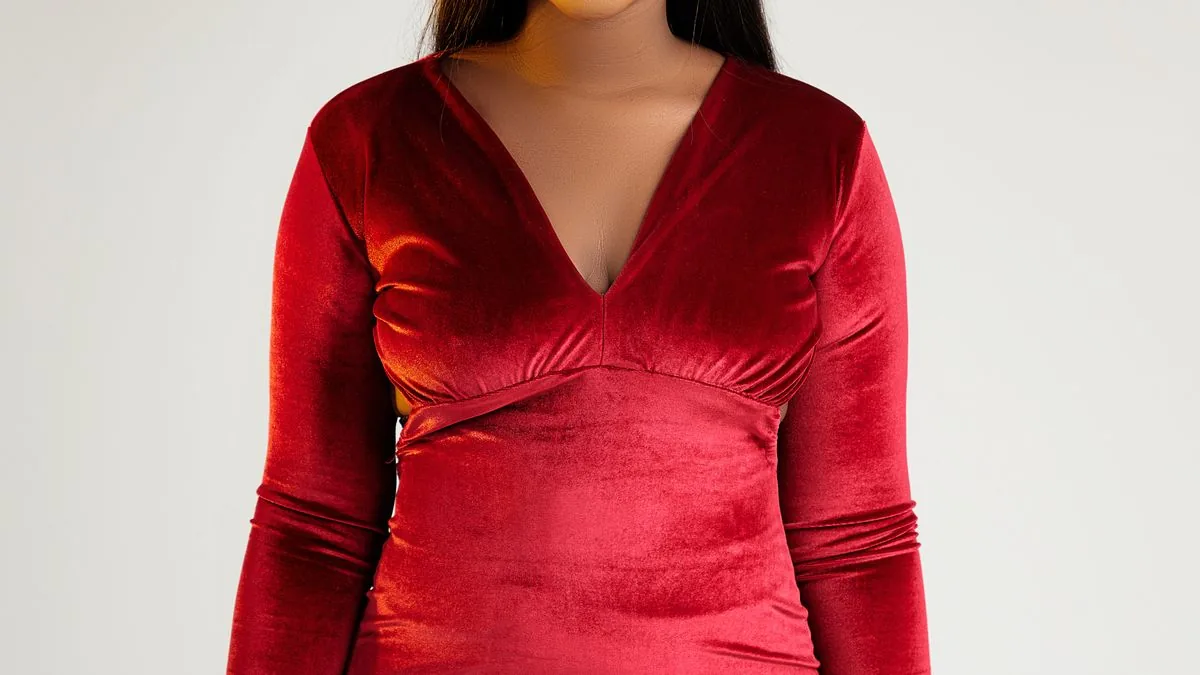
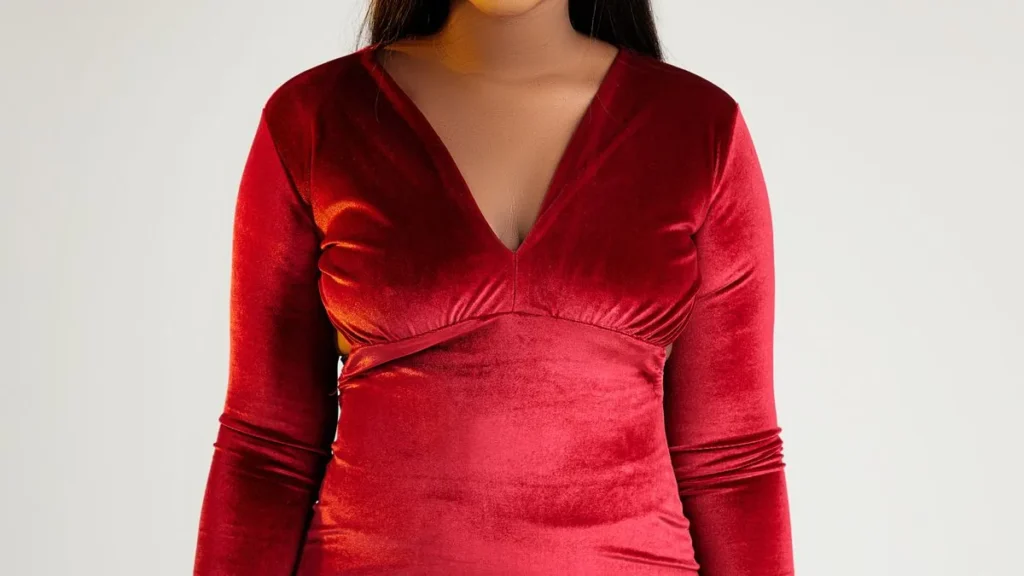
A velvet dress is a dress made from velvet, a woven fabric with a short, dense pile of cut fibres standing up from a base cloth. That pile is the whole point of the garment. It makes the surface soft to the touch, gives the colour its depth, and makes the same dress look different from every angle as the light moves across it. It is defined by the fabric.
Velvet is a construction, not a fibre. The word describes how the cloth is woven, not what it is woven from. A velvet dress can be silk, cotton, viscose, polyester or a blend, and two dresses sold under the same name can feel and wear very differently. The label matters, because the fibre decides the weight, the sheen, the care and the price.
This guide explains what a velvet dress is in plain terms: how the fabric is made, where it comes from, the types of velvet used in dresses, the cuts it usually comes in, and the occasions where it works best.
Key takeaways
- A velvet dress is defined by its fabric: a woven pile cloth with short, dense, cut fibres standing up from a base, not by any particular cut or length.
- Velvet is a weave, not a fibre, so a velvet dress can be silk, cotton, viscose, polyester or a blend, and the fibre decides how it drapes, shines and wears.
- The main dress velvets are silk, cotton, viscose, polyester and stretch velvet, plus crushed, panne and devoré finishes, each with a different look and weight.
- Velvet is not the same as velveteen or velour: velveteen has a shorter, tighter pile made from weft yarns, and velour is usually knitted with a longer, looser pile.
- Most velvet dresses need dry cleaning, and a dress that crushes, sheds or shows pale pressure marks will only do so more with wear.
What a velvet dress actually is
A velvet dress is any dress cut from velvet, and velvet itself is a pile fabric. It is woven with an extra set of yarns drawn up over thin rods or wires to form loops above the ground cloth, and those loops are then cut to leave a dense layer of short fibre ends standing upright. That upright pile is what your hand feels as softness and what the eye reads as depth.
Velvet has a long history as a luxury cloth. Looped pile textiles were made in Egypt thousands of years ago, and silk velvet is generally thought to have developed in China before reaching Europe along the Silk Road. By the second half of the thirteenth century it was being woven in Lucca in Italy, and in the fourteenth century the weavers of Lucca, Venice, Florence and Genoa were producing patterned velvets that were among the most expensive textiles in Europe.
How velvet is made — and why the fibre matters
Velvet is made by weaving two layers of cloth at once, joined by the extra pile yarns, which are then cut apart to leave two separate pieces of pile fabric. The result is the same structure: a ground cloth that holds everything together, and a dense pile standing above it. The height and density of that pile, the fibre it is made from, and whether the backing is a firm woven cloth or a stretchy knit decide how a particular velvet dress looks and feels.
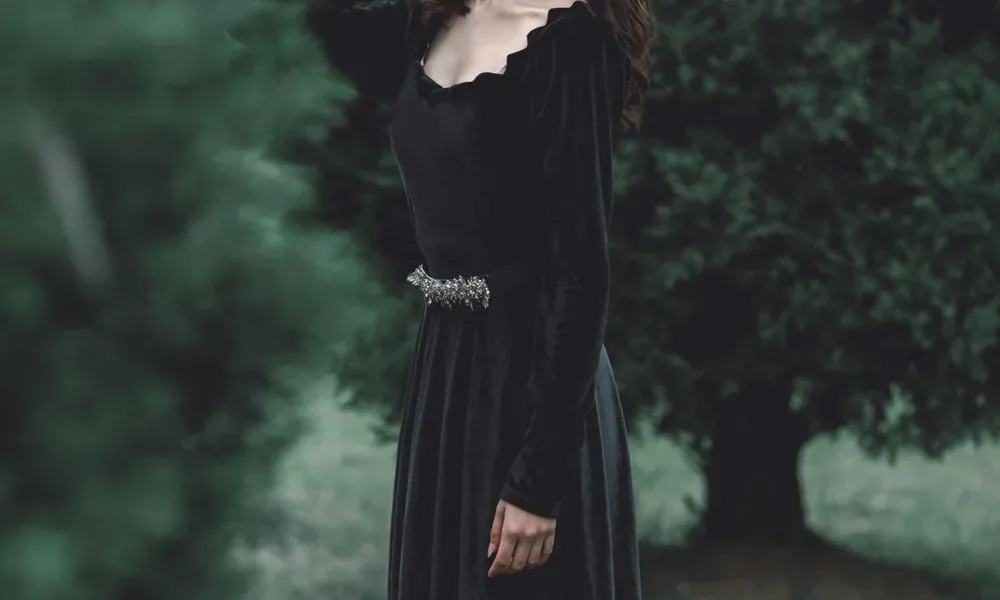
The fibre is the single biggest influence on a velvet dress. Silk velvet is the historic standard: lightweight, fluid and luminous, with a soft, deep lustre rather than a bright shine, and also the most expensive and the most delicate, marking and water-spotting easily and usually requiring dry cleaning. Cotton velvet is heavier, more matte and more casual, with a firm, dense pile; it is breathable, sturdy and often washable, which makes it the most practical velvet for structured dresses. Viscose gives a liquid drape and high sheen, but crushes easily and usually needs dry cleaning too. Polyester velvet is the most common velvet in dresses today: durable, crush-resistant, colourfast and affordable, and often machine washable, though cheaper grades can look flat and feel less breathable than natural fibres.
The main types of velvet used in dresses
Once the fibre is settled, the finish of the pile creates the distinct types of velvet that appear in dresses. Plain or classic velvet has an upright, even pile and is the reference point for all the others. Crushed velvet is made by twisting or pressing the fabric while it is wet, so the pile lies in irregular patterns and the surface shimmers with a mottled effect; it is usually polyester or viscose, and it hides pressing marks well. Stretch velvet is a knitted velvet with elastane in the base, made for fitted garments.
| Velvet type | Typical fibre | Look and feel | Weight and drape |
|---|---|---|---|
| Silk velvet | Silk, sometimes silk and viscose | Fluid, luminous, deep lustre | Light, flowing drape |
| Cotton velvet | Cotton | Matte, dense, sturdy pile | Medium to heavy, holds its shape |
| Viscose velvet | Viscose or rayon | Silky, smooth, high sheen | Light, liquid drape, crushes easily |
| Polyester velvet | Polyester | Soft, uniform sheen, durable | Light to medium, crush-resistant |
| Stretch velvet | Polyester with elastane | Smooth, close-fitting, soft sheen | Medium, stretches in all directions |
| Crushed velvet | Polyester or viscose | Mottled shimmer, textured surface | Medium, hides pressing marks well |
| Panne velvet | Polyester or nylon | Flat pile, very high shine | Light, stretchy, clinging |
| Devoré velvet | Silk and viscose blend | Sheer pattern against opaque pile | Light, delicate, decorative |
Two practical points follow from that table. First, the same dress shape in two different velvets is effectively two different dresses: a slip dress in silk velvet falls and moves, while the same slip dress in panne velvet clings and shines. Second, the finish affects care: crushed velvet forgives creasing, while plain velvet shows every press mark.
The cuts a velvet dress usually comes in
Velvet suits some cuts better than others, and the dresses on sale tend to fall into a small set of shapes that work with the weight and pile of the fabric. The A-line dress is one of the most reliable: fitted at the shoulders and bust, then flaring gently to the hem, it lets the velvet fall in clean folds without clinging, and it suits both cotton and silk velvet. The slip dress is the simplest velvet shape, a straight, narrow dress on thin straps, and it depends entirely on the quality of the cloth, because there is no structure to hide a thin or uneven pile; it works best in silk or viscose velvet. The wrap dress uses a tie waist and a crossed bodice, and its diagonal lines suit velvet.
The midi dress, falling between the knee and the ankle, is the most versatile velvet length, formal enough for an evening occasion and practical enough to sit and move in. The mini dress in velvet is the most casual of the shapes, and it usually appears in stretch or crushed velvet. Colour behaves differently in velvet than in flat fabrics, because the pile deepens the colour in shadow and brightens it where the light strikes. Jewel tones such as emerald, burgundy, sapphire and plum are the classic velvet colours, because the pile gives them a richness a flat cloth cannot match.
When a velvet dress works — and when it does not
A velvet dress works best where its qualities are an advantage: in the evening, in the colder months, and at occasions where a dress is expected to look considered rather than casual. The pile catches low light, so a velvet dress reads as dressed up in a dim room before anything else has been added. Formal dinners, festive parties, winter weddings and evening occasions are the natural home of a velvet dress, and the holiday party dresses that appear every year are dominated by velvet for exactly that reason.
There are settings where a velvet dress is the wrong choice. It is not a warm-weather fabric: the pile traps heat, the weight is tiring in high temperatures, and a velvet dress in strong summer sun can look heavy and out of season. It is not practical for a long day outdoors, because the pile picks up dust, shows rain marks and crushes where a bag strap or a seatbelt presses against it. Season and occasion are therefore the two questions to ask before buying. That is also why the designers behind the best-known luxury fashion brands return to velvet for their evening collections year after year: it is a fabric that looks formal by itself, without decoration or embellishment.
Checklist: choosing a velvet dress
Use this checklist when looking at a velvet dress to judge whether it is worth its price.
- Read the fibre label first: silk, cotton, viscose, polyester or a blend, and check whether the care instructions match the price and the occasion.
- Run your hand across the pile in both directions and look for an even nap, with no bald patches, no pale pressure lines and no shedding on your hand.
- Hold the dress up to the light and check the colour, because velvet changes shade as it moves.
- Check the lining, the seams and the zip, because a velvet dress needs a smooth lining to sit well and a strong zip to carry the weight of the fabric.
- Try the dress sitting down as well as standing, since velvet crushes where the body presses against a seat and a tight fit will crease within an hour.
- Ask how the dress should be cleaned before you buy it, and be wary of any velvet dress whose label promises easy washing without naming the fibre.
Frequently asked questions
What is a velvet dress made of?
A velvet dress is made from velvet, a woven pile fabric that can be silk, cotton, viscose, polyester or a blend. Velvet is a weave, not a fibre, so the fibre on the label decides how the dress drapes, shines, wears and should be cleaned.
Is a velvet dress only for winter?
Mostly, yes. Velvet is a heavy, warm fabric with a dense pile, so it suits autumn and winter and evening occasions. In high summer, the pile traps heat.
How is velvet different from velveteen and velour?
Velvet is a woven pile fabric with a dense, upright pile made from warp yarns. Velveteen is also woven, but its pile is made from weft yarns, so it is shorter, tighter and more matte, with much less sheen. Velour is usually knitted, with a longer, looser pile.
Can you wash a velvet dress at home?
It depends on the fibre. Some cotton and polyester velvet dresses can be machine washed on a gentle cycle, but most silk and viscose velvet dresses are dry clean only, because water and agitation can mark the pile permanently. Always follow the care label.
Why does a velvet dress change colour as you move?
The pile leans in one direction, called the nap, and reflects light differently depending on the angle you look at it from. Where the pile leans towards you, the dress looks lighter; where it leans away, it looks darker.
What should you look for when buying a velvet dress?
Check the fibre label, the evenness of the pile, and the quality of the lining, seams and zip. Satin is the closest comparison for an evening dress, and the differences are clear in our guide to satin dresses.
The bottom line
A velvet dress is a dress made from a woven pile fabric, and that single fact explains almost everything about it: the softness, the depth of colour, the way it changes shade as it moves, the warmth, the weight and the care it needs. Velvet is a weave rather than a fibre, so the dress you buy depends on the fibre and the finish as much as on the cut
Choose the fibre and the finish first, then the cut, then the colour, and check the label and the pile before you commit. A velvet dress in the right fibre, in a cut that suits its weight, worn in the season and the setting it was made for, is one of the most effective dresses in a wardrobe.
Note: Velvet varies widely by fibre and finish, so check the fibre content and care instructions on the dress itself before washing, steaming or storing it.