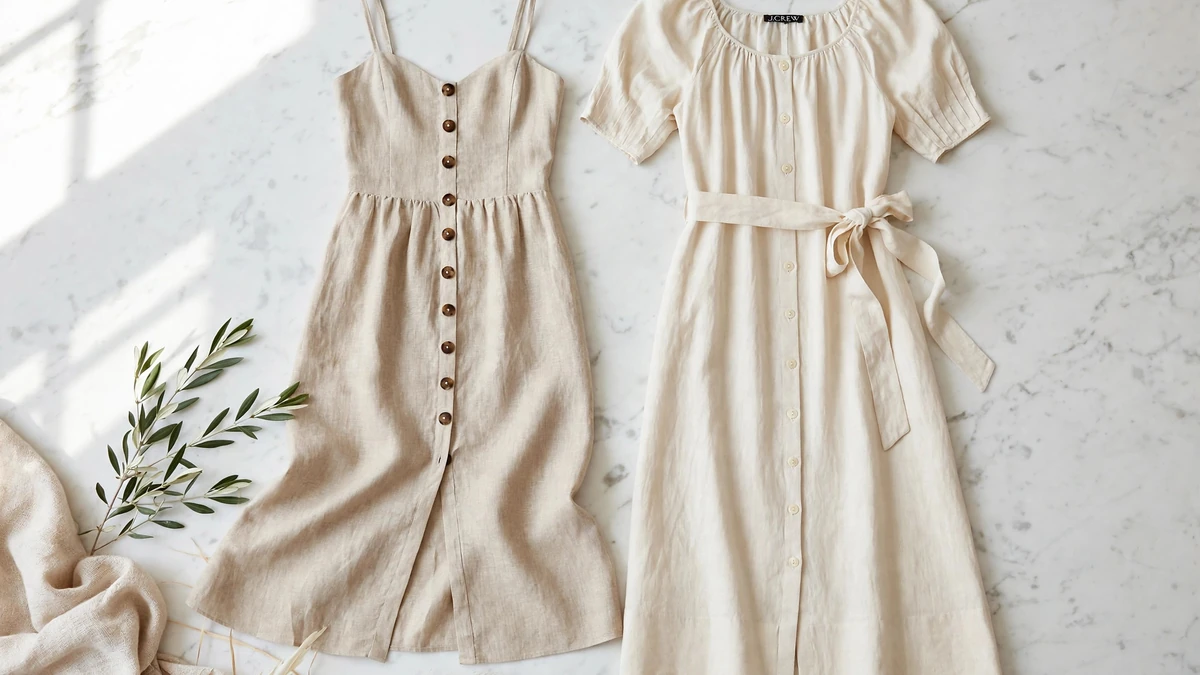

Linen is the fabric summer was made for. It breathes, it dries quickly, and it has a relaxed drape that looks effortless rather than fussy. The problem is not finding a linen dress. It is finding one that fits well, holds its shape, and does not wrinkle into a crumpled mess within an hour of putting it on.
Not all linen is the same. European flax linen is generally softer and more durable than cheaper linen, and a linen blend with a little cotton or viscose can be easier to wear than pure linen. The cut matters too. A dress that is too boxy will look shapeless, while one that is too fitted will lose the easy, airy feel that makes linen worth wearing. Price is a poor guide on its own. Some of the best linen dresses are mid-priced, and some of the most expensive are the hardest to care for.
Below are nine linen dresses worth considering in 2027, from a simple midi to a breezy maxi. Each one is described by what it is good at, what to watch for, and who it suits best, so you can choose with your summer in mind, not just a photo.
Key takeaways
- Linen breathes and dries fast, which makes it ideal for hot weather, but it wrinkles, so choose a cut and blend that suits your tolerance for creases.
- European flax linen is usually softer and more durable than cheaper linen, and a small amount of cotton or viscose can improve the drape.
- Fit matters more than brand: a dress that skims the body looks better in linen than one that is too tight or too boxy.
- Check the lining and the seams: a lined bodice and neat finishing make a linen dress look far more polished.
- No linen dress stays perfectly smooth all day, and one that claims to be wrinkle-free is usually a heavy blend.
Why linen works in summer and where it struggles
Linen is made from flax fibres, which are hollow and absorb moisture quickly, then release it into the air. That is why a linen dress feels cool on a hot day and dries faster than cotton after a sudden shower. It is also why linen has a slightly crisp, textured feel rather than a smooth, silky one. That texture is part of its charm, and it is also what makes it wrinkle.
The wrinkling is the part people either love or hate. A linen dress will crease where you sit, bend, or carry a bag, and those creases are normal. They soften with wear and washing, and a dress that is cut loosely will show them less than a fitted one. If you want a perfectly smooth look, linen is the wrong fabric. If you want a relaxed, lived-in look, it is the right one.
Blends can help. A linen and cotton blend is usually softer and a little less prone to creasing than pure linen, while a linen and viscose blend drapes more fluidly. A blend is not a compromise if it is chosen well. It is a way to get the breathability of linen with a finish that suits how you actually live.
Weight is worth checking too. A heavier linen, around 170 to 200 grams per square metre, holds its shape, drapes cleanly, and creases less obviously than a very fine linen. A lighter linen feels airier and is better for a very hot day, but it can look flimsy and show every crease. If you can, feel the fabric before you buy. A good linen should feel substantial in the hand, with a visible weave and a slight crispness, not thin and papery.
How we chose these dresses and what to look for
Look first at the fabric and the blend. A label that says 100 percent linen, or a clearly stated linen blend, is a good starting point. European flax is a useful sign of quality, and a heavier linen, around 170 grams per square metre or more, will hold its shape better than a very thin one. Our guide to summer dresses covers the same fabric checks, because the quality signs are the same whether the dress is linen, cotton, or a blend.

Look next at the cut and the finishing. A dress that skims the body, with a defined waist or a gentle A-line, usually looks better in linen than a very boxy or very fitted shape. Check the seams and the hem. Neat, even stitching and a lined bodice are signs of a well-made dress, and they make a real difference to how polished it looks.
Finally, look at the care label. Most linen dresses can be machine-washed on a gentle cycle, but some need a cooler wash or a gentler spin. A dress you can wash easily is worth more than a more expensive one that needs dry cleaning every time you wear it.
The 9 best linen dresses of 2027
Reformation Kailyn Linen Dress
What we like: A flattering midi in 100 percent linen with a smocked back and a gentle A-line skirt, easy to wear and comfortable in the heat.
What to consider: The smocked back fits best on a smaller bust, and it wrinkles as linen does. Best for: Holidays and warm weekends. Fabric: 100% linen. Price range: $150 to $250. Standout feature: A smocked back that gives shape without a zip.
This is the dress to buy if you want one linen dress that works for a holiday, a lunch, and a long walk in the heat.
J.Crew Linen Midi Dress
What we like: A classic midi in a linen and cotton blend, with a clean neckline and a flattering fit, available in a good range of colours.
What to consider: The blend creases less than pure linen, but it is also a little warmer. Best for: Everyday summer wear. Fabric: Linen and cotton blend. Price range: $100 to $200. Standout feature: A timeless shape that suits most body types.
A good choice if you want a linen dress you can wear often, without thinking about it. It is simple, well made, and easy to style.
Everlane The Linen Dress
What we like: A straightforward, well-priced dress in 100 percent European flax linen, with a relaxed fit and a clean, minimal look.
What to consider: The fit is relaxed, so size down if you prefer a neater shape. Best for: A minimal, everyday summer look. Fabric: 100% European flax linen. Price range: $100 to $150. Standout feature: Honest pricing for genuine European linen.
For people who like simple, well-made basics, this is a reliable pick. It is the kind of dress you reach for without thinking.
Madewell Linen Midi Dress
What we like: A breezy midi in a linen blend with a tiered skirt and a comfortable fit, easy to dress up or down.
What to consider: The tiered skirt adds volume, so it suits a taller frame best. Best for: Casual summer days. Fabric: Linen blend. Price range: $100 to $200. Standout feature: A tiered skirt that moves well and stays cool.
A good pick if you like a relaxed, floaty dress. Pair it with flat sandals for daytime and a heel for evening.
Zara Linen Blend Dress
What we like: An affordable linen blend dress with a current cut, available in several colours and lengths, and easy to find in store.
What to consider: The fabric is thinner than the premium options, so choose a darker colour or wear a slip. Best for: Trying the linen look on a budget. Fabric: Linen blend. Price range: $50 to $100. Standout feature: The lowest price in this guide for a wearable linen dress.
This is the sensible starting point if you are not sure linen suits you. It lets you try the fabric without a big spend.
Faithfull the Brand Linen Dress
What we like: A beautiful midi in 100 percent linen with a romantic, vintage-inspired cut, a flattering neckline, and a soft, washed finish.
What to consider: Premium price, and the fit is best on a smaller frame. Best for: Holidays and special summer occasions. Fabric: 100% linen. Price range: $200 to $300. Standout feature: A soft, washed finish that looks broken-in from the first wear.
If you want a linen dress that feels special rather than basic, this is a strong choice. It photographs well and wears beautifully.
Mara Hoffman Linen Dress
What we like: A striking midi in 100 percent linen with a bold print, a flattering waist, and a sustainable, considered approach to fabric.
What to consider: The prints are bold, so it suits a confident style, and the price is premium. Best for: Making a statement in summer. Fabric: 100% linen. Price range: $250 to $350. Standout feature: Bold, joyful prints on genuine linen.
A good pick if you like colour and pattern. The linen keeps a bold print feeling relaxed rather than loud.
Sézane Linen Dress
What we like: A refined midi in 100 percent linen with a neat, Parisian cut, a flattering waist, and careful finishing.
What to consider: The fit runs small, so check the size guide before ordering. Best for: A polished, French-inspired summer look. Fabric: 100% linen. Price range: $150 to $250. Standout feature: A neat, tailored cut that looks more polished than most linen.
For people who want linen that looks smart rather than casual, this is the one. It works for lunch, work, and an evening out.
COS Linen Dress
What we like: A clean, architectural midi in a linen blend, with a modern cut and a calm, minimal palette.
What to consider: The cut is straight, so it suits a taller frame best. Best for: A modern, minimal summer wardrobe. Fabric: Linen blend. Price range: $100 to $200. Standout feature: A modern, sculptural shape that stands out from softer linen dresses.
A good choice if your style is minimal and modern. It is the linen dress for people who do not usually wear linen.
Which linen dress is right for you
Start with how you will wear it. A midi is the most versatile length, long enough to feel polished and short enough to stay cool. A maxi is better for a holiday or a formal summer event, while a mini suits a beach day or a hot afternoon. Think about your height too. A tiered or very full skirt can overwhelm a smaller frame, while a straight cut can look plain on a taller one.
Think about colour next. White and pale linen look fresh and cool, but they show marks and need a slip. A mid-tone colour, such as sage, terracotta, or navy, hides marks and suits most skin tones. A linen shorts guide uses the same colour logic, because pale linen behaves the same way whether it is a dress or a pair of shorts.
Fit is the last decision, and it matters most in linen. A dress that skims the body, with a little room to move, looks better than one that is tight, because tight linen creases more and shows every line. If you are between sizes, size up in linen and let the fabric drape, rather than sizing down and fighting it. A belt or a waist tie can add shape to a roomy dress without making it tight, which is the best of both worlds in a fabric that does not stretch.
The caveats that matter
Linen is a natural fibre, and it behaves like one. It wrinkles, it softens with washing, and it can shrink if washed too hot. A dress that is labelled linen but feels very smooth and never creases is probably a heavy blend, not pure linen. Real linen has a slightly crisp texture and a visible weave.
| Detail | What is known |
|---|---|
| Best fabric for most wearers | 100% European flax linen, or a linen and cotton blend |
| Most versatile length | Midi, just below the knee or at mid-calf |
| Best fit | Skims the body with room to move; size up if between sizes |
| How to check quality | Read the label for fibre content; check seams, hem, and lining |
| What to avoid | Very thin linen, a tight fit, and vague “linen feel” labels |
| Washing | Machine wash gentle and cool; avoid hot water and a harsh spin |
| Ironing | Iron while slightly damp, or steam; embrace some natural creasing |
| What it does not do | It does not stay perfectly smooth, and it is not a warm-weather-only fabric |
If you have sensitive skin, linen is usually a good choice, because it breathes and does not trap heat. If a linen dress feels scratchy, the fabric is probably coarse or the weave is rough, and a softer linen or a blend will suit you better.
Checklist: choosing a linen dress honestly
Use these checks before you buy, and again after the first wash.
- Check the label: 100 percent linen, or a clearly stated linen blend with percentages.
- Check the weight: a heavier linen holds its shape better than a very thin one.
- Check the fit: it should skim the body, not cling, and let you move freely.
- Check the finishing: neat seams, a lined bodice, and a hem that hangs evenly.
- Check the colour: a mid-tone hides marks and suits most skin tones, especially in pale linen.
- Check the care label: machine wash gentle and cool, and plan how you will iron or steam it.
Frequently asked questions
How do I stop a linen dress from wrinkling?
You cannot stop it completely, and you should not try to. Choose a looser cut, a blend with a little cotton or viscose, and iron or steam while the dress is slightly damp. The creases soften with wear, and a relaxed linen dress looks better with a few natural creases than a stiff one.
Can I machine wash a linen dress?
Yes, in most cases. Use a gentle, cool cycle and a mild detergent, and avoid a harsh spin. Hang it to dry rather than tumble drying, and iron or steam while it is still slightly damp for the smoothest finish.
Is linen better than cotton for summer?
For hot weather, usually yes. Linen absorbs moisture faster and dries faster than cotton, so it feels cooler. Cotton is softer and wrinkles less, so it suits people who want a smoother look. Our guide to silk blouses covers a similar warm-weather trade-off, because every summer fabric asks you to choose between coolness, smoothness, and care.
Should I size up in a linen dress?
Often yes, especially if you are between sizes. Linen does not stretch, so a dress that is slightly roomy will be more comfortable and will crease less than one that is tight. Check the brand’s size guide, because linen fits vary more than cotton ones.
Does linen shrink?
It can, if washed in hot water or tumble dried. Wash it cool and gentle, and hang it to dry. A small amount of shrinkage in the first wash is normal, which is another reason to buy a slightly roomy fit.
Can I wear linen in winter?
Yes, with layering. A heavier linen dress works well under a coat or a knit, and linen trousers and blazers are worn year-round. Linen is not only a summer fabric, but a light linen dress on its own is best kept for warm weather.
The bottom line
The best linen dress in 2027 is not the most expensive or the trendiest. It is the one that fits your body, in a fabric that suits how you live, in a length and colour you will actually wear. For most people, a midi in 100 percent European flax linen, or a linen and cotton blend, in a mid-tone colour, is the safest choice, and it is worth paying a little more for the fabric quality.
Choose one dress, check the label before you buy, and accept the creases as part of the fabric. A good linen dress should feel better with wear, not worse, and that is the honest test of whether you bought well.