A lip mask looks simple. You smooth it on, leave it, and wake up to softer lips. In practice, though, most people use it wrong. They apply it over lipstick, use too little, wipe it off after ten minutes, or pair it with a scrub that leaves their lips sorer than before.
Used well, a lip mask is one of the easiest steps in a lip care routine. It does not need special tools, it takes less than a minute to apply, and it works while you sleep. The trick is in the details: clean lips, a thick enough layer, the right timing, and knowing when to stop.
Below are nine steps that cover the whole routine, from preparing your lips to getting the most out of an overnight mask. Each step explains what to do, what to avoid, and how long it takes, so you can build a habit that actually lasts.
Key takeaways
- A lip mask works best on clean, slightly damp lips, applied in a thick layer and left on for hours, usually overnight.
- Exfoliate gently before a mask only when your lips are not sore, and never scrub raw or cracked lips.
- Use a lip mask three to five nights a week for dry lips, and nightly for maintenance once they feel comfortable.
- Pair an overnight mask with a balm and sunscreen during the day, because a mask alone does not protect against sun or wind.
- A lip mask cannot repair deeply cracked or bleeding lips on its own, and a mask that stings, swells, or worsens peeling should be stopped.
What a lip mask is and how it works
A lip mask is a thick, rich treatment designed to stay on the lips for hours. Unlike a balm, which is a light layer you reapply through the day, a mask is built to sit in place, usually overnight. Its job is to hold moisture against the thin skin of the lips long enough for it to soften and recover.
It works in two stages. First, humectants such as hyaluronic acid and glycerin draw water into the lips. Second, occlusive ingredients such as shea butter, lanolin or petrolatum form a seal over the top, slowing water loss through the night. That combination is why an overnight mask can leave lips softer in the morning than a balm applied ten times a day.
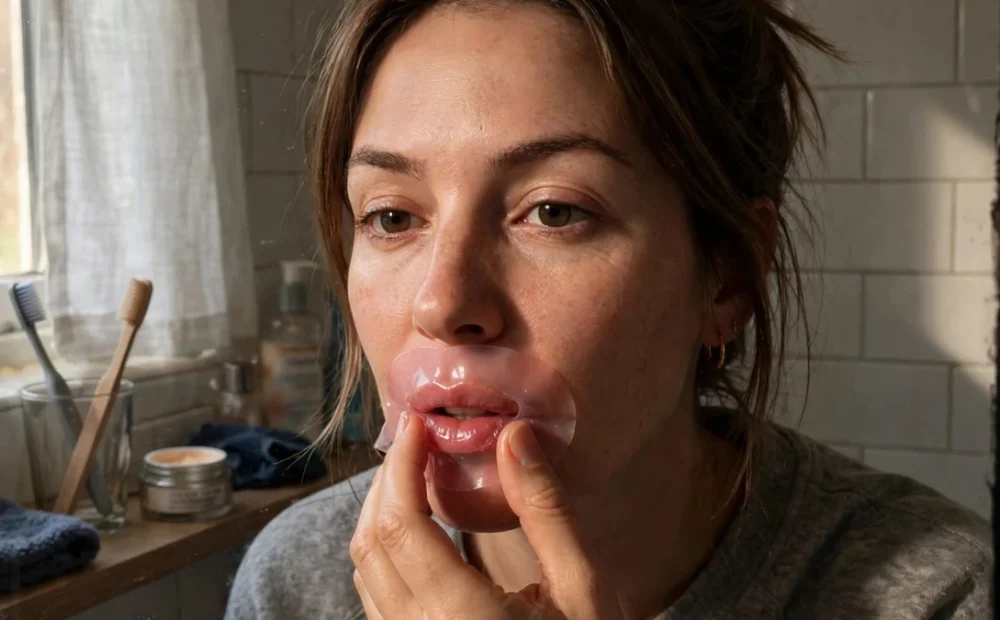
There are different kinds of lip mask. Overnight masks are the most common, thick creams or jellies in jars and tubes. Sheet masks are single-use patches that sit on the lips for fifteen to twenty minutes, useful before an event. Some masks add gentle exfoliating ingredients to smooth flakes, while others are plain and rich, designed purely to hydrate and protect.
Choosing between them is mostly a question of timing. An overnight mask is the best choice for regular care, because it has hours to work and fits easily into a bedtime routine. A sheet mask is better as a quick fix before a wedding, a photoshoot, or a night out, when you want softer lips in twenty minutes rather than eight hours. Neither replaces the other, and many people keep both, using the overnight mask most nights and the sheet mask only when they need fast results.
How to choose the right lip mask and what to look for
Look first at the texture and the wear time. An overnight mask should be thick enough to stay put while you sleep, without feeling gritty or sliding off onto the pillow. If it disappears within an hour, it is not doing the job it was made for.

Look next at the ingredient list. The most useful combination is a humectant plus an occlusive: hyaluronic acid or glycerin to pull water in, and shea butter, lanolin or petrolatum to keep it there. Soothing ingredients such as allantoin or bisabolol help if your lips are raw. Fragrance and flavouring are common irritants, so a fragrance-free mask is usually the safer choice for sore lips.
Finally, look at the format. A jar with a small spatula keeps the product clean and lets you control how much you use. A squeeze tube is more hygienic and easier to travel with. Our guide to the best lip masks of 2027 covers the full range, so you can match the format and formula to your routine before you start.
How to use a lip mask in 9 steps
Start with clean lips
What to do: Remove lipstick, lip liner and any balm, then rinse your lips with lukewarm water and pat them dry. A mask works best on bare skin, where nothing blocks it from the lips.
What to avoid: Do not apply a mask over makeup or a heavy balm, because the mask will sit on top of the old product instead of reaching your lips. Best for: Every lip mask application. Time needed: 1 minute. Standout tip: Clean lips at night, when you will not eat or drink for hours.
This step takes almost no time, but it makes the biggest difference. A mask applied over lipstick is mostly wasted, while the same mask on clean lips can work all night.
Exfoliate gently, only when your lips are not sore
What to do: If your lips have loose flakes, smooth them first with a very gentle scrub or a damp washcloth, using light circular movements for a few seconds.
What to avoid: Never scrub raw, cracked or bleeding lips, and never use a harsh scrub the same night as an exfoliating mask. Best for: Flaky lips that are not sore. Time needed: 1 minute. Standout tip: If it stings, stop at once and skip this step.
Exfoliation is optional, not essential. A plain mask on unexfoliated lips still works well, and it is always the safer choice when your lips are sore.
Dampen your lips slightly
What to do: Leave your lips very slightly damp after rinsing, or press a damp cloth against them for a few seconds before applying the mask.
What to avoid: Do not apply a mask to soaking wet lips, because the product will slide off instead of staying in place. Best for: Humectant masks with hyaluronic acid or glycerin. Time needed: 30 seconds. Standout tip: Slightly damp is the goal, not dripping wet.
Humectants draw water into the lips, and they work best when there is a little water to draw from. This small step makes the mask noticeably more effective.
Apply a thick, even layer
What to do: Use a clean spatula or fingertip to spread a thick, even layer over the whole lip, including the corners, where cracks often start.
What to avoid: Do not use a thin, balm-like layer, and do not leave the corners bare, because they dry out first. Best for: Overnight masks. Time needed: 1 minute. Standout tip: You should be able to see the mask clearly on your lips.
A lip mask is not a balm, and it should not be applied like one. A visible, generous layer is what lets it work for hours instead of minutes.
Leave it on overnight, or for at least 20 minutes
What to do: Leave an overnight mask on while you sleep, or leave a daytime mask on for at least twenty minutes without eating, drinking or talking much.
What to avoid: Do not wipe it off after five or ten minutes, and do not keep reapplying it through the night. Best for: Overnight masks and pre-event sheet masks. Time needed: 20 minutes to 8 hours. Standout tip: Apply it as the last step before bed.
Time is the whole point of a mask. A balm works in minutes, but a mask needs hours to soften the skin properly, so patience is part of the routine.
Do not lick it off
What to do: Leave the mask alone once it is on. If it feels strange, distract yourself and let it settle; most masks feel normal within a minute or two.
What to avoid: Do not lick your lips to test the flavour, because saliva dries lips out and removes the mask. Best for: Anyone whose lips get drier despite using products. Time needed: No extra time. Standout tip: Flavoured masks make licking more tempting, so choose unflavoured if this is a habit.
Licking is one of the most common reasons lip care fails. It feels soothing for a second, but it strips moisture and undoes the mask’s work.
Remove it gently in the morning
What to do: In the morning, wipe away any remaining mask with a soft, damp cloth, using gentle strokes, then look at how your lips feel.
What to avoid: Do not scrub the mask off, and do not peel away any flakes that are still attached to the skin. Best for: Overnight masks. Time needed: 1 minute. Standout tip: If flakes remain, they will come away on their own over the next day.
A gentle wipe is all you need. Your lips should feel softer and look smoother, and any remaining flakes are a sign to keep up the routine, not to scrub harder.
Follow with a balm and sunscreen
What to do: After removing the mask, apply a light balm with sun protection, and reapply it through the day, especially before going outside.
What to avoid: Do not go out into sun or wind with bare lips after a mask, because the newly softened skin is more exposed. Best for: Every morning after an overnight mask. Time needed: 1 minute. Standout tip: Keep the balm in your bag so you can reapply it easily.
A mask repairs lips at night, but a balm protects them during the day. Our guide to the best hydrating lip balms covers daytime options that pair well with an overnight mask.
Repeat three to five nights a week
What to do: Use a lip mask three to five nights a week for dry lips, and nightly for maintenance once your lips feel comfortable.
What to avoid: Do not use an exfoliating mask every night, and do not keep increasing how often you use it if your lips are not improving. Best for: Dry, flaking lips. Time needed: 1 minute per night. Standout tip: Consistency beats intensity; three calm nights a week work better than one harsh night.
A routine you can keep is worth more than an intense one you abandon. Three to five nights a week, every week, is enough to keep dry lips comfortable.
Which routine suits your lips
Very dry, flaking lips do best with the full routine: gentle exfoliation when the lips are not sore, a thick overnight mask three to five nights a week, and a balm with sunscreen during the day. The heavy mask is what keeps moisture against the skin long enough to make a difference.
Sensitive lips that sting easily should skip the exfoliation step entirely and choose a fragrance-free mask. Apply it on clean, slightly damp lips, leave it overnight, and remove it gently in the morning. If your lips are dry but not sore, a lighter mask used a few nights a week can be enough, especially if you use it consistently.
For lips that are dry and also dull, a mask with hyaluronic acid adds hydration as well as softness. Lip scrubs can help with flakes once the skin has calmed, but they should never be used on raw or bleeding lips, and they are never a substitute for the mask itself.
Travel and weather change the routine too. Cold wind, dry cabin air, and strong sun all strip moisture faster, so use the mask nightly on trips and in winter, even if your lips feel fine at home. A small tube in your wash bag means the routine survives a change of place, which is when dry lips usually flare up worst.
The caveats that matter
Lip masks are well tolerated by most people, but they are not a cure for every lip problem. A mask will not heal lips that are constantly licked, picked at, or exposed to wind and sun without protection. It will also not fix a persistent crack at the corner of the mouth, which can be caused by a vitamin deficiency, a yeast infection, or a poorly fitting dental appliance, and needs a clinician rather than a stronger product.
| Detail | What is known |
|---|---|
| Best time to apply | At night on clean, slightly damp lips, as the last step before bed |
| How long to leave it on | Overnight for masks, or at least 20 minutes for daytime and sheet masks |
| How often | Three to five nights a week for dry lips; nightly for maintenance |
| Who should start gently | Sore, cracked or reactive lips; choose fragrance-free and skip exfoliation |
| What to avoid pairing at first | Strong scrubs, retinol lip products, or matte long-wear lipstick on raw lips |
| How much to use | A thick, visible layer covering the whole lip, including the corners |
| When to stop | If it stings, swells, or makes peeling worse, stop and switch to a plain occlusive |
| What it does not do | It does not heal cracked corners, cold sores, or lips damaged by constant licking |
If your lips stay cracked for weeks despite good care, or if one spot keeps splitting open, talk to a clinician before trying a stronger product. A simple, plain mask used consistently is often more effective than a long list of new products tried one after another.
Checklist: using a lip mask honestly
Use these checks each night you apply a mask, and again after a week of use.
- Check your lips are clean: no lipstick, liner or old balm before you apply the mask.
- Check the layer: thick and even, covering the whole lip including the corners.
- Check the timing: apply it last, before bed, and leave it on overnight.
- Check for stinging: if it stings, remove it and switch to a fragrance-free mask.
- Check the morning: wipe it off gently, then apply a balm with sun protection.
- Check the habit: three to five nights a week, consistently, beats one intense night.
Frequently asked questions
How long should I leave a lip mask on?
Overnight is best for an overnight mask, usually six to eight hours. A daytime or sheet mask should stay on for at least twenty minutes. Wiping it off after five or ten minutes wastes most of its benefit.
Can I use a lip mask every night?
Yes, if your lips tolerate it. A plain, fragrance-free mask is usually fine nightly. If you notice irritation or increased peeling, cut back to every other night and check the ingredient list for fragrance or acids.
Should I exfoliate before a lip mask?
Only if your lips are not sore. A gentle scrub or a damp washcloth can smooth flakes before a mask, but never scrub raw, cracked or bleeding lips, and never use a harsh scrub the same night as an exfoliating mask.
Can I wear a lip mask under lipstick?
A light mask can work under lipstick, but a thick overnight mask will make lipstick slide. Use a thin layer of a lighter formula in the day, and save the heavy mask for night.
Why does my lip mask sting?
It may contain fragrance, flavouring, or an exfoliating ingredient that irritates your lips, or your lips may be too raw for that formula. Remove it, switch to a fragrance-free mask, and skip exfoliation until your lips have calmed.
Do I still need a lip balm if I use a lip mask?
Yes. A mask repairs lips at night, but a balm protects them during the day, especially against sun and wind. Use a balm with sun protection every morning after removing the mask.
The bottom line
Using a lip mask well is not complicated. Clean lips, a thick layer, enough time, and a consistent routine are what make it work. The most common mistakes are applying it over makeup, using too little, wiping it off too soon, or scrubbing lips that are already sore.
Start with a plain, fragrance-free mask, use it three to five nights a week, protect your lips with a balm and sunscreen during the day, and judge it on how your lips feel in the morning after two weeks. That is the honest way to get the benefit a lip mask is known for, without the irritation that makes people give up on it.