A tourmaline ring is the most colourful buy in fine jewellery, and the most confusing. No other gemstone covers so much ground: one ring can be soft pink, deep green, vivid blue, or the electric blue-green of Paraiba, and each colour has its own price and buying rules.
Tourmaline is a complex borosilicate mineral and the modern birthstone for October. It scores 7 to 7.5 on the Mohs scale, hard enough for daily wear, and unlike topaz it has no cleavage, so it does not split along a hidden plane.
This guide covers the colour varieties, Paraiba, clarity and cut, treatments, settings, durability, prices and paperwork.
Key takeaways
- Tourmaline is a whole colour family, not one stone: pink rubellite, green tourmaline, blue indicolite, neon Paraiba and bicolour watermelon are all true tourmalines, and variety decides price.
- Colour comes first: look for a vivid, even colour that stays bright in daylight, and beware of stones that look almost black indoors.
- Paraiba is the exception: only a laboratory report proving copper content confirms a true Paraiba, and ordinary blue-green tourmaline is often sold at a Paraiba price.
- Most tourmaline is untreated or only heated, but ask in writing about heat, irradiation and fracture filling.
- Tourmaline scores 7 to 7.5 on the Mohs scale with no cleavage, so it suits everyday wear, but get a certificate for any expensive stone.
Tourmaline is a family, not a single stone
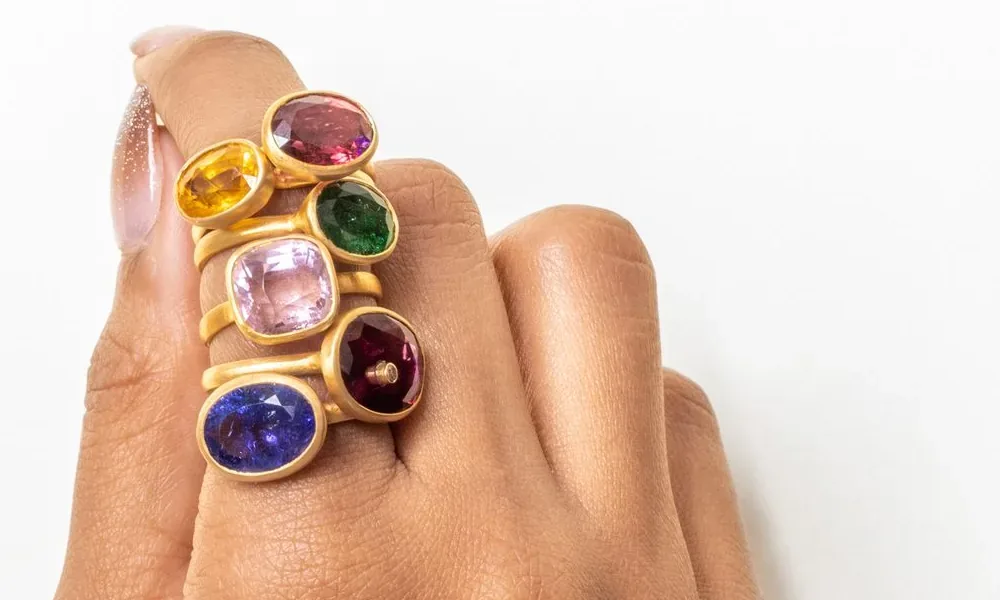
Tourmaline is not one gem but a group of closely related minerals, and the gem variety most often set in rings is elbaite. Its colour comes from trace elements in the crystal, which is why one species can produce almost every colour in the spectrum.
Rubellite is the pink to red variety, and a true rubellite holds its red colour in daylight and in lamplight, while a lesser pink turns brownish under warm light. Green tourmaline ranges from pale mint to deep forest green, and the finest chrome tourmaline is a vivid green coloured by chromium. Indicolite is blue, and watermelon tourmaline is bicolour, pink in the centre with a green rim.
Colour comes first, and it is worth slowing down for
With tourmaline, colour comes first and drives both beauty and price. Jewellers describe it in three parts: hue, the colour itself; tone, how light or dark it looks; and saturation, how strong it is. The most valuable stones are vivid and evenly coloured, with a medium to medium-dark tone.
The most common mistake is buying a tourmaline that is too dark. Green and blue stones are often cut from dark rough, and one that looks rich under a jeweller’s lamp can look almost black indoors. Hold the ring away from the shop lights and look at it by a window, where a good green stays clear and lively and a good blue keeps its blue rather than turning grey.
Tourmaline is strongly pleochroic, showing different colours from different angles. Tilt the ring slowly in daylight and watch how the colour changes. A little pleochroism is normal, but if the colour swings wildly or one angle looks washed out, the cutter has not oriented the stone well.
Paraiba: the rare one worth slowing down for
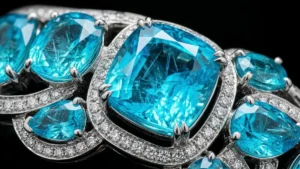
Paraiba tourmaline is the most valuable variety of tourmaline and one of the most expensive gems in the world. First found in the Brazilian state of Paraíba in 1989, similar copper-bearing material was later found in Mozambique and Nigeria. Its electric neon blue-green glow comes from copper, and in good light a fine Paraiba seems to glow from within.
The name is where buyers get caught. True Paraiba is defined by its chemistry, copper-bearing tourmaline, not by colour alone. Plenty of ordinary blue-green tourmaline is sold as Paraiba at an inflated price, and neon-blue apatite is sometimes passed off as Paraiba even though it scores only 5 on the Mohs scale. The only reliable proof is a laboratory report stating the stone is copper-bearing.
Brazilian Paraiba commands the highest prices, often several thousand to tens of thousands per carat, while African Paraiba is more available and costs less. Fine Paraiba over two carats is genuinely rare, so a small stone with a vivid neon glow beats a larger one with a weak, greyish colour.
Clarity and cut: what the eye should and should not see
Most fine tourmaline is eye-clean or nearly so, with no flaws visible to the naked eye. Check in daylight and under a loupe: a few tiny thread-like inclusions are acceptable, but avoid large dark inclusions near the centre, surface-reaching cracks, or a cloudy, milky look.
Watermelon tourmaline is the exception: its slices are expected to show colour zoning and inclusions. Heavily included rubellite is sometimes fracture-filled to improve its clarity, acceptable only if the seller discloses it and the price reflects it. Look for a symmetrical stone with a centred table and even colour, and avoid a pale window in the middle, where light leaks through instead of returning to your eye.
Treatments: the question that changes the price
Most tourmaline reaches the market untreated or only heated, an advantage over ruby and blue topaz, where treatment is routine. Heat lightens dark pink and red stones and improves some blue and green ones, and it is stable and widely accepted. Irradiation is also used, mainly to deepen pink and red colours. Neither should alarm you, but both must be disclosed, and an untreated stone carries a premium.
The treatments to watch for are fracture filling and coating. Fracture filling uses a glass-like substance to fill cracks in a heavily included stone, improving the look but making it less durable and less valuable. Coating is a thin coloured layer on the surface, rare in fine tourmaline but seen at the cheap end, and it can wear off. Ask the seller, in writing, whether the stone has been heated, irradiated, fracture-filled or coated.
Settings and metals that flatter tourmaline
The metal you choose changes how the tourmaline reads. Yellow gold is the classic pairing for pink and green tourmaline: it warms the stone and deepens the colour. White gold and platinum suit blue indicolite and neon Paraiba, while rose gold flatters rubellite and pale pink tourmaline.
A solitaire with four or six prongs puts the tourmaline front and centre and lets light in from all sides, which helps darker stones look brighter. A halo of small diamonds makes the centre stone look larger, and a bezel setting, where metal wraps the stone’s edge, is the most protective option. If you are comparing ring styles, our guide to the best engagement rings shows how the same settings look across different stones.
Durability and everyday wear
Rings take more knocks than any other jewellery, so durability matters more here than in earrings or pendants. Tourmaline sits at 7 to 7.5 on the Mohs scale, so it resists scratching from everyday contact, though it is softer than sapphire at 9 and diamond at 10. Tourmaline has no cleavage, so unlike topaz, which can split cleanly from a sharp knock along one plane, it has no natural plane along which it splits easily.
There are still limits. Tourmaline is brittle compared with sapphire, and a hard knock can chip an exposed corner. A bezel or halo setting removes most of that risk, while watermelon slices need gentler wear. If you are weighing tourmaline against a stone with a cleavage risk, our guide to what to look for in a topaz ring explains how topaz compares. Clean it with warm water, mild soap and a soft brush.
Prices: what to expect in 2027
Tourmaline is one of the few fine gems where a beautiful ring does not require a large budget, and also one where the ceiling is almost unlimited. A well-cut one to two-carat pink or green stone in gold typically costs a few hundred to around a thousand, fine rubellite and indicolite cost more, and Paraiba sits in a market of its own.
| Tourmaline variety | Typical colour | Indicative price per carat | Best for |
|---|---|---|---|
| Common green tourmaline | Green, sometimes yellowish | $20 to $300 | Affordable everyday rings |
| Pink tourmaline | Soft to medium pink | $50 to $300 | Delicate rings in rose gold |
| Rubellite | Rich raspberry red-pink | $300 to $3,000 | Statement rings, collectors |
| Indicolite | Blue, sometimes greyish | $200 to $2,000 | An alternative to sapphire |
| Chrome tourmaline | Vivid green | $500 to $3,000 | Emerald-like colour for less |
| Watermelon tourmaline | Pink centre, green rim | $100 to $500 | Artisan and slice-cut rings |
| Paraiba, African | Neon blue-green | $1,500 to $10,000 | Luxury rings, collectors |
| Paraiba, Brazilian | Electric neon blue-green | $5,000 to $50,000+ | Top collectors, investment |
Because tourmaline crystals grow large, big stones are common, and the price per carat climbs far less steeply with size than it does for ruby or sapphire, except for fine rubellite, chrome tourmaline and Paraiba. A smaller stone with vivid colour is usually a better buy than a larger stone with poor colour.
Certificates and sellers: the paperwork that protects you
For an ordinary pink or green tourmaline ring, a certificate is not essential: the stone is affordable, usually untreated or only heated, and easy for a jeweller to identify. For any costly ring, especially Paraiba, fine rubellite or chrome tourmaline, an independent certificate is worth having. Recognised labs include GIA, AGL and GRS, and their reports state whether the stone is natural tourmaline, whether it is copper-bearing, and any treatments found.
Buy from a jeweller with a clear returns policy and a reputation you can check. If a seller rushes you, refuses a return, cannot name the variety, or cannot produce paperwork for an expensive stone, the ring is not worth the risk. Keep every document: the laboratory report, the receipt, and any appraisal. A diamond buying guide follows the same rule: never pay a premium price without proof of what you are buying.
Checklist: what to look for in a tourmaline ring
- Ask which tourmaline variety the stone is, and get it in writing.
- View the tourmaline in daylight and check the colour stays vivid, not dark or almost black indoors.
- Tilt the stone to check pleochroism, and avoid stones whose colour swings wildly from one angle.
- Check clarity with a loupe: a fine tourmaline is eye-clean, so avoid large inclusions, surface cracks and cloudy stones.
- Confirm the treatment in writing, and ask for a lab report proving copper content before paying a Paraiba price.
- Choose a secure setting, with even prongs or a protective bezel, and get a certificate for any costly stone.
Frequently asked questions
What is the most important thing to look for in a tourmaline ring?
Colour, judged by variety. A vivid, even colour that stays bright in daylight is what makes a tourmaline beautiful and valuable. Avoid dark stones that look almost black indoors.
Is tourmaline durable enough for everyday wear?
Yes, in a sensible setting. Tourmaline scores 7 to 7.5 on the Mohs scale and has no cleavage, so it resists scratching and splitting well. A bezel or halo setting protects it further.
Are tourmalines treated?
Often only lightly, if at all. Heat and irradiation are the common treatments, both stable and accepted when disclosed. Fracture filling and coating are the ones to watch for.
How can you tell a real tourmaline from a fake one?
By testing, not by looking alone. Glass imitations often contain tiny round bubbles, and neon-blue apatite mimics Paraiba but is far softer. A laboratory certificate is the reliable way to be sure.
How much should a tourmaline ring cost?
A good pink or green tourmaline ring typically costs a few hundred to around a thousand. Fine rubellite and chrome tourmaline rings cost several thousand, and Paraiba rings cost far more.
Which tourmaline colour is best for a ring?
There is no single best colour, because tourmaline is a family. The classic choices are a rich rubellite pink-red or a vivid green; for something rarer, try a clean blue indicolite or a neon Paraiba.
The bottom line
A great tourmaline ring starts with the right variety for your taste and budget, a vivid colour that holds its brightness in daylight, a clean and well-cut stone, and a secure setting. Most tourmaline is untreated or only heated and costs far less than ruby or sapphire, while Paraiba demands proof. Buy the stone you can see and check it in daylight.
Note: This guide is general buying advice, not a gemmological appraisal. Prices vary by market and quality, and a laboratory report is the only reliable confirmation of a tourmaline’s identity, variety and treatments.