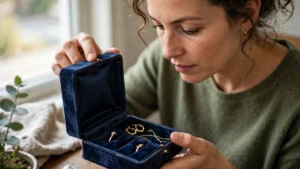

A locket necklace is a necklace with a small hinged case that opens to hold something personal. Inside you will usually find a photograph, a lock of hair, or a tiny folded note. It is one of the oldest jewellery ideas still worn every day, and in 2027 it is quietly coming back as a simple, wearable way to keep someone close.
The appeal is easy to understand. Most necklaces are decoration. A locket necklace is decoration with a private meaning, and only the wearer knows what is inside. That is why lockets are given for birthdays, anniversaries and graduations, and why they are so often kept for decades and passed down.
This guide explains what a locket necklace actually is, what to look for before you buy, and how to wear and care for one. Below are nine facts that matter, from the hinge and the clasp to the metal, the chain and the photograph inside.
Key takeaways
- A locket necklace is a pendant with a hinged case that opens, made to hold a small photograph, a lock of hair, or a tiny keepsake.
- The hinge, clasp and chain matter more than the decoration, because they decide whether the locket stays shut.
- Gold, silver and gold-filled lockets suit different budgets, and the metal sets both the price and how much care the piece needs.
- The photograph inside must be sized and sealed properly, or it will curl or slip out of place.
- A locket is not a safe or a vault, and a very old or fragile locket is better kept for occasions than worn every day.
What a locket necklace actually is
A locket is a small case, usually round, oval, or heart-shaped, hung from a chain. The case opens on a hinge, and inside there are one or two shallow frames for photographs, or an empty space for a keepsake. The word comes from the old French “loquet”, meaning a small latch, which describes the piece well: a tiny, wearable container with a latch.
Lockets have been worn for centuries, but they became widely popular in the Victorian era, when they were used to hold portraits of loved ones and locks of hair. In 2027 they are worn in two main ways: as a sentimental piece, holding a photo of a child, a partner or a parent, and as a fashion piece, where the locket itself is the design. The same locket can serve both purposes over time.
The difference between a locket necklace and a pendant necklace is simple. A pendant is a solid ornament, such as a stone or a shaped piece of metal. A locket opens, and that opening is what makes it personal and also more delicate. A pendant has nothing to break. A locket has a hinge, a clasp, and a thin case wall, all of which need to be well made. Our roundup of the best pendant necklaces of 2027 is a useful comparison if you are deciding between the two styles.
How to tell a good locket necklace from a poor one
Start with the hinge. Open and close the locket a few times. A good hinge moves smoothly, holds the lid open without flopping, and closes with a small, definite click. A poor hinge feels loose, wobbles, or lets the lid fall shut. The hinge fails first on a cheap locket, so check it before anything else.
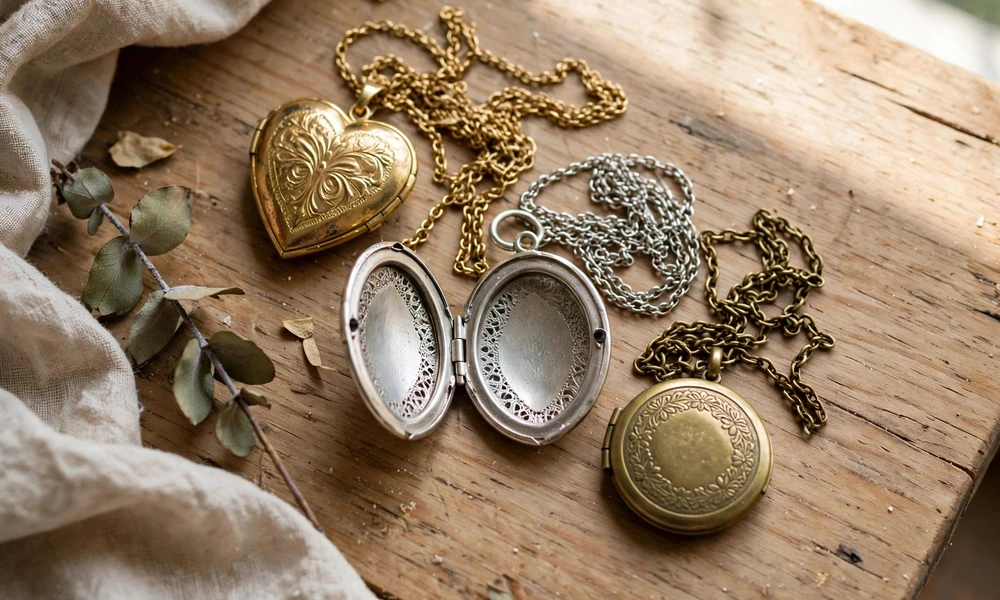
Look next at the clasp and the case. The lid should sit flush against the base when closed, with no visible gap. The clasp should be firm enough that it does not pop open when the locket is turned over or gently shaken. A locket that feels feather-light and flexes when pressed is usually made from very thin metal, and it will dent easily.
Finally, look at the chain and the bail, the small loop that joins the locket to the chain. The bail should be soldered closed, not simply bent shut, and the chain should be strong enough for the weight of the locket. A heavy locket on a fine chain will snap it sooner or later. If the locket is sold without a chain, budget for one that matches it in metal and strength.
The 9 locket necklace facts that matter
The case is the whole point
What it shows: The case is what makes a locket a locket. Its size decides what fits inside, its shape decides the look, and its depth decides whether it holds one photograph, two, or a small keepsake. What to consider: A case that is too shallow will not close over a photograph, and a case that is too deep will look bulky on the neck.
Best for: Anyone who wants to carry a photograph or keepsake. Material: Gold, silver, or gold-filled, usually 20 to 30 mm across. Price range: £40 to £600 for a new locket, more for solid gold. Standout feature: The hinged case that opens to reveal what is inside.
The hinge and clasp do the hard work
What it shows: A locket opens and closes dozens of times a year, and the hinge and clasp take all of that wear. A well-made hinge is usually a barrel hinge, a small tube with a pin through it. What to consider: A simple folded hinge, made from a thin strip of metal, will loosen with use and is hard to repair well.
Best for: Daily wear, where the locket is opened often. Material: The same metal as the case, with a steel pin inside the hinge. Price range: Included in the price of the locket; a repair costs £20 to £60. Standout feature: A firm click when the lid closes.
The chain sets the length and the look
What it shows: The chain decides where the locket sits. A 16-inch chain places it at the base of the throat, an 18-inch chain at the collarbone, and a 20-inch chain at the centre of the chest. What to consider: A chain that is too long lets the locket swing and catch on things, while one that is too short makes a large locket look crowded.
Best for: Matching the locket to the neckline you wear most. Material: Cable, curb, or rope link, in the same metal as the locket. Price range: £25 to £200 for a good chain. Standout feature: An adjustable chain with a sliding bead or extra links.
The metal sets the tone and the budget
What it shows: Solid gold is the most durable and expensive, sterling silver is bright and affordable but tarnishes, and gold-filled is a practical middle ground with a thick layer of gold over a base metal. What to consider: Gold-plated lockets look the same at first, but the thin plating wears through in a year or two of daily wear.
Best for: Gold for a keepsake, silver for everyday fashion, gold-filled for a sensible compromise. Material: 9k or 14k gold, 925 sterling silver, or gold-filled. Price range: £30 to £150 for silver, £80 to £300 for gold-filled, £250 and up for solid gold. Standout feature: A hallmark stamped inside the case, which confirms the metal.
The photograph inside needs the right size
What it shows: A locket photograph is small, usually 15 to 25 mm across, and it must be cut to fit the frame exactly. A photograph that is too large will buckle, and one that is too small will slide around. What to consider: Ordinary printed photographs are too thick for many lockets, and the paper can absorb moisture and curl.
Best for: A clear, close-up portrait with the face filling most of the frame. Material: Thin photo paper, or a print sealed with clear tape or resin. Price range: A few pounds to print, or £10 to £30 from a jeweller. Standout feature: A photograph that sits flat and stays put when the locket is opened.
Engraving makes it personal
What it shows: Engraving turns a locket from a pretty object into a personal one. A date, initials, or a short phrase on the back is the most common choice. What to consider: Machine engraving is neat and cheap, hand engraving is deeper and more characterful, and engraving cannot be undone, so the wording needs to be right.
Best for: Gifts, anniversaries, and marking a date that matters. Material: Any solid metal; engraving does not work well on thin plating. Price range: £15 to £60 for machine engraving, more for hand engraving. Standout feature: A date or initials that only the wearer understands.
Vintage lockets and new lockets are different buys
What it shows: A vintage locket, usually from the Victorian or Edwardian era, has character, a handmade feel, and often a better hinge than a modern budget piece. A new locket has a warranty, a known metal, and a chain that matches. What to consider: A vintage locket may have a worn hinge, a weak clasp, or a photograph frame that no longer holds a picture flat.
Best for: Collectors and anyone who loves the history; new lockets for daily wear. Material: Vintage pieces are often 9k gold or silver; new pieces are usually 14k gold, silver, or gold-filled. Price range: £60 to £400 for vintage, £40 to £600 for new. Standout feature: The patina and craftsmanship of a genuinely old piece.
The everyday versus occasion divide
What it shows: A small, light locket on a short chain is easy to wear every day. A large, heavy, or very old locket is better saved for occasions, because daily wear is what wears out hinges, chains and clasps. What to consider: A locket worn daily is knocked, caught on clothing, and exposed to perfume, sweat and water far more than an occasional piece.
Best for: A simple gold-filled or silver locket for daily wear; a solid gold or vintage piece for occasions. Material: Lightweight gold-filled or silver for every day. Price range: £40 to £150 for a daily-wear locket. Standout feature: A locket light enough that you forget you are wearing it.
Care is simple but not optional
What it shows: A locket needs the same care as any fine jewellery: gentle cleaning, dry storage, and protection from chemicals. The photograph inside needs one extra step, which is keeping moisture out. What to consider: Water getting inside the case is the most common cause of a ruined photograph, and a locket that is worn in the shower will let water in sooner or later.
Best for: Anyone who wants the locket to last for years. Material: A soft cloth, mild soap, and a dry jewellery box. Price range: A few pounds for a cleaning cloth. Standout feature: A photograph that still looks the same in ten years as it does today.
Which locket necklace is right for you
Start with the purpose. If the locket is a gift, choose the metal and the engraving first, and let the size follow. If it is for yourself and you plan to wear it daily, choose the weight and the chain first, because comfort decides whether it is worn at all.
Think about the neckline you wear most. A small oval locket on an 18-inch chain suits almost everything, which is why it is the most common choice. A larger heart-shaped locket suits a plain top and a bare neckline, where it can be seen properly. A long chain with a small locket suits layering, as our guide to what a tennis necklace is shows for a different kind of everyday necklace.
Finally, set the budget by the metal, not by the decoration. A simple solid silver locket will outlast an elaborate plated one, and a gold-filled locket will outlast both if worn daily. Spend on the case, the hinge and the chain. A plain locket that opens smoothly and stays shut is worth more than a pretty one that does not.
The caveats that matter
A locket is a sentimental object, and that is exactly why it is worth buying carefully. The most common disappointment is a locket that looks right in the listing and fails in the first month, usually because the hinge loosens or the plating wears off. Both are easy to avoid by checking the hinge, looking for a hallmark, and choosing a metal that matches how often it will be worn.
| Detail | What is known |
|---|---|
| What it is | A hinged case on a chain, made to hold a photograph or small keepsake |
| Most common sizes | 20 to 30 mm across; 18-inch chain suits most people |
| Best metals | Solid gold for keepsakes, sterling silver for everyday, gold-filled for value |
| What to check first | The hinge, the clasp, the hallmark, and the strength of the chain |
| What to avoid | Thin gold plating for daily wear, and a heavy locket on a fine chain |
| Photograph care | Cut to fit, seal with clear tape, keep the case dry |
| Vintage buying | Check the hinge and clasp, and budget for a jeweller’s service |
| What it does not do | It is not waterproof, and it is not a safe place for anything valuable |
If you are buying a locket to hold something irreplaceable, such as an original photograph or a lock of hair, keep a copy of the photograph and consider sealing the original. A locket is worn close to the body, exposed to moisture, heat and knocks, so the keepsake inside deserves the same care as the locket itself.
Checklist: choosing a locket necklace honestly
Use these checks before you buy, and again after a week of wearing it.
- Check the hinge: open and close it several times, and make sure the lid stays open and closes with a click.
- Check the hallmark: look for 925 for silver or 375 and 585 for gold, and treat an unmarked locket as plated.
- Check the clasp: shake the closed locket gently and make sure it does not pop open.
- Check the chain: make sure it is strong enough for the weight of the locket and the right length for your neckline.
- Check the photograph fit: the picture should sit flat, fill the frame, and not slide when the locket is opened.
- Check the care: keep it dry, store it closed in its own compartment, and take it off before swimming or sport.
Frequently asked questions
What is the difference between a locket and a pendant?
A pendant is a solid ornament that hangs from a chain. A locket is a hinged case that opens to hold something inside, usually a photograph or a small keepsake.
Can I wear a locket necklace every day?
Yes, if it is well made. Choose a small, light locket in solid gold, sterling silver or gold-filled, on a chain strong enough for its weight, and take it off before swimming, showering, sport or heavy work.
What size photograph fits in a locket?
Most lockets take a photograph between 15 and 25 mm across. A jeweller can size and fit it for you, or you can print it small and cut it with a sharp blade, slightly larger than the frame so it presses in flat.
Is gold-filled better than gold-plated for a locket?
Yes, for daily wear. Gold-filled has a much thicker layer of gold bonded to a base metal, so it lasts for years. Gold plating is a thin coating that wears through in a year or two of regular use.
Can a broken locket hinge be repaired?
Usually yes. A jeweller can replace a hinge pin, tighten a loose hinge, or fit a new clasp, typically for £20 to £60. A very thin or badly dented case is harder to repair.
What should I put inside a locket?
A small photograph is the classic choice, followed by a lock of hair or a tiny folded note. Keep it flat and dry, seal a paper photograph with clear tape, and keep a copy of anything irreplaceable. Our guide to gold versus rose gold jewellery can help if you are choosing the metal for a locket you plan to keep for years.
The bottom line
A locket necklace is a simple idea done well: a small case, a good hinge, a chain that suits it, and something personal inside. The best one in 2027 is not the most elaborate or expensive. It is the one with a solid case, a firm clasp, a hallmark you can trust, and a photograph that sits flat and stays dry.
Choose the metal for how often you will wear it, check the hinge before you buy, and keep the keepsake inside safe. A locket necklace will then do what it has always done best: carry something that matters, quietly, every day.