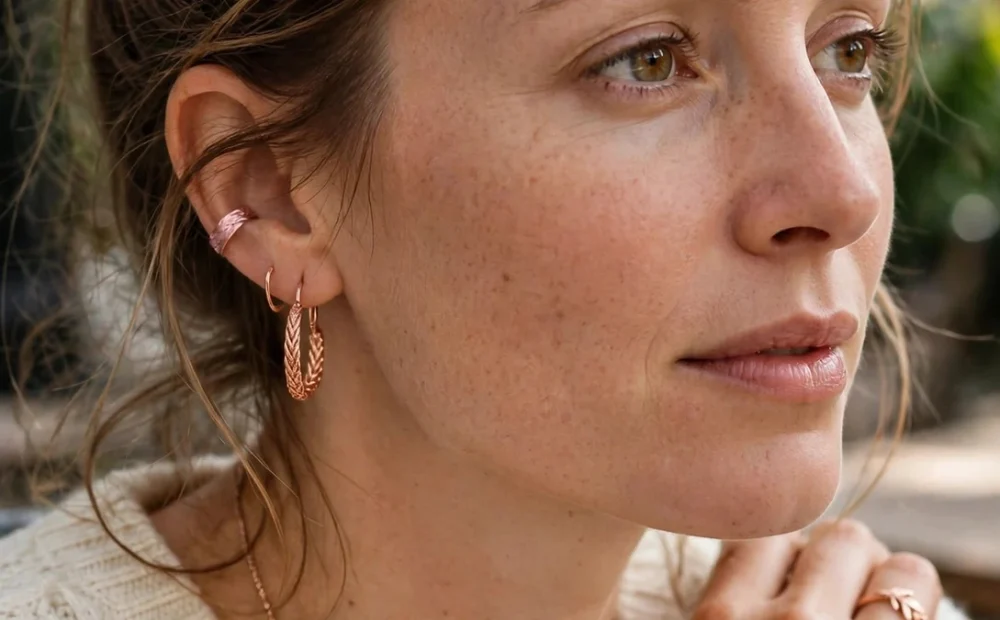
Gold and rose gold look like close cousins in a jewellery case, and in a way they are. Both start with pure gold, both are sold in the same carat weights, and both are made to last. Yet on the skin they tell very different stories. Yellow gold is warm, classic and unmistakable. Rose gold is softer, pinker and more modern, with a romantic blush that photographs beautifully and suits a wide range of skin tones. Choosing between them comes down to which one fits your wardrobe, your skin, your budget and the way you actually wear jewellery.
The confusion usually starts with the names. Rose gold is not a different metal. It is gold mixed with copper, and the copper is what gives it that pink colour. Yellow gold is gold mixed with a blend of silver and copper, which keeps its familiar warm yellow tone. Because the recipes differ, the two alloys behave slightly differently over time. Rose gold can be a little harder and more resistant to scratches, while yellow gold is easier for a jeweller to resize, repair and restore to its original shine.
Below are nine comparisons that matter in 2027, from colour and skin tone to price, durability and everyday wear. Each one looks at what the difference really is, what to watch for, and who each metal suits best, so you can choose with confidence rather than guessing under shop lights.
Key takeaways
- Rose gold is gold mixed with copper, which gives it a pink tone and slightly harder surface, while yellow gold keeps its classic warm colour.
- Both metals come in the same carat weights, and 14k and 18k are the most common choices for everyday jewellery.
- Rose gold flatters cool and fair skin tones especially well, while yellow gold suits warm and olive skin tones.
- Rose gold holds its colour without plating, while white gold needs rhodium, so rose gold is lower maintenance than many people expect.
- Neither metal is hypoallergenic for everyone, and copper in rose gold can irritate very sensitive skin, so check the alloy before you buy.
What gold and rose gold actually are
Pure gold is 24 karat, but it is far too soft for everyday jewellery. Jewellers mix it with other metals to make it stronger, and the metals they choose decide the colour. Yellow gold is made by mixing pure gold with silver and a small amount of copper. The result is the warm, sunny gold most people picture when they think of a wedding band or a classic chain. Rose gold uses a much higher share of copper and little or no silver, which is why it turns pink. The more copper in the mix, the deeper and rosier the colour becomes.
Carat weight works the same for both. An 18k piece is 75 percent pure gold, whether it is yellow or rose, and a 14k piece is 58.3 percent pure gold. The difference is only in the remaining alloy. The story of why gold jewellery never goes out of style is really the story of this flexibility, because the same metal can be shaped into a dozen different looks just by changing the alloy.
One practical difference is how the two metals age. Yellow gold is soft, so it picks up fine scratches more easily, but those scratches can be polished out by a jeweller with little fuss. Rose gold is a little harder thanks to its copper content, so it resists everyday scratches a touch better, but it can be slightly more brittle in very thin settings, and it is harder to work with when a ring needs resizing.
How we compared them and what to look for
The fairest way to compare gold and rose gold is side by side, in daylight, against your own skin. Hold a yellow gold piece and a rose gold piece next to your wrist in natural light, and the one that makes your skin look healthier and more even is usually the right choice for you. That simple test tells you more than any colour chart.

Look next at the carat stamp and the maker’s mark. A piece stamped 14k or 18k tells you the gold content, and a reputable maker’s mark tells you who stands behind the alloy. Ask what the alloy contains, especially if your skin is sensitive. Rose gold contains copper, and copper can cause a reaction in some people, while yellow gold’s silver content is usually better tolerated.
Finally, think about how you will wear the piece. A ring you wear every day needs a harder, more practical metal. A necklace you wear occasionally can be softer and more delicate. Rose gold’s slight hardness suits daily rings and bracelets, while yellow gold’s ease of repair suits pieces you plan to keep and resize over the years. Our guide to rose gold nose rings shows the same principle in a smaller piece, because even a tiny item benefits from a metal chosen for how it will actually be worn.
Gold vs rose gold: the 9 comparisons that matter
The colour
What it shows: Yellow gold is warm, sunny and instantly recognisable as gold. Rose gold is soft, pink and romantic, with a blush that reads as modern rather than traditional. What to consider: Rose gold’s pink tone varies a lot between makers, from a pale blush to a deep coppery pink, so always see the exact piece before buying. Best for: Yellow gold suits classic and vintage styles; rose gold suits romantic and contemporary styles. Material: Yellow gold is gold, silver and copper; rose gold is gold and mostly copper. Price range: Similar at the same carat, roughly £300 to £3,000 for a ring depending on weight and stones. Standout feature: Rose gold’s colour is built into the alloy, so it never needs plating to keep its pink tone.
How each metal suits your skin tone
What it shows: Yellow gold warms up olive and warm skin tones beautifully, while rose gold flatters fair and cool skin tones, softening redness and adding a healthy glow. What to consider: Very pink rose gold can clash with very warm, golden skin, and very yellow gold can look harsh against very pale, cool skin. Best for: Rose gold for fair and cool tones; yellow gold for warm and olive tones. Material: The copper in rose gold adds warmth with a pink cast; the silver in yellow gold keeps it golden. Price range: No price difference for skin tone, both metals cost the same at the same carat. Standout feature: Rose gold is often the most forgiving metal across skin tones, because its pink sits between warm and cool.
Durability and everyday wear
What it shows: Rose gold is slightly harder than yellow gold because copper is a harder alloy metal than silver, so it resists fine scratches a little better in daily wear. What to consider: Rose gold can be slightly more brittle in very thin or delicate settings, and it is harder for a jeweller to resize. Best for: Rose gold for rings and bracelets worn daily; yellow gold for pieces you expect to resize or repair often. Material: Copper-hardened rose gold versus silver-softened yellow gold. Price range: Similar; durability does not change the price much at the same carat. Standout feature: Rose gold keeps its shape well in slim bands, which is why it is popular for modern wedding rings.
Price and value
What it shows: At the same carat and weight, yellow gold and rose gold cost almost the same, because both contain the same amount of pure gold. What to consider: Rose gold can be very slightly cheaper because copper costs less than silver, but the difference is small and often disappears in the maker’s price. Best for: Either metal if you are buying on value; choose on colour, not on price. Material: 14k and 18k are the standard choices in both colours. Price range: 14k pieces from around £150 for small items to several thousand for heavy or gem-set pieces; 18k adds roughly 30 percent. Standout feature: Both metals hold their value well, because their worth is tied to their gold content.
How each metal ages
What it shows: Yellow gold keeps its colour for life and can be polished back to a bright shine. Rose gold also keeps its colour, but its copper content can develop a slightly deeper, warmer tone over many years. What to consider: Neither metal needs replating, unlike white gold, which needs regular rhodium. Best for: Both metals for heirloom pieces you plan to keep for decades. Material: Solid alloy colour in both cases, not a coating. Price range: No extra long-term cost for either metal beyond occasional polishing. Standout feature: Rose gold’s colour is permanent because it is part of the metal, not a surface finish.
Mixing with other jewellery
What it shows: Yellow gold pairs naturally with other yellow gold and with warm gemstones such as citrine and amber. Rose gold pairs beautifully with white gold, silver and blush-toned stones such as morganite and pink sapphire. What to consider: Mixing yellow and rose gold in one stack can look busy unless the pieces share a similar tone or finish. Best for: Rose gold for mixed-metal looks with silver and white gold; yellow gold for a single warm, classic stack. Material: Both metals sit well next to platinum and sterling silver. Price range: No price impact from mixing metals. Standout feature: Rose gold acts as a bridge metal, softening the contrast between yellow gold and silver in one outfit.
Suitability for sensitive skin
What it shows: Yellow gold is usually well tolerated because its alloy is mostly silver, while rose gold’s higher copper content can irritate very sensitive skin. What to consider: Reactions are uncommon but real, and they usually show as itching or redness under a ring or earring. Best for: Yellow gold for very sensitive skin; rose gold for skin that has never reacted to copper. Material: Copper is the main irritant risk in rose gold; nickel is rarely used in either metal today. Price range: No price difference, but a reaction can make an expensive piece unwearable. Standout feature: Higher carat rose gold, such as 18k, contains less copper than 14k and is often better tolerated.
Best occasions and styles
What it shows: Yellow gold reads as formal, traditional and celebratory, which suits weddings, anniversaries and classic evening wear. Rose gold reads as romantic, modern and soft, which suits everyday wear, spring outfits and contemporary styling. What to consider: Rose gold can look too casual for very formal traditional settings, and yellow gold can look too bold with pale, minimal outfits. Best for: Yellow gold for formal and traditional occasions; rose gold for daily wear and modern styling. Material: Both metals work in every jewellery type, from rings to necklaces. Price range: Similar across both metals for the same piece. Standout feature: Rose gold photographs beautifully in natural light, which is one reason it is popular for everyday pieces.
Resale and long-term value
What it shows: Both metals are valued by weight and gold content, so resale value is nearly identical at the same carat. What to consider: Yellow gold is slightly easier to sell because it is the most recognised gold colour, while rose gold depends more on fashion demand. Best for: Yellow gold if resale is a priority; either metal if you plan to keep the piece. Material: 18k holds more gold value than 14k in both colours. Price range: Resale usually returns a fraction of retail price for both metals. Standout feature: Classic yellow gold designs tend to hold their appeal longer, while rose gold follows fashion cycles more closely.
Which gold is right for you
If you love classic, warm and traditional jewellery, and you want a metal that is easy to repair, resize and sell, yellow gold is the straightforward choice. It suits warm and olive skin, it pairs with warm gemstones, and it never looks out of place at a formal occasion.
If you love soft, romantic and modern jewellery, and you want a metal that flatters fair or cool skin and mixes easily with silver and white gold, rose gold is the better choice. It is slightly harder, it holds its colour without plating, and it looks fresh and contemporary in everyday wear. The gold versus silver comparison follows the same logic.
The caveats that matter
Both metals are safe and durable for most people, but a few details are worth knowing before you buy. Rose gold’s copper can irritate sensitive skin, and its colour varies between makers, so always check the exact piece. Yellow gold is softer, so it scratches more easily, and very thin yellow gold pieces can bend with hard wear.
| Detail | What is known |
|---|---|
| What makes the colour | Yellow gold uses silver and copper; rose gold uses mostly copper |
| Gold content | The same at the same carat; 14k and 18k are most common |
| Best skin tones | Yellow gold suits warm and olive skin; rose gold suits fair and cool skin |
| Durability | Rose gold is slightly harder; yellow gold is easier to resize and repair |
| Price | Almost the same at the same carat and weight |
| Colour over time | Both hold their colour; neither needs replating like white gold |
| Sensitive skin | Yellow gold is usually gentler; copper in rose gold can irritate some skin |
| What it does not do | Neither metal is scratch-proof, and neither is a financial investment |
If you are buying an engagement ring or a piece you plan to wear every day, ask the jeweller about the alloy, the carat and the repair policy before you pay.
Checklist: choosing between gold and rose gold honestly
Use these checks before you buy, and again before the return window closes.
- Compare both metals in daylight against your own wrist, not under shop lights.
- Check the carat stamp and ask what metals are in the alloy, especially if your skin is sensitive.
- Ask whether the piece can be resized, and what that will cost, before you buy a ring.
- Wear the piece for a full day at home to check for any skin reaction.
- Think about your existing jewellery and whether the new metal will mix or clash.
- Keep the receipt and the return policy, and store the piece in a soft pouch away from other jewellery.
Frequently asked questions
Is rose gold real gold?
Yes. Rose gold is real gold mixed with copper, and it comes in the same carat weights as yellow gold. An 18k rose gold piece contains 75 percent pure gold, exactly like an 18k yellow gold piece.
Does rose gold fade or lose its colour?
No. The pink colour comes from copper mixed through the whole metal, not from a coating, so it does not fade or wear off. It may deepen slightly over many years, but it will not turn yellow or silver.
Which is more expensive, gold or rose gold?
At the same carat and weight they cost almost the same, because both contain the same amount of pure gold. Rose gold can be very slightly cheaper because copper costs less than silver, but the difference is usually small.
Is rose gold good for sensitive skin?
Often yes, but not always. The copper in rose gold can irritate very sensitive skin, so if you have reacted to jewellery before, try the piece for a full day first, or choose a higher carat, which contains less copper.
Can I wear gold and rose gold together?
Yes, and rose gold works well as a bridge between yellow gold and silver. Repeat the combination, for example a rose gold ring with a rose gold bracelet, so the mix looks deliberate rather than accidental.
Which gold is best for an engagement ring?
Either metal works well. Yellow gold is the classic choice and the easiest to resize and repair. Rose gold is slightly harder and suits a modern, romantic style. Choose the one that flatters the wearer’s skin and matches their everyday wardrobe.
The bottom line
Gold and rose gold are the same metal in two different moods. Yellow gold is warm, classic and easy to live with, while rose gold is soft, modern and romantic, with a colour that flatters many skin tones and needs no plating to stay pink.
Choose by holding both metals against your skin in daylight, checking the alloy if your skin is sensitive, and thinking about how you will actually wear the piece. The right gold is the one you reach for every morning, not the one that looks best under shop lights.