Rose gold jewellery is the warmest member of the gold family, and also the most misunderstood. It looks soft and romantic, almost pink in some lights and coppery in others, and many people assume the colour is a coating that will wear away. It is not.
The confusion is understandable. Rose gold has had several lives, fashionable in the nineteenth century, back again in the 1920s, and back once more in the 2010s as the metal of engagement rings, wedding bands and everyday jewellery.
This guide explains what rose gold jewellery actually is, how it is made, who it suits, and how to buy it well in 2027. It covers the nine facts that matter most, from the copper that gives it its colour to the care that keeps it looking its best.
Key takeaways
- Rose gold gets its pink colour from copper mixed into the gold alloy, so the colour runs through the metal rather than sitting on the surface.
- The karat sets both the shade and the strength: 14 karat is the most practical everyday choice, 18 karat is softer and more deeply pink, and 9 karat is the hardest and palest.
- Rose gold suits warm and neutral skin tones best, but the right shade depends on how pink the alloy is, not on a rule about your skin.
- It is durable enough for daily wear, but it still needs gentle cleaning, and pieces with a thin rose gold plating will wear through where they rub.
- No shade of gold suits everyone, and a piece that looks perfect in a shop window can look different in daylight, so try it on in natural light before you buy.
What rose gold jewellery actually is
Rose gold is gold mixed with copper and a small amount of silver. Pure gold is too soft for jewellery, so it is always alloyed with other metals, and the metals chosen decide the colour. Yellow gold is mixed mostly with silver and copper in balanced amounts. White gold is mixed with nickel or palladium and then usually coated in rhodium.
A 14 karat rose gold alloy is typically around 58 percent gold, with most of the rest copper and a little silver. An 18 karat alloy is 75 percent gold, so it has less copper and a softer, more muted blush. A 9 karat alloy has the most copper relative to gold, which makes it stronger and often a deeper, more coppery pink.
Rose gold is sometimes called pink gold or red gold, and jewellers use the names loosely. A very pale pink may be sold as pink gold, while a deep coppery red may be sold as red gold. In practice they are all rose gold alloys with different copper levels.
How to choose rose gold jewellery and what to look for
Start with the karat. For a ring or bracelet you will wear every day, 14 karat rose gold is the most practical choice. It is hard enough to resist scratches and dents, and its colour is a clear, warm pink. For earrings, pendants and pieces worn less often, 18 karat rose gold is a good choice, because its deeper colour and higher gold content feel more luxurious, and the softness matters less when the piece is not knocked around.
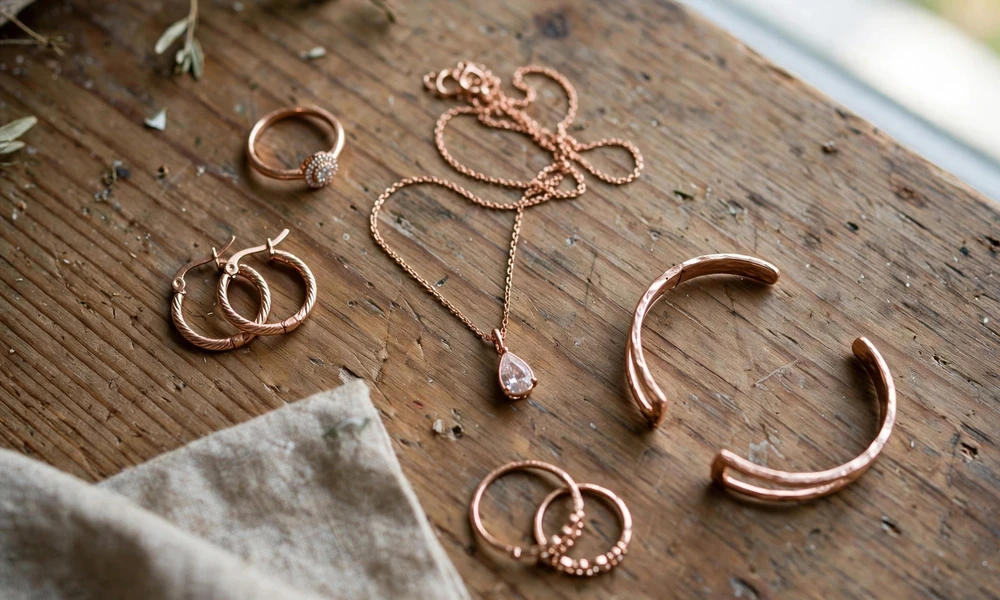
Look next at whether the piece is solid rose gold or plated. Solid rose gold is the same alloy all the way through, so the colour cannot wear off. Rose gold plating, often called rose gold vermeil over silver or rose gold plating over brass, is a thin layer over a different metal, and it will wear through on rings and bracelets where it rubs against skin and other surfaces. Plated pieces are not a bad choice, especially at a lower price, but they should be priced as plated pieces. Our guide to gold vs rose gold jewellery explains how the two gold colours compare side by side.
Finally, look at the finish and the setting. A polished finish makes rose gold look bright and pink, while a brushed or matte finish makes it look softer and more muted. If the piece holds a stone, check the setting carefully.
The 9 facts about rose gold jewellery that matter
The colour comes from copper
What it shows: Rose gold is pink because copper is mixed into the gold alloy. The more copper in the mix, the deeper and more coppery the pink.
What to consider: A piece described as rose gold but with very little copper will look pale and almost yellow. If you want a clear pink, look at the piece in daylight and compare it with another rose gold piece.
Best for: Anyone who wants a warm metal with a soft, romantic colour. Material: Gold alloyed with copper and silver. Price range: Similar to yellow gold at the same karat. Standout feature: The colour is in the metal, not a coating.
The karat sets the strength and the shade
What it shows: Karat tells you how much pure gold is in the alloy. At 18 karat, three quarters of the metal is gold, so the colour is soft and the metal is relatively soft.
What to consider: Do not assume a higher karat is always better. For a wedding band or a ring worn daily, 14 karat is usually the smarter choice because it resists scratches better.
Best for: Everyday rings in 14 karat, special pieces in 18 karat. Material: 9, 14 or 18 karat rose gold. Price range: 9 karat is the most affordable, 18 karat the most expensive. Standout feature: Karat controls both colour and durability.
It suits warm and neutral skin tones best
What it shows: Rose gold has a warm undertone, so it tends to look its best on warm and neutral skin, where it picks up the warmth already in the skin and makes it glow. On very cool skin it can still work, especially in a paler shade, but it will read as a stronger contrast.
What to consider: Skin tone advice is a guide, not a rule. The only reliable test is to try the piece on in daylight and look at it honestly.
Best for: Warm and neutral skin tones, and anyone who likes a soft pink metal. Material: Any karat, chosen by shade. Price range: No price difference by skin tone. Standout feature: A warm glow that flatters most complexions.
It is harder than yellow gold at the same karat
What it shows: Copper is a harder metal than the silver used in most yellow gold alloys, so rose gold is slightly harder and more scratch-resistant than yellow gold at the same karat. That is one reason rose gold became popular for wedding bands and everyday rings.
What to consider: Harder does not mean unbreakable. Rose gold can still scratch, dent and bend, especially in a thin band or a delicate setting.
Best for: Wedding bands, everyday rings and bracelets. Material: 14 karat rose gold for the best balance. Price range: Similar to yellow gold at the same karat. Standout feature: Extra hardness from the copper content.
The colour is in the metal, not a coating
What it shows: Solid rose gold is the same pink alloy all the way through, so the colour cannot rub off or fade the way a plating can. A solid rose gold ring that is scratched will still be pink underneath the scratch, and a jeweller can polish it back to a bright finish.
What to consider: This only applies to solid rose gold. Rose gold plated jewellery, and rose gold vermeil over silver, have a thin pink layer over a different metal, and that layer will wear through with time, especially on rings.
Best for: Anyone who wants a piece that keeps its colour for years. Material: Solid rose gold alloy. Price range: Higher than plated, but lasts far longer. Standout feature: Colour that goes all the way through.
It works in every type of jewellery
What it shows: Rose gold is used for rings, necklaces, earrings, bracelets, watches and brooches, and it suits all of them. It is soft enough to be shaped into fine, delicate work, and hard enough for everyday rings.
What to consider: Delicate rose gold chains and thin bands need the same care as any fine jewellery. They can kink or snap if they are pulled, and a thin rose gold chain is no stronger than a thin chain in any other gold colour.
Best for: Rings, necklaces, earrings and mixed-metal pieces. Material: Rose gold in any karat, alone or mixed. Price range: Varies by weight and karat. Standout feature: Versatility across every jewellery type.
Vintage rose gold and new rose gold are different buys
What it shows: Rose gold was widely used in the late nineteenth and early twentieth centuries, and vintage pieces from that time are often a deeper, more coppery pink than modern pieces. That is partly because older alloys used more copper, and partly because decades of wear have given them a soft patina.
What to consider: A vintage rose gold piece should be checked by a jeweller before you buy it, especially if it holds stones. Old settings can be worn thin, and old alloys can be more brittle than modern ones.
Best for: Collectors and anyone who loves a deeper, older pink. Material: Vintage rose gold alloys, often 9 or 14 karat. Price range: Varies widely by age and condition. Standout feature: A deeper colour and a soft, lived-in patina.
It pairs well with diamonds and other stones
What it shows: Rose gold makes white diamonds look warmer and softer, which suits people who find a diamond in white gold too stark. It also flatters pink and peach stones, such as morganite, pink sapphire and pink tourmaline, and it gives a gentle contrast to white stones like opal and pearl.
What to consider: A very pink rose gold can make a slightly yellow diamond look more yellow, because the warm metal reflects its colour into the stone. If you are buying a diamond in rose gold, look at the stone in the setting, in daylight, rather than judging it loose.
Best for: Engagement rings, pendants and earrings with diamonds or pink stones. Material: Rose gold settings with diamonds, morganite or sapphire. Price range: Depends on the stone more than the metal. Standout feature: Warmth that softens white stones beautifully.
Care is simple but not optional
What it shows: Rose gold is easy to care for. Warm water, a drop of mild soap and a soft cloth are enough for most cleaning, and a jeweller can polish away light scratches.
What to consider: The copper in rose gold can react with moisture and chemicals over a long time, so take rose gold jewellery off before swimming, showering or using cleaning products. Harsh chemicals, especially chlorine and strong acids, can dull the surface.
Best for: Anyone who wants low-maintenance jewellery with a little routine care. Material: Solid or plated rose gold. Price range: Cleaning costs almost nothing at home. Standout feature: Simple care that keeps the colour bright.
Which rose gold jewellery is right for you
If you wear jewellery every day, start with 14 karat rose gold in a simple design. A plain band, a small pendant or a pair of studs in 14 karat will stand up to daily wear, hold its colour, and suit most outfits. If you want something for special occasions, 18 karat rose gold in a deeper pink feels more luxurious, and its softness matters less when the piece is worn rarely.
Think about what you already own. Rose gold mixes happily with yellow gold and with white gold, so you do not need to replace your collection to add one rose gold piece. A rose gold ring next to a yellow gold band, or a rose gold pendant on a white gold chain, looks deliberate and modern. For a smaller piece in the same warm family, our guide to the best rose gold nose rings shows how the colour works in a delicate, everyday design.
The caveats that matter
Rose gold is a practical, durable metal, but it is not the right choice for everyone. The copper that gives it its colour can be a problem for a small number of people with a copper sensitivity, and it can cause a greenish mark on the skin if the piece is worn constantly in damp conditions.
| Detail | What is known |
|---|---|
| What makes it pink | Copper mixed into the gold alloy; more copper means a deeper pink |
| Best karat for everyday wear | 14 karat, for the best balance of colour, hardness and price |
| Best karat for special pieces | 18 karat, for a deeper colour and a more luxurious feel |
| Solid vs plated | Solid rose gold keeps its colour; plating wears through where it rubs |
| Who it suits best | Warm and neutral skin tones, though the right shade is a personal choice |
| What to avoid | Chlorine, harsh chemicals, and wearing plated pieces in water |
| Cleaning | Warm water, mild soap and a soft cloth; a jeweller can polish light scratches |
| What it does not do | It does not suit everyone, and a very pink shade can make a yellow diamond look warmer |
If you have sensitive skin or a known metal allergy, try a rose gold piece for a few days before committing to it, and ask your jeweller about the exact alloy. A higher karat piece has less copper, which may suit sensitive skin better. For general care guidance, our guide on how to clean gold jewellery covers the gentle routine that works for rose gold too.
Checklist: choosing rose gold jewellery honestly
Use these checks before you buy, and again when the piece arrives.
- Check the karat: 14 karat for everyday wear, 18 karat for special pieces, 9 karat for a tighter budget.
- Check whether it is solid or plated: solid keeps its colour, plating wears through with time.
- Check the shade in daylight: shop lighting flatters pink, so look at the piece by a window.
- Check it against your skin: if it makes your hand look warm and healthy, it suits you.
- Check the setting: run a finger gently over the prongs and the edges for snags or rough spots.
- Check the maker’s answers: karat, alloy and solid or plated should all be stated clearly.
Frequently asked questions
Is rose gold real gold?
Yes. Rose gold is a real gold alloy, made by mixing pure gold with copper and a little silver.
Does rose gold fade or change colour?
Solid rose gold does not fade, because the colour is in the metal all the way through. It can develop a soft patina over many years, and it can look slightly duller if it is not cleaned, but a polish restores its colour.
Is rose gold more expensive than yellow gold?
Usually not. At the same karat and weight, rose gold costs about the same as yellow gold, because the price is set mostly by the gold content.
Can I wear rose gold every day?
Yes, especially in 14 karat, which is hard enough for daily wear. Take it off before swimming, showering or cleaning, and store it separately from other jewellery so it does not get scratched.
Does rose gold suit everyone?
It suits warm and neutral skin tones best, but the shade matters more than the rule. A pale rose gold can suit cool skin, and a deep rose gold can suit warm skin.
Is rose gold good for engagement rings?
Yes, it is a popular choice, because it is durable, it makes diamonds look warm and soft, and its colour feels romantic without being traditional. Choose 14 karat for the best balance of hardness and colour, and check the diamond in the setting before you buy.
The bottom line
Rose gold jewellery is a warm, practical and genuinely beautiful metal, and its colour is in the alloy rather than on the surface, which means a solid piece will keep its pink for years. The karat decides the shade and the strength, 14 karat is the most practical everyday choice, and the difference between solid and plated is the single most important thing to check before you buy.
Choose the shade in daylight, ask the plain questions about karat and plating, and buy the piece that makes your skin look warm and healthy rather than the one that looks best under shop lights. Done that way, rose gold is not a trend to chase, but a metal you can wear every day and enjoy for a long time.