
Rose gold and yellow gold are the two classic warm golds, and choosing between them is the first decision most jewellery buyers face. They are made from the same pure gold, mixed with different metals to get different colours, and they cost roughly the same at the same karat and weight.
The choice is rarely about which metal is better. It is about which one suits you. Yellow gold is the traditional choice, bright and unmistakably golden, with a warmth that has been fashionable for thousands of years. Rose gold is the softer, more romantic option, pink and understated, with a modern feel that has made it the metal of many recent engagement rings.
This guide compares the two metals across the nine points that matter most in 2027, from colour and skin tone to price, care and resale, so you can choose with your eyes open rather than by habit. The differences are smaller than the marketing suggests, but they are real, and they show up most in daily wear.
Key takeaways
- Rose gold and yellow gold are both real gold alloys at the same karat, so the choice is about colour and character, not quality.
- Yellow gold suits most skin tones and is the more traditional, versatile choice, while rose gold suits warm and neutral skin best and feels softer and more modern.
- At the same karat, rose gold is slightly harder and more scratch-resistant than yellow gold, because of its higher copper content.
- Both metals need the same simple care, but rose gold is more sensitive to harsh chemicals, and yellow gold can look duller if it is not cleaned.
- Neither metal is the right choice for everyone, and the honest test is to try both on in daylight and see which one makes your skin look its best.
What rose gold and yellow gold jewellery actually are
Both metals start as pure gold, which is too soft for jewellery on its own. Pure gold is always mixed with other metals, called the alloy, and the alloy decides the colour. Yellow gold is mixed mostly with silver and copper in balanced amounts, which keeps its warm golden colour.
The karat tells you how much pure gold is in the mix. At 14 karat, just under 60 percent of the metal is gold. At 18 karat, three quarters is gold. At 9 karat, only about a third is gold.
It helps to know that neither colour is a coating. Solid rose gold and solid yellow gold are the same alloy all the way through, so their colour cannot rub off. Plated jewellery is different, and a thin layer of either colour over silver or brass will wear through with time.
How we compared them
We compared the two metals on the things that actually change how a piece looks and feels in daily life: colour, skin tone, hardness, price, care, ageing, sensitivity, mixing with other jewellery, and resale value. Each comparison below looks at both metals side by side, so you can weigh them against what matters to you.
We also checked how each metal behaves in the pieces people actually buy: rings, necklaces, earrings and bracelets. A metal that is perfect for a pendant can be a poor choice for a ring, and a colour that flatters the neckline can look wrong on the hand. The comparisons below note where the answer changes by piece. For the wider family of gold comparisons, our guide to gold vs silver jewellery covers how gold of any colour compares with silver.
The 9 rose gold vs yellow gold comparisons that matter
The colour
What it shows: Yellow gold is bright, warm and unmistakably golden, with a colour that reads clearly even in low light. Rose gold is softer and pinker, with a muted, romantic tone that can look almost coppery in bright light and almost blush in dim light.
What to consider: Yellow gold is the bolder statement, and it suits people who like their jewellery to be noticed. Rose gold is the quieter choice, and it suits people who prefer jewellery that blends with the skin.
Best for: Yellow gold for a classic, visible warmth; rose gold for a soft, modern pink. Material: Gold alloyed with copper and silver in different ratios. Price range: Similar at the same karat and weight. Standout feature: Two distinct colours from the same pure gold.
How each metal suits your skin tone
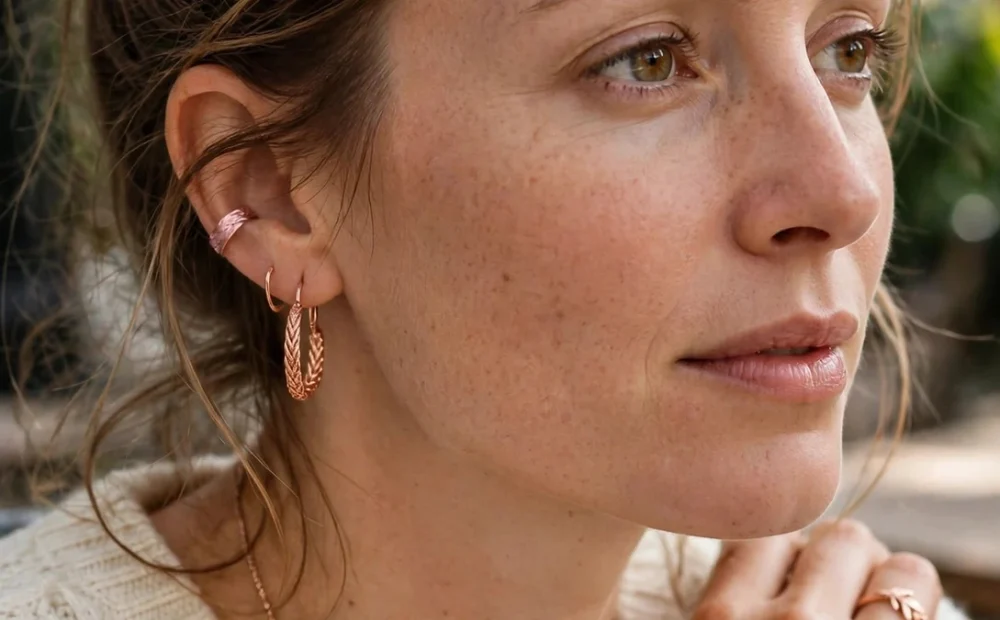
What it shows: Yellow gold suits most skin tones, warm, neutral and cool, because its colour is strong enough to read clearly against any complexion. Rose gold suits warm and neutral skin best, where it picks up the warmth already in the skin, and it can look washed out on very cool skin unless the shade is deep.
What to consider: Skin tone advice is a guide, not a rule. The only reliable test is to try both metals on in daylight.
Best for: Yellow gold for versatility across skin tones; rose gold for warm and neutral skin. Material: Any karat, chosen by shade. Price range: No price difference by skin tone. Standout feature: Yellow gold flatters the widest range of complexions.
Durability and everyday wear
What it shows: At the same karat, rose gold is slightly harder and more scratch-resistant than yellow gold, because copper is harder than the silver used in most yellow gold alloys. That makes rose gold a fraction better for rings and bracelets that take daily knocks.
What to consider: The difference is small, and karat matters more than colour. A 14 karat ring in either colour will outlast an 18 karat ring in either colour.
Best for: Rose gold for everyday rings; either colour for occasional pieces. Material: 14 karat for the best balance of hardness and colour. Price range: Similar at the same karat. Standout feature: Rose gold’s small hardness advantage from its copper content.
Price and value
What it shows: At the same karat and weight, rose gold and yellow gold cost about the same, because the price is set mostly by the gold content. Copper and silver are both inexpensive compared with gold, so the alloy mix makes little difference to the price.
What to consider: Prices can differ between makers, because some charge more for the fashion value of rose gold, and some charge more for a classic yellow gold design. Compare pieces of the same karat and weight, and ask for the gold content rather than judging by the price tag alone.
Best for: Either colour on a budget, since the price difference is small. Material: 9, 14 or 18 karat in either colour. Price range: 9 karat is the most affordable, 18 karat the most expensive. Standout feature: Near-identical pricing for the same gold content.
Tarnish and upkeep
What it shows: Neither metal tarnishes the way silver does, because gold does not react with air in the same way. Both stay bright in a jewellery box for months. Yellow gold can look dull if it is not cleaned, because skin oils and lotions build up on its surface.
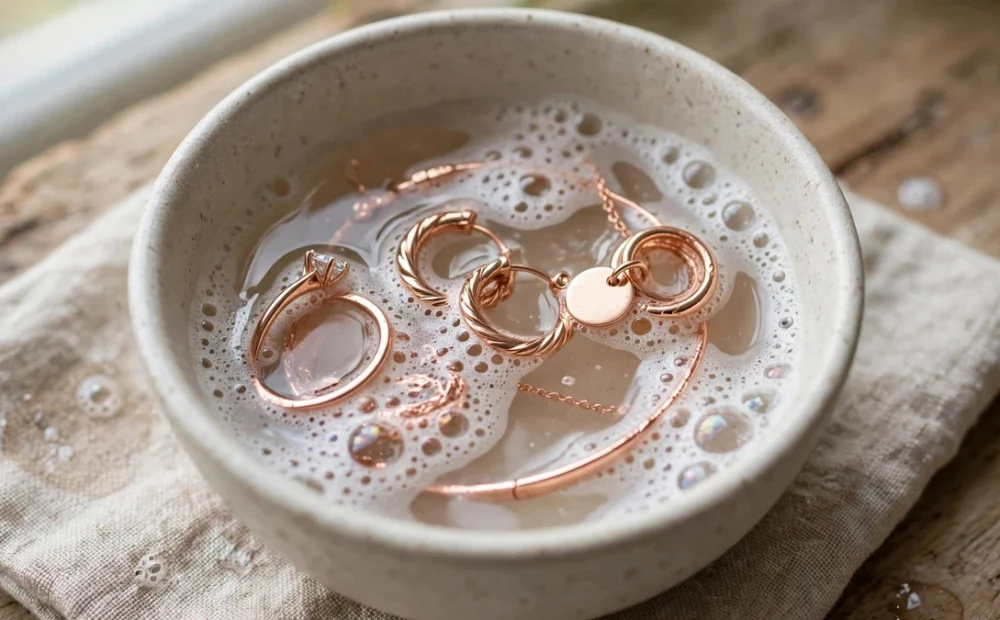
What to consider: Both metals need the same simple care: warm water, a drop of mild soap and a soft cloth. Take either one off before swimming, showering or cleaning.
Best for: Anyone who wants low-maintenance jewellery with a simple cleaning routine. Material: Solid gold in either colour. Price range: Cleaning costs almost nothing at home. Standout feature: Both stay bright with minimal care.
How each metal ages
What it shows: Yellow gold ages gracefully, keeping its colour for decades and developing only a soft shine from wear. Rose gold ages well too, but it can develop a soft patina over many years, and a deep rose gold can mellow slightly as its surface wears.
What to consider: Vintage yellow gold and vintage rose gold both exist, and both are collectable. Vintage rose gold is often a deeper, more coppery pink than modern pieces, because older alloys used more copper.
Best for: Yellow gold for a colour that never changes; rose gold for a soft, lived-in patina. Material: Solid gold in either colour. Price range: Vintage pieces vary widely by age and condition. Standout feature: Yellow gold holds its colour unchanged for decades.
Suitability for sensitive skin
What it shows: Yellow gold is the safer choice for sensitive skin, because its alloy is mostly silver and copper in balanced amounts, and it rarely causes a reaction. Rose gold contains more copper, and a small number of people with a copper sensitivity can develop a rash or a greenish mark where the metal touches damp skin.
What to consider: A reaction is uncommon, and it usually clears up once the piece is removed. A higher karat rose gold piece has less copper, which may suit sensitive skin better.
Best for: Yellow gold for sensitive skin; higher karat rose gold as an alternative. Material: 18 karat rose gold or any karat of yellow gold. Price range: Higher karat costs more in either colour. Standout feature: Yellow gold’s gentler alloy for reactive skin.
Mixing with other jewellery
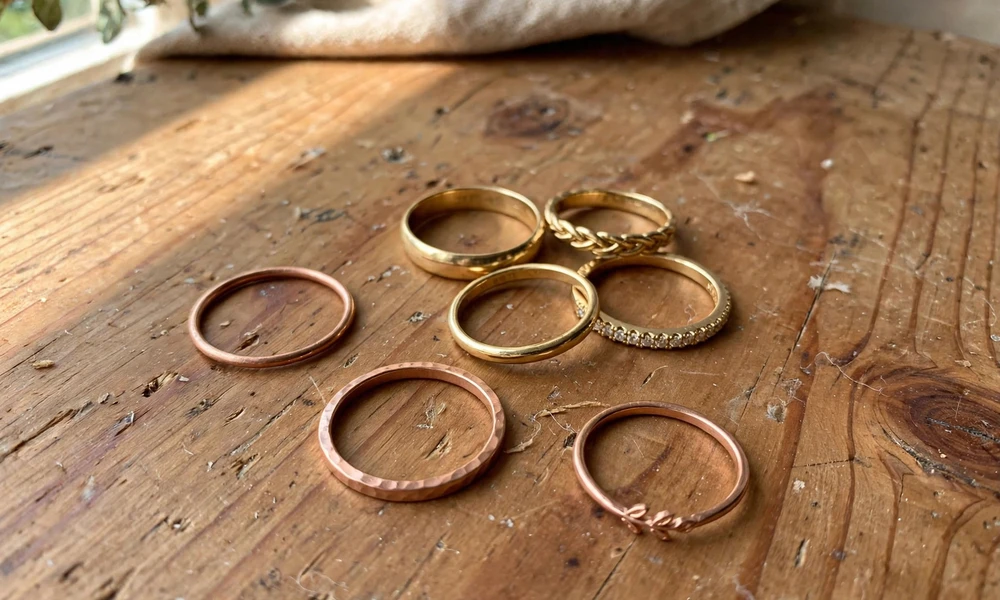
What it shows: Yellow gold mixes easily with white gold and silver, because its strong colour holds its own next to cooler metals. Rose gold mixes well with yellow gold and white gold too, and a two-tone piece in rose and yellow gold looks deliberate and modern rather than mismatched.
What to consider: Mixing metals works best when it looks intentional. A single rose gold ring among yellow gold rings looks like a choice. A rose gold chain, a yellow gold bracelet and a silver watch worn together can look scattered unless the pieces share a style or a weight.
Best for: Either colour in a mixed-metal wardrobe, kept to two metals at once. Material: Rose gold, yellow gold or white gold in any combination. Price range: No extra cost for mixing metals. Standout feature: Both colours sit happily alongside other metals.
Resale and long-term value
What it shows: Both metals hold their value in the same way, because resale value is set mostly by weight and karat, not by colour. A 14 karat rose gold ring and a 14 karat yellow gold ring of the same weight will fetch a similar price when sold for their gold content.
What to consider: Yellow gold is the more traditional choice, so it may be slightly easier to resell as a finished piece, because more buyers are looking for it. Rose gold’s popularity has risen and fallen over the decades, so a rose gold piece may take longer to find a buyer, even though its metal is worth the same.
Best for: Either colour as a long-term hold, since metal value is the same. Material: Solid gold in either colour, 14 karat or higher. Price range: Resale tracks weight and karat, not colour. Standout feature: Equal metal value in both colours.
Which gold is right for you
If you want one metal that works with everything, choose yellow gold. It suits most skin tones, it is the traditional choice for wedding bands and family pieces, and it is the easiest to match with other jewellery you already own. It is also the colour most people picture when they think of gold, which makes it the safest gift choice when you are buying for someone else.
If you want a softer, more modern look, choose rose gold. It suits warm and neutral skin beautifully, it makes diamonds look warm and soft, and it is slightly harder than yellow gold at the same karat, which makes it a good choice for everyday rings. For a broader view of how the two colours sit within the gold family, our guide to gold vs rose gold jewellery compares them in more detail.
If you cannot decide, mix them. A two-tone piece, or a rose gold ring worn next to a yellow gold band, lets you wear both colours at once, and it looks deliberate rather than indecisive. For everyday pieces in either colour, our guide to the best gold jewellery for everyday shows how both metals work in simple, wearable designs.
The caveats that matter
Neither metal is perfect for everyone, and the differences between them are smaller than the marketing suggests. The most common mistake is to choose a colour because it is fashionable, rather than because it suits your skin and your life.
| Detail | What is known |
|---|---|
| Colour | Yellow gold is bright and golden; rose gold is soft and pink |
| Skin tone | Yellow gold suits most tones; rose gold suits warm and neutral best |
| Durability | Rose gold is slightly harder at the same karat; karat matters more than colour |
| Price | Similar at the same karat and weight, set mostly by gold content |
| Care | Both need warm water, mild soap and a soft cloth; rose gold is more sensitive to chlorine |
| Ageing | Yellow gold keeps its colour; rose gold can develop a soft patina |
| Sensitive skin | Yellow gold is gentler; rose gold’s copper can affect a small number of people |
| Resale | Metal value is the same; yellow gold may be slightly easier to resell as a finished piece |
Plated pieces deserve a separate warning. A thin layer of rose gold or yellow gold over silver or brass will wear through where it rubs, whatever the colour, and it should be priced as a plated piece.
Checklist: choosing between rose gold and yellow gold honestly
Use these checks before you buy, and again when the piece arrives.
- Try both on in daylight: hold a yellow gold and a rose gold piece against your skin and compare them honestly.
- Check the karat: 14 karat for everyday wear, 18 karat for special pieces, 9 karat for a tighter budget.
- Check whether it is solid or plated: solid keeps its colour, plating wears through with time.
- Check it against what you own: the new piece should sit happily with your existing jewellery.
- Check the setting: run a finger gently over the prongs and the edges for snags or rough spots.
- Check the maker’s answers: karat, alloy and solid or plated should all be stated clearly.
Frequently asked questions
Is rose gold cheaper than yellow gold?
Usually not. At the same karat and weight, rose gold and yellow gold cost about the same, because the price is set mostly by the gold content.
Which gold is better for an engagement ring?
Both work well. Yellow gold is the traditional choice and suits most skin tones, while rose gold is slightly harder at the same karat and makes diamonds look warm and soft.
Can I wear rose gold and yellow gold together?
Yes. The two metals sit happily side by side, and a two-tone piece or a mixed stack looks deliberate and modern.
Does rose gold fade faster than yellow gold?
Solid rose gold does not fade, because the colour is in the metal all the way through. It can develop a soft patina over many years, and it can look duller if it is not cleaned, but a polish restores its colour.
Which gold is better for sensitive skin?
Yellow gold is usually the safer choice, because its alloy is gentler on reactive skin. Rose gold contains more copper, which can affect a small number of people.
Which gold holds its value better?
Both hold the same metal value, because resale is set by weight and karat, not by colour. Yellow gold may be slightly easier to resell as a finished piece, because more buyers look for it, but the gold itself is worth the same in either colour.
The bottom line
Rose gold and yellow gold are the same metal in two colours, and the choice between them is about character rather than quality. Yellow gold is the versatile, traditional choice that suits most skin tones and holds its colour unchanged for decades.
Try both on in daylight, check the karat and whether the piece is solid or plated, and choose the colour that makes your skin look warm and healthy. Done that way, either metal will serve you well for years, and the right answer is the one that looks best on you.