A gold signet ring is one of the oldest pieces of jewellery still worn every day, and in 2027 it is having a quiet, confident moment. Once a seal for wax and a mark of family or office, it is now worn as a personal piece, engraved with initials, a crest, or nothing at all. The appeal is simple: a solid face, a comfortable weight, and a ring that looks just as right with a suit as it does with a plain shirt.
The problem is not finding a gold signet ring. It is choosing one that is actually worth its price. Gold signets range from thin, hollow bands that dent in a month to solid, heavy rings that will outlast their owner. The difference is in the gold content, the weight, the face shape, and the finish, and none of that is obvious from a photo online.
Below are nine gold signet rings worth considering in 2027, from a classic 14k oval to a slim 18k rectangle and a budget-friendly vermeil option. Each one is described by what it does well, what to watch for, and who it suits best, so you can choose with your hand and your budget in mind, not just a bestseller list.
Key takeaways
- A gold signet ring is defined by its flat, engravable face, and solid gold holds up far better than hollow or thin-plated versions.
- 14k gold is the practical sweet spot for daily wear, while 18k is richer in colour but softer and easier to scratch.
- Face shape changes the whole look: oval is classic, rectangular is sharper, and round is the most understated.
- Engraving is the personal part, so check the face size before you order, and ask whether the engraving is included in the price.
- No gold signet is scratch-proof or dent-proof, and a very cheap gold signet is usually hollow, thinly plated, or lighter than it looks.
What a gold signet ring actually is
A signet ring is a ring with a flat face, traditionally used to press a seal into wax. The name comes from the Latin word for a small seal, and for centuries the face carried a family crest, a coat of arms, or an initial. That history is still part of the appeal, but today most signet rings are worn for style and sentiment rather than for sealing letters.
The face is what matters most. It can be oval, rectangular, square, round, or cushion-shaped, and its size sets the tone of the whole ring. A small face, around 10 to 12 millimetres across, sits quietly on the hand and suits everyday wear. A larger face, 14 millimetres and above, makes a bolder statement and gives more room for engraving, but it can feel heavy and can catch on pockets and gloves.
Gold is the traditional metal for a signet, and it suits the style well. Yellow gold is the classic choice, warm and instantly recognisable. White gold is cooler and more understated, while rose gold is softer and more modern. The karat matters too: 14k gold is 58 percent pure gold and is harder and more durable, while 18k is 75 percent pure and has a deeper colour but scratches more easily.
How we chose these rings and what to look for
Look first at the gold content and the weight. A solid gold signet should feel substantial when you pick it up. A ring that feels light for its size is often hollow, and a hollow ring dents easily and is hard to repair. Ask for the weight in grams and the karat before you buy, and be wary of any listing that does not state either one.
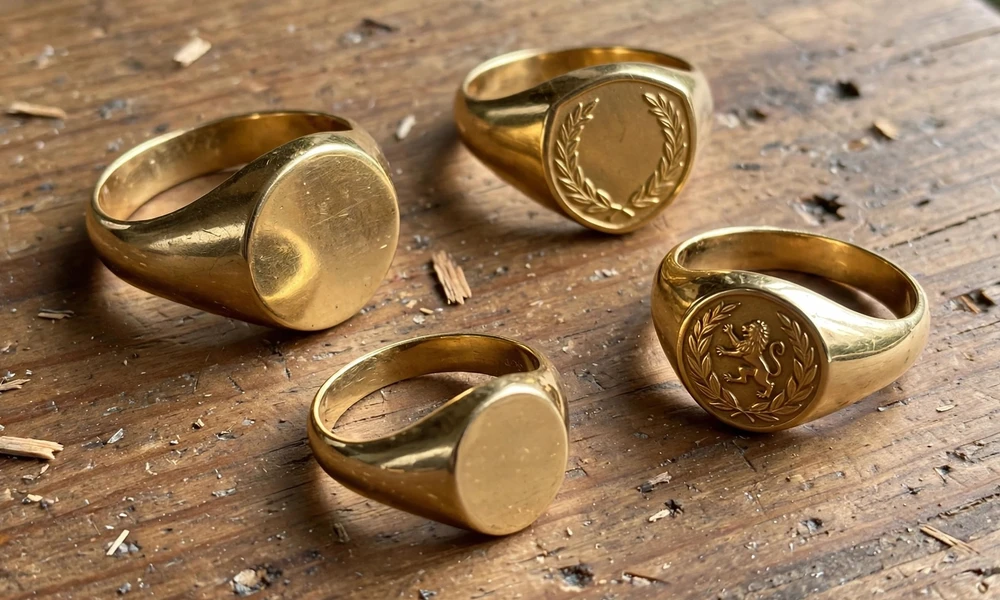
Look next at the face and the finish. The face should be smooth and flat, with clean, even edges. A high-polish finish looks bright and formal but shows scratches quickly, while a brushed or satin finish hides wear better and looks more relaxed. If you plan to engrave, check that the face is large enough for the design you want, and ask whether the engraving is done by hand or by machine, and whether it is included in the price.
Finally, look at the fit and the finger. A signet is usually worn on the pinky or the ring finger, and because the face is wide, it can feel tighter than a plain band in the same size. Try a size up if you are between sizes, and wear the ring for a day before you commit to engraving it, because resizing an engraved signet is more work. Our roundup of the best signet rings of 2027 covers the wider range, including silver and platinum, if you want to compare gold against other metals first.
The 9 best gold signet rings of 2027
The Classic 14k Yellow Gold Oval Signet
What we like: The most traditional signet shape, in durable 14k yellow gold, with a smooth oval face that takes engraving beautifully. What to consider: The high-polish finish shows scratches, and the oval face suits a medium to large hand best. Best For: A first signet ring, worn every day. Material: Solid 14k yellow gold. Price Range: Mid to high. Standout Feature: The classic oval face, the shape signet rings are known for.
The Slim 18k Gold Rectangular Signet
What we like: A slim, rectangular face in rich 18k gold, sharper and more modern than the classic oval, with a comfortable, low profile. What to consider: 18k gold is softer than 14k, so it scratches more easily, and the rectangular face gives less room for a large engraving. Best For: Someone who wants a signet that looks tailored rather than traditional. Material: Solid 18k yellow gold. Price Range: High. Standout Feature: The slim rectangular face, which reads clean and architectural.
The Engraved Initial Gold Signet
What we like: A solid gold signet with a hand-engraved initial, making a standard ring feel personal without changing the classic shape. What to consider: Engraving adds to the price and the wait, and a hand-engraved initial cannot be undone, so be sure of the letter. Best For: A gift, or a ring that marks a milestone. Material: Solid 14k yellow gold, hand-engraved. Price Range: Mid to high, plus engraving. Standout Feature: The hand-engraved initial, cut into the face rather than printed on it.
The Chunky Gold Signet with a Flat Face
What we like: A heavy, solid signet with a wide flat face and a thick band, built to take daily wear and to feel substantial on the hand. What to consider: It is heavy, and the wide face can feel bulky on a smaller hand, so try the size in person if you can. Best For: Someone who likes a bold ring and wears it as a statement piece. Material: Solid 14k yellow gold, heavy weight. Price Range: High. Standout Feature: The weight, which is the first thing you notice when you pick it up.
The Gold Vermeil Signet for a Lower Budget
What we like: A thick layer of gold over sterling silver, giving the look of a solid gold signet at a much lower price, with a classic oval face. What to consider: Vermeil wears over time, especially on the edges and the inside of the band, and it cannot be resized as easily as solid gold. Best For: Trying the signet style before committing to solid gold. Material: Gold vermeil over sterling silver. Price Range: Low. Standout Feature: The price, which makes the signet style accessible without a big spend.
The 14k Gold Signet with a Small Diamond
What we like: A solid 14k gold signet with a single small diamond set into the face, adding a quiet sparkle without changing the classic shape. What to consider: The stone needs checking once a year, and the setting adds to the price, so the ring costs more than a plain signet of the same weight. Best For: An occasion ring, or a signet that doubles as a dress ring. Material: Solid 14k yellow gold with a small diamond. Price Range: High. Standout Feature: The single diamond, set flush into the face so it does not catch.
The Vintage-Style Gold Signet with Milgrain
What we like: A solid gold signet with a milgrain edge, the tiny beaded border that gives a ring an old, hand-finished feel, with a warm, slightly aged polish. What to consider: The milgrain edge can wear smooth over many years of daily use, and the vintage look does not suit everyone. Best For: Someone who likes antique and heirloom-style jewellery. Material: Solid 14k yellow gold with milgrain detailing. Price Range: Mid to high. Standout Feature: The milgrain border, which gives the ring its vintage character.
The Minimalist Gold Signet with a Round Face
What we like: A small, round-faced signet in solid gold, the most understated shape, easy to wear every day and easy to pair with other rings. What to consider: The small face leaves little room for engraving, and the minimalist look can feel too plain if you wanted a statement. Best For: Everyday wear, and for smaller hands. Material: Solid 14k yellow gold. Price Range: Mid. Standout Feature: The small round face, which keeps the ring quiet and wearable.
The Two-Tone Gold Signet
What we like: A solid gold signet combining yellow and white gold, with a yellow gold face and a white gold band, giving two metals in one ring. What to consider: Two-tone rings are harder to match with other jewellery, and the white gold will need re-rhodiuming every few years to stay bright. Best For: Someone who wears both yellow and white gold and wants one ring that bridges the two. Material: Solid 14k yellow and white gold. Price Range: High. Standout Feature: The two-tone design, which makes the ring stand out without adding stones.
Which gold signet ring is right for you
Start with the face shape, because it changes the whole look. Oval is the classic and the safest choice, and it suits most hands. Rectangular is sharper and more modern, and it works well on longer fingers. Round is the most understated, and it is the easiest to wear every day without thinking about it. If you are unsure, try an oval first, because it is the shape most people picture when they think of a signet.
Then choose the gold. 14k yellow gold is the practical choice for daily wear: hard enough to resist dents, warm enough to look like gold, and priced below 18k. 18k is richer in colour and feels more luxurious, but it is softer, so it suits a ring worn for occasions rather than one worn to the gym or the garden. Vermeil is the budget route, and it is honest about what it is, a gold layer over silver, as long as you know it will wear over time.
Finally, think about the finger and the rest of your jewellery. A signet is usually worn on the pinky or the ring finger, and a wide face can make a ring feel tighter than a plain band in the same size. If you wear a watch on the same hand, a slim signet will sit better than a chunky one. Our guide to how to style gold jewellery is a useful frame here, because a signet looks best when it sits naturally with the rest of what you wear, not when it fights with it.
The caveats that matter
Gold is durable, but it is not indestructible. Even a solid gold signet will scratch, dent, and wear over years of daily use, and a thin or hollow ring will do so much faster. That is normal, and a jeweller can polish out light scratches, but it is worth knowing before you buy, because a signet that looks perfect in the box will not look perfect after a year on your hand. That is part of owning gold jewellery, not a fault in the ring.
| Detail | What is known |
|---|---|
| Best gold for daily wear | 14k gold, harder and more durable than 18k, with a warm colour |
| Most classic face shape | Oval, the traditional signet shape, suits most hands |
| What to check before buying | Gold karat, weight in grams, and whether the ring is solid or hollow |
| Engraving | Check the face size first, and ask whether engraving is included in the price |
| What wears out first | High-polish finishes scratch, vermeil wears at the edges, white gold needs re-rhodiuming |
| Sizing | Try a size up if between sizes, because a wide face feels tighter than a plain band |
| Care | Clean with warm soapy water and a soft cloth, and store separately from other rings |
| What it does not do | No gold signet is scratch-proof or dent-proof, and cheap gold signets are usually hollow or thinly plated |
If you are buying a signet as a gift, check the return policy before you order, especially if it will be engraved, because engraved rings are often non-returnable. And if the ring is for a child or a teenager, choose a size with room to grow, or a style that can be resized, because a signet that fits today may not fit in a year.
Checklist: choosing a gold signet ring honestly
Use these checks before you buy, and again when the ring arrives.
- Check the gold: karat stated, weight in grams given, and solid rather than hollow.
- Check the face: shape and size suit your hand, with room for engraving if you want it.
- Check the finish: high polish looks formal but scratches, brushed finishes hide wear better.
- Check the fit: wear it for a day before engraving, and try a size up if you are between sizes.
- Check the engraving: hand or machine, included in the price, and the right letter or design.
- Check the seller: a clear return policy, especially for engraved rings, and a jeweller who can resize and polish the ring later.
Frequently asked questions
What is the best gold for a signet ring?
14k gold is the best choice for most people, because it is hard enough for daily wear and still has a warm gold colour. 18k is richer and softer, so it suits occasion wear, while 9k is harder but paler.
How much should a gold signet ring cost?
It depends on the weight and the karat, not just the design. A solid 14k gold signet usually costs several hundred pounds or dollars, while a vermeil signet costs far less. If a solid gold signet seems very cheap, check the weight, because it may be hollow.
Can a gold signet ring be resized?
Yes, in most cases, but it is more work than resizing a plain band, especially if the ring is engraved. Ask your jeweller before you buy, and wear the ring for a day before you commit to engraving it.
Is a gold signet ring suitable for everyday wear?
Yes, if it is solid gold and the right size. A 14k signet stands up well to daily wear, although it will pick up light scratches over time. A jeweller can polish it back to a bright finish when needed.
What finger should I wear a signet ring on?
Traditionally the pinky finger, but today the ring finger is just as common, and some people wear one on the middle finger. Choose the finger that feels comfortable, because a signet with a wide face feels different on each one. Everyday gold pieces, such as our best gold jewellery for everyday wear, show how a signet sits naturally alongside simpler pieces.
Does gold vermeil last as long as solid gold?
No. Vermeil is a thick layer of gold over sterling silver, and it wears over time, especially on the edges and the inside of the band. It is a good way to try the style at a lower price, but it will not last as long as solid gold.
The bottom line
The best gold signet ring in 2027 is not the most expensive or the most unusual. It is the one that is solid, that fits comfortably, and that you will actually wear. For most people, that means a classic oval or a slim rectangular face in solid 14k yellow gold, with engraving added only once you are sure of the size and the design.
Choose the face shape first, then the gold, then the finish, and buy from a seller who states the karat and the weight plainly. That is the honest way to get a signet ring that still looks good in ten years, rather than one that dents in a month.