Rose gold jewellery looks its best when it is clean, and it shows dirt faster than you might expect. The warm pink tone that makes it so flattering also makes dullness, fingerprints and a thin film of lotion easy to see. A necklace that looked bright in the shop can look tired after a few weeks of everyday wear, not because the metal is damaged, but because a layer of skin oils, perfume and dust has settled on it.
The good news is that cleaning rose gold jewellery at home is simple, and it does not need special equipment. Warm water, a drop of mild soap, a soft cloth and ten unhurried minutes are enough for most pieces. The mistakes people make are not complicated either: water that is too hot, a brush that is too hard, a chemical cleaner meant for silver, or a piece left damp in a box. Each one is easy to avoid once you know what to watch for.
Below are nine steps that take a rose gold piece from dull to bright, in order, with the details that matter at each stage. The routine works for solid 14k and 18k rose gold, and for rose gold vermeil with a little extra care.
Key takeaways
- Most rose gold jewellery needs only warm soapy water, a soft cloth, and ten minutes of gentle cleaning.
- Clean solid 14k and 18k rose gold at home, but treat vermeil and plated pieces more gently and never soak them.
- Perfume, lotion, chlorine and salt water are the main causes of dullness and darkening on rose gold.
- Always dry a piece completely before storing it, because dampness in a closed box causes tarnish and darkening.
- No home cleaning method restores worn-through plating, and a piece with loose stones or damage should go to a jeweller.
What cleaning rose gold jewellery actually means
Cleaning rose gold jewellery means removing the film that builds up on the surface, not stripping the metal itself. That film is a mix of skin oils, sweat, perfume, lotion, dust and, for rings, soap residue from hand washing. It dulls the shine, softens the pink colour, and can make a stone look cloudy. A gentle wash lifts it away and leaves the metal bright again.
It is worth understanding the difference between cleaning and polishing, because they are not the same job. Cleaning removes dirt from the surface. Polishing removes a tiny layer of metal to smooth out fine scratches, and it should be done sparingly, by a jeweller, because each polish takes a little metal away. A soft cloth used after cleaning gives a gentle shine without removing metal, and that is enough for most pieces most of the time.
The same principles apply to other gold colours, and if you already clean gold jewellery at home, this routine will feel familiar. Our guide to cleaning gold jewellery covers the same ground for yellow gold, and the two routines share the same gentle approach, because rose gold and yellow gold are both gold alloys that respond to the same mild soap and soft cloth.
What you need and what to look for
You need very little: a small bowl, lukewarm water, a drop of mild dish soap or hand soap without moisturiser, a soft lint-free cloth, and a soft-bristled brush, such as a baby toothbrush, for details. A second clean cloth for drying, and a lined tray or a soft towel to lay the piece on, complete the kit. That is all. No special jewellery cleaner is needed for a routine clean, and many commercial cleaners are too harsh for rose gold vermeil.

Before you start, look at the piece in good light. Check whether any stones are loose by gently pressing them with a fingertip, look for bent prongs, a weak clasp, or a chain link that is pulling open. If anything is loose or damaged, do not clean the piece at home. Take it to a jeweller first, because cleaning can loosen a stone further or catch a bent prong and make the damage worse.
Also check what the piece is made of. Solid rose gold can be soaked briefly and brushed gently. Rose gold vermeil, which is gold over sterling silver, should be wiped rather than soaked, and never brushed hard, because the gold layer is thin and will wear through. Plated rose gold should be wiped only, with a damp cloth and no soap, and dried at once. If you are not sure what you have, treat it as vermeil and be gentle.
The 9 steps to clean rose gold jewellery properly
Look at the piece before it touches water
What to do: Hold the piece under a bright light and look at it closely, checking the stones, the prongs, the clasp and the chain for anything loose, bent or worn. What to avoid: Do not skip this step, and do not clean a piece with a loose stone or a damaged clasp at home. Best for: Every piece, every time. Time needed: 2 minutes. Standout tip: A quick check now saves a lost stone later.
Wash your hands and lay out a soft cloth
What to do: Wash and dry your hands, then lay a soft, lint-free cloth or a towel on a flat surface, with a small lined tray or a bowl nearby to hold the piece. What to avoid: Do not work over a sink without a plug or a strainer, and do not lay the piece on a hard surface where it can scratch. Best for: Every piece, every time. Time needed: 2 minutes. Standout tip: A plugged sink and a soft surface protect against drops.
Mix a gentle soap solution
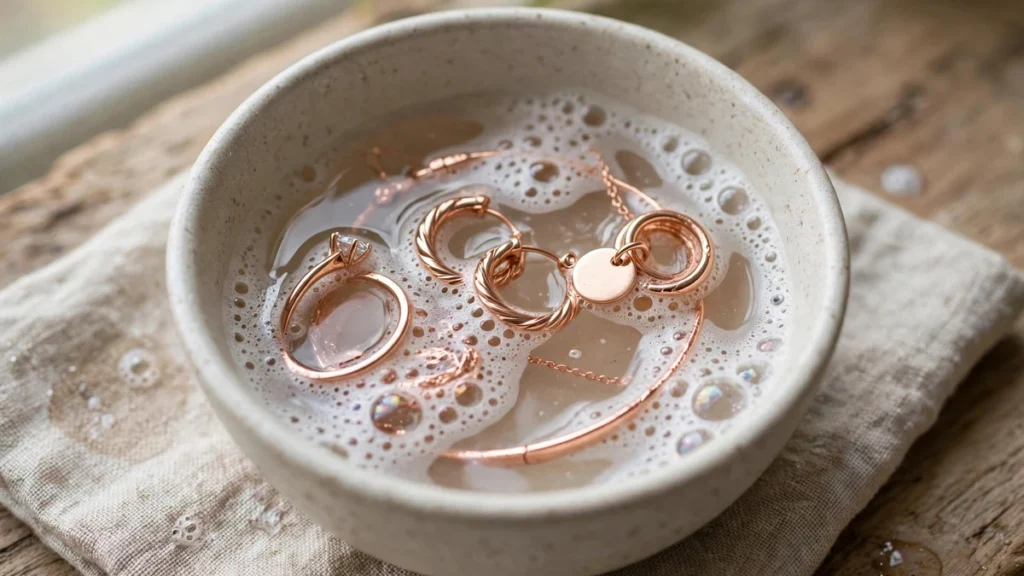
What to do: Fill a small bowl with lukewarm water and add one drop of mild dish soap or plain hand soap, stirring gently until it is mixed. What to avoid: Do not use hot water, antibacterial soap, soap with moisturiser, or any cleaner containing bleach, ammonia or abrasives. Best for: Solid rose gold and vermeil. Time needed: 1 minute. Standout tip: One drop of soap is enough; more soap leaves a film.
Soak solid rose gold for ten minutes
What to do: Place a solid rose gold piece in the soapy water and leave it for ten minutes, so the solution can loosen the film of oils and dirt. What to avoid: Do not soak vermeil or plated pieces, do not soak pieces with glued-in stones, pearls or soft stones, and never leave a piece soaking for hours. Best for: Solid 14k and 18k rose gold without soft stones. Time needed: 10 minutes. Standout tip: Ten minutes is enough; longer soaking does not clean better.
Clean the details with a soft brush
What to do: Lift the piece out of the water and brush it gently with a soft-bristled brush, paying attention to the back of settings, the inside of rings, and the links of a chain, where dirt collects. What to avoid: Do not use a hard brush, a toothbrush with stiff bristles, or a metal tool, and do not scrub vermeil or plated pieces. Best for: Solid rose gold with settings, engraving or chain links. Time needed: 3 minutes. Standout tip: Brush the back of a setting, where dirt hides and dulls a stone.
Polish with a soft jewellery cloth
What to do: Wipe the piece gently with a soft, lint-free jewellery cloth, using light, even strokes, and taking care around stones and engraving. What to avoid: Do not use a silver polishing cloth, which is too abrasive for rose gold, and do not rub hard enough to heat the metal. Best for: Solid rose gold and vermeil. Time needed: 2 minutes. Standout tip: Light, even strokes give a shine without scratching.
Rinse under lukewarm running water
What to do: Rinse the piece under lukewarm running water, holding it securely, or dip it in a second bowl of clean lukewarm water and swirl it gently. What to avoid: Do not rinse over an open drain, and do not use hot water. Best for: Solid rose gold. Time needed: 1 minute. Standout tip: A second bowl of clean water is safer than an open drain.
Dry it completely, never leave it damp
What to do: Pat the piece dry with a soft, lint-free cloth, then lay it on a dry cloth for a few minutes so any water trapped in settings and links can evaporate. What to avoid: Do not rub hard, do not use a hairdryer, and never put a damp piece away in a closed box. Best for: Every piece, every time. Time needed: 5 minutes. Standout tip: Water trapped in a setting is what causes darkening, so give it time.
Store it clean, dry and separate
What to do: Put the piece away in a soft pouch or a lined jewellery box, separate from other pieces so it cannot scratch or be scratched. What to avoid: Do not toss it into a drawer with other jewellery, and do not store it in a bathroom, where steam and humidity speed up darkening. Best for: Every piece, every time. Time needed: 1 minute. Standout tip: A separate pouch prevents scratches and keeps the piece bright.
Which cleaning method is right for your rose gold
The right method depends on what the piece is made of and what it contains. Solid 14k and 18k rose gold can take the full routine: a ten-minute soak, a soft brush, a rinse and a thorough dry. It is the most forgiving metal, and it is the reason solid gold is worth buying for pieces you wear every day.
Rose gold vermeil needs a shorter, gentler version. Wipe it with a soft cloth dampened in the soap solution, brush only the plain metal parts very lightly, and dry it at once. Never soak vermeil, and never use a silver cloth on it, because the gold layer is thin and will wear through with repeated harsh cleaning. Plated rose gold should only be wiped with a damp cloth and dried immediately, with no soap at all.
Stones change the routine too. Diamonds, sapphires and rubies can take the full routine, but pearls, opals, turquoise and other soft stones should never be soaked or brushed, and should only be wiped with a damp cloth. If a piece has a glued setting, do not soak it, because water can weaken the glue. When in doubt, wipe rather than soak, and ask a jeweller if you are unsure. How you store the piece matters just as much as how you clean it, and our guide to storing jewellery properly explains the pouches, boxes and habits that keep rose gold bright between cleans.
The caveats that matter
Home cleaning is for maintenance, not repair. It will remove dirt and restore shine, but it will not fix a loose stone, a bent prong, a worn clasp, or plating that has worn through to the metal underneath. Those are jobs for a jeweller, and trying to fix them at home usually makes them worse. A professional clean and check once a year is a sensible habit, and most jewellers will check the settings and the clasp at the same time.
| Detail | What is known |
|---|---|
| Best routine clean | Lukewarm water, one drop of mild soap, a soft cloth and a soft brush |
| How long to soak | Ten minutes for solid rose gold; never soak vermeil, plated pieces or soft stones |
| What to avoid | Hot water, bleach, ammonia, silver polish, abrasive cloths, and ultrasonic cleaners on set stones |
| How often to clean | Every few weeks for everyday pieces, less often for occasional wear |
| What causes dullness | Skin oils, perfume, lotion, soap residue, dust, chlorine and salt water |
| Drying | Pat dry with a soft cloth, then air-dry for a few minutes before storing |
| Storage | Clean, dry and separate, in a soft pouch or lined box, away from humidity |
| What home cleaning cannot fix | Loose stones, bent prongs, worn clasps, and plating worn through to the base metal |
If your skin reacts to copper, or if a piece causes redness or itching, stop wearing it and talk to a jeweller or a clinician. Rose gold contains copper, and a small number of people are sensitive to it. A different metal, or a piece with a protective coating, may suit you better. And if a piece is valuable, sentimental, or set with a large stone, a professional clean is a safer choice than a home clean, because a jeweller can check the setting at the same time.
Checklist: cleaning rose gold jewellery honestly
Use these checks before you clean, and again when you put the piece away.
- Check the piece first: look for loose stones, bent prongs and weak clasps before it touches water.
- Check what it is made of: solid rose gold can be soaked, vermeil should be wiped, and plated pieces should only be wiped with a damp cloth.
- Check the water: lukewarm, not hot, with one drop of mild soap and nothing harsher.
- Check the tools: a soft cloth and a soft brush only, never a silver cloth, a hard brush or a metal tool.
- Check the drying: pat dry, air-dry for a few minutes, and never store a piece damp.
- Check the storage: clean, dry and separate, in a soft pouch or lined box, away from the bathroom.
Frequently asked questions
How often should I clean rose gold jewellery?
Every few weeks for pieces you wear daily, and less often for pieces you wear occasionally. A ring or a necklace worn every day collects skin oils and lotion quickly, so a short clean every two to three weeks keeps it bright. A piece worn once a month may only need cleaning twice a year.
Can I use a silver cleaning dip on rose gold?
No. Silver dips and silver polishing cloths are too harsh for rose gold, and they can damage the surface, especially on vermeil and plated pieces. Warm soapy water and a soft cloth are safer and work just as well for routine cleaning.
Can I wear rose gold jewellery in the shower or while swimming?
It is best not to. Soap, shampoo, chlorine and salt water all dull rose gold over time, and water can get trapped in settings and cause darkening. Take jewellery off before showering, swimming or exercising, and put it on last, after perfume and lotion have dried.
Why has my rose gold jewellery gone darker?
The copper in rose gold reacts with air, moisture and skin chemistry, and over time the surface can darken slightly, especially in creases and under settings. A gentle clean usually restores it. If the darkening is patchy or the colour has worn through to a different metal underneath, the piece is plated or vermeil and the surface has worn, which a clean cannot fix.
Can I use an ultrasonic cleaner on rose gold?
Only for plain solid rose gold with no stones, and even then with care. Ultrasonic cleaners can loosen stones, damage soft stones, and shake a weak setting apart. For most pieces, warm soapy water and a soft brush are safer and just as effective. If you are unsure, ask a jeweller.
Does rose gold need different care from yellow gold?
Mostly no. The routine is the same: warm soapy water, a soft cloth, a thorough dry, and careful storage. The one difference is the copper, which makes rose gold slightly more prone to darkening, so drying it completely and keeping it away from perfume and moisture matters a little more. Our comparison of gold versus rose gold jewellery sets out the differences in full.
The bottom line
Cleaning rose gold jewellery is a small, simple habit, and it makes a visible difference. Ten minutes with warm soapy water and a soft cloth, a thorough dry, and careful storage are enough to keep a solid rose gold piece bright for years. The routine is gentle by design, because the goal is to remove dirt, not to strip metal, and a light touch works better than a strong cleaner.
Clean your everyday pieces every few weeks, check them for loose stones while you do it, and take anything valuable or damaged to a jeweller once a year. That is the whole routine, and it is enough. Rose gold rewards gentle, regular care far more than occasional deep cleaning, and a piece that is looked after this way will keep its warm colour for a long time.