
A linen suit is one of the few summer outfits that looks polished without feeling heavy. The fabric breathes, the cut stays relaxed, and the whole look reads as considered rather than overdressed. Yet many people buy one, wear it once, and then leave it hanging because the creases feel wrong, the colour feels hard to match, or the outfit never quite comes together.
The trick is to stop treating linen like wool. A linen suit is not meant to look pressed and perfect. Its soft drape, visible weave and gentle creasing are part of its character. Once you accept that, the rest becomes simple: choose a fit that skims rather than clings, pair it with light layers, and keep the shoes and accessories easy.
This guide walks through each decision in order, from fit and colour to what to wear underneath, which shoes to choose, how to dress the suit up or down, and how to look after it. Follow the steps and you will have a summer suit you actually reach for, not one you admire from inside the wardrobe.
Key takeaways
- Choose a relaxed, unstructured fit with a soft shoulder and a straight or slightly tapered trouser.
- Start with stone, sand, light grey, navy or sage, then add colour through a shirt, pocket square or shoes.
- Wear a linen shirt, a plain cotton T-shirt or a fine-knit polo underneath, and skip heavy ties in hot weather.
- Match the shoes to the occasion: loafers for smart days, clean white trainers for casual days, and sandals only for the beach.
- Linen will crease, and that is normal; steam it lightly, hang it well, and do not try to iron it perfectly flat.
What makes a linen suit work in summer
Linen is made from flax fibres, and those fibres let air pass through far more easily than wool or polyester. That is why a linen jacket feels cooler on a warm day, even when it is fully lined in appearance. The fabric also absorbs moisture and dries quickly, which helps on humid afternoons and long outdoor lunches.
Getting the fit right
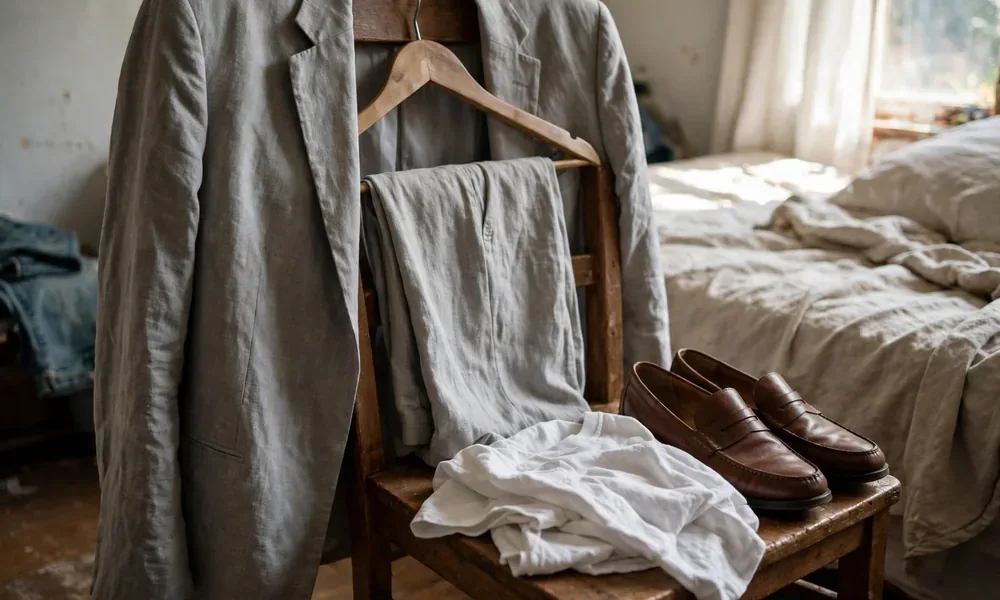
Fit matters more with linen than with almost any other suiting fabric. Because the cloth is light and soft, a jacket that is too tight will pull and crease in the wrong places, while a jacket that is too large will look shapeless. Aim for a middle ground: the jacket should close without strain, the shoulder seam should sit at the edge of your own shoulder, and the sleeve should show about a centimetre of shirt cuff.
Choose an unstructured or half-canvassed jacket if you can. A heavy, padded shoulder fights against linen’s natural drape and makes the suit look stiff. A soft shoulder, a single vent or no vent at all, and a slightly shorter body all help the jacket move with you. Patch pockets add a casual touch and suit the fabric well.
For the trousers, look for a mid-rise waist and a straight or gently tapered leg. Very slim trousers can look out of proportion with a relaxed jacket, and very wide trousers can swamp the outfit. A small break at the shoe, or no break at all, keeps the line clean. If you plan to wear the suit without socks, make sure the trouser length still works with loafers.
Choosing a colour that suits you
Stone, sand and natural ecru are the easiest linen suit colours to start with. They work with white, navy, sage, olive and soft pink, and they look good in bright sunlight. A stone suit with a white linen shirt and tan loafers is a complete outfit that needs little else.
Navy is the most versatile dark option. It works for weddings, evening events and smarter workdays, and it pairs well with white, cream, pale blue and light grey. A navy linen suit is also more forgiving of creases, because the darker colour softens the lines. If you only buy one linen suit, navy is a strong choice.
What to wear underneath
The layer underneath a linen suit changes the whole mood of the outfit. A white linen shirt is the classic choice: it is cool, crisp and smart enough for a wedding or a formal lunch. Choose a shirt in linen or a linen-cotton blend, with a soft collar that sits well under a jacket. A spread collar works well; a very stiff collar can look out of place.
A plain cotton T-shirt is the easiest way to dress a linen suit down. A white, cream or navy crew-neck T-shirt, with no logo, turns the suit into a smart-casual outfit for a holiday dinner or a weekend event. Make sure the T-shirt is clean, well fitting and not too thin, so it does not look like an afterthought.
A fine-knit polo shirt sits between the two. It is smarter than a T-shirt and cooler than a long-sleeved shirt, and it works well for a garden party or a smart lunch. Choose a polo in a solid colour, with a collar that holds its shape. Avoid chunky knits, which add bulk under a light jacket.
Shoes, belts and accessories
Shoes set the tone of a linen suit more than almost anything else. Brown leather loafers are the most reliable choice: they are smart, comfortable and easy to slip on and off. Tan suede loafers suit lighter suits, while dark brown leather suits navy and grey. Wear them without socks, or with invisible socks, for a clean summer look.
Clean white trainers can work with a linen suit, but only if they are truly clean and simple. Choose a plain leather trainer with no bright logos or chunky soles. This combination suits a casual wedding, a city break or a smart lunch, but it is not right for a formal ceremony. Avoid running trainers, which clash with the suit’s tailored lines.
Keep accessories simple. A leather watch strap in tan or brown, a pair of sunglasses with a classic frame, and a linen pocket square are enough. Avoid heavy jewellery, large logos and too many colours at once. The suit itself is the statement; the accessories should support it, not compete with it. For a broader view of the season, see our guide to summer fashion trends for 2027, which shows how linen fits into the wider warm-weather wardrobe.
Styling a linen suit for different occasions
The same linen suit can work for a wedding, a holiday and a workday, but the details need to change. At a wedding, wear a linen shirt, a light tie if the dress code asks for one, and polished loafers. Keep the colours soft and the pocket square neat. At a garden party, swap the shirt for a polo, leave the tie at home, and choose suede loafers.
Tailoring can also help you get more wear from the suit. A good tailor can shorten a sleeve, taper a trouser or adjust a waist, and those small changes make a linen suit look far more expensive than it is. For more on how tailoring changes a suit, read our guide to power suits for women, which covers fit and structure in detail.
Linen suits at a glance
| Occasion | Best colour | Wear underneath | Shoes |
|---|---|---|---|
| Summer wedding | Navy or stone | White linen shirt | Brown leather loafers |
| Garden party | Sand or sage | Fine-knit polo | Tan suede loafers |
| Holiday dinner | Stone or light grey | Plain white T-shirt | Clean white trainers |
| Smart workday | Navy or light grey | Pale blue shirt | Polished leather derbies |
| Beach event | Natural ecru | Open-collar linen shirt | Leather sandals |
| Evening event | Navy | White shirt, no tie | Dark brown loafers |
| Weekend lunch | Sage or olive | Cream T-shirt | Suede loafers |
| Travel day | Light grey | Linen shirt | Comfortable loafers |
Caring for linen and managing wrinkles
Wash linen suits with care. Many are dry-clean only, so check the label before you wash one at home. If the label allows washing, use a gentle cycle, cool water and a mild detergent, then hang the suit to dry away from direct sunlight. Never tumble-dry linen, as the heat can shrink it and set creases in place.
Store the suit in a breathable garment bag, not a plastic cover, so air can circulate. Keep it away from damp and direct sun, and leave space around it in the wardrobe so it does not get crushed. With good care, a linen suit will soften and improve over several summers. Understanding the fabric itself helps too, so see our guide to natural fibres in clothing for how linen compares with cotton, wool and other summer fabrics.
Checklist before you wear it
- Try the suit sitting down, not just standing, and check for pulling at the chest and thighs.
- Choose a colour that works with at least three shirts you already own.
- Pick a light layer underneath, and test the collar shape under the jacket.
- Match your belt to your shoes, and keep accessories to two or three simple pieces.
- Steam the suit lightly, hang it well, and accept soft creases as part of the look.
- Check the dress code for the event, and dress the suit up or down to match it.
Frequently asked questions
Can you wear a linen suit to a wedding?
Yes, a linen suit works well for a summer wedding, especially an outdoor or daytime ceremony. Choose navy, stone or light grey, wear a linen shirt, and add polished loafers. Check the dress code first, and avoid very casual combinations such as trainers if the invitation asks for formal dress.
Do linen suits always look wrinkled?
Linen creases naturally, but a well-fitting suit looks softly creased rather than messy. Steaming before you wear it, hanging it well, and choosing a relaxed fit all help. Darker colours and linen blends also show creases less than pale, pure linen.
What shirt should I wear under a linen suit?
A white or pale linen shirt is the smartest choice. For a more relaxed look, a plain cotton T-shirt or a fine-knit polo works well. Avoid heavy cotton shirts, which can feel hot and look stiff under a light jacket.
Can I wear trainers with a linen suit?
Yes, if the trainers are clean, plain and made from leather. White leather trainers suit a casual linen suit for a holiday or weekend event. Avoid running trainers, bright colours and chunky soles, which clash with the tailored shape.
Should I wear a tie with a linen suit?
Only if the occasion calls for it. A knitted silk tie or a linen tie in a muted colour works well for a formal event. For most summer occasions, an open collar looks better and feels cooler. Leave the top button undone and keep the shirt collar neat.
How do I stop a linen suit from shrinking?
Follow the care label, wash in cool water on a gentle cycle if washing is allowed, and never tumble-dry linen. Hang the suit to dry away from direct sunlight, and take it to a dry cleaner if the label says dry-clean only.
The bottom line
A linen suit works best when you treat it as a relaxed, breathable outfit rather than a formal uniform. Get the fit right, choose a colour you can wear often, keep the layers light, and match the shoes to the occasion. The creases are part of the fabric, not a problem to solve, and a softly creased linen suit that fits well looks far better than a stiff wool suit on a hot day.
Start with one versatile suit in navy, stone or light grey, and build your summer outfits around it. Wear the jacket and trousers together for smart occasions, and wear them separately for casual days. With a little care and a simple approach to styling, a linen suit can become the most useful piece in your summer wardrobe.
Note: This guide is general styling advice, not a guarantee of fit or care results. Check the care label on your own suit, and follow the dress code for any event you attend.