
Elastic-waist jeans are easy to buy and easy to get wrong. The waistband is comfortable, the leg is fine, and then the outfit falls apart because the waistband shows, the shirt bunches over it, or the whole pair reads as something you would wear to the sofa and nowhere else. Styling one is mostly a matter of deciding what to do with the waistband.
The fix is simple. An elastic waist works best when it is treated as a feature you plan around, not a problem you hide badly. The waistband should sit flat, the shirt should end where the waistband begins, and the leg should be relaxed enough that the comfort of the waist matches the rest of the jean. Get those three right and the pair looks deliberate.
This guide covers nine ways to style elastic-waist jeans for men in 2027, from the fitting-room check to the jacket that dresses the whole pair up. Each step is a small, specific move, and together they turn a comfort purchase into an outfit you would wear out without thinking twice.
Key takeaways
- The waistband is the visible part of an elastic-waist jean, so style around it: keep it flat, keep the shirt honest about it, and never let it bunch.
- A mid-rise elastic waist at your natural waist looks deliberate; a low-slung elastic waist looks like the jeans are falling down.
- Short, boxy tops balance a pull-on waist better than long, loose ones, which only add volume where the waistband already has it.
- Relaxed legs suit elastic waists; skinny legs fight them, because a tight leg makes the loose waist look like a mistake.
- Cold washing and hang drying protect the elastic, and a worn-out waistband cannot be styled around, so care is part of the styling.
What makes elastic-waist jeans different
An elastic-waist jean changes one thing about a normal jean: the waistband. The denim, pockets, fly, and leg are the same, but the waistband stretches when you move and pulls back when you stop. That single change alters how the jean behaves in an outfit, because a rigid waistband holds a shirt in place and an elastic one does not. A tucked-in shirt can pull the elastic up, and a belt cannot fix that the way it can on a normal jean.
That is why styling starts at the waist rather than at the shoes. On a normal jean, you build the outfit from the hem up; on an elastic-waist jean, you build it from the waistband down: decide where the waistband sits, decide whether the shirt goes in or stays out, and only then worry about the shoes.
The other difference is the silhouette. An elastic waist adds a little volume at the waist, even on a clean pair, because the band has to be thick enough to hold its spring. A slim, tailored top balances that volume; a long, boxy top doubles it. That is the whole logic of this guide: keep the top close and the waistband flat.
Before you style it: fit, fabric, and first checks
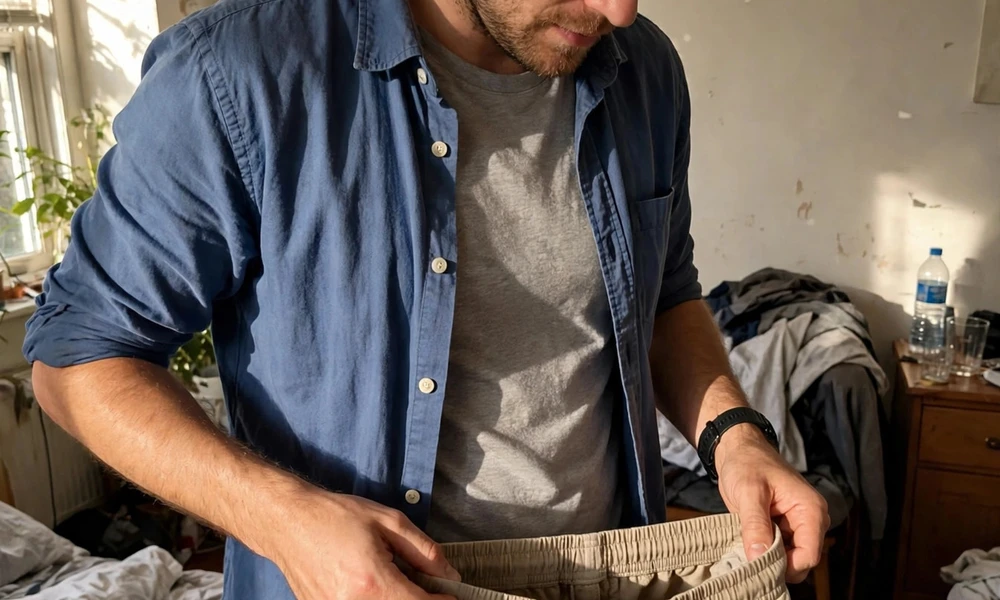
Start with the fit, and start sitting down. An elastic waistband that feels fine standing up can dig in the moment you sit, or bunch into folds at the front that no shirt will hide. Sit in the pair, stand up again, and check that the band lies flat in both positions. If it rolls over at the top edge, the waist is too small; if it sags, it is too big.
Check the fabric next. A heavier denim holds the waistband’s shape and keeps the leg falling straight, while a thin, flimsy denim sags at the seat and makes the elastic waist look like an afterthought. The denim should feel like jeans, not like a knit that happens to be blue. Our guide to styling jogger jeans for men makes the same point about the leg: the fabric has to earn its place, not just the waistband.
Finally, check the drawstring, if the pair has one. A drawstring is useful, but only if you tie it flat and tuck the ends away. A dangling one shows through a thin shirt and reads as loungewear. Tie it once, flat against the band, and forget about it.
9 ways to style elastic-waist jeans
Sit down in the shop: the elastic should stretch, not dig in
What to do: Try the jeans on, sit down, and feel whether the waistband stretches evenly or digs in at the front. Stand up again and check that the band lies flat and the pockets sit normally. Use this sit-and-stand check as the first test of any elastic-waist pair.
What to avoid: Do not judge one only standing still in a shop mirror. Best For: First fittings and any new elastic-waist pair. Time Needed: Five minutes, jeans on, sitting and standing in front of a mirror. Standout Tip: The elastic should stretch when you sit and lie flat when you stand.
The waistband is a moving part, and this check proves it moves properly.
Wear the waistband at your natural waist so the drawstring stays hidden
What to do: Pull the waistband up to your natural waist, where your body bends, and let it sit there all day. The drawstring stays inside the waistband at that height and the leg hangs the way the cut intended.
What to avoid: Do not wear the waistband low on your hips, where the drawstring slips out and the front sags. Best For: Everyday wear and any pair with a drawstring. Time Needed: A minute, in front of a mirror, the first time you wear the pair. Standout Tip: The natural waist is where the elastic works hardest and shows least.
Height is the difference between a waistband that looks deliberate and one that looks like it is falling down.
A short, boxy tee balances the pull-on waist better than a long one
What to do: Wear a tee that ends at the waistband, with a boxy cut that sits square on the shoulders. The short hem shows the waistband cleanly, and the boxy shape balances the volume the elastic adds.
What to avoid: Do not wear a long, loose tee that hangs past the waistband. Best For: Warm days and casual weekends. Time Needed: No extra time — it is a wardrobe choice, not a task. Standout Tip: The tee should end where the waistband begins.
A short hem and a square shoulder are the two cheapest fixes in this guide.
Let the shirt hang free over a bunching waistband
What to do: If the elastic gathers at the back, leave the shirt untucked so the fabric falls over the band and the back looks smooth. A shirt that ends just below the waistband covers the gathering without hiding the front.
What to avoid: Do not tuck a shirt into a waistband that bunches at the back, because the tuck pulls the bunching forward. Best For: Full-elastic waistbands and days you move around a lot. Time Needed: Ten seconds, in front of a mirror, before you leave. Standout Tip: An untucked shirt is a cover, not a surrender.
The back of the waistband is where cheap elastic gives itself away, and a shirt is the easiest cover for it.
Match the elastic waist to a relaxed leg, not a skinny one
What to do: Choose a relaxed or straight leg, so the comfort of the waist matches the comfort of the leg. The leg should fall straight from the knee and clear the shoe without clinging.
What to avoid: Do not pair an elastic waist with a skinny leg. Best For: Any elastic-waist pair and any day you want comfort to read as a choice. Time Needed: No extra time — it is a buying decision, not a styling task. Standout Tip: The leg and the waist should agree with each other.
A relaxed leg and an elastic waist are the same idea twice.
Slip-on shoes suit the pull-on waist better than lace-ups
What to do: Wear loafers, slip-on trainers, or easy sandals, so the whole outfit has the same easy, pull-on logic. The shoes should be as low-effort as the waistband.
What to avoid: Do not wear heavy lace-up boots that fight the relaxed logic of the waistband. Best For: Weekends, travel days, and warm weather. Time Needed: No extra time — it is a shoe choice. Standout Tip: The shoes should match the waistband’s mood, not fight it.
An outfit with one easy element and one fussy element looks unfinished; two easy elements look intentional.
A chore jacket lifts the elastic waist out of loungewear
What to do: Put a canvas chore jacket or an overshirt over the jeans, open, so the jacket frames the waistband and gives the outfit a structured top half. The jacket’s straight cut balances the softness of the waist.
What to avoid: Do not wear a long coat over an elastic-waist jean, because it hides the waistband and the outfit loses its shape. Best For: Cool days and smart-casual settings. Time Needed: A minute, to check the jacket falls at the hip, not the knee. Standout Tip: A hip-length jacket is the elastic waist’s best friend.
The jacket does the structuring the waistband cannot, and the pair looks dressed rather than dressed down.
Cold water and a clothesline keep the elastic springy
What to do: Wash the jeans cold, inside out, and hang them to dry. Cold water and air drying protect the elastic inside the waistband.
What to avoid: Do not put them in a hot dryer, because heat breaks elastic down far faster than it wears denim. Best For: Every elastic-waist pair you own, from the first wash. Time Needed: No extra time — hang drying replaces the dryer cycle. Standout Tip: The dryer is the fastest way to kill a good waistband.
Care is styling, because a waistband with no spring cannot be styled around.
Tie the drawstring flat so it never shows through the shirt
What to do: Tie the drawstring in a flat knot against the waistband and tuck the ends inside, so nothing dangles and nothing shows through a thin shirt.
What to avoid: Do not leave the drawstring hanging loose, because it will show through a tucked shirt and read as loungewear. Best For: Any pair with a drawstring, especially under a thin or light-coloured shirt. Time Needed: Thirty seconds, the first time you wear the pair. Standout Tip: A flat knot is invisible; a bow is a label.
The drawstring is a tool, not a decoration, and it should behave like one.
Matching elastic-waist jeans to the occasion
For a weekend, the formula is simple: an elastic-waist jean, a short boxy tee, and slip-on shoes. Nothing in the outfit fights anything else, and the comfort reads as a choice rather than a default. The Arizona or Croft & Barrow pairs suit this day best, because their dark washes look like normal jeans from across the room.
For a smart-casual day, add the chore jacket and swap the tee for a button-down left untucked. The jacket gives the outfit structure, the untucked shirt covers the waistband, and the Haggar or IZOD pair keeps the leg smart enough for a restaurant or a gallery. Styling suspender jeans for men follows the same logic from a different angle, because suspenders hold the trousers up from the shoulders instead of gripping at the waist.
For a long drive or a travel day, lean into the comfort: a relaxed leg, a soft tee, and slip-on shoes, with a jacket you can take off at the other end. The Urban Pipeline pair was made for this day, with deep pockets for a phone and a waistband that stays comfortable through hours of sitting. The one place these jeans do not belong is a formal setting, where a belted waist is part of the dress code.
The caveats that matter
Elastic-waist jeans have a lifespan, and it is shorter than a normal jean’s. The denim will outlast the waistband, and the day the elastic stops springing back is the day the pair stops doing its job. Washing cold and hanging dry stretches that day out by years, but buy expecting two or three years of heavy wear, not ten.
The other caveat is the tuck. A tucked-in shirt and an elastic waistband are a difficult combination, because the elastic moves when you do and the shirt does not. If you need a tucked-in shirt, pick a back-panel elastic pair, where the front stays flat, and keep the tuck shallow. A full-elastic waistband and a full tuck will fight each other all day.
| Detail | What is known |
|---|---|
| Where the waistband sits | At your natural waist — low on the hips, it slips and sags |
| Best top | Short and boxy, ending at the waistband, not past it |
| Best leg | Relaxed or straight — a skinny leg fights the loose waist |
| Best shoes | Slip-ons and loafers — the same easy logic as the waistband |
| Best layer | A hip-length chore jacket or overshirt, worn open |
| The tuck | Keep it shallow, and only with a back-panel elastic pair |
| Washing | Cold wash, hang dry — heat kills elastic faster than denim |
| Where they do not belong | Formal settings, where a belted, structured waist is the dress code |
Checklist: styling elastic-waist jeans honestly
Use these checks before you leave the house, and again after the first wash.
- Check the waistband sitting down and standing up: it should lie flat in both positions, with no bunching at the front.
- Check the drawstring: tied flat against the band, ends tucked away, nothing showing through the shirt.
- Check the shirt length: it should end at the waistband, not hang past it and double the volume there.
- Check the leg: relaxed or straight, falling cleanly over the shoe, never clinging at the ankle.
- Check the shoes: slip-ons or loafers for the easy logic of the waistband, boots only when the day needs them.
- Check the wash: cold water, hang dry, from the first wash — a dead waistband cannot be styled around.
Frequently asked questions
Do elastic-waist jeans look like sweatpants?
Not if the pair is a real jean. Sweatpants have a knit fabric and a ribbed ankle cuff; an elastic-waist jean has real denim, five pockets, and a straight or relaxed leg. The waistband is the only shared feature, and a clean front hides it.
Will the elastic waistband stretch out over time?
Yes, eventually. Expect two to three years of heavy wear before the spring fades, longer if you wash cold and hang dry. The denim will still look good when the waistband gives up, which is why the care routine matters more than the brand name.
Can men wear elastic-waist jeans to the office?
In a casual office, yes, with a dark wash, a chore jacket, and a button-down left untucked. In a formal office, no — a belted waist is part of the dress code. Our guide to styling tapered jeans for men is the better starting point if your office leans smart.
Do elastic-waist jeans suit bigger builds?
They suit bigger builds better than almost any other jean, because the waistband stretches where a rigid waistband would pinch, and a relaxed leg gives the thigh room too. The Wrangler Authentics Comfort Flex and the Croft & Barrow pairs are the best starting points in this list.
Should I size down in elastic-waist jeans?
No. Buy your usual waist size and let the elastic cover the half size in either direction. Sizing down just makes the band work harder and wears it out faster. If a pair slips without a belt, the waist is too big, not the elastic too weak.
Can I wear a belt with elastic-waist jeans?
You can, but only on pairs with belt loops, and only a slim belt. A wide, heavy belt fights the elastic and bunches the waistband. Most elastic-waist jeans are designed to be worn without one, and they look better that way.
The bottom line
Styling elastic-waist jeans comes down to three moves: keep the waistband flat at your natural waist, keep the top short and honest about the waist, and keep the leg relaxed enough to match. Everything else here is a variation on those three moves.
Buy the pair that fits sitting down, wash it cold, and wear it with the confidence of a man who chose comfort on purpose. The elastic waist is not a compromise to apologise for — it is a feature, and styled well, nobody will know it is there.