A tennis bracelet earns its sparkle from dozens of small stones, and each one of them collects the same things your hands do: soap, lotion, sunscreen, dust, and the faint film of everyday life. After a few weeks of regular wear, the diamonds look a little duller, the metal a little flatter, and the bracelet no longer catches the light the way it did when it was new.
The good news is that cleaning a tennis bracelet is simple, quick, and safe to do at home, as long as you use the right method. Warm water, a drop of mild soap, and a soft brush are all you need. The mistakes people make are almost always the same: harsh cleaners, ultrasonic machines used without checking the stones first, and rough handling that loosens a prong or a clasp.
Below are nine steps that will bring a tennis bracelet back to life without risking the stones or the setting. Each step explains what to do, what to avoid, and how long it takes, so you can clean your bracelet with confidence instead of guessing.
Key takeaways
- Warm water, mild soap, and a soft brush are enough to clean a tennis bracelet safely at home.
- Always check the stones and the clasp before cleaning, because a loose stone can be lost in the sink.
- Soak briefly, brush gently around each stone, rinse well, and dry completely before storing.
- Avoid harsh chemicals, toothpaste, and ultrasonic cleaners unless a jeweller has checked the bracelet first.
- No home cleaning method repairs a loose stone, a bent prong, or a faulty clasp, and a bracelet with any of these needs a jeweller, not a deeper clean.
What cleaning a tennis bracelet actually means
Cleaning a tennis bracelet means removing the thin layer of oil, lotion, and dust that builds up on the stones and the metal. Diamonds are not dirty in the way clothes are dirty. They are simply coated, and that coating stops light from entering and leaving the stone, which is what makes a diamond look dull. A clean diamond sparkles because light can pass through it freely.
The metal needs cleaning too. Gold and platinum collect the same film, and a bracelet that looks grey or flat is usually just coated, not worn out. A gentle wash restores the colour and the shine without removing any metal, which is why a soft method is always better than an aggressive one. Harsh scrubbing or strong chemicals can scratch the metal and loosen the settings, which is the opposite of what cleaning is meant to do.
How often you clean depends on how often you wear the bracelet. A bracelet worn every day benefits from a quick wash every two to three weeks. One worn only for occasions needs cleaning a few times a year, or whenever it looks dull. The test is simple. Hold the bracelet up to a light. If the stones look bright and lively, it is fine. If they look cloudy or flat, it is time to clean it.
What you need and what to look for
You need a small bowl, lukewarm water, a few drops of mild dish soap or hand soap, a soft toothbrush or a soft jewellery brush, and a lint-free cloth. That is all. You do not need a special jewellery cleaner, a polishing cloth with chemicals, or an ultrasonic machine. A simple soap solution is gentler and safer than most products sold for the job.
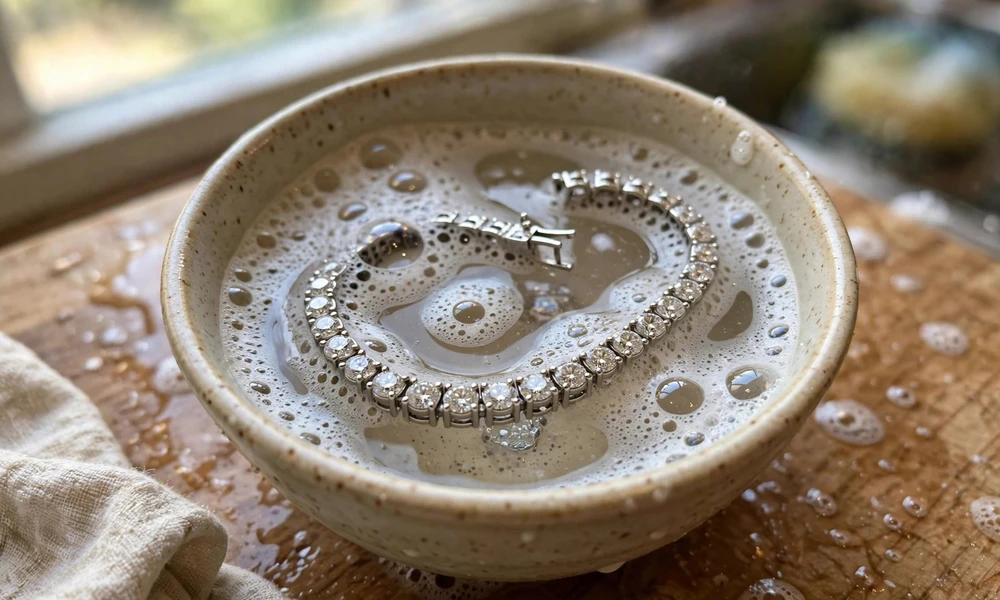
Before you start, look at the bracelet closely. Check each stone by touching it gently with a fingertip. If any stone moves, stop and take the bracelet to a jeweller instead of cleaning it, because a loose stone can fall out in the water. Check the clasp too. It should close with a clear click, and the safety catch should work. A bracelet with a faulty clasp should be repaired before it is worn again, not after a cleaning. The same careful approach applies to other diamond pieces, and our guide on how to clean a tennis necklace explains the same checks for a piece with a similar line of stones.
Finally, work over a towel, not over an open sink. Put the plug in the sink or work over a bowl on a table, so that if a stone does come loose, it is caught. This is a small habit, but it is the one that saves bracelets. A diamond lost down a drain is almost never recovered.
The 9 steps to clean a tennis bracelet properly
Look at the bracelet before it touches water
What to do: Hold the bracelet under a bright light and check every stone, prong, and link, then test the clasp and safety catch. What to avoid: Skipping this check, because cleaning a bracelet with a loose stone can lose it. Best for: Every cleaning. Time needed: Two minutes. Standout tip: A stone that moves when touched means a trip to the jeweller, not a wash.
This step takes two minutes and prevents the worst outcome in jewellery care. Look for stones that sit crooked, prongs that look bent or worn thin, and links that feel stiff or loose. If anything looks wrong, put the bracelet aside and book a jeweller’s check instead.
Wash your hands and lay out a soft cloth
What to do: Wash your hands with soap, dry them, and lay a clean, soft cloth on the table as your work surface. What to avoid: Working over a hard surface or an open sink, where a dropped bracelet can be damaged or lost. Best for: Every cleaning. Time needed: One minute. Standout tip: A towel on the table catches the bracelet and the water.
Mix a gentle soap solution
What to do: Fill a small bowl with lukewarm water and add two or three drops of mild dish soap or plain hand soap, then stir gently. What to avoid: Hot water, which can loosen settings, and harsh detergents or antibacterial soaps with strong chemicals. Best for: Every cleaning. Time needed: One minute. Standout tip: If the water feels hot on your wrist, it is too hot for the bracelet.
Lukewarm water is warm enough to dissolve oils and soap residue, but not so hot that it stresses the metal or the settings. A few drops of soap are enough. More soap does not clean better, and it leaves a film that needs extra rinsing.
Soak the bracelet briefly
What to do: Place the bracelet in the soapy water and leave it for ten minutes so the solution can loosen the film on the stones. What to avoid: Soaking for hours, or overnight, which does not clean better and can weaken glue in some settings. Best for: Bracelets worn daily. Time needed: Ten minutes. Standout tip: Ten minutes is enough; longer soaking adds risk, not shine.
A short soak does most of the work for you. The soap lifts oils and lotion from the stones and the metal, so the brushing that follows is light and easy. Do not leave the bracelet soaking while you do something else, because a forgotten bracelet is a bracelet that gets knocked, dropped, or left in water far too long.
Clean around the stones with a soft brush
What to do: Lift the bracelet out, then brush gently around each stone with a soft toothbrush, paying attention to the back of the settings where dirt collects. What to avoid: Pressing hard, using a stiff brush, or scrubbing in circles, which can bend prongs. Best for: Every cleaning. Time needed: Three to five minutes. Standout tip: The back of each stone collects the most dirt, so brush there first.
The back of a tennis bracelet is where most of the dirt hides, because it sits against your skin all day. Brush each stone from the back, then the front, using short, gentle strokes. If a stone looks dull after brushing, brush it again rather than pressing harder. Patience cleans better than force.
Clean the clasp and safety catch
What to do: Brush the clasp, the tongue, and the safety catch gently, then open and close the clasp a few times in the soapy water. What to avoid: Forcing a stiff clasp, which can bend the tongue and stop it closing properly. Best for: Bracelets worn daily. Time needed: Two minutes. Standout tip: A clasp that moves smoothly in water will move smoothly when dry.
Rinse under lukewarm running water
What to do: Rinse the bracelet under a gentle stream of lukewarm water, turning it so every stone and link is rinsed clean. What to avoid: Rinsing over an open drain, or using a strong jet of water that can push a loose stone out. Best for: Every cleaning. Time needed: One minute. Standout tip: Hold the bracelet in a small sieve or a bowl if your sink has no plug.
Rinsing removes the soap, and soap left on the stones will dry into a film that dulls them again. Rinse until the water runs clear and the bracelet no longer feels slippery. If you are worried about the drain, rinse the bracelet in a bowl of clean water instead, changing the water once.
Dry it completely, never leave it damp
What to do: Lay the bracelet on a lint-free cloth and pat it dry, then leave it to air-dry for ten minutes before storing or wearing it. What to avoid: Rubbing hard, using a hairdryer, or putting a damp bracelet into a closed box. Best for: Every cleaning. Time needed: Ten minutes. Standout tip: Water trapped behind a stone dries slowly, so give it time.
Drying matters as much as washing. Water left behind a stone or inside a clasp can leave spots on the metal and, over time, encourage tarnish. Pat the bracelet dry with a soft cloth, then leave it on the cloth in the open air until it is completely dry to the touch.
Store it flat, safe, and separate
What to do: Fasten the clasp, lay the bracelet flat in its box or a soft pouch, and store it away from other jewellery. What to avoid: Tossing it loose into a drawer or a jewellery box, where it can tangle, scratch, or snag. Best for: Every cleaning. Time needed: One minute. Standout tip: A fastened bracelet cannot tangle with itself.
Which cleaning method is right for your bracelet
For most tennis bracelets, the soap-and-water method above is the right one. It is gentle, it works on gold, platinum, and diamonds, and it carries almost no risk when the bracelet has been checked first. Use it every two to three weeks if you wear the bracelet daily, and a few times a year if you wear it only for occasions.
A professional clean is worth it once a year. A jeweller will check every stone, tighten any loose prongs, clean the bracelet in an ultrasonic machine, and polish the metal. Ultrasonic cleaning is safe for most diamond bracelets, but only after a jeweller has confirmed that every stone is secure, because the vibrations can shake a loose stone out. Never put a bracelet in an ultrasonic cleaner at home without that check. If you are choosing between styles and want to compare how different bracelets are made, our guide to the best tennis bracelets of 2027 explains the settings and clasps that hold up best to daily wear.
Do not use toothpaste, baking soda, vinegar, or household cleaners on a tennis bracelet. Toothpaste is abrasive and scratches metal. Baking soda is too harsh for a piece with dozens of small settings. Vinegar and household cleaners can damage gold and loosen stones. If a bracelet is very dirty, a longer soak in soapy water and a second gentle brushing will do more than any harsh product, and it will do it safely.
The caveats that matter
Home cleaning is maintenance, not repair. It keeps a healthy bracelet bright, but it cannot fix a loose stone, a bent prong, a worn clasp, or a cracked diamond. If you notice any of these, stop cleaning and take the bracelet to a jeweller. Cleaning a damaged bracelet can make the damage worse, and a stone that is already loose is more likely to fall out in water than on your wrist.
| Detail | What is known |
|---|---|
| Best method at home | Lukewarm water, mild soap, soft brush, ten-minute soak |
| How often | Every 2 to 3 weeks for daily wear, a few times a year for occasions |
| Check first | Every stone, prong, link, clasp, and safety catch |
| What to avoid | Toothpaste, baking soda, vinegar, harsh cleaners, hot water |
| Ultrasonic cleaning | Only after a jeweller confirms every stone is secure |
| Drying | Pat dry, then air-dry for ten minutes before storing |
| Storage | Flat, fastened, in its own box or soft pouch |
| What it does not do | It does not repair loose stones, bent prongs, or a faulty clasp |
Be careful with bracelets that mix diamonds with softer stones, such as opals, pearls, or emeralds. Those stones should not be soaked, and they need a different cleaning method. If your bracelet has anything other than diamonds in it, ask a jeweller how to clean it before using the soap-and-water method.
Checklist: cleaning a tennis bracelet honestly
Use these checks before you clean, and again after the bracelet is dry.
- Check the stones: touch each one gently and make sure none moves before the bracelet touches water.
- Check the clasp: it should click shut firmly and the safety catch should work.
- Work over a towel: put the plug in the sink or work over a bowl, never over an open drain.
- Use lukewarm water and mild soap: a few drops are enough, and hot water is never better.
- Brush gently: short, soft strokes around each stone, especially on the back of the settings.
- Dry completely: pat dry, air-dry for ten minutes, and store the bracelet flat and fastened.
Frequently asked questions
How often should I clean my tennis bracelet?
Every two to three weeks if you wear it daily, and a few times a year if you wear it only for occasions. Hold it up to a light. If the stones look cloudy or flat, it is time to clean it, whatever the calendar says.
Can I use an ultrasonic cleaner at home?
Only after a jeweller has checked that every stone is secure. Ultrasonic vibrations can shake a loose stone out, so the check matters more than the machine. A professional clean once a year is a safer way to get the same result.
Is dish soap safe for diamonds?
Yes, a few drops of mild dish soap in lukewarm water is one of the safest ways to clean diamonds at home. Avoid antibacterial soaps and harsh detergents, which can leave a film or damage the metal.
Can I clean a tennis bracelet with toothpaste?
No. Toothpaste is abrasive and will scratch the metal and dull the finish over time. It is one of the most common cleaning mistakes, and it does lasting damage for no benefit.
What should I do if a stone feels loose?
Stop cleaning immediately and take the bracelet to a jeweller. Do not wear it, soak it, or brush it. A loose stone can fall out with very little movement, and a jeweller can tighten the setting in a few minutes.
How do I clean the clasp of a tennis bracelet?
Brush it gently with the same soapy water, then open and close it a few times while it is wet. If it still feels stiff or loose after cleaning, it needs a jeweller. Our guide on how to clean gold jewellery covers the same clasp care for gold chains and bracelets.
The bottom line
Cleaning a tennis bracelet takes fifteen minutes, a bowl of warm soapy water, and a soft brush. The steps are simple, but the order matters: check the bracelet first, soak briefly, brush gently, rinse well, and dry completely. Done regularly, this keeps the diamonds bright and the metal clean without any risk to the stones.
The one habit that matters most is the check before you start. A bracelet with a loose stone or a faulty clasp needs a jeweller, not a wash, and catching that early is what keeps a tennis bracelet on your wrist for years instead of lost in a sink.