A diamond tennis necklace is one of the few pieces of jewellery that does the same job in almost every setting. It is a single line of diamonds, set end to end, that sits close to the neck and catches light with every small movement. Worn with a plain top it looks deliberate. Worn with an evening dress it looks finished.
The problem is not finding one. It is knowing what you are actually paying for. Two necklaces that look almost identical in a photograph can differ by thousands, and the difference is usually in the stones, the setting, and the metal, not in the brand name on the box. A line of small, well-matched diamonds in a secure setting will look better and last longer than a line of larger, uneven stones in a flimsy one.
Below are nine diamond tennis necklaces for women worth considering in 2027, from a delicate everyday line to a full riviera-style statement piece. Each one is described by what it is good at, what to watch for, and who it suits best.
Key takeaways
- A tennis necklace is a single line of diamonds set end to end; the quality of the match between the stones matters more than the size of any one stone.
- Round brilliant cuts are the classic choice because they return the most light, while oval, princess and emerald cuts give a different, quieter character.
- Total carat weight tells you how much diamond you are buying, but it says nothing about colour, clarity or how well the stones are matched.
- A secure setting and a strong clasp matter as much as the stones, because a tennis necklace is worn close to the skin and moves all day.
- No diamond tennis necklace is an investment guarantee, and lab-grown stones, while beautiful, do not hold resale value the way natural diamonds have done.
What a diamond tennis necklace actually is
A tennis necklace takes its name from the tennis bracelet, which became famous when a player stopped a match to look for a lost diamond bracelet. The necklace version follows the same idea: a continuous line of individually set diamonds, usually round brilliants, joined in a flexible chain that follows the curve of the neck. There is no centre pendant and no break in the line, which is what gives it its clean, unbroken sparkle.
The classic length sits at 16 to 18 inches, which places the line at the base of the neck or just below the collarbone. Shorter lines, around 14 to 15 inches, sit higher and read as a choker. Longer lines, at 20 inches and beyond, sit lower on the chest and suit deeper necklines.
What makes a good one is consistency. The stones should be the same colour and clarity from one end to the other, with no single stone that looks darker, cloudier or larger than its neighbours. That matching is skilled work, and it is one of the reasons a well-made tennis necklace costs more than the sum of its stones. A line of mismatched diamonds will always look slightly restless, however bright each stone is on its own.
How we chose these necklaces and what to look for
Look first at the stones. Round brilliant cuts are the standard because they are cut to return the most light, which is exactly what a tennis necklace is for. Check the colour grade and the clarity grade, and ask whether the stones are matched across the whole line. A necklace graded as a whole, rather than stone by stone, can hide one or two weaker stones in the middle, so a seller who can talk about matching is usually a good sign.
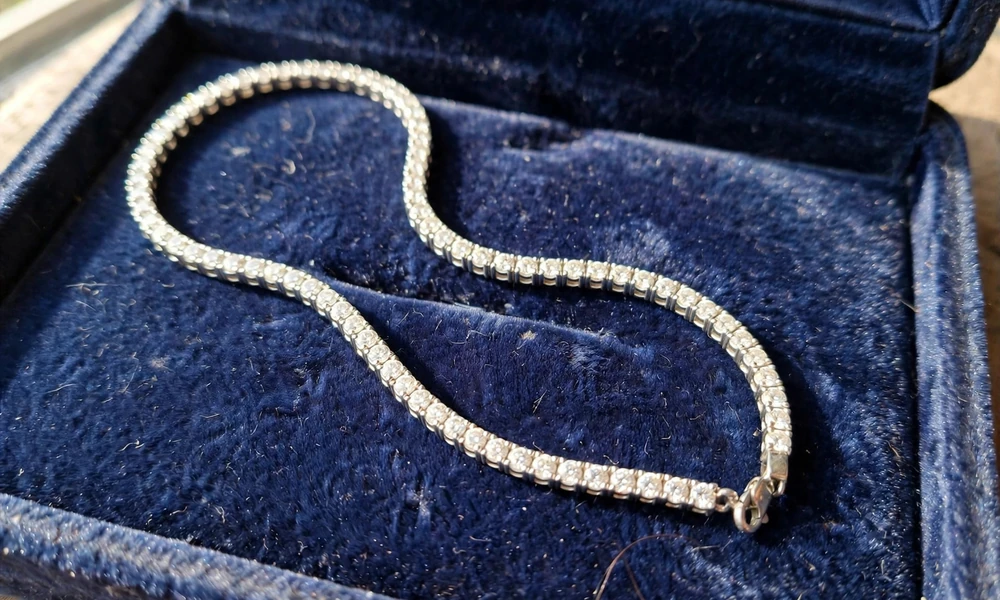
Look next at the setting and the metal. Prong settings hold each stone so light can pass through it, which is why they sparkle so well, but the prongs must be even and secure. Bezel settings are smoother and more protective, and they suit everyday wear, though they can look slightly less brilliant. Yellow gold warms the look, white gold and platinum keep it cool and bright, and rose gold softens it.
Finally, look at the clasp and the length. A tennis necklace needs a clasp you can trust, because it is worn every day and it moves with you. A box clasp with a safety latch is the usual choice, and a small figure-eight safety chain is worth having on a longer or heavier line. Our guide to the best diamond necklaces of 2027 covers the wider range of styles, from pendants to lariats, if you want to compare a tennis line with other diamond necklace shapes before you commit.
The 9 diamond tennis necklaces for women of 2027
The Classic Round-Cut Line
What we like: A continuous line of round brilliant diamonds in a four-prong setting, the purest version of the tennis necklace, bright from every angle and easy to wear with almost anything. What to consider: The classic style shows every mismatch, so buy from a seller who grades the line as a matched set. Best for: A first tennis necklace, and for anyone who wants one piece that works every day. Stone: Round brilliant diamonds, near-colourless. Price range: Mid to high. Standout feature: The unbroken, even sparkle that defines the style.
The Graduated Line
What we like: Stones that grow gently larger towards the centre and smaller towards the clasp, which flatters the neckline and puts the most sparkle where the eye naturally falls. What to consider: The graduation must be smooth, not stepped, or the line will look uneven. Best for: Evening wear and occasions when the necklace is the main piece. Stone: Round brilliant diamonds, graduated in size. Price range: High. Standout feature: The gentle swell of size towards the centre.
The Oval-Cut Line
What we like: Oval diamonds that give the same total carat weight a longer, more slender look, with a softer, more romantic sparkle than round stones. What to consider: Ovals can show a dark bow-tie effect in the centre if they are poorly cut, so check the stone in daylight. Best for: Anyone who wants a tennis necklace that looks a little different from the classic. Stone: Oval-cut diamonds. Price range: Mid to high. Standout feature: The elongated, elegant shape of each stone.
The Lab-Grown Line
What we like: Lab-grown diamonds that are chemically identical to natural diamonds, at a much lower price for the same size and quality, so a fuller line becomes affordable. What to consider: Lab-grown stones do not hold resale value the way natural diamonds have done, so buy it to wear, not to keep as an asset. Best for: A first tennis necklace on a smaller budget, or a larger line for the same money. Stone: Lab-grown round brilliant diamonds. Price range: Low to mid. Standout feature: The same sparkle at a fraction of the price.
The Yellow Gold Line
What we like: Warm yellow gold that softens the diamonds and suits warm skin tones, with a vintage, slightly softer feel than white metal. What to consider: Yellow gold can make near-colourless stones look slightly warmer, so choose a higher colour grade if you want a bright white sparkle. Best for: Warm skin tones, vintage styling, and anyone who wears mostly yellow gold. Stone: Round brilliant diamonds in 14k or 18k yellow gold. Price range: Mid to high. Standout feature: The warm, golden frame around each stone.
The White Gold Line
What we like: White gold that keeps the diamonds looking bright and cool, with a clean, modern feel that suits most skin tones and most outfits. What to consider: White gold is usually rhodium-plated, and the plating wears over time, so it will need re-plating every year or two. Best for: Everyday wear and anyone who wants the brightest possible look. Stone: Round brilliant diamonds in 14k or 18k white gold. Price range: Mid to high. Standout feature: The crisp, bright contrast between metal and stone.
The Rose Gold Line
What we like: Rose gold that gives the necklace a soft, blushing warmth, romantic without being pink, and flattering on a wide range of skin tones. What to consider: Rose gold is a fashion metal, so it can look dated faster than yellow or white gold if tastes change. Best for: Romantic styling, spring and summer outfits, and anyone who loves rose gold. Stone: Round brilliant diamonds in 14k or 18k rose gold. Price range: Mid. Standout feature: The soft, warm blush of the metal.
The Delicate Everyday Line
What we like: A fine, lightweight line of small diamonds that sits close to the neck, comfortable enough to wear all day and subtle enough for the office. What to consider: Small stones mean less sparkle from a distance, so this is a quiet piece, not a statement one. Best for: Daily wear, layering, and a first piece of fine jewellery. Stone: Small round brilliant diamonds, lower total carat weight. Price range: Low to mid. Standout feature: The lightness and the ease of wearing it every day.
The Statement Riviera Line
What we like: A full, generous line of larger diamonds with a high total carat weight, the most dramatic version of the style, made for evenings and celebrations. What to consider: It is heavy, expensive, and needs a strong clasp and regular checks, so it is not an everyday piece. Best for: Formal occasions, milestone gifts, and anyone who wants the full riviera effect. Stone: Large round brilliant diamonds, high total carat weight. Price range: Very high. Standout feature: The sheer presence of a full line of large stones.
Which diamond tennis necklace is right for you
Start with how you will wear it. If you want one necklace for every day, choose a delicate or classic line in white or yellow gold, at 16 to 18 inches, with a secure box clasp and a safety latch. It should be light enough to wear for a full day without noticing it, and the stones should be well matched so the line looks even in daylight.
If you want a necklace for occasions, a graduated line or a riviera line will give you more presence, and the extra carat weight will be visible across a room. Think about your neckline too. A choker-length line suits a high collar or a bare neck, while a longer line suits a deep V-neck or a strapless dress. Our guide to what a tennis bracelet is explains the matching piece, because a tennis necklace and a tennis bracelet share the same idea, and wearing them together is one of the easiest ways to build a set that actually matches.
A lab-grown line will give you the same look for much less money, and if you plan to wear it often, that is a good trade. A natural diamond line will cost more and hold its value better, but it will not look any brighter on the neck. Choose the stones you can afford to enjoy.
The caveats that matter
A tennis necklace is a fine piece of jewellery, and it needs the care that goes with that. The setting is the weak point, not the stones. Prongs wear down over time, especially on a necklace that is worn daily, and a loose stone can fall out without you noticing. Have the setting checked once a year, and sooner if the necklace catches on clothing or if a stone looks tilted.
| Detail | What is known |
|---|---|
| Classic length | 16 to 18 inches, sitting at the base of the neck or just below the collarbone |
| Best cut for sparkle | Round brilliant, cut to return the most light; oval and princess cuts give a different character |
| What matters most | How well the stones are matched in colour and clarity across the whole line |
| Best clasp | Box clasp with a safety latch, plus a safety chain on heavier lines |
| Lab-grown vs natural | Lab-grown stones are chemically identical and much cheaper, but do not hold resale value the same way |
| Who should choose bezel settings | Anyone who wears the necklace daily, as bezels protect the stones better than prongs |
| Care | Clean gently in warm soapy water, dry fully, and have the setting checked once a year |
| What it is not | It is not an investment guarantee, and no tennis necklace suits every neckline or every occasion |
Insurance is worth considering for a valuable line, and a proper valuation from a jeweller is the starting point. Keep the certificate and the receipt together, and photograph the necklace, so you have a record if it is ever lost or damaged.
Checklist: choosing a diamond tennis necklace honestly
Use these checks before you buy, and again after a month of wearing it.
- Check the match: the stones should be the same colour and clarity from one end of the line to the other, with no single stone that stands out.
- Check the setting: prongs should be even and secure, and the necklace should feel flexible, not stiff or springy, when you hold it.
- Check the clasp: a box clasp with a safety latch, and a safety chain on a longer or heavier line.
- Check the length: measure a necklace you already like, and try the length on with the necklines you wear most.
- Check the certificate: ask for a grading report for the stones, and keep it with the receipt.
- Check the care: clean it gently in warm soapy water, dry it fully, and have the setting checked once a year.
Frequently asked questions
What is the difference between a tennis necklace and a riviera necklace?
They are very similar, and the terms are often used interchangeably. A riviera necklace is usually a fuller, more generous line of larger diamonds, while a tennis necklace can be any size.
How long should a diamond tennis necklace be?
Most people choose 16 to 18 inches, which sits at the base of the neck or just below the collarbone. A 14 to 15 inch line sits higher, like a choker, and a 20 inch line sits lower on the chest. Try the length on with the necklines you wear most before you decide.
Are lab-grown diamonds real diamonds?
Yes. Lab-grown diamonds are chemically and physically identical to natural diamonds, grown in a laboratory rather than mined. They cost much less for the same size and quality, but they do not hold resale value the way natural diamonds have done.
Can I wear a tennis necklace every day?
Yes, if you choose a delicate or classic line with a secure clasp. A bezel setting is more protective for daily wear than a prong setting, and a lighter line is more comfortable. Have the setting checked once a year, and take it off for swimming, exercise and heavy housework.
How do I clean a diamond tennis necklace?
Soak it briefly in warm water with a drop of mild soap, brush very gently with a soft brush, rinse, and dry it fully with a soft cloth. Avoid ultrasonic cleaners at home unless a jeweller has checked the setting first, because vibration can loosen a worn prong.
What should I wear with a tennis necklace?
Almost anything, which is the point of it. A delicate line suits a plain top or a shirt, while a fuller line suits an evening dress. It also layers well: a short tennis line with a longer pendant, or a tennis necklace with pearl studs, is a classic combination. Our guide to the best pearl necklaces for women is a useful companion here, because pearls and diamonds are the two necklace styles that work together most easily.
The bottom line
The best diamond tennis necklace in 2027 is not the biggest or the most expensive. It is the one with well-matched stones, a secure setting, and a length that suits the way you dress. For everyday wear, a classic or delicate line in white or yellow gold is the sensible choice. For occasions, a graduated or riviera line will give you the presence you want.
Choose the stones you can afford to enjoy, check the setting and the clasp before you buy, and have it checked once a year after that. A tennis necklace is a simple idea done well, and when it is done well, it is the piece you will reach for more than any other.