Boho style is one of those looks everyone recognises and almost no one can quite define. It is the long, flowing dress at a summer festival, the fringed jacket over a white blouse, the layered necklaces, the suede boots that look better slightly scuffed. It is relaxed, a little romantic, and unbothered by the rules that govern most fashion. But boho is not just a mood. It has a history, a set of fabrics, a colour palette, and a way of dressing that works far beyond festival season.
The word itself is short for bohemian, and it reaches back to the artists, writers and travellers of nineteenth-century Paris, who dressed outside the conventions of their time because they could not afford, or did not want, to dress inside them. That spirit never really left. In the 1960s and 1970s it became the uniform of a generation that valued freedom over formality. In the 2000s it came back through festival culture and celebrity style, and it has stayed ever since.
This guide explains what boho style actually is in 2027, how to recognise the real thing, and how to wear it without looking like you are in costume. Below are nine facts covering the history, fabrics, colours, prints, accessories and honest limits of the look, so you can build a version that suits your life, not just a photograph.
Key takeaways
- Boho style is loose, layered and relaxed, built on natural fabrics, earthy colours and prints, not on one garment.
- It began with nineteenth-century artists and travellers, and was revived in the 1960s and 1970s.
- The best boho looks mix texture and print with plain, well-fitting pieces, so the outfit feels considered.
- Good boho is not expensive by definition: vintage, thrifted and simple cotton pieces often look better than cheap designer copies.
- Boho is not a costume, and it is not flattering on everyone in every form; proportion, fabric quality and fit matter more than layer count.
What boho style actually is
At its simplest, boho style is dressing that prioritises comfort, movement and individuality over structure and polish. The silhouette is loose rather than tailored. Dresses are long and flowing, skirts are full, trousers are wide, and tops are soft and unstructured. Nothing is meant to look stiff. A boho outfit should move when you move, and it should look like it belongs to the person wearing it rather than to a shop window.
The look draws on many influences at once: folk dress, vintage clothing, travel souvenirs, artisan crafts and the relaxed style of the 1970s. A maxi dress, a crochet top, a suede jacket and a wide-brim hat can all be boho, but none of them is boho on its own. It is the combination, the layering, and the sense that the pieces were collected over time, that makes the style work.
It also has a real philosophy behind it. The original bohemians dressed against convention, and that spirit survives: clothes that are comfortable, personal and a little unconventional, chosen because you like them rather than because they are the current thing. That is why boho has outlasted so many trends. It is less a fashion than an attitude towards getting dressed, and attitudes last longer than hemlines.
How we chose these facts and what to look for
Look first at the fabric. Real boho is built on natural fibres: cotton, linen, silk, suede and leather. These fabrics breathe, soften with wear, and develop character over time. A polyester dress printed with paisley may look boho from a distance, but up close it feels wrong: stiff, shiny, and hot. If the fabric does not feel good against your skin, it is not boho, whatever the label says.
Look next at the fit and the proportion. Boho is loose, but loose is not the same as shapeless. The best boho outfits balance a flowing piece with something more defined: a long skirt with a fitted top, a wide-leg trouser with a tucked-in blouse, an oversized jacket over a slim dress. Without that balance, the layers pile up and the outfit swallows the person wearing it. A summer dress roundup shows this balance well, because the best flowing dresses still show the shape of the person inside them.
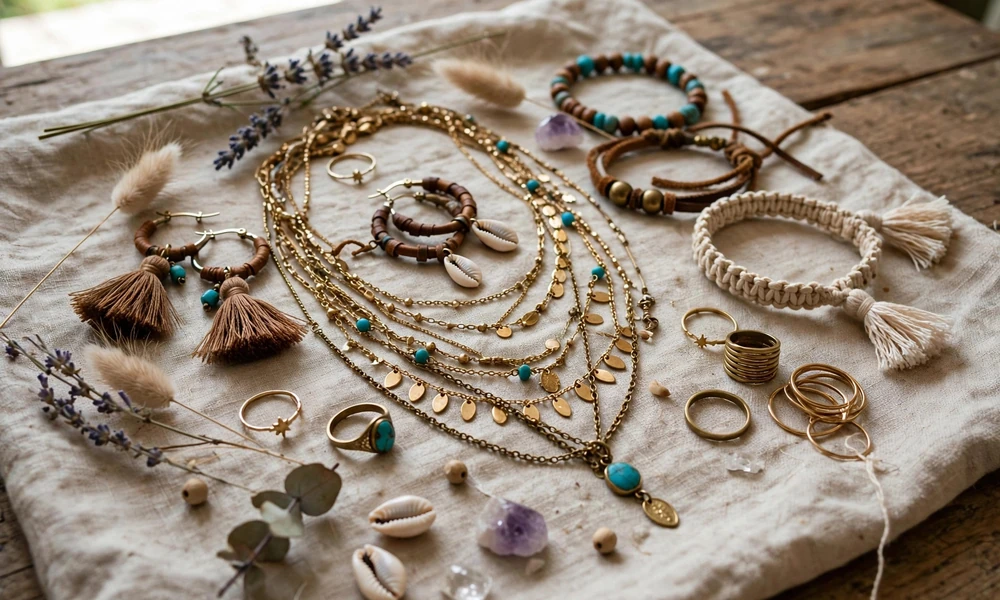
Finally, look at the details. Handmade touches matter in boho: embroidery, crochet, tassels, fringe, hand-tooled leather, and jewellery that looks collected rather than bought as a set. These details separate a thoughtful boho outfit from a mass-produced copy. You do not need many of them. One or two well-chosen details, a good belt, a handcrafted bag, a pair of earrings with a story, do more than five cheap accessories ever will.
The 9 key facts about boho style in 2027
It started with artists and travellers, not a trend cycle
What we like: Boho comes from the artists, writers and travellers of nineteenth-century Paris, who dressed outside convention because they lived outside it. What to consider: The history is often used as marketing, so a brand calling something boho does not make it so. Best for: Anyone who wants a style with a story rather than a season. Fabric: Whatever was available and affordable, often cotton and wool. Price range: From thrifted pieces to designer collections. Standout feature: A look that has survived for more than a century because it is an attitude, not a trend.
The silhouette is loose, long and layered
What we like: Comfort and movement. Long skirts, wide trousers, flowing dresses and oversized jackets are easy to wear all day. What to consider: Too much volume without structure can look untidy, and very long layers can overwhelm a petite frame. Best for: Warm weather, holidays, festivals, and relaxed weekends. Fabric: Cotton voile, rayon, linen, soft jersey. Price range: £25 to £300 for a good dress. Standout feature: A silhouette that moves with you and never feels restrictive.
Natural fabrics do most of the work
What we like: Cotton, linen, silk and suede feel good, breathe well, and age gracefully in a way synthetics never do. What to consider: Natural fabrics crease and cost more, so a cheap boho dress is often synthetic in disguise. Best for: Anyone who wears their clothes hard and wants them to last. Fabric: Cotton, linen, silk, suede, leather. Price range: £40 to £250 for a well-made piece. Standout feature: Fabric that improves with wear instead of falling apart.
The colour palette comes from the earth
What we like: Warm, natural colours, terracotta, rust, mustard, olive, sand, cream and deep brown, are easy to mix and flattering on most skin. What to consider: An all-earth palette can look flat, so it needs one contrast, a deep teal or a dusty rose, to come alive. Best for: Autumn, outdoor events, and anyone tired of black and navy. Fabric: Any natural fibre takes these dyes beautifully. Price range: No premium for colour itself, but natural dyes cost more to produce. Standout feature: A palette that looks collected from nature rather than chosen from a chart.
Prints are the personality
What we like: Paisley, floral, tribal and geometric prints give boho its character and make even a simple outfit feel personal. What to consider: Too many competing prints look chaotic, and a loud print in cheap fabric looks worse than a plain dress. Best for: Dresses, skirts and blouses, where a print has room to breathe. Fabric: Cotton voile, silk, rayon. Price range: £30 to £200 for a printed dress. Standout feature: A print that tells a story, whether it is paisley, floral or folk-inspired.
Accessories are not an afterthought
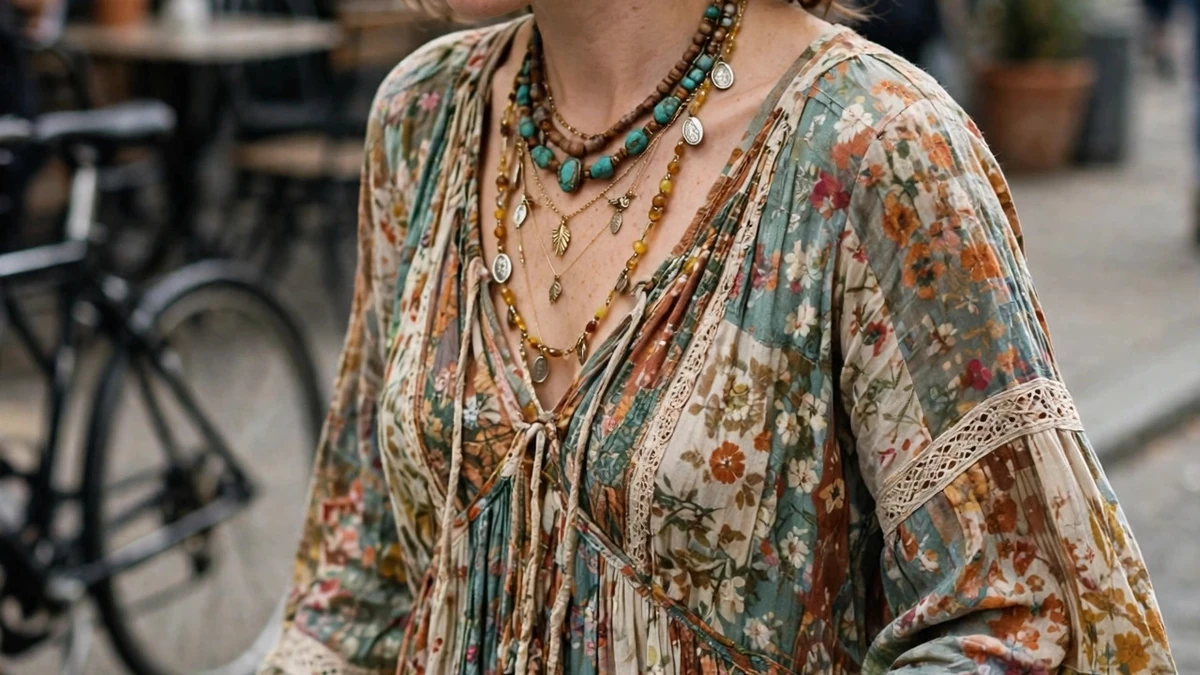
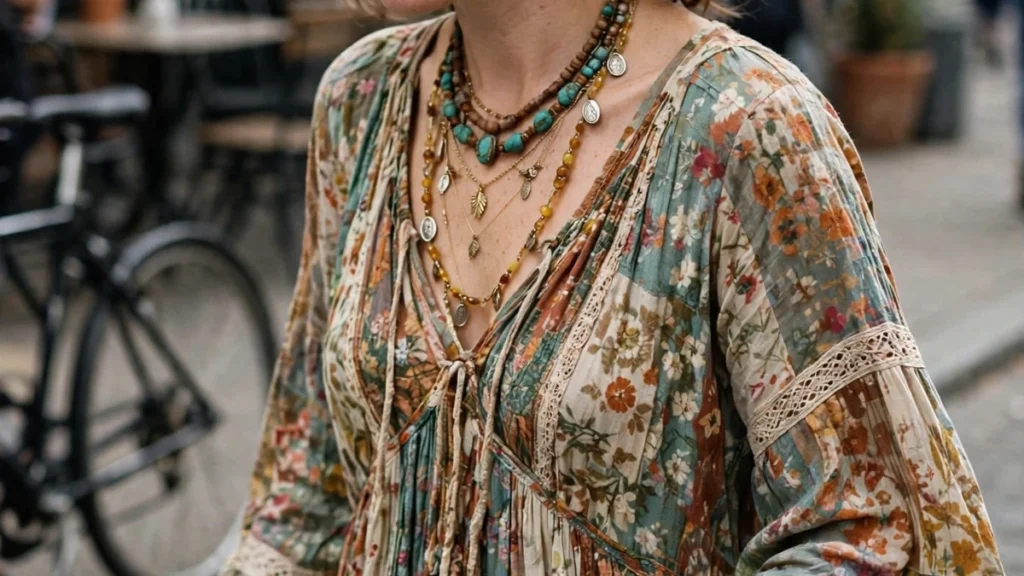
What we like: Layered necklaces, stacked bracelets, wide-brim hats, fringed bags and leather belts are what turn simple clothes into a boho outfit. What to consider: Too many accessories at once look like a costume, and cheap, tangled jewellery ruins the effect. Best for: Finishing an outfit, adding personality, and making a plain dress feel special. Fabric: Leather, suede, beads, turquoise, silver. Price range: £10 to £200 for a good piece. Standout feature: Jewellery and accessories that look collected over time, not bought as a matching set.
Boho works at every age
What we like: The loose silhouette, natural fabrics and relaxed attitude suit women in their twenties and their seventies alike, and adapt easily to different bodies and lifestyles. What to consider: The festival version, crop tops and tiny shorts, does not translate to every age or occasion. Best for: Anyone who wants comfort without giving up style. Fabric: Whatever suits your skin and your climate. Price range: The same at every age, from thrifted to designer. Standout feature: A style that grows with you instead of expiring at thirty.
The price range is genuinely wide
What we like: Boho can be built for very little money. Vintage shops, charity shops and markets are full of the cotton dresses, suede jackets and leather belts the style is made of. What to consider: The cheapest new boho clothes are usually synthetic and badly made, the opposite of what the style stands for. Best for: Building a wardrobe slowly, piece by piece, rather than buying a whole look at once. Fabric: Vintage cotton, linen and leather are often better quality than new budget options. Price range: £5 thrifted to £500 designer. Standout feature: A style where a £10 vintage find can outshine a £200 new dress.
Care is simple if you buy well
What we like: Natural fabrics are easy to care for once you know how: cold wash, air dry, a little patience, and they last for years. What to consider: Suede and leather need protection from rain, silk needs gentle handling, and embroidery can snag if you are careless. Best for: People who are happy to wash cold and hang clothes to dry. Fabric: Cotton and linen are the easiest, silk and suede need more care. Price range: Care costs almost nothing, but replacing a ruined piece costs plenty. Standout feature: Clothes that reward a little care by lasting far longer than fast fashion.
Which boho look is right for you
Start with your life, not with a photograph. If you spend your days at a desk, a long linen dress with a blazer and a leather tote will feel boho without looking out of place. If you are often outdoors, a wide-leg trouser, a cotton blouse and sturdy boots will serve you better than a trailing skirt. If you love colour, let a printed dress be the centre of your outfit. If you prefer neutrals, build the look from texture instead: suede, linen, crochet and leather in cream, sand and brown.
Your body shape matters too, but not in the way fashion magazines suggest. The question is not whether boho suits your shape, it is which version suits you. Petite women often do better with a midi length than a full maxi, and with a defined waist rather than a shapeless sack. Taller women can carry the long, layered look easily. Curvy women often find that a wrap dress or a belted tunic gives the loose silhouette the definition it needs. A silk blouse is a good test piece: if it feels comfortable tucked into a skirt or worn loose over trousers, you have found a building block that will work in many outfits.
Finally, think about how much of the look you actually want. You do not have to dress head to toe in boho to enjoy it. One flowing dress, one fringed bag, or one beautiful printed scarf can bring the spirit of the style into an otherwise plain wardrobe. That is often the best version of boho: a touch of it, worn with confidence, rather than a full costume worn with doubt.
The caveats that matter
Boho is forgiving, but it is not foolproof. The most common mistake is wearing too much of it at once: a maxi dress, a fringed jacket, a wide-brim hat, layered necklaces, stacked bracelets and a fringed bag, all in one outfit. Each piece is lovely on its own. Together they look like fancy dress. Edit ruthlessly: choose two or three boho elements and let the rest of the outfit be simple.
| Detail | What is known |
|---|---|
| Origin | Nineteenth-century artists and travellers; revived in the 1960s and 1970s |
| Silhouette | Loose, long and layered, with one defined piece |
| Key fabrics | Cotton, linen, silk, suede, leather; synthetics rarely look right |
| Colour palette | Earth tones: terracotta, rust, mustard, olive, sand, cream, brown |
| Signature prints | Paisley, floral, tribal and geometric, one print per outfit |
| Best accessories | Layered necklaces, wide-brim hats, leather belts, fringed bags |
| Who it suits | Most ages and body types, with adjusted proportions |
| What it does not do | It does not suit stiff formal occasions, or hide poor fabric or fit |
Boho also has a cultural question worth taking seriously. Some of its prints and patterns come from specific cultures, and wearing them without understanding their origin can feel like borrowing rather than appreciating. There is no simple rule, but there is a simple habit: learn where a pattern comes from, buy from makers of that tradition when you can, and avoid wearing sacred or ceremonial designs as fashion. Respect is part of the style, or it should be.
Checklist: building a boho wardrobe honestly
- Check the fabric: natural fibres first, cotton, linen, silk, suede or leather, and be wary of anything shiny or stiff.
- Check the proportion: one flowing piece balanced with something closer to the body, never everything loose at once.
- Check the print count: one print per outfit is enough, and let it share a colour with the rest of what you wear.
- Check the accessories: two or three pieces, chosen for meaning or quality, not five cheap ones bought as a set.
- Check the occasion: boho suits relaxed days, holidays and creative settings, but formal occasions need a more tailored version.
- Check the story: buy vintage or second-hand where you can, and learn where a pattern or craft comes from before you wear it.
Frequently asked questions
What is the difference between boho and hippie style?
They overlap, but they are not the same. Hippie style is tied to the 1960s counterculture: tie-dye, peace symbols, and a deliberate rejection of mainstream fashion. Boho is older and broader, reaching back to nineteenth-century artists. Boho can be polished and expensive; hippie style was, by design, not.
Can I wear boho style to work?
Yes, in a tailored version. A long linen dress with a blazer, a silk blouse with wide-leg trousers, or a suede jacket over a simple dress all read as boho in most offices. Skip the festival pieces and keep the look to one or two boho elements.
Is boho style still in fashion in 2027?
Yes, and it has been for years. Boho is less a trend than a lasting style language, returning in a new form every few seasons. In 2027 it is quieter and more polished than the festival version of the 2000s, with better fabrics and cleaner lines.
What fabrics should I look for in boho clothing?
Cotton, linen, silk, suede and leather. These are the fabrics that breathe, soften with wear, and give boho its relaxed, lived-in feel. Natural fibres in clothing explains why these materials matter: the difference between a good boho dress and a bad one is usually the fabric, not the design.
How do I wear boho without looking like I am in costume?
Edit. Choose two or three boho elements and keep the rest simple. One flowing dress with plain shoes, or one printed scarf with a plain coat, will look like a style choice. Five boho pieces at once will look like fancy dress. The best boho outfits look as if they were collected over time, not bought in one trip.
Is boho style expensive?
It does not have to be. Vintage and second-hand shops are full of the cotton dresses, suede jackets and leather accessories the style is built on, often for very little money. Spend on the pieces you wear most, a good dress, a real leather bag, a pair of boots, and buy the rest slowly.
The bottom line
Boho style in 2027 is a relaxed, personal way of dressing built on natural fabrics, earthy colours, prints and layered accessories. It has a real history, it works at every age, and it can be built for very little money if you buy vintage and choose well. The best version is not a costume. It is a few good pieces, worn with confidence, that look as if they belong to you.
Start with one flowing dress or one good jacket, add a piece of jewellery that means something to you, and let the look grow from there. Boho rewards patience and imagination more than money, and that is why it is still here after more than a century.