Pearl jewellery is the most forgiving jewellery to wear and the least forgiving to store badly. A pearl necklace can survive years of daily wear and still look luminous, then lose its shine in a few months in the wrong box. The reason is simple: pearls are organic. They are made of nacre, a material that needs a little moisture in the air, hates being sealed away, scratches easily, and dries out in heat. A storage habit that suits gold or diamonds can quietly damage pearls.
Most pearl damage does not come from wearing. It comes from the drawer. Pearls thrown loose in a jewellery box get scratched by metal clasps and harder stones. Pearls hung on a hook stretch their silk thread. Pearls sealed in a plastic bag dry out and go dull. Pearls left in a hot car or a sunny windowsill crack. Each of these is easy to prevent, and each takes less than a minute once the habit is set.
Below are nine steps that keep pearl jewellery looking like pearl jewellery in 2027, from cleaning a pair of earrings before they go away to restringing a necklace once a year. Each step explains what to do, what to avoid, who it suits, how long it takes, and the one tip that makes the difference.
Key takeaways
- Pearls need air and a little humidity, so never seal them in plastic bags or airtight boxes for months at a time.
- Store each pearl piece separately, in a soft pouch or a lined slot, so metal clasps and harder stones cannot scratch the nacre.
- Lay pearl necklaces flat and never hang them, because hanging stretches the silk thread and weakens the knots.
- Clean pearls with a soft, damp cloth before storing, let them dry fully, and keep them away from perfume, heat and sunlight.
- No storage method makes pearls indestructible, and a necklace worn often will still need restringing about once a year.
Why pearl storage is different
A pearl is not a stone. It is a layered, organic material, built up over years inside a mollusc, and it behaves more like skin than like a gem. Nacre contains a small amount of water, and it stays smooth and luminous when the air around it has a little humidity. In a very dry place, or sealed in plastic for months, pearls slowly lose moisture, and the surface can go dull, chalky, or even develop fine cracks. That is why the old advice to keep pearls in a soft pouch in a drawer, rather than in a sealed safe, is still correct.
Pearls are also soft. On the Mohs hardness scale they sit around 2.5 to 4.5, which is softer than steel, softer than most gemstones, and softer than the metal clasps on their own necklaces. A pearl dropped into a box with a diamond ring, a steel chain, or a brooch pin will pick up scratches that cannot be polished out. The damage is rarely dramatic. It is a slow dulling, a small flat spot, a scratch that catches the light, and it adds up over months until the pearl no longer looks like itself.
The third difference is the thread. Most pearl necklaces and bracelets are strung on silk, knotted between each pearl so that the strand cannot scatter if the thread breaks. Silk is strong but it stretches, absorbs moisture and skin oils, and weakens with age. Hanging a necklace lets gravity pull on the silk all day and night. Storing it flat, coiled gently, takes that strain away and can double the time between restrings.
How to store pearl jewellery properly
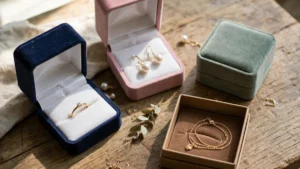
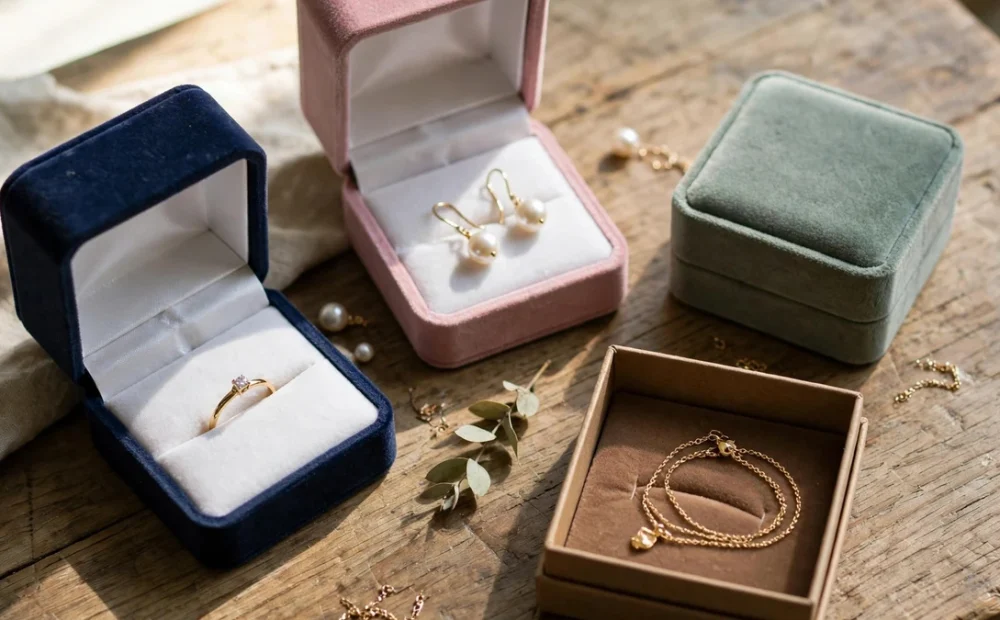
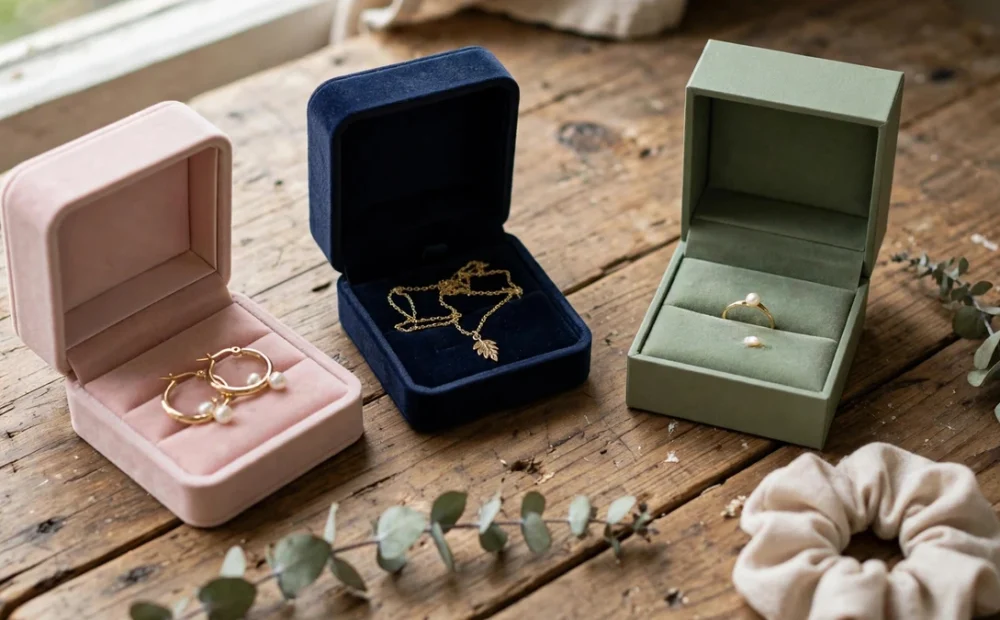
The right storage for pearls is soft, separate, and slightly open to the air. A lined jewellery box with individual slots works well, as does a set of soft fabric pouches kept in a drawer. The key is that each piece has its own space, the lining is soft, and the box is not sealed airtight. A wooden box with a velvet lining, kept in a bedroom drawer away from radiators and windows, is the classic answer, and it is classic because it works.

What does not work is a single compartment where everything is tossed together, a plastic zip bag, or a hook on the wall. A shared compartment guarantees scratches. A plastic bag traps dry air and can leave pearls dull and lifeless after a few months. A hook stretches the silk and lets the necklace swing against the wall. If your current storage is any of these three, changing it is the single most useful thing you can do for your pearls, and it costs nothing.
For a fuller picture of general jewellery storage, our guide to storing jewellery properly covers boxes, travel cases and humidity for every material, and it is a useful companion to this pearl-specific guide. The pearl rules below are stricter, because pearls are softer and more sensitive than metal or stone, but the general principles are the same: soft, separate, cool, and dry, but not too dry.
The 9 steps to store pearl jewellery
Clean pearls before you put them away
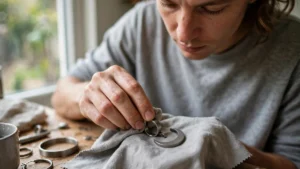
What to do: Wipe each pearl with a soft, slightly damp cloth after wearing, to remove skin oils, sweat and traces of perfume or hairspray. What to avoid: Never use ultrasonic cleaners, steam, jewellery dips, or harsh soaps on pearls, and never scrub. Best for: Every pearl piece, every time it is worn. Time needed: One minute. Standout tip: A clean pearl stored away stays bright; a dirty pearl stored away goes dull faster.
Let pearls dry completely
What to do: Lay the piece flat on a soft towel for a few minutes after wiping, and only put it away when it feels dry to the touch. What to avoid: Never store a damp pearl necklace in a closed pouch, because trapped moisture can weaken silk thread and encourage mildew. Best for: Necklaces and bracelets, which hold moisture between pearls and knots. Time needed: Five minutes. Standout tip: If you can feel dampness on the silk, it is not ready to store.
Give each piece its own pouch or slot
What to do: Keep each necklace, bracelet, and pair of earrings in its own soft pouch or its own lined slot in a jewellery box. What to avoid: Never put two pearl pieces in one pouch, and never mix pearls with metal chains or gemstone jewellery. Best for: Anyone with more than one pearl piece. Time needed: Two minutes to set up. Standout tip: A pouch costs very little and prevents the scratches that no cleaning can fix.
Lay necklaces flat, never hang them
What to do: Coil a pearl necklace in a loose circle, lay it flat in a pouch or a lined tray, and keep the clasp fastened so it cannot scratch the pearls. What to avoid: Never hang a pearl necklace on a hook or a stand, and never drape it over a jewellery box edge. Best for: Every pearl necklace and bracelet, especially knotted silk strands. Time needed: Thirty seconds. Standout tip: Flat storage can double the time between restrings.
Keep pearls away from other jewellery
What to do: Store pearls in their own section of the box, away from rings, chains, brooches and anything with a sharp edge or a hard stone. What to avoid: Never drop a pearl piece into a shared compartment, a travel pouch with metal jewellery, or a handbag pocket with keys. Best for: Travellers and anyone with a crowded jewellery box. Time needed: Two minutes to reorganise. Standout tip: If a piece can scratch glass, it can scratch a pearl.
Store pearls where the air can reach them
What to do: Keep pearls in a drawer or a box that is not airtight, in a room with normal indoor humidity, and wear them regularly, since skin contact and air keep nacre healthy. What to avoid: Never seal pearls in plastic bags, vacuum pouches, or a safe for months at a time. Best for: Pearls that are worn rarely, such as heirlooms and occasion pieces. Time needed: None, once the habit is set. Standout tip: Pearls that are worn often stay brighter than pearls that are stored for years.
Keep pearls cool, dark and away from heat
What to do: Store pearls in a cool drawer away from radiators, sunny windowsills, bathrooms, and the top of a hot car dashboard. What to avoid: Never leave pearls in direct sun, in a hot car, or in a steamy bathroom, and never store them near a heater. Best for: Anyone in a warm climate or with a sunny bedroom. Time needed: None, once the spot is chosen. Standout tip: If a drawer feels warm to your hand, it is too warm for pearls.
Check clasps, knots and settings every few months
What to do: Look at the knots between pearls, tug the strand gently to feel for stretch, and check that clasps close firmly and earring posts are straight. What to avoid: Never keep wearing a necklace whose knots have loosened or whose clasp slips, because a break means pearls on the floor. Best for: Necklaces and bracelets worn weekly or more. Time needed: Five minutes, every three months. Standout tip: A strand that has stretched by even a few millimetres is telling you it needs attention.
Restring and re-check once a year
What to do: Take a pearl necklace worn regularly to a jeweller once a year for restringing, knot checking, and a clean, and ask them to check the clasp at the same time. What to avoid: Never wait until the thread breaks, and never try to restring a knotted strand yourself unless you have been taught how. Best for: Necklaces and bracelets worn at least weekly. Time needed: One jeweller visit a year. Standout tip: Annual restringing is the cheapest insurance a pearl necklace has.
Which storage suits your collection
A small collection, one necklace and one pair of earrings, needs only two soft pouches in a drawer. That is enough, and it is better than an expensive box used badly. A medium collection, several necklaces, bracelets and earrings, suits a lined box with divided slots, where each piece has its own space and necklaces lie flat. A large collection, including heirlooms and occasion pieces, suits a dedicated drawer with a velvet tray, plus a yearly jeweller visit to check the pieces that are rarely worn.
For travel, the rules tighten. Use a flat travel case with separate soft pouches, lay necklaces flat, fasten clasps, and never put pearls in a shared pocket with metal jewellery or keys. A travel case with a velvet roll is ideal, because the pearls stay flat and separate even in a suitcase. If you are choosing new storage, our roundup of the best jewellery organisers covers boxes, rolls and travel cases, and the divided, lined options are the ones that suit pearls best.
Whatever the size of the collection, the principle is the same: soft, separate, flat, cool, and open to the air. Get those five right and most pearl damage simply does not happen. Get one wrong, usually the shared compartment or the sealed bag, and the damage accumulates quietly until the pearls look tired.
The caveats that matter
Pearls are more sensitive than any other jewellery material, and that sensitivity is the whole story of their storage. They are soft, porous, and organic, which means they react to their environment in ways that gold and diamonds do not. A storage habit that is merely careless with gold can be destructive with pearls, and the damage is usually permanent, because nacre cannot be polished back the way metal can. If a pearl has already gone dull, our guide to how to clean pearl jewellery explains how to bring back its shine safely.
| Detail | What is known |
|---|---|
| Best storage | Soft pouch or lined slot, each piece separate, in a cool drawer away from heat and sun |
| What pearls need | A little humidity in the air; never seal them in plastic bags or airtight boxes for months |
| Necklaces | Lay flat in a loose coil with the clasp fastened; never hang them, or the silk stretches |
| What scratches pearls | Metal clasps, harder gemstones, steel chains, keys and brooch pins in a shared compartment |
| Heat and sun | Heat dries out nacre and can cause fine cracks; strong sun fades colour and dulls lustre |
| Cleaning before storage | Wipe with a soft, damp cloth after wearing and let the piece dry fully before putting it away |
| How often to check | Check knots, clasps and settings every three months; restring a regularly worn necklace once a year |
| What storage cannot do | It cannot repair scratches, restore lost lustre, or replace silk thread that has already stretched |
If you have inherited pearls, the storage rules matter even more, because older pearls may already have thin nacre, tired silk, and a clasp that has not been checked in years. Before you store an inherited piece, take it to a jeweller for a check. They can tell you whether the strand is safe to wear, whether the nacre is sound, and whether the clasp needs replacing, and that one visit protects a piece that may be irreplaceable.
Checklist: storing pearl jewellery safely
Use these checks when you put pearls away, and again when you reorganise your jewellery box.
- Clean first: wipe each pearl with a soft, damp cloth and let it dry fully before storing.
- Separate everything: one pouch or slot per piece, never two pearl pieces together, never pearls with metal or gemstones.
- Lay necklaces flat: coil loosely, fasten the clasp, and never hang a pearl necklace.
- Keep them cool and dark: a bedroom drawer away from radiators, windows and bathrooms.
- Let them breathe: no plastic bags, no vacuum pouches, no airtight safe for months at a time.
- Check regularly: knots, clasps and settings every three months, and a jeweller visit once a year for pieces worn often.
Frequently asked questions
Can I store pearls in a jewellery box?
Yes, if the box is lined and each piece has its own slot or pouch. A shared compartment is the problem, not the box itself. Pearls stored loose with metal jewellery will scratch, so give them their own space.
Should I keep pearls in a plastic bag?
No. Pearls need a little humidity in the air, and a sealed plastic bag dries them out over months, which can dull the lustre and cause fine cracks. A soft fabric pouch in a drawer is a far better home.
Can I hang a pearl necklace?
No. Hanging lets gravity stretch the silk thread and loosen the knots, so the strand gradually lengthens and the pearls no longer sit snugly. Lay the necklace flat in a loose coil, with the clasp fastened.
How often should a pearl necklace be restrung?
About once a year for a necklace worn weekly or more, and every two to three years for one worn rarely. If the strand has stretched, the knots look loose, or the thread feels slack, take it to a jeweller sooner.
Can I store pearls in a safe?
Not for long periods. A safe is usually dry and airtight, which is the opposite of what pearls need. If you must use a safe, keep the pearls in a soft pouch and take them out to wear every few months, or store them in a drawer instead.
What is the best travel case for pearl jewellery?
A flat case with a velvet roll or divided soft pouches, where each piece lies flat and separate. Lay necklaces flat, fasten clasps, and never put pearls in a shared pocket with metal jewellery, keys, or anything hard.
The bottom line
Storing pearl jewellery well is not complicated, but it is specific. Pearls need air, a little humidity, soft separate storage, flat necklaces, and a cool dark drawer. They do not need a sealed bag, a hook, a shared compartment, or a sunny windowsill, and each of those common mistakes quietly damages them over time.
Clean each piece after wearing, let it dry, give it its own pouch or slot, lay necklaces flat, and check the knots and clasps every few months. Take a regularly worn necklace to a jeweller once a year. Those small habits are what keep a pearl necklace luminous for decades, and they cost nothing but a minute at the end of the day.