Packing a weekend bag is a small skill with an outsized effect on a trip. Done well, you arrive with everything you need, nothing you do not, and a bag you can lift into the overhead bin without help. Done badly, you spend the weekend wearing the same shirt, digging for your toothbrush, and wishing you had left half of it at home. The difference is rarely about the bag itself. It is about deciding what the weekend actually involves and packing for that, and nothing else.
Most people overpack for weekends because they pack for possibilities rather than plans. A spare outfit for a dinner that is not booked, three pairs of shoes for a two-day trip, a book, a tablet and a laptop for a weekend that is mostly outdoors. Each extra item adds weight and clutter, and it makes the things you actually need harder to find. A weekend away is short, so every item you carry should earn its place by being used at least once.
This guide walks through nine steps to pack a weekend bag properly, from choosing the bag to closing it and checking it before you leave. Follow them in order and you will pack faster, carry less and enjoy the trip more.
Key takeaways
- Pack for the plans you actually have, not for every possibility, and let the bag’s size enforce the choice.
- Lay everything out before it goes in the bag, so you can see what you are carrying and cut what you do not need.
- Roll soft clothes and fold structured ones, and use small pouches to keep categories separate.
- Keep documents, medication and valuables at the top, where you can reach them without unpacking.
- A weekend bag can still be gate-checked on a full flight, so never put anything irreplaceable in it alone.
What packing a weekend bag actually involves
Packing a weekend bag is about fitting two or three days of life into a single bag that you can carry yourself. That usually means two outfits, sleepwear, toiletries, a phone charger, a book or headphones, and whatever the weekend specifically needs, whether that is walking shoes, swimwear or a smarter outfit for dinner. Two nights away is the usual case, and the same method works whether you are driving, taking the train or flying.
The first thing to decide is what the weekend involves. A city break with dinners out needs different clothes from a countryside weekend with long walks, and a beach weekend needs different things again. Write down the plans, day by day, and pack one outfit per plan plus a spare top. Anything that does not match a plan on the list is a candidate for leaving behind.
Weather is the other deciding factor, and it is worth checking the forecast the night before you leave rather than a week ahead. A single versatile layer, such as a light jacket or a jumper that works with everything you packed, is usually more useful than two specialist items. If rain is likely, a compact waterproof layer earns its place; if it is not, leave it at home.
How this guide works and what to look for
These nine steps follow the order that works best in practice: choose the bag, empty it, lay out what you plan to carry, group small items, pack heavy things first, put essentials on top, secure documents and valuables, fill the gaps, then close and check. Each step includes what to do, what to avoid, who it suits best, how long it takes and a tip that makes it easier.

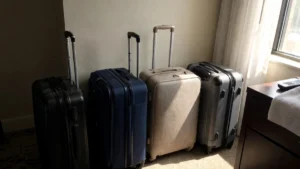
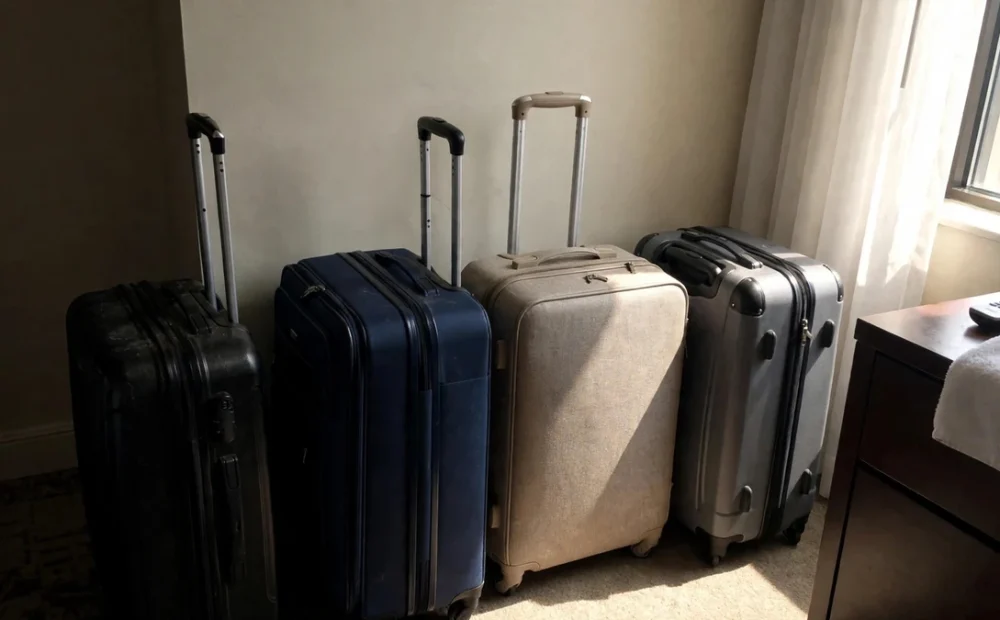
The method works for any bag, but the bag you choose matters. A structured weekender holds its shape and is easy to pack in layers, while a soft duffel can be squeezed into a tight space but needs pouches to stay organised. If you are still choosing, the best weekend bags for short trips cover the main options, from structured weekenders to soft duffels, and explain which suits which kind of trip.
Time is part of the method. Packing well takes about twenty to thirty minutes, and most of that is deciding what to take. Rushing the decision is what leads to overpacking, so give yourself that time the evening before you leave rather than the morning of the trip. The point is not to pack perfectly, but to pack deliberately, so nothing important is left behind and nothing useless comes along.
The 9 steps to pack a weekend bag
Choose the right bag for the weekend
What to Do: Pick a bag that fits the trip: a weekender or small duffel for two or three days, a carry-on if you are flying, and a bag with a shoulder strap if you will be walking far. Check it is clean, dry and empty before you start.
What to Avoid: Do not use a bag much bigger than you need, because the extra space invites extra items you will not use.
Best For: Every weekend trip. Time Needed: 5 minutes. Standout Tip: If the bag has a separate shoe compartment or a zipped pocket, use it for shoes and toiletries rather than clothes.
Empty the bag completely
What to Do: Turn the bag out, remove everything left from the last trip, and check every pocket. Wipe the inside if it needs it, and make sure zips and straps work before you pack.
What to Avoid: Do not pack on top of forgotten items from a previous trip, because they take up space and you will not remember they are there.
Best For: Anyone reusing a bag from a recent trip. Time Needed: 3 minutes. Standout Tip: Keep a small pouch of travel essentials ready to drop in, so you never have to hunt for a charger or adaptor.
Lay out everything you plan to carry
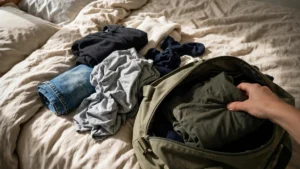
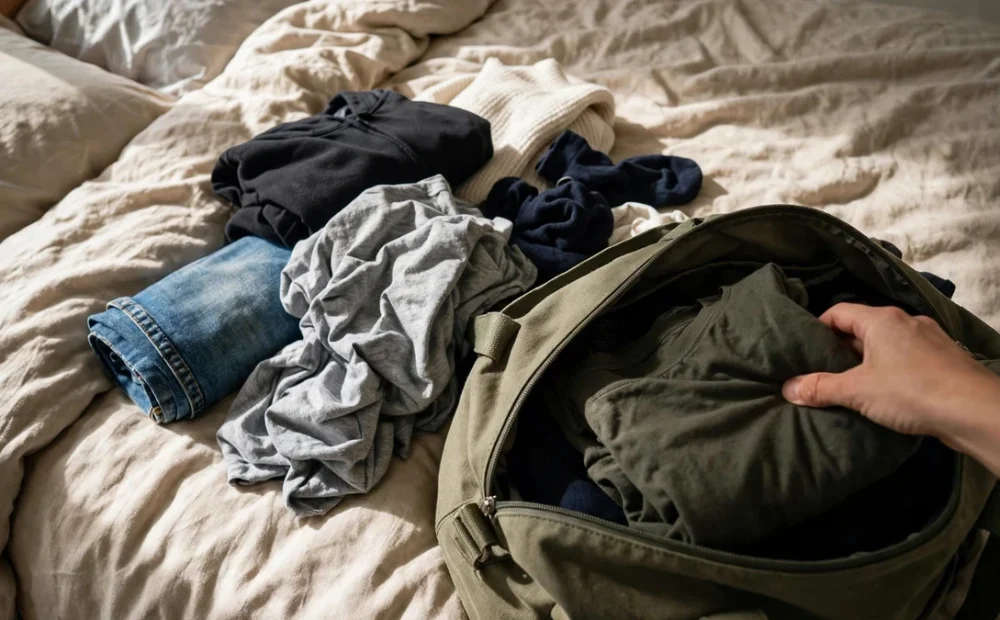
What to Do: Lay every item on the bed in groups: clothes, toiletries, electronics, documents and extras. Look at the pile as a whole and remove anything that does not match a plan on your weekend list.
What to Avoid: Do not skip this step and pack straight from the wardrobe, because you will pack more than you need and forget something you do need.
Best For: Overpackers and anyone packing for a trip with mixed plans. Time Needed: 5 minutes. Standout Tip: If an item does not have a clear use on this trip, leave it behind; you can usually buy it if you really need it.
Group small items into pouches
What to Do: Put toiletries in one pouch, cables and chargers in another, and small items such as medication, jewellery and spare buttons in a third. Use pouches in different colours or sizes so you can find the right one by touch.
What to Avoid: Do not let small items loose in the bag, because they sink to the bottom and you will unpack everything to find them.
Best For: Travellers carrying toiletries, electronics and medication. Time Needed: 5 minutes. Standout Tip: A clear toiletry pouch speeds up security checks and lets you see what is inside without opening it.
Pack the heavy items first, at the bottom
What to Do: Put shoes, toiletry pouches and anything heavy at the bottom of the bag, near the wheels or the base. Then add folded clothes in layers, with the heaviest garments at the bottom and lighter ones on top.
What to Avoid: Do not put heavy items on top of clothes, because they crush and crease everything underneath and make the bag top-heavy.
Best For: Wheeled bags and duffels that are carried by a handle. Time Needed: 5 minutes. Standout Tip: Stuff socks and underwear inside shoes to save space and help the shoes keep their shape.
Put the essentials at the top
What to Do: Place the things you will need first at the top: a phone charger, a book or headphones, a snack, a light layer and anything you want on the journey. Put sleepwear near the top too, so you can reach it without unpacking on arrival.
What to Avoid: Do not bury your charger or your book under three layers of clothes, because you will unpack the whole bag on the train or plane to reach them.
Best For: Anyone travelling by train, plane or car. Time Needed: 3 minutes. Standout Tip: Keep a small bag or pocket for the journey’s essentials, so you can take it out and leave the main bag shut.
Secure your passport, cards and cash
What to Do: Put your passport, cards, cash and tickets in a zipped inner pocket or a small pouch that stays close to your body, not loose in the main compartment. Check you have them before you close the bag.
What to Avoid: Do not put all your documents and money in one place with no backup, and do not leave them in an outer pocket that is easy to reach.
Best For: International trips and any journey involving tickets or reservations. Time Needed: 2 minutes. Standout Tip: Take a photo of your passport and tickets on your phone as a backup, and keep a second card in a different pocket.
Add comfort items last, in the gaps
What to Do: Fill the gaps with soft, flexible items: a scarf, a spare top, a small pillow or a book. These items use space that would otherwise be wasted and stop the contents shifting around.
What to Avoid: Do not force the bag shut once it is full, because strained zips fail at the worst moment and creased clothes stay creased.
Best For: Soft duffels and weekenders with flexible sides. Time Needed: 3 minutes. Standout Tip: A scarf does double duty as a blanket on the plane and a layer on arrival, so it earns its place twice.
Close the bag, check it and adjust
What to Do: Close the bag, lift it, carry it for a minute and check the weight and balance. Open it once more, remove anything you have not used on the last three weekends, and check you have your documents, charger and medication.
What to Avoid: Do not skip the final check, because the things people forget are almost always the small essentials, not the clothes.
Best For: Every trip, especially early departures. Time Needed: 3 minutes. Standout Tip: Weigh the bag if you are flying, because an overweight cabin bag can be checked at the gate and charged.
Packing for different kinds of weekends
A city weekend and a countryside weekend need different bags, even when they last the same number of days. For a city break, pack one smart outfit for the evening, comfortable shoes for walking, and a small bag for the day. For the countryside, prioritise practical shoes, layers for changing weather, and clothes you do not mind getting muddy. For a beach weekend, swimwear, a light cover-up and sun protection matter more than a second evening outfit. A spa weekend is simpler still: swimwear, comfortable clothes for the spa, and one outfit for dinner are usually all you need.
The season changes the packing list more than the destination does. In winter, one warm layer that works with everything is worth more than two thinner ones, and a hat and gloves take up little space. In summer, light fabrics that dry quickly are the priority, and a single smarter outfit is enough for the evening. If you are packing a handbag as well as the weekend bag, the guide to packing a handbag for travel uses the same principles on a smaller scale: group small items, keep essentials on top, and do not carry what you will not use.
For a weekend with a formal event, such as a wedding, pack the formal outfit in a garment bag or folded carefully at the top of the bag, and carry it separately if you can. Shoes for the event go in a shoe bag at the bottom, and everything else follows the usual method. Trying to squeeze a formal outfit into an already full bag is how it arrives creased.
The caveats that matter
| Detail | What is known |
|---|---|
| Bag size | Most weekend bags hold 30 to 45 litres, which is enough for two or three days if you pack in layers. |
| Cabin limits | Airlines typically allow a cabin bag around 55 x 40 x 20 cm, but budget carriers are stricter, so check before flying. |
| Weight limits | Cabin weight allowances are often 7 to 10 kg, and some airlines weigh bags at the gate. |
| Liquids | Liquids in hand luggage are usually limited to containers of 100 ml in a single clear bag, so decant toiletries. |
| Gate checking | On full flights a cabin bag may be gate-checked, so keep valuables, medication and documents in your personal item. |
| Shoes | Shoes are the heaviest and bulkiest items in a weekend bag, so wear your heaviest pair and pack only one spare. |
| Wrinkles | Rolling soft fabrics prevents creases, while structured items such as blazers should be folded, not rolled. |
| Forgetting things | The most commonly forgotten items are chargers, medication and adapters, so check those first in the final check. |
Checklist: packing a weekend bag honestly
- Write down the weekend’s plans and pack one outfit per plan, plus a spare top.
- Lay everything out before it goes in the bag, and remove anything without a clear use.
- Group small items into pouches, and keep toiletries, cables and medication separate.
- Pack heavy items at the bottom, essentials at the top, and fill gaps with soft items.
- Keep documents, cards, cash and medication where you can reach them without unpacking.
- Close the bag, lift it, weigh it if flying, and do a final check before you leave.
Frequently asked questions
How many outfits should I pack for a weekend?
One outfit per day plus a spare top is enough for most weekends. Add one smarter outfit if you have an evening plan, and wear your bulkiest items on the journey so they do not take up bag space.
Should I roll or fold my clothes?
Roll soft fabrics such as t-shirts, knitwear and underwear, because rolling saves space and prevents creases. Fold structured items such as shirts and blazers, because rolling them creates creases that are hard to remove.
How do I stop my bag smelling after a weekend away?
Pack a small laundry pouch for worn clothes, and air the bag out when you get home. A fabric freshener sachet in the bag helps, but separating dirty clothes from clean ones matters more.
What is the best bag for a weekend trip?
A weekender or small duffel suits most weekends, while a small carry-on is better if you are flying. The best luxury weekender bags are a good starting point if you want a bag that holds its shape and lasts.
Can I pack a weekend bag in a handbag?
For a very light weekend, a large tote can work, but most weekends need a proper bag. A handbag is better as a second bag for documents, a book and the things you want on the journey.
What should I do if my bag is overweight at the airport?
Move heavy items such as books, chargers and a jacket into your personal item or wear them, because airlines usually weigh the cabin bag, not what you are wearing. Repack before you reach the gate if you can.
The bottom line
Packing a weekend bag well is mostly about deciding what the weekend involves and then packing for that, in order, with heavy things at the bottom and essentials at the top. The nine steps here take about half an hour, and they work for any bag, from a soft duffel to a hard-shell carry-on.
Pack the evening before you leave, do the final check, and then stop packing. A bag that is a little light is always better than one that is a little too full, and the weekend will be better for it. If you travel with a partner, pack together and share the space, because two half-empty bags are worse than one well-packed one.