Best Luxury Bedding Brands in 2027: 8 Labels Worth the Splurge
The best luxury bedding brands do not compete on thread count alone. They compete on fibre, weave, finishing, and the way a sheet feels after fifty washes, not five. A truly good set of sheets is the most-used object in your home: you spend roughly a third of your life in contact with it, and the difference between a decent set and a great one shows up in sleep quality, skin comfort, and how often you need to replace it.
This guide looks at eight luxury bedding brands that have earned their reputations the slow way, through consistent materials and construction rather than marketing. Some are heritage European mills with centuries behind them. Others are direct-to-consumer labels that cut out the department-store markup and put the money into long-staple cotton, Belgian linen, and careful finishing.
What follows is not a ranking of the softest sheet in a showroom. It is a practical guide to choosing bedding that will still feel good in three years, what each brand does best, where each one falls short, and the mistakes that turn an expensive purchase into a drawer full of regret.
Key takeaways
- Fibre quality matters more than thread count: long-staple cotton, Belgian flax linen, and TENCEL lyocell are the materials that define luxury bedding.
- Percale suits hot sleepers who want crisp and cool; sateen suits those who want smooth, silky, and warm.
- Heritage mills like Sferra, Frette, and Matouk lead on finishing and longevity, while direct-to-consumer brands like Boll & Branch, Parachute, and Brooklinen lead on value.
- Always buy the full set in the same line: mixing brands across sheets, duvet, and pillowcases is the fastest way to a mismatched bed.
- Caveat: luxury bedding is an investment with real diminishing returns past a certain price, and no sheet can fix a bad mattress or a room that runs too hot.
What this guide covers
This guide covers eight luxury bedding brands selling in 2027, spanning heritage European mills, American direct-to-consumer labels, and organic specialists. For each brand you will find what it does best, what to watch out for, and who it suits. The focus is on sheets, duvet covers, and pillowcases — the pieces that touch your skin every night.
We also cover the buying fundamentals: how to read a fabric label, why weave matters as much as fibre, and what thread count actually tells you. A separate section on the caveats that matter walks through the traps, from misleading thread counts to dyes that fade and linen that never softens the way the photos promise.
How we chose
We started with a long list of more than twenty bedding brands marketed as luxury and narrowed it using four filters: material transparency, construction quality, owner feedback over time, and value relative to the price. A brand had to name its fibre, its country of origin, and its weave to make the shortlist.
We weighted durability heavily. Luxury bedding earns its price by lasting: a sheet set that costs three times a budget set should survive at least three times as long. We also looked at care requirements, because a sheet that needs dry cleaning or shrinks in the wash is not a luxury, whatever the price tag says.
What to look for
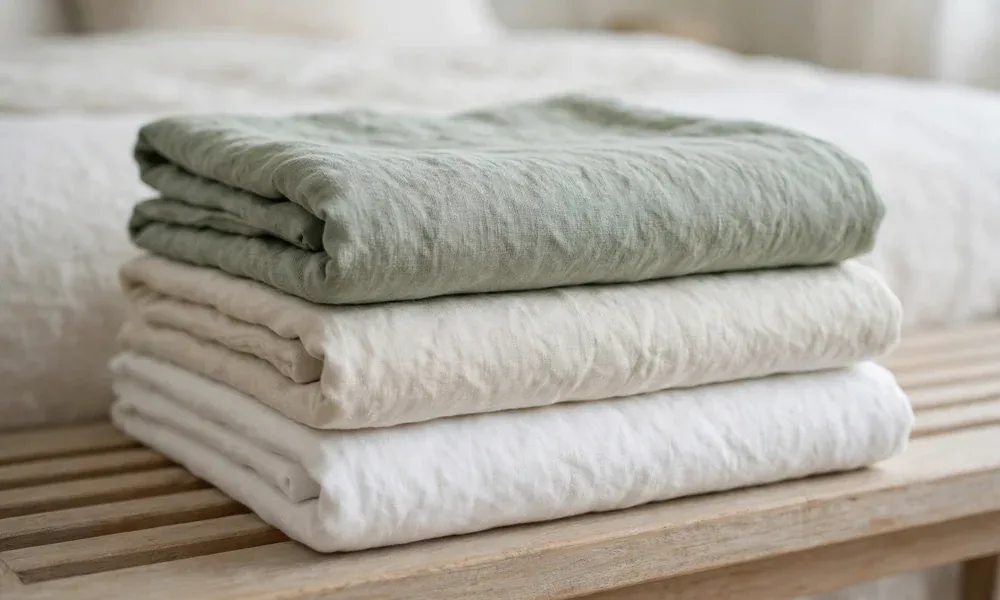
Before the brand profiles, it helps to know what separates a genuinely luxurious sheet from an expensive one. The fibre comes first. Long-staple cotton — Egyptian, Pima, or Supima — has longer fibres that spin into smoother, stronger yarn with less pilling. Belgian and French flax produce linen that breathes better than cotton in heat and softens with every wash. TENCEL lyocell, made from eucalyptus wood pulp, wicks moisture well and suits hot sleepers who find cotton too warm.
Weave comes second. Percale is a plain, one-over-one-under weave that feels crisp, matte, and cool, and it is the classic choice for hot sleepers. Sateen uses a satin-style weave that exposes more thread surface, giving a smooth, slightly lustrous hand and a warmer feel. None is objectively better; the right one depends on how you sleep.
Thread count is the most misunderstood number in bedding. Above roughly 400, higher counts usually mean thinner, multi-ply yarns twisted together to inflate the number, not better fabric. A well-made 300-thread-count percale in long-staple cotton will outperform a 1,000-thread-count sheet made from short-staple fibre every time.
Boll & Branch
Boll & Branch built its name on organic cotton and transparent sourcing. Its signature sheet is made from organic long-staple cotton grown in India, woven into a sateen or percale of your choice. The brand is Fair Trade Certified, and its traceability — you can follow a sheet back to the farm — is still unusual in bedding.
What we like: The organic cotton is genuinely high quality, with a smooth hand and strong resistance to pilling. The percale option is one of the crispest on the market, and returns and exchanges are straightforward, which matters when you are spending this much sight unseen.
What to consider: Prices sit at the top of the direct-to-consumer range, and the colour palette is deliberately restrained — mostly whites, neutrals, and soft pastels.
Parachute
Parachute is the brand that made linen bedding mainstream in the United States. Its washed linen sheets arrive pre-softened, so you skip the stiff break-in period that puts many people off linen, and the colour range is one of the widest in luxury bedding.
What we like: The linen is garment-washed for softness from day one, and the range covers percale, sateen, linen, and brushed cotton, so one brand can outfit every sleeper in a household.
What to consider: Linen wrinkles by nature, and Parachute’s does too — if you want a pressed, hotel-crisp look, the percale line is a better fit. Some owners report the linen thinning after several years of heavy use, so rotate sets if you can.
Brooklinen
Brooklinen started as a direct-to-consumer sheet company and has grown into a full home brand, but its core remains the same: well-made cotton sheets at prices well below heritage labels. Its Luxe sateen set is the best-known product, with a smooth, slightly heavy hand that feels more expensive than it is.
What we like: Value is the story here. The Luxe sateen and the Classic percale both punch above their price, and the brand runs frequent sales. The move-in bundle — sheets, duvet cover, and pillowcases together — is one of the simplest ways to dress a new bed.
What to consider: The sateen is warmer than percale and can feel heavy in summer. Brooklinen’s cotton is good but not the longest staple on this list, so expect a little more pilling over time than you would get from Sferra or Matouk.
Coyuchi
Coyuchi is the organic specialist of this list: GOTS-certified organic cotton and linen, processed without toxic dyes, with a take-back programme that recycles old sheets into new fibre. If sustainability is a deciding factor rather than a nice extra, Coyuchi is the benchmark.
What we like: The organic credentials are real and certified, not just claimed, and the relaxed, stonewashed linen and cotton are among the most comfortable on this list for warm sleepers.
What to consider: The relaxed aesthetic is not for everyone — these are soft, slightly rumpled sheets, not crisp hotel bedding. Prices are high for the direct-to-consumer category, and the range is smaller than Parachute’s or Brooklinen’s.
Sferra
Sferra is the heritage pick. Founded in Italy in 1891, the brand still makes its finest bedding in Italy from long-staple Egyptian cotton, with the kind of finishing — hand-rolled hems, careful embroidery, precise tailoring — that mass-market brands cannot replicate. Its Giza 45 sheet, made from a rare extra-long-staple Egyptian cotton, is one of the most celebrated sheets ever made.
What we like: The finishing is unmatched. Hems lie flat, embroidery is precise, and the fabric holds its colour and hand through years of washing. For a forever bed, Sferra is the standard other brands are measured against.
What to consider: This is the most expensive brand on the list, often two to three times the price of a direct-to-consumer set, and the best pieces are sold a la carte rather than as bundles. Wash gently and avoid high heat, or you will shorten the life of a very expensive sheet.
Frette
Frette has supplied bedding to grand hotels since 1860, and that heritage shows in its products: crisp, tailored, and built to survive commercial laundry. The brand’s hotel collection is the closest thing to sleeping in a five-star suite at home, and its sateen is famously smooth.
What we like: If you love the feeling of a luxury hotel bed, Frette is the most direct route to it. The sateen is dense and silky without feeling slippery, and the white-on-white tailoring is immaculate.
What to consider: Prices are firmly in heritage territory, and the aesthetic is classic — mostly white and ivory, with restrained borders. Bold colour and modern pattern are not Frette’s strengths. A night in a grand hotel can also be the best way to test the feel before buying, since Hotel Emma in San Antonio shows how a historic luxury hotel dresses its beds with the same crisp, tailored approach.
Matouk
Matouk is an American heritage brand, making luxury bedding in Massachusetts since 1929. It is known for fine percale and for its embroidery, and its sheets are a favourite of interior designers who want a tailored, classic look with modern colours.
What we like: The percale is among the finest available — crisp, cool, and long-lasting — and the colour range is unusually broad for a heritage brand, with dozens of solid colours and embroidery options.
What to consider: As with Sferra, you pay for the finishing, and prices reflect it. The brand’s aesthetic is traditional, so if your bedroom leans modern and minimal, Parachute or Coyuchi may fit better.
The White Company
The White Company, founded in London, built its reputation on exactly what the name promises: beautiful white bedding, made well, in a wide range of fabrics. Its white and neutral palette is a strength rather than a limitation, and its Egyptian cotton and linen collections are consistently strong.
What we like: The range is enormous, covering every fabric and weave in this guide, and the white-only focus means every piece coordinates. Quality is consistent across the range, and the brand’s bedding is easy to buy internationally.
What to consider: White bedding shows every mark and needs more careful washing than coloured sets. Prices vary widely across the range, so check the fibre and weave on each line rather than assuming the brand name guarantees the same quality throughout.
Background
Luxury bedding as a category is relatively recent. For most of history, fine sheets were made by hand for wealthy households and hotels, and the mass market made do with whatever cotton was cheapest. The change came in the late twentieth century, when Italian mills like Sferra and Frette began selling directly to consumers, and again in the 2010s, when direct-to-consumer brands removed the department-store markup.
The materials have changed less than the marketing. Egyptian cotton remains the benchmark for long-staple fibre, and Belgian flax still produces the world’s finest linen. What has changed is transparency: the best brands now name their fibre, their mill, and their certifications, and that information is the most useful tool a buyer has. Bedding is also now bought as part of a room, coordinated with furniture, lighting, and storage — including how to organize your closet so the linen cupboard and the wardrobe work together rather than competing for space.
The caveats that matter
| Caveat | What it means | How to avoid it |
|---|---|---|
| Inflated thread counts | Counts above 400 often use multi-ply yarns to inflate the number without improving the fabric. | Judge fibre and weave first; treat thread count as a footnote. |
| Short-staple cotton | Short fibres pill, thin, and feel rough after repeated washing. | Look for long-staple, Egyptian, Pima, or Supima cotton on the label. |
| Linen’s break-in period | Unwashed linen feels stiff and rough for the first few weeks. | Buy garment-washed linen or accept the first month as a break-in. |
| Sateen runs warm | The satin weave traps heat and suits cold sleepers more than hot ones. | Hot sleepers should choose percale or linen instead. |
| Colour fading | Dark and saturated dyes fade faster, especially in hot washes. | Wash in cool water and dry on low heat or on the line. |
| Mismatched sets | Sheets, duvet covers, and pillowcases from different brands rarely match in tone or weight. | Buy the full set in one line from one brand. |
| Overpaying for branding | Some labels charge heritage prices for ordinary cotton. | Check the fibre, origin, and certifications before paying the premium. |
| Care requirements | Harsh detergents and high heat shorten the life of fine fabric. | Use mild detergent, cool water, and low-heat drying. |
Checklist
- Decide your weave first: percale for crisp and cool, sateen for smooth and warm, linen for breathable and relaxed.
- Check the fibre on the label — long-staple cotton, Belgian flax, or TENCEL — before looking at the price.
- Buy the full set in one line: fitted sheet, flat sheet, duvet cover, and pillowcases from the same brand.
- Measure your mattress depth before ordering, especially if you use a topper, so the fitted sheet actually fits.
- Wash new sheets before the first use, in cool water with mild detergent, and skip fabric softener.
- Keep two sets in rotation so each one rests between washes and lasts longer overall.
FAQ
What is the best luxury bedding brand overall?
There is no single best brand, because the right choice depends on how you sleep. Sferra and Frette lead on finishing and heritage, Boll & Branch and Coyuchi lead on organic materials, Parachute leads on linen, and Brooklinen leads on value. Start with your weave preference, then choose the brand that does that weave best.
Is high thread count worth paying for?
Up to about 400, yes — a higher count in single-ply, long-staple cotton means a denser, smoother fabric. Above 400, the number is often inflated by multi-ply yarns, and a well-made 300-thread-count percale will feel better than a 1,000-thread-count sheet made from short-staple cotton.
Is linen bedding worth the price?
For hot sleepers, yes. Linen breathes better than cotton, wicks moisture, and softens with every wash, so a good linen set often lasts longer than a cotton one. The trade-off is texture: linen wrinkles and feels less smooth than sateen, so buy garment-washed linen if you want softness from day one.
How often should luxury sheets be washed?
Once a week is the standard recommendation, in cool or warm water with a mild detergent. Avoid hot water and high-heat drying, which break down fibres faster, and never use fabric softener on cotton or linen — it coats the fibres and reduces breathability.
Can luxury bedding be a good gift?
Yes, and it is one of the most appreciated luxury gifts, because people rarely buy premium sheets for themselves. A linen throw or a high-quality pillowcase set is a safer gift than a full sheet set, since sizes and weave preferences vary. For more ideas in the same price range, see our guide to the best luxury gifts under $1000 for 2027.
How long should luxury bedding last?
A well-made sheet set in long-staple cotton or linen should last five to seven years with weekly washing, and often longer with two sets in rotation. Replace sheets when the fabric thins in the centre, the elastic gives out, or pilling no longer responds to a fabric shaver — not on a fixed schedule.
The bottom line
The best luxury bedding brands earn their prices with better fibre, better weaving, and better finishing — not with bigger numbers on a label. Start with your weave: percale if you sleep hot, sateen if you sleep cold, linen if you want breathability and a relaxed look. Then choose the brand that does that weave best at a price you can justify: Brooklinen or Parachute for value, Boll & Branch or Coyuchi for organic materials, Sferra, Frette, or Matouk when you want the finest finishing available.
Buy the full set in one line, wash it gently, and rotate two sets. Do that, and a good luxury sheet set will repay its price many times over — in better sleep, in a bed that looks and feels considered, and in years before you need to think about buying sheets again.
Meet Our Experts
Our home and lifestyle editors research bedding materials, construction, and care, and review owner feedback and editorial coverage before recommending a brand. This guide reflects that research rather than any single test or trial.
Why Trust BrassSmile
BrassSmile covers beauty, lifestyle, fashion, and luxury living with a focus on practical, specific guidance. Our guides name materials, prices, and trade-offs, link only to our own published guides, and are updated as brands change their lines.
Sources
Brand material and care information from Boll & Branch, Parachute, Brooklinen, Coyuchi, Sferra, Frette, Matouk, and The White Company. Fibre and weave guidance from the Textile Exchange and the International Linen and Hemp Association. Editorial coverage from The Strategist, Wirecutter, and Good Housekeeping.