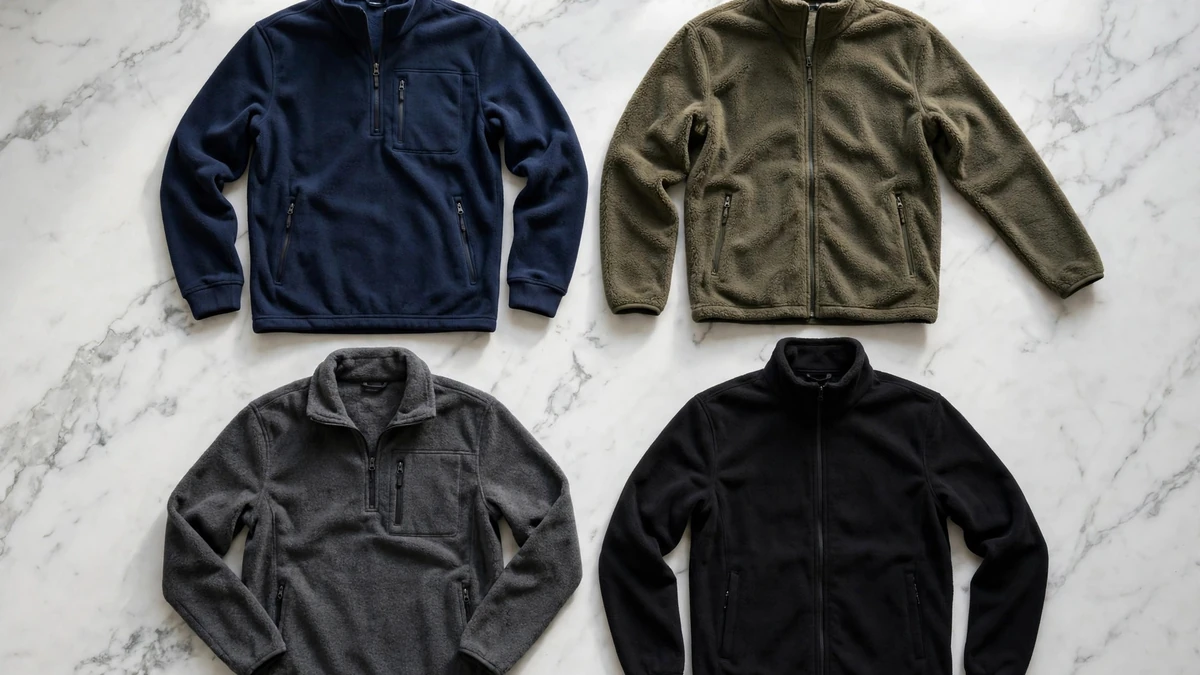

A good fleece jacket is the most quietly useful layer a man can own: warm without being heavy, quick to dry, and it works on its own in mild weather and under a shell when the temperature drops. The problem is that not all fleece is equal. Some jackets shed fibres everywhere, some pill into a bobbled mess within a month, and some are cut so generously that they look like a tent under a coat.
This guide is organised by how you will actually wear the jacket, not just by brand name. A heavyweight fleece is the right call for cold mornings and outdoor work, while a lightweight grid fleece is better as a mid-layer for walking and running. A full-zip is easier to ventilate than a quarter-zip, and a jacket with a chest pocket and hand pockets is far more useful day to day than one with a single pocket.
Below are nine men’s fleece jackets worth considering in 2027, from a classic heavyweight full-zip to a lightweight technical mid-layer. Each one is described by what it is good at, what to watch for, and who it suits best, so you can choose with your use in mind, not just a bestseller list.
Key takeaways
- Fleece keeps you warm by trapping air in its fibres, and a heavier, denser fleece is warmer but bulkier and slower to dry.
- Grid and waffle fleece breathe better than flat microfleece, which makes them better mid-layers for active use.
- A full-zip jacket is easier to ventilate and layer than a quarter-zip, and a high collar adds real warmth on cold mornings.
- Check the fit before you buy: a fleece should sit close enough to trap warmth without restricting your arms or shoulders.
- No fleece is fully windproof or waterproof on its own, and pilling, shedding and static are normal trade-offs to watch for.
What a men’s fleece jacket actually offers in 2027
Fleece is a knitted synthetic fabric, usually polyester, brushed to create a soft, air-trapping pile. That trapped air is what insulates you: the thicker and denser the pile, the warmer the jacket, but also the heavier and bulkier it is under a coat. A lightweight fleece of around 100 grams per square metre is a thin mid-layer, a midweight fleece of around 200 grams is a comfortable standalone jacket, and a heavyweight fleece of 300 grams or more is a serious cold-weather layer.
Modern fleece has moved well beyond the plain, boxy pullovers of twenty years ago. Grid fleece uses a raised grid pattern that traps air while leaving channels for moisture to escape, which is why it is the standard for walking, climbing and running. Stretch fleece adds elastane for a closer, more athletic fit, and recycled fleece now performs just as well as virgin polyester.
Fleece is a layer, not a shell. It is not windproof and it is not waterproof: a stiff breeze will cut through a light fleece, and rain will soak it quickly. That is why it works so well as a mid-layer under a waterproof jacket, and why it dries so fast. Judge a fleece as part of a system, not on its own in a storm.
How we chose these jackets and what to look for
Look first at the weight and the weave. For a standalone everyday jacket, a midweight fleece with a smooth face is the most versatile choice. For walking or running, grid or waffle fleece breathes better and packs smaller. For maximum warmth in cold, still weather, a heavyweight fleece with a dense pile is hard to beat.

Look next at the fit and the features. A fleece should be close enough to trap warmth without pulling across the chest or restricting your arms when you reach forward. A high collar that can be zipped to the chin adds real warmth. Hand pockets should be deep enough for cold hands, and a chest pocket is useful for a phone. Thumbholes, which some technical fleeces include, keep the sleeves in place under a shell. Our guide to the best luxury clothing brands for men is a useful companion here, because the brands that make the best fleece often make the best knitwear and outerwear too.
Finally, look at the fabric quality. A good fleece feels soft and even, with a pile that springs back when pressed. A cheap fleece feels thin and slippery, and pills fastest. Check that the zips run smoothly without catching the fabric, and that the hem and cuffs sit flat. A fleece that sheds fibres everywhere in its first week is made from low-quality yarn.
The 9 best men’s fleece jackets of 2027
Patagonia Better Sweater Full-Zip
What we like: A warm, midweight full-zip with a sweater-like knit face, a soft brushed interior, and a clean look that works as well in town as on a trail.
What to consider: It is warmer than it looks, so it can be too much indoors, and it is not the lightest option for packing. Best for: Everyday wear and cool-weather layering. Fabric: 100% recycled polyester knit fleece. Price range: Mid to premium. Standout feature: The sweater-knit face that looks like a jumper, not a technical jacket.
One jacket that does everything, and it outlasts cheaper fleeces by years.
Arc’teryx Covert Cardigan
What we like: A refined, slim-fitting fleece cardigan with a soft, low-bulk face, a high collar, and a cut that layers cleanly under a shell or a coat.
What to consider: Premium price, and the slim fit means you should size up if you want to layer it over a thick jumper. Best for: Smart-casual layering and travel. Fabric: Polyester fleece with a smooth face. Price range: Premium. Standout feature: The tailored, cardigan-style cut that works under a blazer.
The closest thing to a fleece that can pass for a smart knit.
The North Face Denali Jacket
What we like: A heavyweight classic with a dense, warm pile, reinforced shoulders, and a roomy fit that layers easily over a jumper.
What to consider: It is bulky and heavy, so it is not a packing-friendly choice, and the boxy fit will not suit everyone. Best for: Cold weather and outdoor work. Fabric: Heavyweight Polartec fleece. Price range: Mid-range. Standout feature: The dense, wind-resistant pile that handles cold, still days with ease.
A classic for a reason: warm, tough, and one of the best cold-weather fleeces you can buy.
Uniqlo Fleece Full-Zip Jacket
What we like: A light, soft, well-priced full-zip that is easy to throw on, easy to wash, and available in a wide range of colours.
What to consider: It is lighter and less warm than the premium options, and it will pill sooner with hard wear. Best for: Everyday layering on a budget. Fabric: Polyester microfleece. Price range: Budget. Standout feature: The price, which makes it the best value fleece in this guide.
Hard to beat for the price, and the right choice for a simple, comfortable layer.
Patagonia R1 Air Full-Zip Hoody
What we like: A lightweight grid fleece with a hollow-core yarn that traps air and breathes well, making it an excellent active mid-layer.
What to consider: It is not warm enough as a standalone jacket in cold weather, and the hoody adds bulk under a tight shell. Best for: Walking, running and climbing as a mid-layer. Fabric: Recycled polyester grid fleece. Price range: Mid to premium. Standout feature: The grid construction that balances warmth and breathability better than flat fleece.
The technical pick for moving fast in cold weather without overheating.
Columbia Steens Mountain Full-Zip
What we like: A comfortable, midweight full-zip with a soft hand feel, deep hand pockets, and a price that makes it easy to recommend.
What to consider: The fit is generous, so it can look shapeless on slimmer builds, and it is not as durable as the premium options. Best for: Casual wear and light outdoor use. Fabric: Polyester microfleece. Price range: Budget to mid-range. Standout feature: The soft, brushed interior that feels warm from the first wear.
A solid, honest fleece for everyday use: warm, comfortable, and fairly priced.
Arc’teryx Kyanite Jacket
What we like: A stretchy, midweight fleece with a smooth face, a close athletic fit, and excellent freedom of movement.
What to consider: Premium price, and the close fit means it is better as a mid-layer than a standalone jacket for most people. Best for: Active use and layering under a shell. Fabric: Polyester fleece with elastane. Price range: Premium. Standout feature: The four-way stretch that moves with you without bunching.
The best-fitting fleece in this guide, and it never gets in the way.
Helly Hansen Daybreaker Fleece Jacket
What we like: A lightweight, quick-drying full-zip that packs down small and works well as a travel layer or a mild-weather jacket.
What to consider: It is thin, so it is not warm enough for cold days on its own, and the fit is snug. Best for: Travel and mild-weather layering. Fabric: Lightweight polyester fleece. Price range: Mid-range. Standout feature: The packability, which makes it easy to carry in a bag.
The fleece to pack: light, fast-drying, and always useful in a bag.
Fjällräven Vardag Pile Fleece Jacket
What we like: A heavyweight pile fleece with a retro look, a warm, deep pile, and a durable, outdoorsy feel.
What to consider: It is heavy and bulky, and the pile sheds a little at first, so it needs a few washes to settle. Best for: Cold-weather walks and casual outdoor wear. Fabric: Recycled polyester pile fleece. Price range: Mid to premium. Standout feature: The deep, cosy pile that feels warmer than its weight suggests.
Not the most technical option, but one of the most satisfying to wear on a cold day.
Which fleece jacket is right for you
Start with how you will use it. For everyday wear, choose a midweight full-zip with a clean look, such as the Better Sweater or the Denali, and check the fit against the clothes you already own. For walking or running, choose a grid or stretch fleece such as the R1 Air or the Kyanite, and prioritise breathability and fit over warmth. For travel, a lightweight fleece such as the Daybreaker is the most practical choice, because it packs small and dries fast.
Think about the fit next. A fleece should be close enough to trap warmth but loose enough to layer over a T-shirt or a thin jumper. Try it on with those layers, and reach forward to check for pulling across the shoulders. Too tight feels restrictive all day; too loose lets cold air in at the waist and cuffs. A guide to the best cashmere sweaters is useful here too, because the same fit principles apply, and a good cashmere crewneck is often the layer that sits under a fleece on the coldest days.
Finally, think about the details. A chest pocket is worth having if you carry a phone. A smooth face slides more easily under a shell than a deep pile. If you hate pilling, choose a tight, dense weave rather than a loose, fluffy one. Small things, but they separate a fleece you reach for daily from one that sits in a drawer.
The caveats that matter
Fleece has real limitations. It is not windproof, so a cold wind cuts through it, and it is not waterproof, so it soaks through in rain. It sheds microfibres when washed, and it pills where straps and belts rub. None of this makes fleece a bad choice. It makes it a layer that works best as part of a system, with a shell on top when the weather turns.
| Detail | What is known |
|---|---|
| Best weight for everyday wear | Midweight, around 200 grams per square metre, is the most versatile |
| Best for active use | Grid or waffle fleece, which breathes better than flat microfleece |
| Wind and rain | Fleece is not windproof or waterproof; pair it with a shell in bad weather |
| Fit | Close enough to trap warmth, loose enough to layer over a T-shirt or thin jumper |
| Pilling | Common with friction; a dense weave pills less than a loose, fluffy pile |
| Washing | Machine wash cold, avoid fabric softener, and air-dry or tumble dry on low |
| Microfibres | Fleece sheds fibres in the wash; a wash bag reduces the amount released |
| What it does not do | It does not replace a waterproof shell, and it will not keep you warm in a strong wind on its own |
Washing matters more than most people think. Wash fleece cold, skip the fabric softener, which coats the fibres and reduces warmth, and avoid high heat in the dryer, which can flatten the pile. A gentle wash and a low tumble dry, or air drying, will keep a good fleece soft and warm for years, and a wash bag that catches microfibres is a sensible extra.
Checklist: choosing a men’s fleece jacket honestly
Use these checks before you buy, and again after a month of wear.
- Check the weight: midweight for everyday wear, lightweight grid for active use, heavyweight for cold, still weather.
- Check the fit: try it on with the layers you plan to wear underneath, and reach forward to test the shoulders.
- Check the zip: it should run smoothly to the chin without catching the fabric.
- Check the pockets: hand pockets should be deep enough for cold hands, and a chest pocket is useful for a phone.
- Check the pile: press it and see if it springs back; a flat, thin pile will pill and lose warmth sooner.
- Check the care label: machine wash cold, no fabric softener, and low heat or air-dry to protect the pile.
Frequently asked questions
What is the warmest type of fleece?
Heavyweight fleece with a dense pile traps the most air, so it is the warmest. A 300-gram fleece is noticeably warmer than a 100-gram one, but bulkier and heavier, so it suits cold, still weather rather than active use.
Is fleece better than wool for a mid-layer?
It depends. Fleece is lighter, dries faster, and is easier to wash, which makes it better for active use and travel. Wool insulates better when wet and resists odour, which makes it better for multi-day wear. Many people own both and choose by the day.
How do I stop my fleece from pilling?
You cannot stop it entirely, but you can slow it down. Choose a dense weave, avoid carrying a heavy bag on the same shoulder every day, wash it inside out on a gentle cycle, and use a fabric shaver to remove pills when they appear. A guide to natural fibres in clothing explains why some fabrics pill more than others, and what to look for when you want a fabric that ages well.
Can I wear a fleece jacket in the rain?
Briefly, yes, but fleece is not waterproof and will soak through in steady rain. It dries fast, which is a genuine advantage, but for wet weather wear a waterproof shell over it.
Should I size up in a fleece jacket?
Usually not. Most fleeces are cut to layer over a T-shirt or a thin jumper, so your normal size is the right starting point. Size up only if you plan to wear it over a thick jumper, or if the brand runs slim, and check the fit with your layers on before you decide.
How often should I wash a fleece jacket?
Only when it needs it. Fleece does not hold odour the way cotton does, so airing it out is often enough. When you do wash it, use a cold, gentle cycle, skip the fabric softener, and dry on low heat or hang it to air-dry.
The bottom line
The best men’s fleece jacket in 2027 is the one that matches how you will actually wear it. For everyday use, a midweight full-zip such as the Better Sweater is hard to beat. For active use, a grid or stretch fleece such as the R1 Air or the Kyanite is the smarter choice. For cold weather, a heavyweight fleece such as the Denali or the Vardag Pile will keep you warmer than anything lighter.
Choose the weight first, then the fit, then the features, and do not pay a premium for warmth you will never use. A fleece that fits well, that you reach for without thinking, and that you wash gently will serve you far better than a more expensive one that sits in a drawer.