Rhodonite is the pink stone winter jewellery needs. It is warm, soft-toned and quietly romantic, and it looks its best against the dark wool, cashmere and leather that fill a winter wardrobe. The problem is not finding rhodonite earrings. It is finding a pair that is genuinely well made, honestly described, and suited to cold weather, rather than a dyed imitation or a fragile stone set in a mounting that will not survive daily wear.
That is why this guide is organised by stone quality and setting, not just by price. Rhodonite is a relatively soft stone, so the cut, the setting and the care it needs matter more than the brand name on the box. A well-set cabochon in a protective bezel can be worn all winter. A large, exposed stone in a thin prong setting is a chip waiting to happen, however beautiful it looks in the photograph.
Below are nine rhodonite earrings worth considering in 2027, from classic studs to longer drops, each one described by what it is good at, what to watch for, and who it suits best, so you can choose with your winter wardrobe in mind, not just a bestseller list.
Key takeaways
- Rhodonite is a pink manganese silicate, usually opaque, most often cut as a cabochon and frequently marked with black manganese veining.
- At Mohs 5.5 to 6.5 it is softer than quartz or sapphire, so a protective bezel setting and gentle handling matter more than with harder stones.
- Look for natural colour with even pink tones, a secure setting, and a seller who discloses any dyeing or stabilising.
- Wear rhodonite earrings with dark winter fabrics, gold or rose gold, and simple necklines that let the pink stand out.
- Rhodonite has no proven healing properties and is not an investment stone, so buy it for how it looks, not for what it promises.
What rhodonite actually is and why it suits winter
Rhodonite is a manganese silicate mineral, named from the Greek word for rose. Its colour ranges from soft blush pink to a deeper rose, and many pieces carry black or dark brown veins of manganese oxide, which give the stone a distinctive marbled look. It is almost always opaque, so it is cut as a smooth cabochon rather than faceted, and that soft, polished surface is part of its appeal.
Winter suits it for a simple reason. Pink is a warm colour, and in the cold months it reads as a gentle contrast against charcoal, navy, black and deep green. A pair of rhodonite studs can lift a dark coat or a grey knit without shouting, and a longer drop works well with the higher necklines and heavier fabrics of the season. Gold and rose gold warm the pink further, while silver and white gold give it a cooler, more modern edge. It also pairs well with the soft blush tones that appear in winter makeup, so the earrings can tie a whole cold-weather look together.
The stone is not rare, and that is good news for buyers. Rhodonite is affordable compared with pink sapphire or pink tourmaline, and it is widely available in good quality. What varies is how honestly it is sold. Some rhodonite is dyed to even out pale patches, some is stabilised with resin to fill small cracks, and some pink stones sold as rhodonite are actually dyed agate, glass or resin. None of those treatments is a reason to refuse a pair outright, but each one should be disclosed, and the price should reflect it.
How we chose these earrings and what to look for
Look first at the colour and the cut. Good rhodonite has an even pink tone with a soft, waxy lustre, and the black veining, where present, should look natural rather than painted on. A cabochon should be smoothly domed with no flat spots or visible scratches, and the stone should sit evenly in its setting with no gaps at the edges.
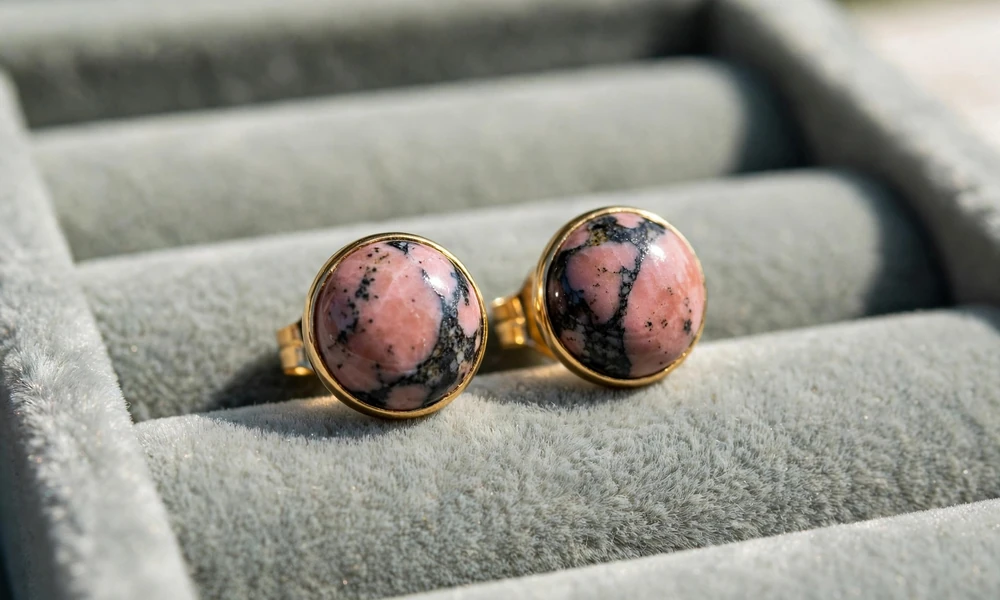
Look next at the setting. Because rhodonite is relatively soft, a bezel setting, where a rim of metal wraps around the stone, protects it far better than tall prongs. Prongs are fine for small studs that are worn occasionally, but for earrings you plan to wear every day, a bezel or a half-bezel is the safer choice. Check the backs too. A secure butterfly or screw back matters more in winter, when scarves, hats and high collars can catch an earring and pull it loose.
Finally, look at the metal and the price. Rhodonite pairs well with yellow gold, rose gold and sterling silver, and the metal should be hallmarked or clearly described. Our guide to the best diamond earrings of 2027 explains how to judge a setting and a metal in the same way, because the checks that matter for a diamond stud, secure claws, honest metal, a fair price, matter just as much for a softer coloured stone. If a pair of rhodonite earrings costs as much as a pink sapphire pair, ask why before you buy.
The 9 best rhodonite earrings for winter 2027
Tiffany & Co. Rhodonite Studs
What we like: Clean, classic studs in a polished setting, with evenly coloured stones and the careful finishing the house is known for. What to consider: Premium price for a modest stone, and the design is deliberately simple. Stone: Rhodonite cabochon. Setting: Yellow gold bezel. Best for: Everyday wear and gifting. Price range: Premium.
A safe, polished choice for anyone who wants rhodonite without fuss. The bezel setting suits the stone, and the small size makes these easy to wear with a scarf or a high collar. They are also a good gift, since the design is classic enough to suit most tastes and the size is easy to get right.
Cartier Rhodonite Studs
What we like: Elegant proportions, a smooth cabochon, and a secure screw-back fitting that holds well through the day. What to consider: A luxury price for a soft stone, so these are best as an occasional pair rather than a daily one. Stone: Rhodonite cabochon. Setting: Rose gold bezel. Best for: Evening and special occasions. Price range: Luxury.
The rose gold warms the pink beautifully, and the proportions are right for winter evening dressing. Handle them gently and they will last well.
David Yurman Rhodonite Studs
What we like: A distinctive cable-style setting, solid construction, and a stone with good, even colour. What to consider: The signature design is not for everyone, and the stones are on the smaller side. Stone: Rhodonite cabochon. Setting: Sterling silver cable bezel. Best for: Everyday wear with a signature look. Price range: Mid to premium.
These are a good middle ground between fine jewellery and fashion jewellery. The cable detail gives them character, and the bezel keeps the stone protected.
Mejuri Rhodonite Stud Earrings
What we like: Fair pricing, a simple modern design, and a stone with a soft, natural pink. What to consider: Small stones, so they read as subtle rather than statement, and the setting is minimal. Stone: Rhodonite cabochon. Setting: Gold vermeil bezel. Best for: Everyday wear and first rhodonite. Price range: Affordable.
A sensible first pair. The price is honest for the stone, the size is wearable every day, and the vermeil finish is easy to care for if you keep it dry.
Monica Vinader Rhodonite Studs
What we like: A neat, well-proportioned stud with a warm pink stone and a comfortable fit. What to consider: The vermeil finish needs gentle care, and the stone is small. Stone: Rhodonite cabochon. Setting: Gold vermeil bezel. Best for: Everyday wear and layering with other earrings. Price range: Affordable.
These work well as part of a small earring stack or on their own. The pink is soft rather than bright, which suits dark winter colours.
Missoma Rhodonite Stud Earrings
What we like: A modern, minimal design, good colour for the price, and a lightweight feel that suits all-day wear. What to consider: The setting is slim, so treat the stones gently, and the pink can vary slightly between pairs. Stone: Rhodonite cabochon. Setting: Gold vermeil prong. Best for: Everyday wear and gifting. Price range: Affordable.
A light, easy pair for daily wear. The prong setting shows more of the stone, so check the claws are even and the stone sits firmly before you buy.
Maria Black Rhodonite Studs
What we like: A contemporary, sculptural design with a good-sized stone and a distinctive look. What to consider: The design is bold, so it suits confident styling rather than quiet outfits. Stone: Rhodonite cabochon. Setting: Sterling silver bezel. Best for: Statement everyday wear. Price range: Mid-range.
These are for anyone who wants rhodonite with a modern edge. The silver keeps the pink cool and graphic, which works well with black and grey.
Astrid & Miyu Rhodonite Drops
What we like: A graceful drop length that moves well, with a warm pink stone that catches the light. What to consider: Drops are more exposed than studs, so they need more care around scarves and coats. Stone: Rhodonite cabochon. Setting: Gold-plated bezel. Best for: Evening and occasion wear. Price range: Affordable.
The drop length makes these feel special without being heavy. Wear them with hair up and a simple neckline so the stones can be seen. They are light enough for a long evening, and the movement of the drop shows off the pink far better than a stud can.
Thomas Sabo Rhodonite Drops
What we like: A longer, elegant drop with a rich pink stone and a secure hook fitting. What to consider: The length makes them more vulnerable to knocks, so they are best for evenings rather than all-day wear. Stone: Rhodonite cabochon. Setting: Sterling silver bezel. Best for: Evening and winter occasions. Price range: Mid-range.
A good choice for winter parties and dinners. The pink reads warmly in evening light, and the silver keeps the look fresh rather than heavy.
Which rhodonite earrings are right for you
Start with how often you will wear them. If the answer is every day, choose a small stud in a bezel setting, in gold or silver, with a secure back. Small studs survive scarves, hats and high collars, and a bezel protects the stone from the knocks that come with winter layers. A stud also sits close to the ear, so it will not catch on a coat collar or a chunky knit the way a longer earring can. If the answer is evenings and occasions, a drop is a better choice, and you can afford a larger stone and a more decorative setting.
Think next about your winter palette. Rhodonite suits dark, cool colours best, charcoal, navy, black and deep green, and it warms up grey and camel. Yellow gold and rose gold bring out the warmth in the pink, while silver and white gold give it a cleaner, cooler look. If you wear mostly black, either metal works, but rose gold is the most flattering with the pink.
Finally, match the stone to your skin tone. Rhodonite is a cool-to-neutral pink, so it suits most skin tones, but very pale pink stones can disappear on very fair skin, while deep rose stones can look strong on warm skin. If you can, try the earrings on in daylight before you buy, and look at them against your coat as well as your skin. A guide to gold jewellery for everyday wear is useful here, because the metal you choose changes how the pink reads almost as much as the stone itself.
The caveats that matter
Rhodonite is a lovely stone, but it is not a hard one, and that is the fact that matters most. At Mohs 5.5 to 6.5 it can be scratched by harder stones, chipped by a knock against a hard surface, and dulled by harsh cleaning. It should never go in an ultrasonic cleaner or a steam cleaner, and it should be cleaned only with lukewarm water, mild soap and a soft cloth. Store rhodonite earrings separately, in a soft pouch or a lined box, so they are not scratched by diamonds or other hard jewellery.
| Detail | What is known |
|---|---|
| What it is | A pink manganese silicate, usually opaque, often with black manganese veining |
| Hardness | Mohs 5.5 to 6.5, softer than quartz, sapphire or diamond, so it needs gentle handling |
| Usual cut | Smooth cabochon, rarely faceted, because the stone is opaque |
| Best setting | Bezel or half-bezel, which protects the edges better than tall prongs |
| Common treatments | Dyeing to even out colour and resin stabilising to fill small cracks, both should be disclosed |
| Common imitations | Dyed agate, glass and resin, which are lighter, glossier and often too evenly coloured |
| Cleaning | Lukewarm water, mild soap and a soft cloth only, never ultrasonic or steam cleaning |
| What it does not do | It has no proven healing properties and is not an investment stone |
Dyeing is the most common issue to watch for. Dyed rhodonite can look very even and very pink, which is attractive in a photograph but less natural in person. Ask the seller whether the stone has been dyed or stabilised, and be wary of a price that seems too low for the size and quality shown. A reputable seller will answer plainly.
Checklist: choosing rhodonite earrings honestly
Use these checks before you buy, and again when the earrings arrive.
- Check the colour: even pink tones, natural-looking veining, and a soft waxy lustre rather than a glassy shine.
- Check the setting: a bezel or half-bezel for everyday wear, with the stone sitting evenly and no gaps at the edges.
- Check the backs: secure butterfly or screw backs that hold firmly, especially if you wear scarves and high collars.
- Check the disclosure: ask whether the stone has been dyed or stabilised, and expect a straight answer.
- Check the metal: hallmarked or clearly described gold or silver, with a finish that suits how often you will wear them.
- Check the care: plan to clean with lukewarm water and mild soap only, and store the earrings separately in a soft pouch.
Frequently asked questions
Is rhodonite a good stone for everyday earrings?
Yes, in a small stud with a bezel setting and a secure back. It is softer than quartz or sapphire, so it needs gentle handling, but a well-set stud worn daily will last well if you avoid knocks and harsh cleaning.
Can rhodonite earrings be worn in winter?
Yes, winter is a good season for rhodonite. The pink looks warm against dark wool and cashmere, and the stone is not affected by cold. Take care with scarves and high collars, which can catch a drop earring and pull it loose.
How can I tell real rhodonite from an imitation?
Real rhodonite is usually opaque with a waxy lustre and often has natural black veining. Glass imitations are glossier, lighter, and often too evenly coloured, while dyed agate has banding that rhodonite does not. Buy from a seller who discloses treatments.
Is rhodonite dyed?
Sometimes. Dyeing is used to even out pale patches, and stabilising resin is used to fill small cracks. Both are common and acceptable if disclosed, but the price should reflect them, and a seller who will not answer the question is a warning sign.
How do I clean rhodonite earrings?
Use lukewarm water, mild soap and a soft cloth, then dry them gently. Never use an ultrasonic cleaner or a steam cleaner, and avoid harsh chemicals, perfumes and hairspray directly on the stones.
Is rhodonite an investment stone?
No. Rhodonite is affordable and widely available, and it does not hold value the way diamond, ruby or sapphire can. Buy it because you like how it looks, not because you expect it to appreciate. Our guide to diamond jewellery for winter is a better starting point if investment value matters to you.
The bottom line
The best rhodonite earrings for winter 2027 are not the biggest or the most expensive. They are the ones with an even pink colour, a protective setting, a secure back and an honest description. A small bezel-set stud is the most practical choice for everyday wear, while a drop is the better pick for evenings and occasions.
Choose one pair, wear it with the dark colours and heavy fabrics of the season, and look after it with gentle cleaning and separate storage. Rhodonite is a warm, affordable stone, and treated with a little care it will look good all winter.