Sapphires are the quiet luxury of the jewellery world. They are harder than almost any other gemstone used in earrings, they come in a deep, rich blue that suits winter colours perfectly, and they have a history that stretches from royal crowns to engagement rings. A pair of sapphire earrings is one of the few pieces of jewellery that feels both classic and personal at the same time.
The problem is that sapphires are not all the same. Some are a deep, velvety blue and some are pale and washed out. Some are natural and some are laboratory-grown, and the price difference between the two is enormous. Most blue sapphires are heat-treated, which is a standard, permanent practice, but it is worth knowing. And the setting matters as much as the stone: a sapphire in a flimsy setting will look cheap, while the same stone in a well-made setting will look like a piece you will keep for years.
Below are nine sapphire earrings worth considering for winter 2027, from classic studs to elegant drops. Each one is described by what it is good at, what to watch for, and who it suits best, so you can choose with your winter wardrobe in mind, not just a bestseller list.
Key takeaways
- Sapphire is one of the hardest gemstones used in jewellery, at 9 on the Mohs scale, which makes it durable enough for daily wear.
- Most blue sapphires are heat-treated to improve their colour, which is a standard and permanent practice, but the best stones are a deep, even blue without a grey or green cast.
- Studs are the most versatile choice for winter, while drops suit evenings and occasions that call for something more noticeable.
- Check the setting as carefully as the stone: a well-made setting protects the sapphire and makes it look its best.
- No sapphire earring is an investment in the financial sense, and a stone that is described as flawless at a low price is almost certainly synthetic or heavily treated.
What sapphires actually are and why they suit winter
Sapphire is a variety of corundum, the same mineral family as ruby. Its blue colour comes from traces of iron and titanium, and the best stones are a rich, saturated blue that looks deep rather than dark. Sapphires also come in pink, yellow, green and white, but blue is the colour most people mean when they say sapphire, and it is the colour that suits winter best. Blue sapphires pair naturally with the season’s palette: navy, charcoal, cream, burgundy and black all sit well beside a deep blue stone.
Durability is the practical reason sapphires make such good earrings. At 9 on the Mohs hardness scale, sapphire is second only to diamond, which means it resists scratches from everyday wear far better than softer stones such as opal, moonstone or emerald. That matters for earrings, which catch on scarves, collars and hair, especially in winter when you are layering. A sapphire stud can be worn every day for years without the stone losing its polish.
Winter is also a good season for sapphires because the light is softer. In bright summer sun, a pale sapphire can look washed out. In winter light, a deep blue sapphire holds its colour and looks richer against knitwear and wool. That is why sapphire earrings feel like a winter piece, even though they can be worn all year.
How we chose these earrings and what to look for
Look first at the colour. The best blue sapphires are a rich, even blue, without a grey, green or overly dark cast. A stone that is too dark looks black in low light, and a stone that is too pale looks washed out. Hold the earrings in different light if you can, because a sapphire that looks vivid in a shop can look flat in daylight, and the reverse is also true.
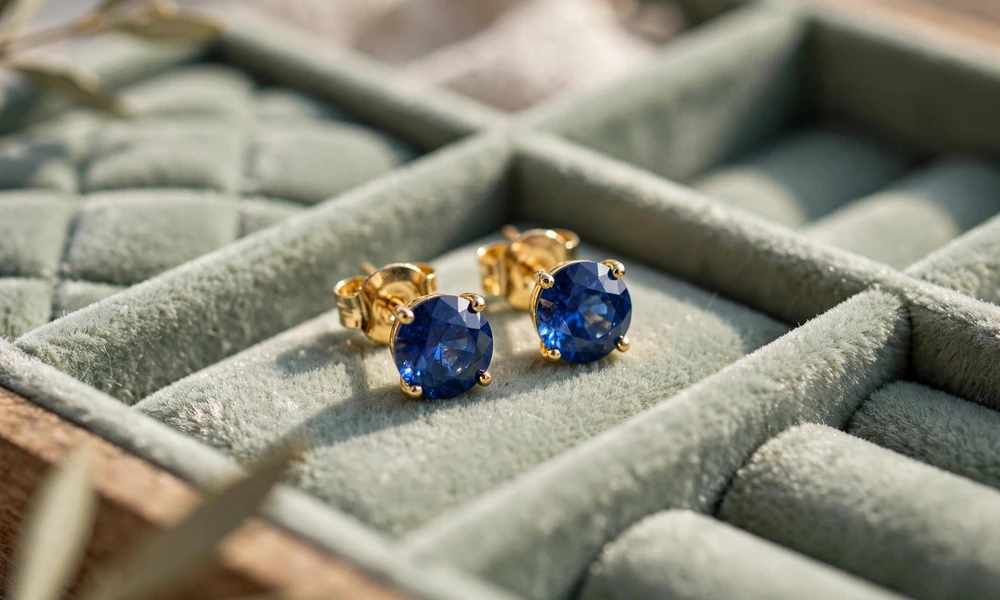
Look next at the setting and the metal. A four-prong setting shows the stone well and lets light through, while a bezel setting protects the edges and suits an active life. Gold, whether yellow, white or rose, suits sapphires well, and silver is a good, affordable alternative. Check that the posts and backs are secure, because losing an earring is the most common way a good pair is lost, and our guide to diamond earrings for 2027 covers the same setting checks in more detail, since the principles are the same for any gemstone stud.
Finally, ask about treatment and origin. Most blue sapphires are heat-treated, which is standard, permanent and widely accepted, and it should not put you off. What matters is that the seller tells you. A natural sapphire that has not been heat-treated is rare and very expensive. A laboratory-grown sapphire is chemically the same as a natural one, but it costs far less, and it should be sold as laboratory-grown, not as natural.
The 9 best sapphire earrings of winter 2027
Tiffany & Co. Sapphire Studs
What we like: Classic round sapphire studs in a clean four-prong setting, with a deep, even blue and a polished finish that suits everyday wear. What to consider: Luxury price, and the studs are modest in size, so they suit a classic rather than a statement look. Stone: Blue sapphire, heat-treated. Setting: Four-prong, 18k gold. Best for: Everyday elegance and a first pair of fine sapphire earrings. Price range: Luxury.
Cartier Sapphire Studs
What we like: Beautifully cut sapphire studs in a refined setting, with a rich blue and the kind of finishing that makes the stones look brighter than their size suggests. What to consider: Luxury price, and the design is deliberately understated. Stone: Blue sapphire, heat-treated. Setting: Four-prong, 18k gold. Best for: Formal occasions and a polished winter look. Price range: Luxury.
Cartier’s strength is in the cut and the finish. The stones are not large, but they are cut to catch the light, and the setting is slim and elegant rather than bulky.
David Yurman Sapphire Studs
What we like: Sapphire studs with a distinctive cable-detailed setting, in a deep blue that suits winter colours, with a secure and comfortable fit. What to consider: Premium price, and the cable detail makes the setting slightly heavier than a plain prong. Stone: Blue sapphire, heat-treated. Setting: Cable-detailed, sterling silver or gold. Best for: A signature look that is recognisable without being loud. Price range: Premium.
If you want sapphire studs with a bit more character, this is the pair. The cable detail is subtle, but it gives the earrings a distinctive look that a plain setting does not have.
Mejuri Sapphire Stud Earrings
What we like: Simple, well-made sapphire studs at a fair price, with a good blue colour and a comfortable, lightweight setting. What to consider: The stones are smaller than the luxury options, and the setting is plain rather than distinctive. Stone: Blue sapphire, heat-treated. Setting: Four-prong, 14k gold vermeil or solid gold. Best for: Everyday wear and a first pair of sapphire earrings. Price range: Mid-range.
Monica Vinader Sapphire Studs
What we like: Elegant sapphire studs in a clean setting, with a rich blue and a versatile size that works for both day and evening. What to consider: Mid-range price, and the gold vermeil needs gentle care to keep its finish. Stone: Blue sapphire, heat-treated. Setting: Four-prong, gold vermeil or solid gold. Best for: Everyday elegance and a versatile winter pair. Price range: Mid-range.
A reliable, well-designed pair that sits comfortably between the affordable and the luxury options. The size is versatile, which makes these easy to wear with almost anything in a winter wardrobe.
Missoma Sapphire Stud Earrings
What we like: Delicate sapphire studs with a fresh, modern feel, in a clear blue that looks bright against winter knitwear. What to consider: The stones are small, so they suit a subtle look rather than a statement, and the gold vermeil needs care. Stone: Blue sapphire, heat-treated. Setting: Four-prong, gold vermeil. Best for: Delicate, everyday jewellery and layering with other earrings. Price range: Affordable to mid-range.
These are the lightest and most delicate studs here. They are a good choice if you like small, subtle earrings, or if you wear more than one pair at a time.
Maria Black Sapphire Studs
What we like: Modern sapphire studs with a clean, architectural setting, in a deep blue that suits a contemporary winter look. What to consider: The design is modern rather than classic, so it suits a contemporary style more than a traditional one. Stone: Blue sapphire, heat-treated. Setting: Four-prong, sterling silver or gold. Best for: A modern, understated winter look. Price range: Mid-range.
Astrid & Miyu Sapphire Drops
What we like: Graceful sapphire drop earrings with a gentle swing, in a rich blue that catches the light as you move. What to consider: Drops are less practical than studs for everyday wear, and they need to be removed for scarves and high collars. Stone: Blue sapphire, heat-treated. Setting: Drop, gold vermeil. Best for: Evenings, occasions and days when you want something more noticeable. Price range: Affordable to mid-range.
Drops are the right choice when you want your earrings to be noticed. These move gently and catch the light, which makes them lovely for winter evenings, even if they are not the most practical everyday pair.
Thomas Sabo Sapphire Drops
What we like: Elegant sapphire drops with a polished finish, in a deep blue that suits winter colours, at a fair price for the size of the stones. What to consider: The drops are a little heavier than studs, so they are best for shorter wear rather than all day. Stone: Blue sapphire, heat-treated. Setting: Drop, sterling silver. Best for: Winter occasions and a more noticeable earring. Price range: Affordable to mid-range.
A good, affordable drop earring that gives you the drama of a sapphire without the luxury price. They are best saved for occasions, when you want your earrings to be part of the outfit rather than a quiet detail.
Which sapphire earrings are right for you
Start with the style. Studs are the most versatile choice. They suit everyday wear, they work with scarves and high collars, and they do not catch on knitwear. Drops are more noticeable and more elegant, but they are less practical for all-day wear in winter, when you are constantly putting on and taking off layers. If you can only buy one pair, buy studs.
Then think about the colour. A deep, even blue is the safest choice, because it suits the widest range of skin tones and winter colours. A very dark sapphire can look almost black in low light, while a very pale one can look washed out. The best test is to look at the earrings in daylight, not just under shop lights, because that is the light you will wear them in most often.
Metal matters too. Yellow gold warms a blue sapphire and suits warmer skin tones. White gold and platinum cool it and suit cooler skin tones. Rose gold softens it and gives a more modern look. Silver is a good, affordable alternative that suits blue sapphires well, and our guide to gold jewellery for everyday wear explains how to choose between gold tones, which helps when you are deciding on a setting.
The caveats that matter
Most blue sapphires are heat-treated, and that is normal. Heat treatment improves the colour and clarity of a sapphire, it is permanent, and it is standard practice across the industry. It should not put you off buying a sapphire, but the seller should tell you. A sapphire sold as untreated, or as natural, at a low price is a warning sign, because a genuinely untreated natural sapphire of good colour is rare and expensive.
| Detail | What is known |
|---|---|
| Hardness | 9 on the Mohs scale, second only to diamond, so sapphires resist scratches well |
| Best colour | A deep, even blue without a grey, green or overly dark cast |
| Most common treatment | Heat treatment, which is standard, permanent and widely accepted |
| Most versatile style | Studs, which suit everyday wear and do not catch on scarves or knitwear |
| Best setting for daily wear | A secure four-prong or bezel setting, with sturdy posts and backs |
| Cleaning | Warm water, mild soap and a soft brush; avoid harsh chemicals and ultrasonic cleaners for set stones |
| What to ask before buying | Whether the sapphire is natural or laboratory-grown, and whether it has been heat-treated |
| What sapphires do not do | They do not hold financial value like an investment, and a flawless stone at a low price is almost certainly synthetic |
Cleaning is simple. Warm water, mild soap and a soft brush will keep sapphires bright, and a soft cloth will polish the setting. Avoid harsh chemicals, and be careful with ultrasonic cleaners, which can loosen a stone in a prong setting. Check the prongs and the backs regularly, because a loose prong is how a stone is lost, and it is far cheaper to have a jeweller tighten a prong than to replace a stone.
Checklist: choosing sapphire earrings honestly
Use these checks before you buy, and again after the first few wears.
- Check the colour: look for a deep, even blue, and check the stones in daylight, not just under shop lights.
- Check the setting: make sure the prongs are even and secure, and that the posts and backs close firmly.
- Ask about treatment: most blue sapphires are heat-treated, which is normal, but the seller should tell you.
- Ask whether the sapphire is natural or laboratory-grown, because the price difference is large and it should be clear.
- Check the metal: choose a gold tone that suits your skin and your other jewellery, and check that the finish is even.
- Check the comfort: wear the earrings for an hour before deciding, because a heavy drop or a sharp post will not get more comfortable with time.
Frequently asked questions
Are sapphire earrings good for everyday wear?
Yes. Sapphire is one of the hardest gemstones used in jewellery, at 9 on the Mohs scale, so it resists scratches from everyday wear far better than softer stones. Studs are the best choice for daily wear, because they do not catch on scarves, collars or knitwear.
Are most sapphires heat-treated?
Yes, most blue sapphires are heat-treated to improve their colour and clarity. It is a standard, permanent practice and widely accepted in the trade. It should not put you off, but the seller should tell you, and an untreated natural sapphire of good colour is rare and expensive.
How can I tell a natural sapphire from a laboratory-grown one?
You usually cannot tell by looking. A laboratory-grown sapphire is chemically the same as a natural one, but it costs far less. The difference is in the price and the paperwork, so buy from a seller who states clearly whether the stone is natural or laboratory-grown.
How do I clean sapphire earrings?
Warm water, mild soap and a soft brush, then dry with a soft cloth. Avoid harsh chemicals, and be careful with ultrasonic cleaners, which can loosen a stone in a prong setting. Have a jeweller check the prongs once a year if you wear the earrings often.
Do sapphire earrings go with gold or silver?
Both. Yellow gold warms a blue sapphire and suits warmer skin tones. White gold and platinum cool it and suit cooler skin tones. Silver is a good, affordable alternative. Our guide to diamond jewellery for winter covers the same metal choices, because the principles for choosing a setting are the same for any gemstone.
Are sapphire earrings a good gift?
Yes, especially in winter. Sapphires are durable, they suit a wide range of styles, and a pair of studs is a safe choice if you do not know the recipient’s taste. September is the birthstone month for sapphire, which makes them a thoughtful gift for a September birthday, but they are worn all year.
The bottom line
The best sapphire earrings for winter 2027 are not the most expensive or the largest. They are the pair in a deep, even blue, in a secure, well-made setting, in a style you will actually wear. A pair of classic studs is the safest first choice, because it works every day, with every winter outfit, and it will still look good in ten years.
Check the colour in daylight, ask about heat treatment and whether the stone is natural or laboratory-grown, and check the setting as carefully as the stone. A sapphire that is well chosen and well set is a piece you will keep, and that is a better buy than a larger stone in a setting that was made to a price.