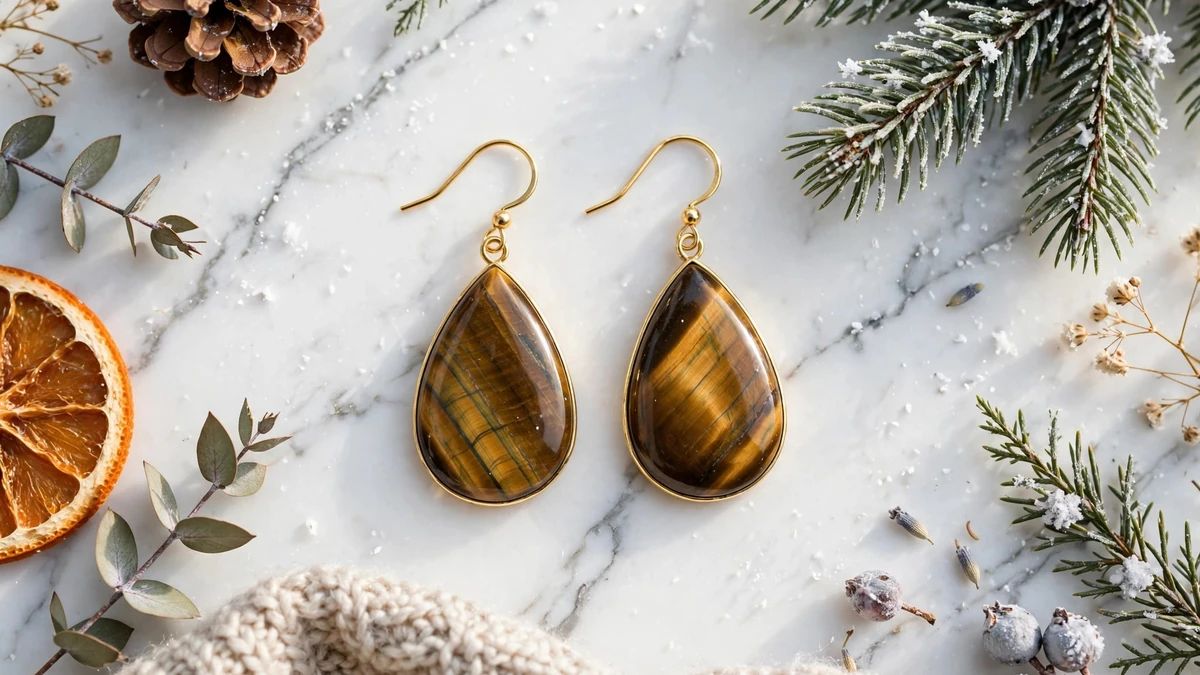

Tiger’s eye is the stone that winter dressing was made for. Its warm golds, deep browns and flashes of amber sit naturally against wool, cashmere, leather and the darker palette of the cold months, and it brings a soft glow to the face without the sparkle of a diamond or the formality of a pearl. It is also one of the most affordable genuine gemstones, which means a well-made pair of tiger’s eye earrings can look far more expensive than it is.
The problem is that tiger’s eye varies enormously in quality. A good stone has a silky, shifting band of light, known as chatoyancy, that moves as the earring catches the light. A poor one looks flat, muddy or dull, and cheap settings can make even a decent stone look like costume jewellery.
Below are nine tiger’s eye earrings worth considering for winter 2027, from classic gold studs to sculptural drops. Each one is described by what it does well, what to watch for, and who it suits best, so you can choose a pair that earns its place in your winter rotation.
Key takeaways
- Tiger’s eye is a quartz with a silky, shifting band of light; the best stones show clear golden-brown chatoyancy that moves as the light changes.
- Gold settings suit tiger’s eye best in winter, because warm metal echoes the stone’s golden tones, while silver gives a cooler, more modern look.
- Bezel and prong settings protect the stone best; tiger’s eye is hard enough for daily wear at Mohs 7, but it can still chip if dropped on a hard surface.
- Most commercial tiger’s eye is natural, but dyed imitations and glass copies exist, so buy from a jeweller who discloses treatments and offers a return policy.
- Tiger’s eye has no proven healing properties and is not an investment stone; buy it because you love how it looks, not because it will gain value.
What tiger’s eye actually is
Tiger’s eye is a variety of quartz. Its golden-brown colour and silky, shifting band of light come from fine fibres of crocidolite, an asbestos mineral, that were replaced by quartz over millions of years. The result is a stone that looks striped like a tiger’s coat and seems to move when you turn it. That effect, called chatoyancy, is what makes tiger’s eye recognisable, and it is also what separates a good stone from a dull one.
On the Mohs hardness scale, tiger’s eye scores 7, which is hard enough for earrings worn every day. It resists scratches from normal wear, it does not fade in sunlight, and it holds a polish well. That durability is one reason it has been used in jewellery for centuries, from ancient Roman carvings to modern fine jewellery. It is not, however, indestructible. A sharp knock against a hard surface can chip an edge, and a poorly set stone can loosen over time.
Most tiger’s eye on the market is natural and untreated, though some stones are dyed to deepen the colour or to imitate other stones, and glass imitations are common at the cheapest end. A reputable jeweller will tell you what you are buying.
How we chose these earrings and what to look for
Look first at the stone itself. Hold the earring up to the light and move it slowly. A good tiger’s eye shows a clear, silky band of golden light that shifts as you turn it. The colour should be warm and rich, gold and brown with depth, not flat, grey or muddy. Stones that are very dark can look dull in winter light, while very pale stones can look washed out. The sweet spot is a medium golden-brown with visible movement.
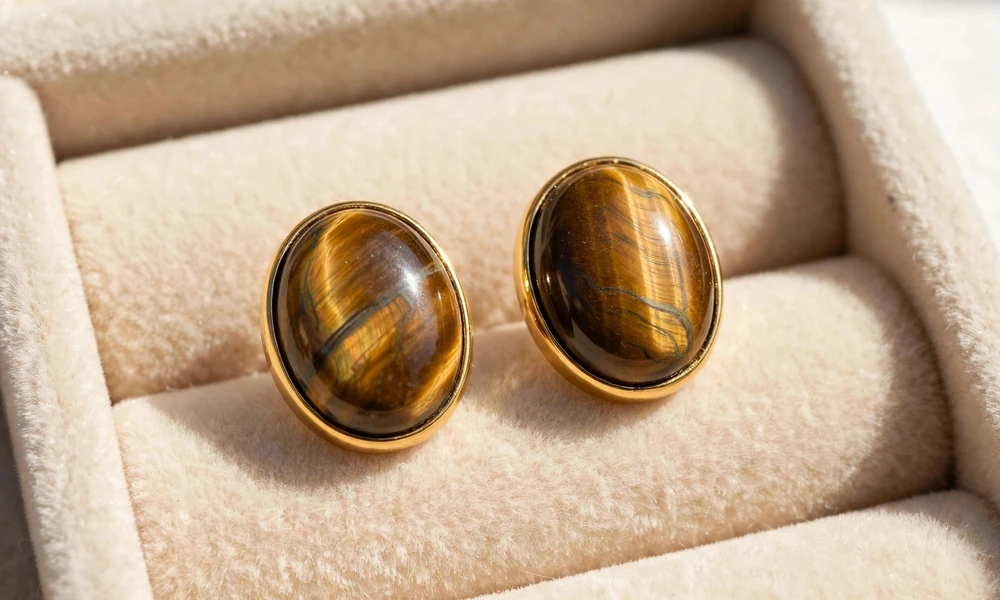
Look next at the setting and the metal. Gold, whether solid, vermeil or plated, is the natural partner for tiger’s eye in winter, because it picks up the stone’s golden tones. Silver and white gold give a cooler, more modern contrast. A bezel setting, where the metal wraps around the stone’s edge, protects it best and suits a polished, minimal look. Prong settings show more of the stone but leave the edges exposed. Check that the stone sits level, that the setting is smooth with no rough edges, and that the post or hook feels secure. Our guide to the best diamond earrings explains the same setting checks in more detail, and they apply to any stone, not just diamonds.
Finally, think about size and weight. Earrings sit close to the face, so a stone that is too large can overwhelm a small face, while a very small stud can disappear under a winter scarf or a high collar. Drops and dangles suit evenings and special occasions, while studs are the everyday choice.
The 9 best tiger’s eye earrings for winter 2027
Tiffany & Co. Studs
What we like: A classic, understated stud in a polished gold setting, with a well-cut tiger’s eye that shows clear golden chatoyancy. The craftsmanship is exact, the stone sits level, and the pair works with everything from a cashmere jumper to a tailored coat. What to consider: Premium price, and the design is simple, so it will not suit anyone looking for a statement piece. Stone: Tiger’s eye. Setting: Gold. Best for: Everyday winter wear. Price range: Premium.
This is the pair to buy if you want one set of tiger’s eye earrings that you never have to think about.
Cartier Studs
What we like: A refined stud with a beautifully polished tiger’s eye and a setting that feels substantial without being heavy. The proportions are careful, the gold has a warm tone that suits the stone, and the pair reads as quietly luxurious rather than showy. What to consider: Premium price, and the style is classic rather than fashion-forward. Stone: Tiger’s eye. Setting: Gold. Best for: Work and formal occasions. Price range: Premium.
A strong choice for anyone who wants tiger’s eye in a fine jewellery setting. It is the kind of pair that works as well at a winter wedding as it does at the office.
David Yurman Studs
What we like: A sculptural stud with David Yurman’s signature cable detail, giving the tiger’s eye a more distinctive frame than a plain bezel. The stone is well matched across the pair, and the design feels crafted rather than mass-produced. What to consider: Premium price, and the cable detail adds visual weight, so it suits medium and larger faces best. Stone: Tiger’s eye. Setting: Gold with cable detail. Best for: Statement everyday wear. Price range: Premium.
For anyone who finds plain studs too quiet, this pair adds character without losing elegance. The cable work is the point, and it is done well.
Mejuri Stud Earrings
What we like: A clean, modern stud in gold vermeil, with a well-polished tiger’s eye at a fair price. The design is minimal, the stone shows good chatoyancy, and the pair is light enough for all-day wear. What to consider: Vermeil is a thick gold plating over sterling silver, so it needs gentle care and will eventually show wear with heavy use. Stone: Tiger’s eye. Setting: Gold vermeil. Best for: Everyday wear on a budget. Price range: Mid-range.
A sensible, well-made option for a first pair of tiger’s eye earrings. The stone is the star, and the setting lets it be.
Monica Vinader Studs
What we like: A polished stud in 18-karat gold vermeil with a warm, richly coloured tiger’s eye. The brand’s quality control is reliable, the stones are well matched, and the pair has a soft, wearable glow. What to consider: Vermeil needs gentle handling, and the design is simple, so it will not stand out in a jewellery box full of statement pieces. Stone: Tiger’s eye. Setting: 18-karat gold vermeil. Best for: Daily wear and gifting. Price range: Mid-range.
A good gift choice and a reliable everyday pair. The colour of the stone is the strength here, warm and even, with a clear band of light.
Missoma Stud Earrings
What we like: A contemporary stud with a slightly larger tiger’s eye than most in this price range, set in gold vermeil. The stone is well polished, the setting is neat, and the pair has a confident, modern feel. What to consider: Vermeil wears over time, and the larger stone may feel heavy for very small ears. Stone: Tiger’s eye. Setting: Gold vermeil. Best for: Modern everyday styling. Price range: Mid-range.
If you want a tiger’s eye stud with a bit more presence than a classic small stud, this is a good middle ground. The stone is genuinely good for the price.
Maria Black Studs
What we like: A sculptural, slightly edgy stud that treats tiger’s eye as a design material rather than a traditional gem. The setting is interesting, the stone is well cut, and the pair suits anyone whose style leans modern or minimal with an edge. What to consider: The design is distinctive, so it will not suit a classic wardrobe, and the price sits above the mid-range. Stone: Tiger’s eye. Setting: Gold. Best for: Modern, sculptural styling. Price range: Mid-range to premium.
A pair for people who like their jewellery to have a point of view. The tiger’s eye is well chosen, and the design lets it look contemporary rather than traditional.
Astrid & Miyu Drops
What we like: A graceful drop earring with a polished tiger’s eye that catches the light as it moves, set in gold. The length is flattering without being dramatic, and the pair works well for evenings and winter occasions. What to consider: Drops are less practical than studs for everyday wear, and they can catch on scarves and high collars. Stone: Tiger’s eye. Setting: Gold. Best for: Evenings and special occasions. Price range: Mid-range.
For winter evenings, when a stud can disappear under a coat, a drop earring brings the stone into view. This pair does it with restraint.
Thomas Sabo Drops
What we like: A well-priced drop earring with a warm, clearly chatoyant tiger’s eye and a sturdy gold-toned setting. The design is versatile, the stones are well matched, and the pair is light enough to wear for hours. What to consider: Gold-toned plating needs gentle care, and the design is classic rather than distinctive. Stone: Tiger’s eye. Setting: Gold-toned. Best for: Affordable evening wear. Price range: Affordable.
A good entry point into tiger’s eye drops. The stone is the best thing about this pair, and it is attractive for the price.
Which tiger’s eye earrings are right for you
Start with your winter wardrobe. If you wear a lot of camel, chocolate, burgundy and cream, tiger’s eye will blend beautifully, and a gold setting will feel natural. If your winter palette is mostly black, grey and navy, a silver or white gold setting gives a sharper contrast and stops the stone looking too warm. Either way, the stone’s golden band should be visible, because that is what makes tiger’s eye interesting.
Think about your face shape and your hair. Studs suit everyone and work with hair worn up or down. Drops suit longer necks and hair worn up, and they add movement that a stud cannot. If you wear a lot of scarves, choose a stud or a short drop that will not snag on knitwear. Our guide to gold jewellery for everyday wear is useful here, because the same questions about metal, scale and comfort apply to any pair of earrings.
Finally, think about how often you will wear them. A solid gold stud is the best investment if you plan to wear the pair every day for years. A vermeil or gold-toned pair is a better choice if you want to try the stone, or if you like to rotate your jewellery with the seasons. Both are legitimate, as long as you know what you are buying.
The caveats that matter
Tiger’s eye is a durable, honest stone, but it is not magic and it is not an investment. It will not hold its value the way a diamond or a fine sapphire might, and claims about healing, protection or energy have no scientific basis. Buy it because you love the colour and the way it moves in the light. That is reason enough.
| Detail | What is known |
|---|---|
| What it is | A variety of quartz, coloured golden-brown by iron oxide, with a silky band of light called chatoyancy |
| Hardness | Mohs 7, hard enough for daily wear, but it can chip if dropped on a hard surface |
| Best setting | Gold, which echoes the stone’s warm tones; a bezel setting protects the edges best |
| What to check before buying | Clear, moving band of light; warm, even colour; stone level in its setting; no rough edges |
| Common imitations | Glass copies and dyed stones; buy from a jeweller who discloses treatments |
| Care | Clean with warm water, mild soap and a soft cloth; avoid ultrasonic cleaners and harsh chemicals |
| Who should avoid it | Anyone who wants a stone that holds investment value, or who dislikes warm, earthy tones |
| What it does not do | It has no proven healing properties and will not gain value over time |
If you have sensitive ears, choose a setting with hypoallergenic posts, such as solid gold or surgical steel, and avoid cheap plated posts that can irritate the skin.
Checklist: buying tiger’s eye earrings honestly
Use these checks before you buy, and again when the earrings arrive.
- Check the chatoyancy: hold the stone to the light and move it slowly; the golden band should shift clearly.
- Check the colour: warm, even golden-brown with depth, not flat, grey or unnaturally uniform.
- Check the setting: the stone should sit level, the metal should be smooth, and the post or hook should feel secure.
- Check the metal: know whether you are buying solid gold, vermeil or plated, and what care each one needs.
- Check the disclosure: ask whether the stone is natural or dyed, and buy from a jeweller with a clear return policy.
- Check the fit: try the pair with your winter coat and scarf, and make sure it does not catch on knitwear.
Frequently asked questions
Is tiger’s eye a real gemstone?
Yes. Tiger’s eye is a genuine variety of quartz, with a hardness of 7 on the Mohs scale. It is not a synthetic stone, though glass imitations and dyed stones exist, so buy from a jeweller who discloses what you are getting.
Can I wear tiger’s eye earrings every day?
Yes, in most cases. Tiger’s eye is hard enough for daily wear, and earrings are less exposed to knocks than rings. Choose a bezel setting for the best protection, and take the earrings off before swimming, showering or applying hairspray.
Does tiger’s eye go with gold or silver?
Both, but gold is the natural partner in winter, because it echoes the stone’s warm golden tones. Silver and white gold give a cooler, more modern contrast. The choice is a matter of taste and of what else you wear.
How do I clean tiger’s eye earrings?
Warm water, a drop of mild soap and a soft cloth are enough. Rinse, dry gently, and store the pair in a soft pouch away from harder jewellery. Avoid ultrasonic cleaners and harsh chemicals, which can damage the setting.
Is tiger’s eye expensive?
No, relative to most gemstones. Tiger’s eye is abundant, which keeps the stone itself affordable. What you pay for is the setting, the craftsmanship and the brand. A well-made pair in solid gold will cost far more than the stone alone would suggest. Our guide to diamond jewellery for winter gives a useful sense of how much of a jewellery price is the stone and how much is the setting.
Does tiger’s eye have healing properties?
There is no scientific evidence that tiger’s eye has healing properties, and it should not be bought for that reason. It is a beautiful, durable stone, and that is enough. If you love how it looks, it is a good buy.
The bottom line
The best tiger’s eye earrings for winter 2027 are the ones with a clear, moving band of golden light, a setting that protects the stone, and a metal that suits your wardrobe. A classic gold stud is the safest choice and the most versatile, while a well-chosen drop adds movement for evenings.
Choose one pair, wear it through the winter, and judge it on how often you reach for it. If it becomes the pair you put on without thinking, you chose well. Tiger’s eye does not need to be expensive to be good, but it does need to be well cut, well set, and honestly sold.