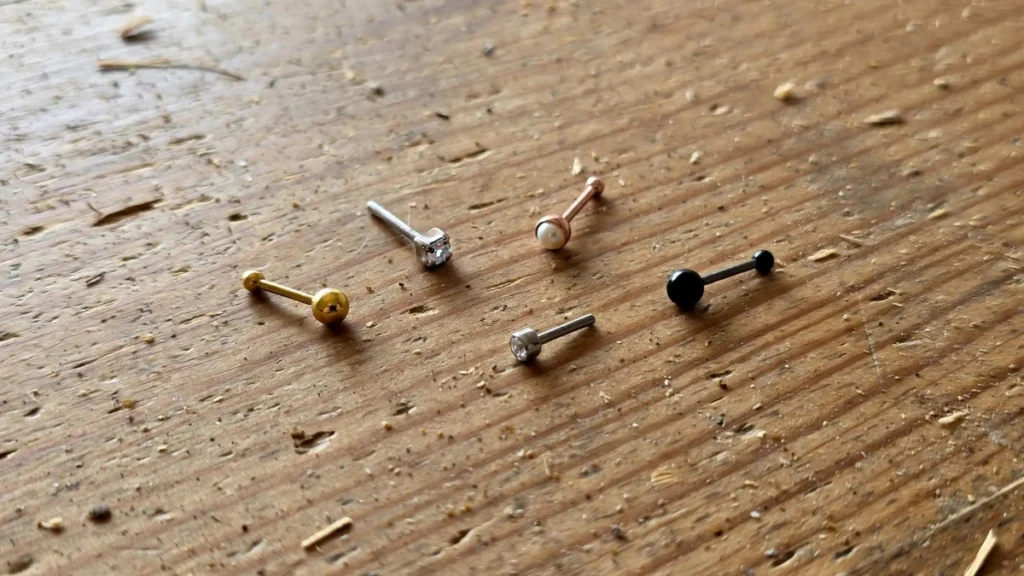
A nose stud looks like the smallest decision in a jewellery box, but the back of it decides how it feels all day. A flat-back stud sits against the inside of the nostril on a small disc, while a screw stud holds itself in place with a curved tail that tucks inside the nose. Both sit on the outside of the nose in much the same way, and from a normal distance most people would never know which one you are wearing. Up close, though, the difference shows in comfort, security, and how often you have to think about it.
The confusion usually starts at the shop counter. Flat-back studs are often sold as the modern, comfortable choice, and screw studs are often sold as the classic, secure choice, and both claims are partly true. A flat back is kinder to the inside of the nose and easier to clean around, but it needs the right post length to sit well. A screw stud stays put without a separate backing, but its curved tail can catch when you change it, and it takes a little practice to put in and take out smoothly.
Below are nine comparisons that matter in 2027, from comfort and security to cost, care, and how each style fits into an everyday routine. Each comparison looks at what flat-back and screw studs do well, what to watch for, and who each one suits best, so you can choose by how you actually wear jewellery, not by what the shop display suggests.
Key takeaways
- Flat-back studs sit on a small disc inside the nose and feel smoother against the skin, while screw studs use a curved tail and need no separate backing.
- Flat-back studs are usually easier to clean and change, but they need the correct post length or they will sit too loose or press too tight.
- Screw studs tend to stay put well once they are in, but they take more practice to insert and remove without catching.
- Both styles work in gold, silver, and titanium, and the metal matters more for sensitive skin than the shape of the back.
- Neither style heals a fresh piercing faster, and a new piercing should only be changed once it is fully healed and comfortable.
What flat-back and screw nose studs actually are
A flat-back nose stud, often called a labret-style stud, has a straight post with a small flat disc at one end and a decorative top at the other. The disc rests against the inside wall of the nostril, and the decorative top sits on the outside. The disc spreads the pressure over a wider area than a ball or a screw tail, which is why many people find it comfortable for all-day wear and for sleeping. The top usually screws on or pushes in, so changing the look means changing the top, not the whole post.
A screw nose stud has a post that bends into a gentle curve or a small hook at the end. There is no separate backing to lose. You insert the curved tail through the piercing and twist it gently until the decorative top sits flat against the outside of the nose. The curve is what keeps it in place. It is a design that has been used for decades, and it works well once you know the motion, which is a small twist rather than a straight push.
The visible part of both styles can look identical. The same small diamond, pearl, or plain gold ball can sit on either type of post. That is why the choice is really about the part you cannot see: how the stud behaves inside the nose, how it feels when you blow your nose or wash your face, and how easy it is to live with between changes. The metal, the size of the top, and the gauge of the post all matter too, but the back is where the daily difference lives.
How we chose these comparisons and what to look for
We looked at how each style behaves in ordinary use, not in a display case. That means comfort over a full day, how secure it feels during sleep and exercise, how easy it is to clean, and how much practice it takes to change. We also looked at cost, because a stud you replace often should not cost the same as one you keep for years, and at how each style suits different noses, skin types, and routines.

Look first at post length. A flat-back stud needs a post that matches the thickness of your nostril. Too short, and the disc presses into the skin. Too long, and the top wobbles and catches on clothing. A screw stud is more forgiving on length because the curve does the holding, but a curve that is too tight can pinch, and one that is too loose can slide. If you are unsure, ask the seller for the post length and gauge in millimetres, and compare it with a stud you already wear comfortably.
Look next at the metal. Implant-grade titanium, solid gold, and sterling silver are the common choices, and the metal matters more than the back style for sensitive skin. A well-made stud in a metal your skin tolerates will feel better than a cheap stud in the “right” shape. Our guide to gold jewellery for everyday wear explains why solid gold holds up well for daily pieces, and the same logic applies here: a stud you wear every day should be made of a metal that does not tarnish, flake, or irritate.
The 9 comparisons that matter in 2027
First impressions and how they look on the nose
What we like: Both styles look the same from the front, so the choice never shows. A small diamond or gold ball sits neatly on either post, and neither style draws attention to the back. What to consider: A flat-back stud can sit slightly flatter against the nose if the post length is right, while a screw stud can sit a touch proud if the curve is long. Best For: Anyone who wants a clean, minimal look. Material: Gold, silver, or titanium. Price Range: Around £8 to £60 for a single stud. Standout Feature: The visible top is identical on both, so the look is yours to choose freely.
Comfort and how it feels all day
What we like: Flat-back studs feel smooth inside the nose, with no curve pressing against the nostril wall. What to consider: A screw stud’s tail can press or tickle until you get used to it, especially in the first week. Best For: People who wear a stud every day and want to forget it is there. Material: Titanium or gold. Price Range: Around £10 to £70 for a single stud. Standout Feature: The flat disc spreads pressure, so it rarely digs in.
Security and what stays put
What we like: Screw studs hold themselves in place with the curve, and there is no backing to come loose. What to consider: A flat-back top can unscrew if it is not tightened properly, so check it now and then. Best For: Active days, travel, and anyone who has lost a backing before. Material: Gold or titanium. Price Range: Around £10 to £80 for a single stud. Standout Feature: The screw curve is its own security, with nothing to lose.
Ease of putting it in and taking it out
What we like: Flat-back studs go in straight, which most people find intuitive on the first try. What to consider: Screw studs need a gentle twist, and the first few changes can feel fiddly. Best For: Anyone who changes studs often. Material: Any. Price Range: Around £8 to £60 for a single stud. Standout Feature: A straight post is the easiest to insert and remove.
Cleaning and everyday care
What we like: Flat-back studs are easy to clean around, because the disc is smooth and the post is straight. What to consider: The curve of a screw stud can trap a little dried skin or product, so it needs a careful wipe. Best For: Busy routines and anyone who wants the simplest care. Material: Titanium or gold. Price Range: Around £8 to £60 for a single stud. Standout Feature: A straight post dries quickly and cleans easily.
Cost for one stud and for a small set
What we like: Both styles cost about the same at the same quality, so price rarely decides it. What to consider: Flat-back studs with interchangeable tops can cost more up front but less over time, because you buy tops, not whole studs. Best For: Building a small collection over time. Material: Gold, silver, or titanium. Price Range: Around £8 to £60 per stud, or £25 to £120 for a set of three. Standout Feature: Interchangeable flat-back tops make a set cheaper to grow.
Skin sensitivity and allergies
What we like: Both styles are available in implant-grade titanium, which is the kindest metal for sensitive skin. What to consider: Cheap plated studs can irritate the skin whatever the back shape, so the metal matters more than the style. Best For: Sensitive skin and new piercings. Material: Implant-grade titanium or solid gold. Price Range: Around £12 to £80 for a single stud. Standout Feature: Titanium flat-backs are the gentlest widely available option.
Matching outfits and other jewellery
What we like: Both styles take the same tops, so they match any outfit and any other jewellery you wear. What to consider: A larger decorative top can catch on scarves and high collars, whichever back it sits on. Best For: Everyday outfits and formal occasions alike. Material: Gold or silver to match other pieces. Price Range: Around £10 to £70 for a single stud. Standout Feature: The top, not the back, sets the style.
Keeping it afterwards as a keepsake
What we like: Solid gold studs in either style hold their value well and last for years. What to consider: Plated studs wear through eventually, and a screw stud’s curve can bend if it is forced. Best For: A stud you plan to keep for years. Material: Solid gold or titanium. Price Range: Around £40 to £200 for a solid gold stud. Standout Feature: A solid gold flat-back with a screw-on top is easy to keep and easy to pass on.
Which nose stud is right for you
If you want the easiest daily wear, choose a flat-back stud in the right post length. It is comfortable, easy to clean, and easy to change, and it suits most noses and most routines. It is the better choice if you sleep on your side, change studs often, or simply want to forget the stud is there.
If you have worn screw studs for years and like them, there is no reason to change. They are secure, they need no backing, and once you know the twist, changing them is quick. They suit people who keep one stud in for weeks at a time and rarely swap it. A well-chosen everyday piece works the same way in any part of a jewellery box: the best choice is the one that fits your routine, not the one the shop recommends most loudly.
If your skin is sensitive, let the metal decide before the back does. Implant-grade titanium or solid gold in either style will feel better than a cheap plated stud in the “right” shape. And if you are still healing from a fresh piercing, do not change the stud at all until a professional says it is ready, whichever style you were pierced with.
The caveats that matter
Neither style is better for healing. A fresh piercing needs time, gentle cleaning, and no unnecessary movement, and the stud it was pierced with should stay in until it is fully healed. Changing a stud too early can irritate the piercing and set healing back by weeks, so patience matters more than the shape of the back.
| Detail | What is known |
|---|---|
| How it stays in | Flat-back uses a disc inside the nose; screw uses a curved tail |
| Most comfortable daily | Flat-back, because the disc is smooth and still |
| Easiest to change | Flat-back, with a straight push and a small twist of the top |
| Most secure | Even, if the fit is right; screw has no backing to lose |
| Best metal for sensitive skin | Implant-grade titanium or solid gold, in either style |
| Cost | About the same at the same quality; flat-back tops can be bought separately |
| When to change a new piercing | Only once fully healed, on professional advice |
| What matters most | Post length, gauge, and metal, more than the back shape |
If a stud hurts, catches often, or the skin around it stays red and sore, take it out carefully, clean the area gently, and speak to your piercer before putting another one in. Pain is information, not something to push through, and a professional can check the fit and the metal in a minute.
Checklist: choosing between flat-back and screw
Use these checks before you buy, and again when a new stud arrives.
- Check the post length and gauge in millimetres, and compare them with a stud you already wear comfortably.
- Check the metal: implant-grade titanium or solid gold for sensitive skin, and avoid cheap plated alloys.
- Check the top: it should screw on or push in firmly, with no wobble once it is fitted.
- Check the fit: the top should sit flat against the nose without pressing, and the disc or curve should not dig in.
- Check the change: if you swap studs often, a flat-back with interchangeable tops is the easier routine.
- Check the healing: if your piercing is new, do not change the stud until a professional says it is fully healed.
Frequently asked questions
Is a flat-back or a screw nose stud better?
Neither is better for everyone. Flat-back studs are usually more comfortable and easier to change, while screw studs are secure and need no backing. The right choice depends on your nose, your routine, and how often you change studs.
Do flat-back nose studs fall out easily?
Not if they fit. A flat-back stud with a tightened top and the right post length stays put well, including overnight. If a top keeps loosening, check the thread and tighten it gently, or ask the seller for a replacement top.
Are screw nose studs hard to put in?
They take a little practice. The trick is a gentle twist rather than a straight push, following the curve of the tail. Most people get the motion after a few changes, and a piercer can show you once if you are unsure.
Can I sleep in a flat-back nose stud?
Yes, and many people find it the most comfortable style for sleeping, because the flat disc does not press or dig in. Make sure the post length is right, so the disc does not press into the skin overnight.
Which metal is best for a nose stud?
Implant-grade titanium is the kindest choice for sensitive skin, and solid gold is a good long-term choice that does not tarnish. Sterling silver is fine for most people but can tarnish and is not ideal for a fresh piercing. A statement piece in solid metal lasts the same way a good stud does: the metal is what survives daily wear.
How do I know the right post length?
Measure a stud you already wear comfortably, or ask your piercer to measure your nostril thickness. A post that is too short presses, and one that is too long wobbles and catches. Most nostrils suit a post of about 6 to 7 millimetres, but it varies, so a personal measurement is worth it.
The bottom line
Flat-back and screw nose studs look the same from the front, and both can be comfortable, secure, and long-lasting when they fit. The flat back is the easier daily choice for most people: smoother inside the nose, simpler to clean, and quicker to change, especially if you like to swap tops. The screw stud is the simpler object, with no backing to lose, and it suits people who keep one stud in for weeks and rarely change it.
Choose by comfort and routine, not by fashion. Get the post length and gauge right, pick a metal your skin tolerates, and buy solid metal if you want the stud to last. The back is a small detail, but it is the detail you live with every day, and getting it right is what turns a pretty stud into one you never have to think about.