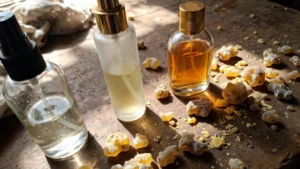

A vetiver perfume is a fragrance built around vetiver, an oil distilled from the roots of a tall tropical grass. It is one of the oldest ingredients in perfumery, and one of the most distinctive. Where most perfume notes are sweet, floral or fruity, vetiver is green, smoky, earthy and dry. It smells like cut grass after rain, like dry soil and a faint trace of wood smoke, and it gives a perfume a calm, grounded backbone that other notes can build on.
The reason vetiver matters is that it does a job few other notes can do. It adds depth without sweetness, structure without heaviness, and staying power without shouting. A citrus perfume with vetiver lasts longer and smells more serious, while a woody one feels cooler and cleaner. That is why vetiver appears in hundreds of perfumes, often without the word vetiver anywhere on the bottle.
This guide explains what vetiver is, where it comes from, how it is made, and how to recognise it in a perfume, so you can tell a bright vetiver from a dark one and choose a bottle you will actually enjoy wearing.
Key takeaways
- Vetiver is an oil distilled from the roots of a tropical grass, and it smells green, smoky, earthy and dry.
- It is a base note, which means it is one of the last things to fade, and it gives a perfume structure and staying power.
- Haitian vetiver is the brightest and cleanest, Javanese vetiver is the darkest and smokiest, and the origin changes the scent more than most people expect.
- Vetiver pairs best with citrus, woods, spice and lavender, and it is rarely the only note in a perfume.
- Vetiver is a love-it-or-leave-it note, and a smoky vetiver that smells elegant on one person can smell harsh on another, so always test on skin first.
What vetiver actually is
Vetiver comes from Vetiveria zizanioides, a tall, fast-growing grass native to India and now grown across the tropics, especially in Haiti, Java and Réunion. The plant itself is unremarkable to look at, but its roots are long, dense and rich in aromatic oil. Those roots are washed, dried and steam-distilled to produce a thick, amber oil with a deep, earthy smell.
The roots are also why vetiver smells the way it does. They grow deep in the soil, and the oil carries that earthiness with it: damp soil, dry grass, wood smoke and a faint bitter edge. It is not a sweet smell, and it is not a floral one. It is closer to the smell of a forest floor after rain, or a freshly cut field in late summer. It is often grouped with cedar and sandalwood, as our guide to what a woody perfume is explains, even though it comes from a grass root, not a tree.
Vetiver has been used in perfumery for well over a century, and it earned its place because it does two things at once: it smells interesting on its own, and it makes other ingredients smell better by giving them a dry, earthy foundation to sit on.
How vetiver is made and what to look for
Vetiver oil is made by steam distillation. The roots are harvested after about eighteen months in the ground, washed clean, chopped and dried in the sun, then distilled with steam. The oil that comes out is thick, dark amber and intensely aromatic. The quality of the oil depends on the soil, the climate, the age of the roots and the skill of the distiller. That is why vetiver from different places smells so different, and why the origin is worth knowing.

When you are reading a perfume description, look for the origin. Haitian vetiver is the most widely used and the most versatile, bright, clean and slightly floral, with a grapefruit-like lift. Javanese vetiver is darker, smokier and almost leathery, and it is the one to choose if you like deep, brooding scents. Vetiver from Réunion is softer and rounder, with a gentle warmth that suits people who find the darker kinds too stern. The origin and the supporting notes together decide whether a vetiver perfume will suit you, as our guide on how to choose a perfume explains.
Also look at how much vetiver the perfume actually contains. A perfume that leads with vetiver will name it first and build everything else around it. A perfume that lists vetiver among a dozen other notes is using it as a background texture, which is perfectly fine, but it will not smell like a vetiver perfume. The concentration matters too: an eau de parfum will show the vetiver more clearly and for longer than a light eau de toilette.
9 things to know about vetiver perfume
Vetiver comes from roots, not wood
What it shows: Vetiver is often described as a woody note, but it is not a wood at all. It is an oil distilled from the roots of a tropical grass, which is why it smells earthy and green rather than dry and sawn like cedar. What to consider: The grass origin explains the green, slightly bitter edge that no true wood has. Best For: Anyone curious about what makes vetiver different from sandalwood and cedar. Material: Vetiver root oil, steam-distilled. Price Range: Varies by origin, Haitian is the most common. Standout Feature: The only major perfume note that comes from a grass root.
It is a base note, so it lasts
What it shows: Vetiver sits in the base of a perfume, which means it is one of the last notes to fade. A vetiver perfume typically lasts six to eight hours on skin, and darker blends can last twelve or more. What to consider: The long life means a bad match is harder to live with, so test before you buy a large bottle. Best For: People who want a perfume that lasts all day without reapplying. Material: Vetiver base note, often with cedar or musk. Price Range: Lasts longer than most citrus perfumes at the same price. Standout Feature: One of the longest-lasting natural notes in perfumery.
Haitian vetiver is the brightest kind
What it shows: Vetiver from Haiti is clean, bright and slightly floral, with a grapefruit-like lift that makes it the easiest kind to wear in the daytime. What to consider: Its brightness means it can smell sharp in the first few minutes, so give it time to settle. Best For: Daytime, office wear and first-time vetiver buyers. Material: Haitian vetiver, often with citrus. Price Range: The most widely available and usually the most affordable. Standout Feature: The cleanest, most versatile vetiver origin.
Javanese vetiver is the darkest kind
What it shows: Vetiver from Java is dark, smoky and almost leathery, with a deep, brooding character that suits evening and cold weather. What to consider: The smoke can feel severe on first wear, and it is the kind most likely to smell old-fashioned to a new nose. Best For: Evening, autumn and winter, and confident wearers. Material: Javanese vetiver, often with woods and resin. Price Range: Less common and often more expensive. Standout Feature: The smokiest and most dramatic vetiver origin.
Vetiver pairs best with citrus
What it shows: Citrus is vetiver’s most natural partner. Grapefruit, bergamot and lemon lift the note, keep it fresh, and make it wearable in warm weather. What to consider: Citrus fades fast, so a citrus-vetiver perfume will change a lot in the first hour as the top notes leave and the vetiver takes over. Best For: Summer, daytime and people who like fresh scents. Material: Vetiver with grapefruit, bergamot or lemon. Price Range: Common across all price levels. Standout Feature: The pairing that makes vetiver work in hot weather.
It also pairs well with woods and spice
What it shows: Cedar, sandalwood, pepper and nutmeg all sit comfortably with vetiver, pushing it warmer and deeper for evening and cold weather. What to consider: Too much spice can make a vetiver perfume feel heavy, so look for balance rather than a long list of warm notes. Best For: Evening wear and people who like warm, woody scents. Material: Vetiver with cedar, sandalwood or spice. Price Range: Common in the mid to high price range. Standout Feature: The pairing that turns vetiver into an evening scent.
A sandalwood pairing is especially worth trying, as our best sandalwood perfumes roundup shows.
Vetiver smells different on skin than on paper
What it shows: On a test strip vetiver can smell sharp, green and almost medicinal. On skin it warms up, the smoke softens, and the earthy base comes forward. What to consider: A vetiver that smells harsh on paper may smell wonderful on skin, and the reverse is also true, so a paper test alone is not enough. Best For: Anyone who has ever rejected a vetiver after a quick sniff. Material: Vetiver oil on skin versus on paper. Price Range: No cost to test properly, just an hour of patience. Standout Feature: One of the notes that changes most between paper and skin.
Give any vetiver perfume at least an hour on your wrist before you decide.
Real vetiver perfumes cost more for a reason
What it shows: Good vetiver oil is expensive to produce. The roots take eighteen months to grow, the yield is low, and the best origins command high prices, which is why genuine vetiver perfumes rarely cost very little. What to consider: Very cheap vetiver perfumes often use synthetic substitutes or tiny amounts of real oil, which can smell flat or harsh. Best For: Buyers who want to understand why prices vary so much. Material: Natural vetiver oil versus synthetic vetiver substitutes. Price Range: Quality vetiver perfumes usually start around £70. Standout Feature: The cost of the raw material is a real part of the price.
How to test a vetiver perfume before buying
What it shows: The right way to test is one spray on clean, dry skin, then wait an hour without smelling anything else. That gives the sharp opening time to settle and the true vetiver base time to appear. What to consider: Testing three vetivers at once will confuse your nose, and testing on a card will not show you how it behaves on skin. Best For: Anyone about to spend money on their first vetiver perfume. Material: One spray on the wrist, an hour of wear. Price Range: Ask for a sample before buying a full bottle. Standout Feature: The single most useful habit for buying vetiver well.
One good test is worth more than ten reviews.
Which vetiver style suits you
If you like fresh, clean scents, choose a bright Haitian vetiver with citrus. It will smell like a smart, green cologne, and it will work in the office, in warm weather and in the daytime without ever feeling heavy. Guerlain Vétiver and Grey Vetiver are the classic examples, and they are the safest place to start.
If you like warm, woody scents, choose a darker vetiver with cedar, sandalwood or spice. It will smell deeper and more serious, and it will suit evening wear and cold weather. Sycomore and Vetiver 46 are the benchmarks here, and they show how far the note can go when it is treated as the star rather than a supporting player.
If you are not sure, choose soft. A vetiver with musk or a gentle woody base, like Narciso Rodriguez Vetiver Musc, is the easiest way in, because it shows the note without the smoke. Wear it for a week, and if you find yourself wanting more depth, move up to a brighter Haitian blend, and then to a darker one.
The caveats that matter
Vetiver is not a crowd-pleaser. It is a strong, distinctive note, and some people simply do not like it. They find it too green, too smoky or too old-fashioned, and no amount of blending will change that. That is the nature of a bold ingredient, and it is why vetiver perfumes are usually bought by people who already know they like the note.
| Detail | What is known |
|---|---|
| What it is | An oil steam-distilled from the roots of a tropical grass |
| How it smells | Grassy, smoky, earthy and dry, with a cool green edge |
| Where it sits | A base note, one of the last to fade, lasting six to eight hours or more |
| Brightest origin | Haiti, clean and grapefruit-like, best for daytime |
| Darkest origin | Java, smoky and leathery, best for evening and cold weather |
| Best pairings | Citrus for freshness, woods and spice for warmth, lavender for a classic feel |
| How to test it | One spray on skin, wait an hour, judge the dry-down not the opening |
| What it is not | It is not a wood, not sweet, and not a note everyone will love |
If you have sensitive skin or a fragrance allergy, patch-test any new perfume on your inner arm before wearing it on your neck or wrists, and stop using it if you develop redness or irritation. That is a sensible habit with any perfume, and it matters more with a strong, long-lasting base note like vetiver.
Checklist: buying a vetiver perfume honestly
Use these checks before you buy, and again after a full day of wear.
- Check the origin: Haitian for bright and clean, Javanese for dark and smoky, Réunion for soft and round.
- Check the role: is vetiver the star of the perfume, or just a background texture among many notes?
- Test on skin, not paper: vetiver changes a lot in the first hour, so give it time before you judge it.
- Test one at a time: three vetivers at once will confuse your nose and tell you nothing useful.
- Match the season: bright vetivers for heat, dark vetivers for cold weather and evening.
- Ask for a sample first: vetiver is a love-it-or-leave-it note, so try before you commit to a large bottle.
Frequently asked questions
What does vetiver smell like?
Grassy, smoky, earthy and dry, with a cool green edge. Think of cut grass after rain, dry soil and a faint trace of wood smoke. The exact character depends on the origin, with Haitian vetiver the brightest and Javanese vetiver the darkest.
Is vetiver a masculine note?
Traditionally it has been marketed to men, but the note itself has no gender. Many women wear vetiver happily, especially the brighter Haitian kinds, and several vetiver perfumes are sold as unisex. Judge it by whether you like the smell.
Is vetiver the same as sandalwood?
No. Vetiver comes from a grass root, while sandalwood comes from a tree. They are often paired because they share a dry, woody character, but they are different ingredients with different smells, and they complement each other well.
Does vetiver perfume last long?
Yes, usually. Vetiver is a base note, so it is one of the last things to fade, and most vetiver perfumes last six to eight hours on skin. Dark, resinous blends can last twelve hours or more.
Can I wear vetiver in summer?
Yes, if you choose a bright one. Haitian vetiver with grapefruit or bergamot works well in heat. Avoid dark, smoky vetivers in high summer, because the smoke and resin can feel heavy when it is hot.
Why is vetiver so expensive?
The roots take about eighteen months to grow, the oil yield is low, and the distillation is slow, so good natural vetiver oil is costly. That cost shows up in the price of genuine vetiver perfumes, although some affordable ones are excellent too.
The bottom line
A vetiver perfume is a fragrance built around one of perfumery’s most distinctive ingredients: a grass-root oil that smells green, smoky and earthy, and gives a perfume structure, depth and staying power. The origin decides the character, with Haitian vetiver the brightest, Javanese the darkest, and the supporting notes deciding whether it suits daytime or evening, summer or winter.
If you are curious, start with a bright Haitian blend, test it on skin for a full hour, and judge the dry-down rather than the opening. If you like what you find, a whole family of vetiver perfumes is waiting, from clean daytime classics to dark, smoky evening scents. If you do not like it, that is useful information too: vetiver is a bold note, and knowing it is not for you is just as valuable as finding one you love.