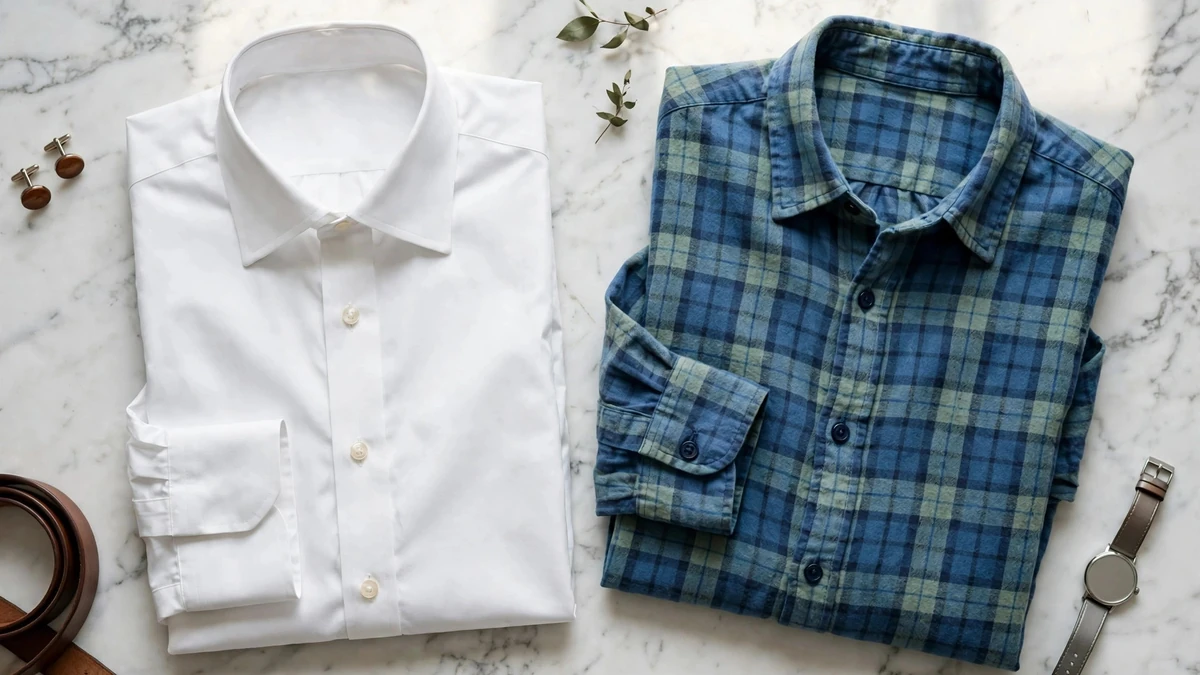

A shirt looks simple until you have to choose one. A formal shirt and a casual shirt can share the same colour, the same cotton, and even the same price, yet they behave completely differently once you put them on. One is built to sit under a jacket and a tie and look pressed at the end of a long day. The other is built to be worn open at the neck, untucked, and comfortable from morning to evening.
The difference is not just the collar. It is in the fabric weight, the weave, the cuffs, the fit, the buttons, and the way the shirt is meant to be cared for. Get those details right and a shirt quietly makes an outfit work. Get them wrong and even an expensive shirt can look out of place.
Below are nine comparisons that explain the real differences between formal and casual shirts in 2027, so you can choose the right one for the occasion and your own wardrobe, rather than guessing from a label.
Key takeaways
- A formal shirt is defined by structure: a firm collar, a smooth fine weave, and a fit made to sit under a jacket and a tie.
- A casual shirt is defined by ease: softer fabric, a relaxed collar, and details such as chest pockets and softer cuffs.
- Fabric matters more than brand. Fine poplin and twill suit formal wear, while oxford, linen, and flannel suit casual wear.
- The same shirt rarely does both jobs well. A shirt that looks sharp with a suit usually looks stiff untucked at the weekend.
- No shirt, however expensive, fixes a bad fit, and a formal shirt worn without care can look worse than a simple, well-fitting casual one.
What formal and casual shirts actually mean in 2027
A formal shirt is a shirt designed for structured occasions. It is usually made from a fine, smooth cotton such as poplin or twill, with a firm collar that holds its shape, French or single-button cuffs, and a body cut to be tucked in and worn under a jacket. The colours are usually restrained, white, pale blue, or a subtle stripe, because the shirt is meant to support a suit rather than compete with it.
A casual shirt is designed for relaxed occasions. It is usually made from a softer, more textured fabric such as oxford cloth, linen, chambray, or flannel, with a softer collar that can sit open, a looser fit, and details such as a chest pocket or a button-down collar. It is meant to be worn untucked or half-tucked, with jeans, chinos, or shorts, and it should still look good at the end of the day without ironing.
The line between the two has softened in recent years. Many offices no longer require a tie, and many formal shirts are now made with a little stretch for comfort. Even so, the core difference has not changed. A formal shirt is built for structure and polish. A casual shirt is built for comfort and ease.
How we chose these comparisons and what to look for
Look first at the fabric and the weave. Hold the shirt up to the light. A formal shirt is usually fine and smooth, with a tight weave that looks almost flat. A casual shirt usually has a visible texture, a slightly looser weave, or a slub that you can see and feel. That texture is what makes a casual shirt look relaxed, and it is also what makes it look wrong under a formal suit.

Look next at the collar and the cuffs. A formal collar is firmer, taller, and often has removable collar stays to keep it sharp. A casual collar is softer, often button-down, and sits flat without stays. Formal cuffs are usually single or double cuffs made for cufflinks, while casual cuffs are usually single-button and softer. Our guide to the best luxury shirt brands is a useful starting point for comparing how different makers handle these details.
Finally, look at the fit and the length. A formal shirt is cut longer at the back so it stays tucked in, with a slimmer body that sits neatly under a jacket. A casual shirt is often cut shorter, with a straighter hem that looks right untucked. Try the shirt on with the trousers and the jacket you plan to wear it with, because a shirt that looks good on a hanger can still sit badly under a jacket.
The 9 comparisons that matter in formal vs casual shirts 2027
Fabric and weave
What we like: Formal shirts use fine poplin and twill that feel smooth and look sharp under a jacket. Casual shirts use oxford, linen, and chambray that feel softer and breathe better in warm weather.
What to consider: Fine formal fabrics crease more easily and need ironing. Linen and chambray crease too, but the creases look natural on a casual shirt and out of place on a formal one. Best For: Formal for offices and events, casual for weekends and warm days. Fabric: Poplin and twill for formal, oxford and linen for casual. Price Range: Mid-range to premium for both. Standout Feature: The weave itself tells you which shirt you are holding.
If the cloth feels smooth and almost flat, it is a formal shirt. If it feels textured or soft, it is a casual one.
Collar shape
What we like: A formal collar is firm, tall, and holds its shape with a tie. A casual collar is softer, often button-down, and sits open comfortably without a tie.
What to consider: A soft collar under a tie can collapse and look untidy. A stiff formal collar worn open can look too rigid for a relaxed outfit. Best For: Formal for tie-wearing occasions, casual for open-neck outfits. Fabric: Cotton with collar stays for formal, soft cotton for casual. Price Range: Mid-range to premium. Standout Feature: Collar stays and a firm interlining mark a formal shirt.
A collar that stands up properly makes a suit look finished. A collar that flops makes even a good suit look careless.
Cuff style
What we like: Formal shirts offer single cuffs and double cuffs made for cufflinks, which add polish. Casual shirts use simple single-button cuffs that are easy to roll up.
What to consider: Double cuffs need cufflinks and a jacket to look right. Rolled-up formal cuffs can look awkward, while rolled-up casual cuffs look natural. Best For: Formal for events and business, casual for everyday wear. Fabric: Cotton, with French cuffs on formal shirts. Price Range: Mid-range to premium. Standout Feature: Cufflinks are the clearest sign of a formal shirt.
If you plan to wear a jacket and a tie, choose cuffs that suit the occasion. If you plan to roll your sleeves up, choose a casual shirt.
Fit and cut
What we like: Formal shirts are cut slim through the body and longer at the back, so they stay tucked in. Casual shirts are cut straighter and shorter, so they look right untucked.
What to consider: A formal shirt worn untucked often looks too long and too slim. A casual shirt tucked into suit trousers can bunch and look bulky. Best For: Formal for suits, casual for jeans and chinos. Fabric: Cotton with a little stretch for comfort in both. Price Range: Mid-range to premium. Standout Feature: The hem length tells you how the shirt is meant to be worn.
A well-fitting mid-priced shirt always looks better than an expensive one that pulls at the chest or billows at the waist.
Colour and pattern
What we like: Formal shirts favour white, pale blue, and subtle stripes that work with any suit. Casual shirts allow bold checks, prints, and stronger colours that would look out of place in a formal setting.
What to consider: A bold pattern under a suit can distract from the suit itself. A plain white shirt at a casual lunch can look overdressed. Best For: Formal for business and weddings, casual for weekends and holidays. Fabric: Cotton in solid or fine stripe for formal, printed cotton for casual. Price Range: Mid-range to premium. Standout Feature: A fine stripe is formal, a bold check is casual.
Keep formal shirts restrained and let casual shirts carry the colour.
Buttons and details
What we like: Formal shirts use small, plain mother-of-pearl or resin buttons and a clean placket. Casual shirts use larger buttons, chest pockets, and details such as epaulettes or contrast stitching.
What to consider: A chest pocket under a jacket can bulge and spoil the line of the suit. Decorative details on a formal shirt can look busy. Best For: Formal for clean, minimal outfits, casual for relaxed, detailed outfits. Fabric: Cotton, with mother-of-pearl buttons on better formal shirts. Price Range: Mid-range to premium. Standout Feature: A chest pocket is almost always a casual detail.
A formal shirt hides its details. A casual shirt shows them off.
How to wear it
What we like: A formal shirt is worn tucked in, with a tie and a jacket, and it looks polished all day. A casual shirt is worn untucked or half-tucked, open at the neck, and it looks relaxed without effort.
What to consider: A formal shirt worn untucked can look unfinished. A casual shirt worn with a tie can look confused, because the soft collar will not hold the tie properly. Best For: Formal for suits and smart events, casual for jeans, chinos, and shorts. Fabric: Cotton in both cases, chosen for the occasion. Price Range: Mid-range to premium. Standout Feature: The way the shirt is worn is part of the design.
A shirt has to work with the trousers, the jacket, and the shoes you already own.
Care and ironing
What we like: Formal shirts reward careful ironing with a crisp, clean finish. Casual shirts are more forgiving, and many can be worn straight from the line with only a light press.
What to consider: Formal cotton creases easily and needs regular ironing. Linen casual shirts crease too, but the creases are part of the look. Best For: Formal for people who iron regularly, casual for low-maintenance wardrobes. Fabric: Cotton and linen, with easy-care blends available for both. Price Range: Mid-range to premium. Standout Feature: A formal shirt that is not ironed looks worse than a casual shirt that is not ironed.
A formal shirt that you never iron will always look worse than a casual shirt you simply wash and wear.
Price and value
What we like: A good formal shirt is an investment that lasts for years if it is cared for. A good casual shirt is often better value, because it is worn more often and in more settings.
What to consider: Price is a poor guide on its own. A costly formal shirt in the wrong fit is worse value than a mid-priced one that fits well. Best For: Formal for a small, high-quality rotation, casual for everyday wear. Fabric: Cotton, with better cloth lasting longer in both types. Price Range: Mid-range to premium for formal, affordable to premium for casual. Standout Feature: Value comes from how often the shirt is worn, not from the price tag.
Two formal shirts and three casual shirts that fit well will serve you better than ten that do not.
Which shirt is right for you
Start with the occasion. If you wear a suit and a tie most days, invest in formal shirts first. Choose white and pale blue in fine poplin or twill, with a firm collar and a fit that sits neatly under a jacket. Three or four good ones, rotated and cared for, will cover most working weeks.
If your days are mostly casual, invest in casual shirts instead. Choose oxford cloth for cooler months, linen for warm weather, and flannel for winter. A button-down collar and a chest pocket are useful details, and a slightly looser fit will be more comfortable. Our guide on how to wear a necktie is worth reading if you are moving between formal and casual dress, because the tie often decides whether a shirt looks formal or not.
For most people, the answer is both, in the right proportions. Keep a small number of formal shirts for occasions that need them, and a larger number of casual shirts for everyday life.
The caveats that matter
The biggest mistake is buying a shirt for the wrong occasion. A formal shirt worn open at the neck with jeans can look stiff and uncomfortable. A casual shirt worn with a suit can look sloppy, because the soft collar and the chest pocket spoil the clean line of the jacket.
| Detail | What is known |
|---|---|
| Best fabric for formal | Fine poplin or twill cotton, smooth and tightly woven |
| Best fabric for casual | Oxford, linen, chambray, or flannel, softer and more textured |
| Collar difference | Formal collars are firm with stays, casual collars are soft and often button-down |
| Cuff difference | Formal cuffs suit cufflinks, casual cuffs are single-button and easy to roll |
| Fit difference | Formal shirts are longer and slimmer for tucking in, casual shirts are shorter for wearing untucked |
| When a shirt is wrong | When the collar collapses under a tie, or the shirt bunches under a jacket |
| Care | Formal shirts need regular ironing, casual shirts are more forgiving |
| What price does not fix | A bad fit, the wrong fabric for the occasion, or a shirt that is never ironed |
Fit is the other common problem. A shirt that is too tight across the chest will pull at the buttons, whether it is formal or casual. A shirt that is too loose will billow under a jacket or look shapeless untucked. Try it on, sit down in it, and raise your arms. If it pulls or rides up, it is the wrong size.
Checklist: choosing a shirt honestly
Use these checks before you buy, and again after the first wash.
- Check the fabric: smooth and fine for formal, textured and soft for casual.
- Check the collar: firm with stays for a tie, soft and button-down for open-neck wear.
- Check the length: long enough to stay tucked in for formal, short enough to look right untucked for casual.
- Check the fit: no pulling at the chest, no billowing at the waist, and room to move your arms.
- Check the details: no chest pocket under a suit, no cufflinks on a shirt you plan to roll up.
- Check the care: be honest about whether you will iron it, and choose the fabric to match.
Frequently asked questions
Can I wear a formal shirt without a tie?
Yes, but choose the right one. A formal shirt with a firm collar can look good open at the neck with a suit, as long as the collar holds its shape. A softer formal shirt will collapse and look untidy.
Can I wear a casual shirt with a suit?
Usually not. A casual shirt has a soft collar, a chest pocket, and a textured fabric that spoils the clean line of a suit. For a relaxed suit, a soft formal shirt is a better choice.
What is the difference between oxford and poplin?
Poplin is a fine, smooth weave used for formal shirts. Oxford is a slightly thicker, more textured weave used for casual shirts. Oxford feels softer and looks more relaxed, while poplin looks sharper and more polished.
Do I need collar stays?
For formal shirts, yes. Collar stays keep the collar points sharp and stop them from curling. For casual button-down collars, they are not needed, because the buttons hold the collar in place.
How many formal shirts do I need?
Three or four good ones are enough for most people. White and pale blue cover most occasions, and a fine stripe adds variety.
Does fabric quality matter more than brand?
Usually yes. A well-made shirt in good cotton will outlast a branded shirt in poor cloth, and it will feel better to wear. Our guide to the best natural fibres in clothing explains which fabrics last longest and why.
The bottom line
The difference between a formal and a casual shirt is not a matter of taste. It is a matter of design. Formal shirts are built for structure, with fine fabric, a firm collar, and a fit made for a jacket and a tie. Casual shirts are built for ease, with softer fabric, a relaxed collar, and a fit made to be worn untucked. Neither is better than the other. They simply do different jobs.
Choose by the occasion, not by the label. Buy fewer shirts, buy better fabric, and make sure the fit is right.